What makes up the initial investment breakdown for a sand-based AAC plant in 2026?
Publish time:Sep 14, 2026
Reading:此处显示添加时间
What Actually Makes Up the Sand AAC Plant Initial Investment Breakdown in 2026?
If you’re evaluating a sand-based autoclaved aerated concrete (AAC) plant for 2026, the question isn’t just “How much does it cost?” — it’s *where* that money goes, *why* certain components command larger shares, and *what gets overlooked* until commissioning stalls or output falls short of projections. The sand AAC plant initial investment breakdown isn’t a static percentage chart. It’s a reflection of real-world engineering trade-offs: material handling capacity vs. autoclave cycle time, automation depth vs. operator skill availability, utility readiness vs. site preparation complexity.
And here’s what most project planners miss early on: the largest line item isn’t the autoclave — it’s the integrated system around it. A high-spec autoclave is useless without precise slurry dosing, stable steam generation, reliable demoulding, and consistent curing conditions. That integration — not individual equipment specs — defines CAPEX efficiency.Core Equipment: Where Capital Actually Lands
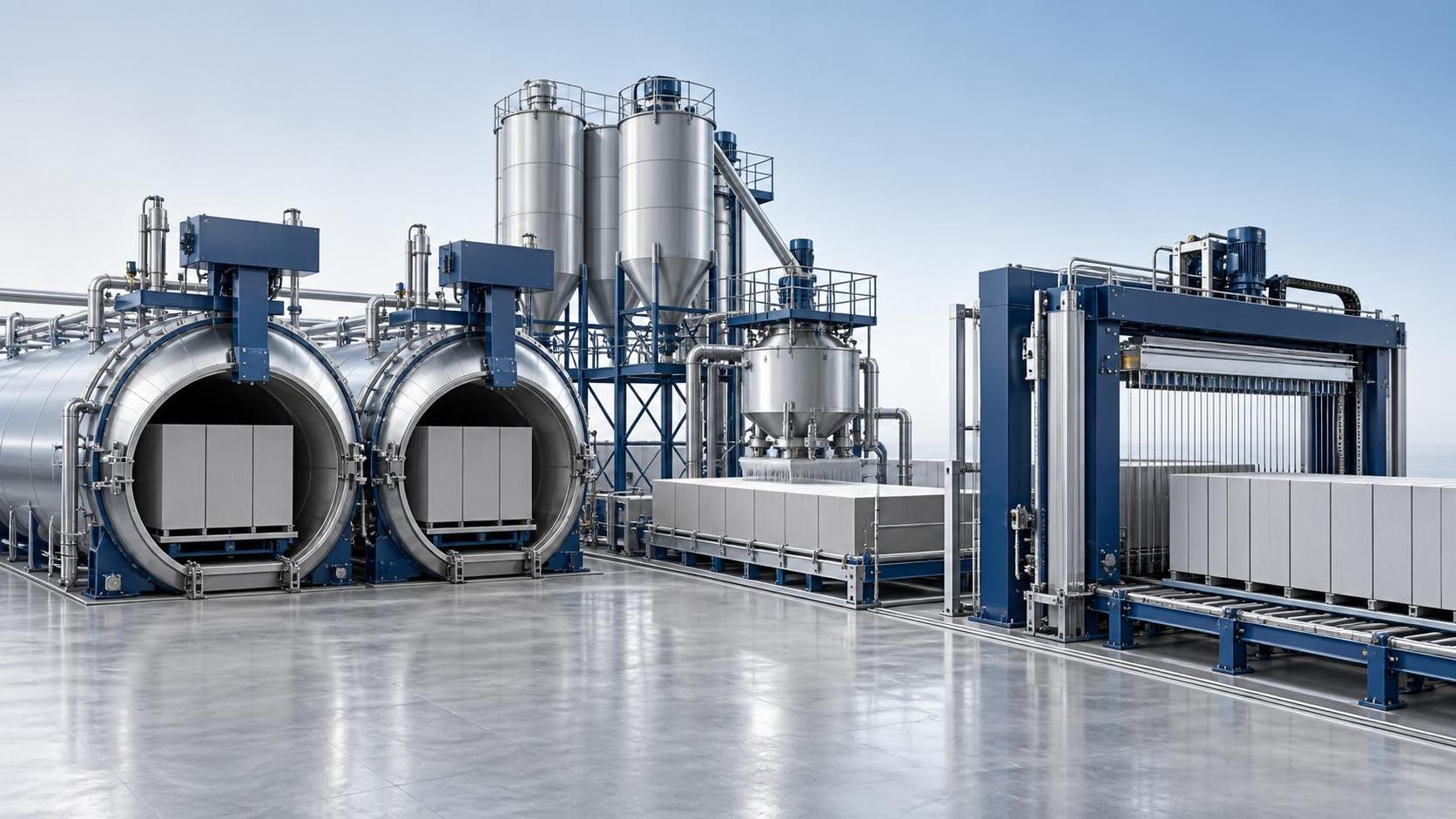
A typical mid-capacity sand AAC plant (150–250 m³/day) allocates roughly 60–68% of total initial investment to core production equipment. But within that, priorities have shifted since 2022:
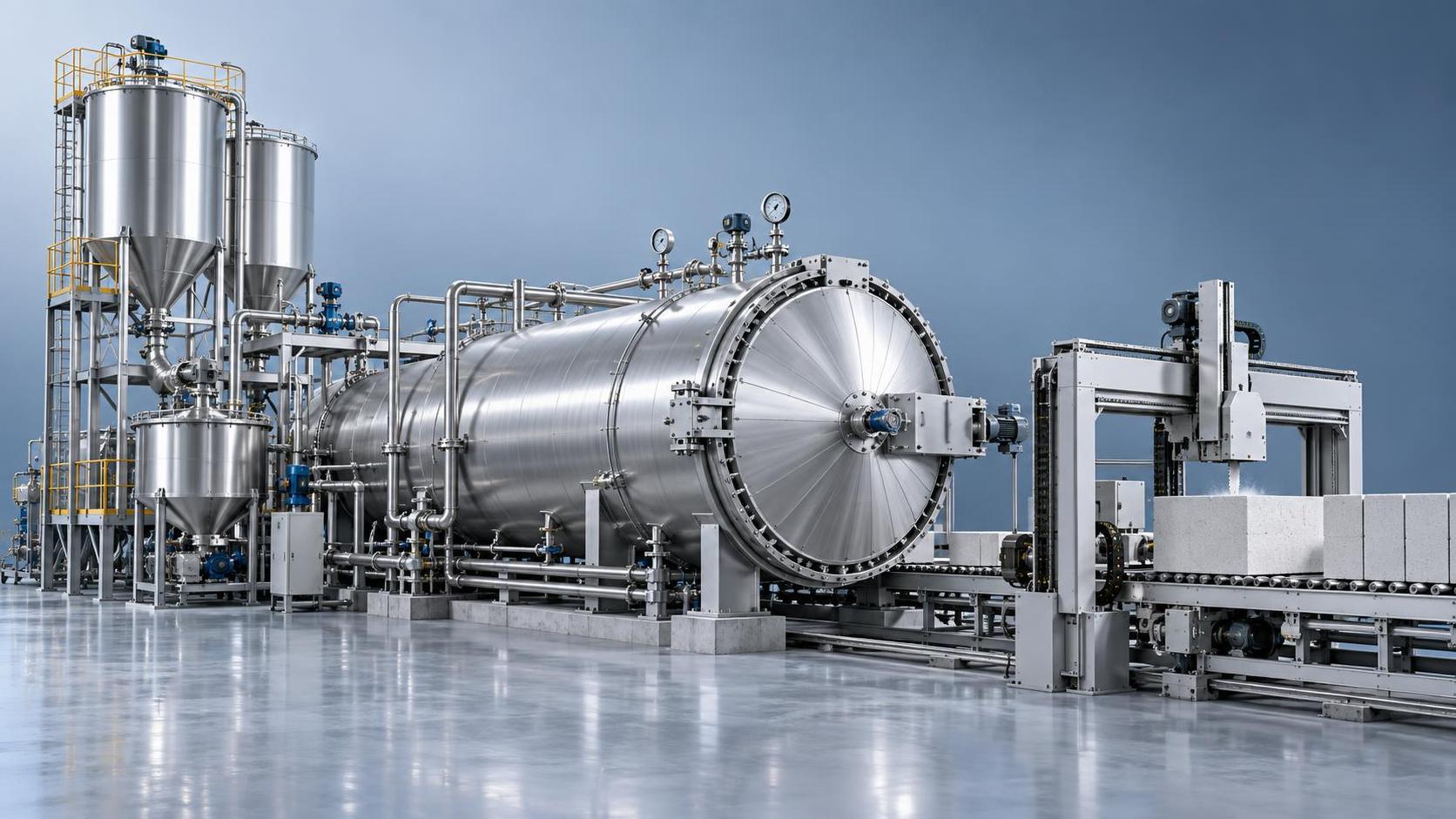
- Autoclaves still represent ~22–26% of total CAPEX — but modern designs emphasize thermal efficiency over sheer volume. Double-chamber units with optimized steam distribution now outperform older single-chamber models on energy per m³, even at higher upfront cost.
- Slurry preparation & casting systems account for ~18–22%. This includes sand grinding mills (especially critical for silica sand with high quartz content), precision dosing pumps, mixer geometry, and mold transport. Skimping here directly impacts density consistency and block strength variability.
- Demoulding & cutting lines take ~12–15%. Fully automated multi-wire cutters with CNC positioning are no longer premium options — they’re baseline for stable dimensional tolerance. Manual or semi-auto systems introduce yield loss and labor bottlenecks that compound over time.
- Raw material handling & storage (~6–8%) is often underestimated. Silica sand moisture variation demands robust drying or conditioning — not just conveyors and silos. Ignoring this leads to slurry instability and rejected batches.Infrastructure & Utility Integration: The Hidden 25%
This portion rarely appears on vendor quotations as a standalone line item — yet it frequently absorbs 22–28% of total investment and causes the most schedule delays.
- Steam generation (boilers + feedwater treatment) consumes ~9–12%. High-pressure saturated steam (1.0–1.3 MPa) must be delivered continuously, reliably, and with minimal fluctuation. Off-the-shelf industrial boilers often require significant retrofitting — including pressure vessel certification, condensate return piping, and water softening capacity sized for actual AAC process demand, not generic boiler specs.
- Electrical infrastructure (~7–10%) includes transformer upgrades, motor control centers (MCCs) with harmonic filtering, and dedicated circuits for sensitive controls. Voltage dips during cutter activation or autoclave door cycling can crash PLCs — a problem only visible after startup.
- Site preparation & foundations (~4–6%) goes beyond grading. Autoclaves and heavy cutting frames require isolated, vibration-dampened foundations. Standard concrete pads crack under cyclic thermal stress — leading to alignment drift and wire breakage.
None of these are “optional extras.” They’re operational prerequisites — and their design must be coordinated with equipment suppliers *before* civil works begin.Automation, Controls & Commissioning: Not Just Software
Automation accounts for ~5–8% of initial investment — but its impact stretches across the entire plant lifecycle. A basic PLC system with local HMI screens won’t suffice for sand AAC. You need:
- Integrated batch tracking (from sand intake to finished block pallet)
- Real-time slurry density and temperature feedback loops
- Autoclave cycle logging tied to steam pressure, temperature ramp rates, and dwell times
- Preventive maintenance triggers based on actuator cycles and motor load history
Crucially, this layer requires deep process knowledge — not just programming skill. Generic automation integrators often misinterpret AAC-specific logic (e.g., how delayed slurry setting affects cutting timing, or how ambient humidity shifts optimal demoulding windows). That’s why turnkey providers with in-house AAC process engineers — like Shandong Hongfa, which integrates control architecture with its 21-product AAC line portfolio — consistently deliver faster ramp-up and fewer post-commissioning logic revisions.What Doesn’t Belong in the Initial Investment Breakdown (But Often Sneaks In)
- Working capital for raw materials: Sand, lime, cement, aluminum powder, and additives aren’t CAPEX — they’re operating expense. Including them inflates the perceived barrier to entry.
- Training costs billed separately: If a supplier charges extra for operator training, it’s a red flag. Proper commissioning includes competency transfer — not just handover of manuals.
- “Future expansion” modules added upfront: Extra silo space or oversized transformers sound prudent — until they delay ROI by 6–9 months and increase interest burden without immediate benefit.
The smarter approach? Design for phase-one throughput, validate performance, then scale utilities and storage based on *actual* consumption data — not theoretical max capacity.Why 2026 Changes the Calculation
Three practical shifts affect the 2026 sand AAC plant initial investment breakdown:
1. Energy regulation tightening: New provincial emissions standards in China and Southeast Asia now require documented steam efficiency ratios and heat recovery feasibility studies — adding engineering review costs and potentially mandating economizers or condensate flash tanks.
2. Silica sand sourcing volatility: Increased mining restrictions mean more projects require on-site sand classification or pre-washing — pushing raw material prep CAPEX upward by 3–5%.
3. Supply chain localization: Longer lead times for imported autoclave vessels or specialty valves mean earlier procurement commitments — increasing working capital lock-up before civil work even starts.
None of these change the *structure* of the breakdown — but they shift weight between categories and compress decision timelines.The Bottom Line: It’s About System Logic, Not Line Items
A meaningful sand AAC plant initial investment breakdown doesn’t list prices — it maps dependencies. If your autoclave vendor doesn’t co-engineer steam piping with your boiler supplier, you’ll pay twice. If your cutting system isn’t validated against your specific sand particle distribution, you’ll replace wires monthly. And if your control system wasn’t built with AAC curing kinetics in mind, you’ll spend more on troubleshooting than optimization.
That’s where experience matters — not just in equipment manufacturing, but in having delivered over 34 years of AAC production lines, holding 46 national patents (including 28 invention patents) in slurry control, autoclave thermal management, and integrated batching logic. It means the investment roadmap reflects not just hardware, but how each component behaves *in sequence*, under real site constraints — because the first tonne of AAC isn’t made when the autoclave is installed. It’s made when every subsystem responds predictably, together.
Previous:International Projects
Recommend
 Sep 17, 2026
Why turnkey AAC plant delivery timelines often extend beyond quoted 6–8 months — and where delays most commonly occur
Discover why turnkey AAC plant timelines often exceed 6–8 months—and where delays really happen. Get actionable insights to protect your schedule & ROI.
- Sep 18, 2026
What makes up the initial investment breakdown for a sand-based AAC plant in 2026?
sand AAC plant initial investment breakdown: uncover the real 2026 CAPEX drivers — autoclaves, integration, utilities & automation — not just price tags.
 Aug 19, 2026
International Projects