What safety inspection requirements apply to AAC autoclave systems under ISO 4126 and local regulations?
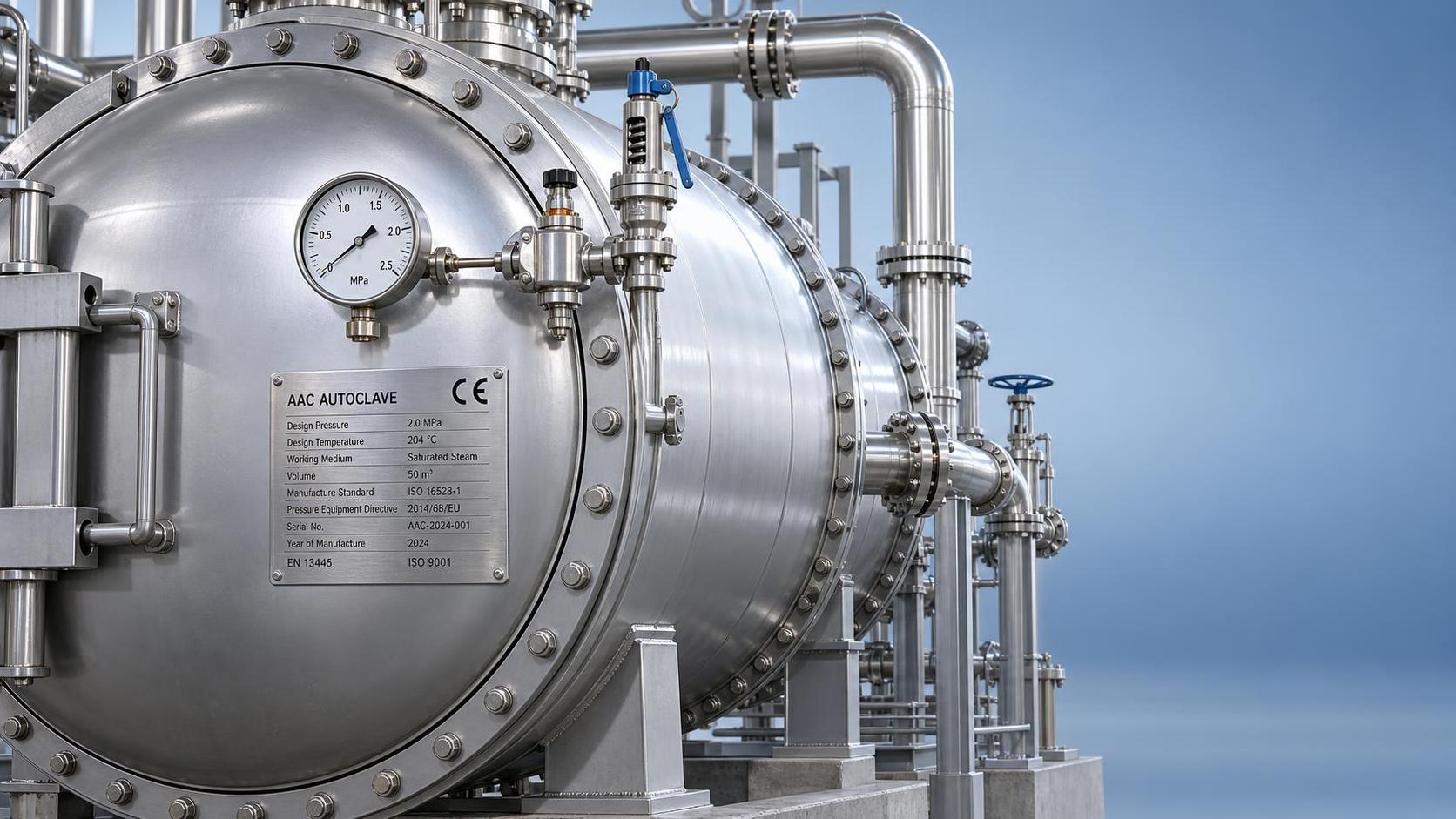
Compliance with safety inspection requirements for AAC autoclave systems is not optional—it’s foundational to operational continuity, personnel safety, and regulatory acceptance. Under ISO 4126 (Safety devices for protection against excessive pressure) and local jurisdictional mandates—such as China’s TSG 21-2016 Supervision and Inspection Regulations for Fixed Pressure Vessels or EU PED 2014/68/EU—autoclaves used in aerated concrete production are classified as Class III or IV pressure vessels. That classification triggers mandatory periodic inspections, documented verification of pressure relief devices, and traceable maintenance records. Failure to meet these requirements risks immediate shutdown, non-renewal of operating permits, or liability in case of incident. For manufacturers like Shandong Hongfa—whose AAC autoclave systems integrate 46 national patents and adhere to ISO 9001-2008 quality management—the inspection framework isn’t a compliance checkbox; it’s embedded in design validation, component selection, and commissioning protocols.
Core Inspection Requirements Under ISO 4126
ISO 4126 does not prescribe inspection intervals directly but defines performance, testing, and marking criteria for pressure relief devices—primarily safety valves and rupture discs—installed on AAC autoclaves. The standard requires that every relief device:
- Be type-tested and certified to ISO 4126-1 (safety valves) or ISO 4126-2 (rupture discs);
- Maintain a set pressure tolerance of ±3% for valves rated below 10 bar, or ±5% above;
- Be sized using ISO 4126-7 methods to ensure sufficient discharge capacity during full-load overpressure scenarios (e.g., steam trap failure + thermal expansion);
- Carry permanent markings including manufacturer ID, set pressure, temperature rating, and conformity symbol (e.g., CE or China Compulsory Certification mark).
Crucially, ISO 4126 mandates that relief devices be inspected *before initial commissioning* and *at least annually* thereafter—though actual frequency depends on service conditions. In AAC applications—where autoclaves cycle daily between 0.8–1.8 MPa and 174–200°C—Hongfa’s engineering practice applies a six-month inspection interval for valves exposed to condensate-laden steam, based on observed seat erosion rates from field data across 12+ years of operation.
Local Regulatory Alignment: China, EU, and North America
While ISO 4126 provides technical benchmarks, enforcement rests with local authorities—and their interpretation dictates execution. In China, TSG 21-2016 governs inspection scope, personnel qualifications, and documentation. It requires:
- External inspection every 12 months (visual checks for corrosion, deformation, insulation integrity);
- Internal inspection every 36 months (requires vessel entry, wall thickness measurement via ultrasonic testing, weld seam evaluation);
- Hydrostatic test every 6 years (1.25× design pressure, held for ≥10 minutes, with no leakage or permanent deformation);
- Relief device verification at each external inspection—either bench-tested or verified in situ using calibrated pressure sources.
In the EU, PED 2014/68/EU delegates inspection responsibility to Notified Bodies for Category IV vessels (which AAC autoclaves typically fall under). Here, inspections must follow harmonized standards like EN 13445 and include documented risk assessment per EN 16502. In North America, ASME BPVC Section VIII Division 1 applies, requiring annual visual inspection and relief valve testing per ASME PTC 25—with state-level boiler and pressure vessel commissions (e.g., NBIC Part 3) enforcing re-certification after major repairs.
What Triggers More Frequent or Additional Inspections?
Fixed intervals are baseline requirements—not substitutes for condition-based judgment. Several AAC-specific operational factors necessitate accelerated or supplemental inspection:
- Feedstock variability: High-sulfur fly ash or inconsistent lime content increases acidic condensate formation, accelerating internal corrosion—warranting ultrasonic thickness checks every 18 months instead of 36;
- Cycle fatigue: Autoclaves undergoing >300 cycles/year require weld seam NDT (e.g., phased-array UT) every 24 months, not just at 36-month internal inspection;
- Control system anomalies: Repeated high-pressure alarms (>3 occurrences/month) signal potential regulator or sensor drift—prompting immediate relief device functional test and calibration review;
- Post-maintenance verification: Any replacement of vessel internals (e.g., steam distribution manifolds), piping modifications, or valve recalibration demands full relief system re-validation before restart.
Hongfa’s AAC autoclave systems incorporate redundant pressure transmitters and automated log-triggered alerts for such anomalies—enabling early intervention before formal inspection cycles begin.
Documentation That Holds Up Under Audit
An inspection is only valid if its evidence is traceable, contemporaneous, and technically defensible. Required documentation includes:
- Calibration certificates for all test equipment (validity ≤12 months);
- Relief device test reports showing actual lift pressure, reseating pressure, and flow capacity verification;
- UT thickness maps with location identifiers (e.g., “Circumferential weld, 1.2 m from south flange”);
- Photographic records of internal surfaces, especially near steam inlet zones and drain points;
- Maintenance logs linking valve replacements to batch production records—demonstrating downtime correlation with inspection findings.
Shandong Hongfa provides digital inspection templates aligned with TSG 21-2016 Annex G and EN 13445-5 Annex D, pre-populated with vessel-specific parameters (design pressure, material grade, corrosion allowance) to reduce clerical error and accelerate report generation.
Where Manufacturer Design Impacts Inspection Feasibility
Not all autoclaves are equally inspectable. Design choices affect how efficiently and thoroughly inspections can be performed:
- Manhole size ≥400 mm diameter enables full internal visual access without scaffolding;
- Modular relief valve assemblies—like those in Hongfa’s patented quick-release mounting system—allow removal and bench testing without draining the entire vessel;
- Embedded strain gauges at critical weld junctions provide real-time fatigue data, reducing reliance on periodic destructive testing;
- Non-destructive examination (NDE) access points built into insulation cladding eliminate need for insulation removal during UT scans.
These features do not replace required inspections—but they lower total cost of compliance and increase detection reliability by minimizing human error during access and measurement.
When to Engage a Third-Party Inspector
Internal maintenance teams can perform visual checks and basic valve function tests—but certain tasks require accredited personnel:
- Ultrasonic thickness measurements exceeding 20 mm wall thickness;
- Full hydrostatic or pneumatic testing;
- NDT of circumferential weld seams (RT or UT Level II certification required);
- Re-rating of vessel MAWP following design modification.
For AAC plants operating multiple autoclaves, Hongfa recommends contracting one third-party inspector per 3–4 vessels to maintain consistency in methodology and reporting format—avoiding discrepancies that delay regulatory sign-off.
Ultimately, AAC autoclave system safety inspection requirements converge where international standards meet site-specific operation. They demand more than calendar-based checklists—they require understanding how steam chemistry, cycling frequency, and component wear interact in real time. Manufacturers with deep domain experience—like Shandong Hongfa, which has delivered over 800 AAC production lines since 1990—embed this understanding into both hardware design and support documentation. The result is not just compliance, but predictable, verifiable, and sustainable pressure system integrity.
Next:No more content
Recommend
 Sep 17, 2026
What safety inspection requirements apply to AAC autoclave systems under ISO 4126 and local regulations?
AAC autoclave system safety inspection requirements under ISO 4126 & local regulations—learn how Shandong Hongfa ensures compliance, reliability, and zero downtime.
- Sep 14, 2026
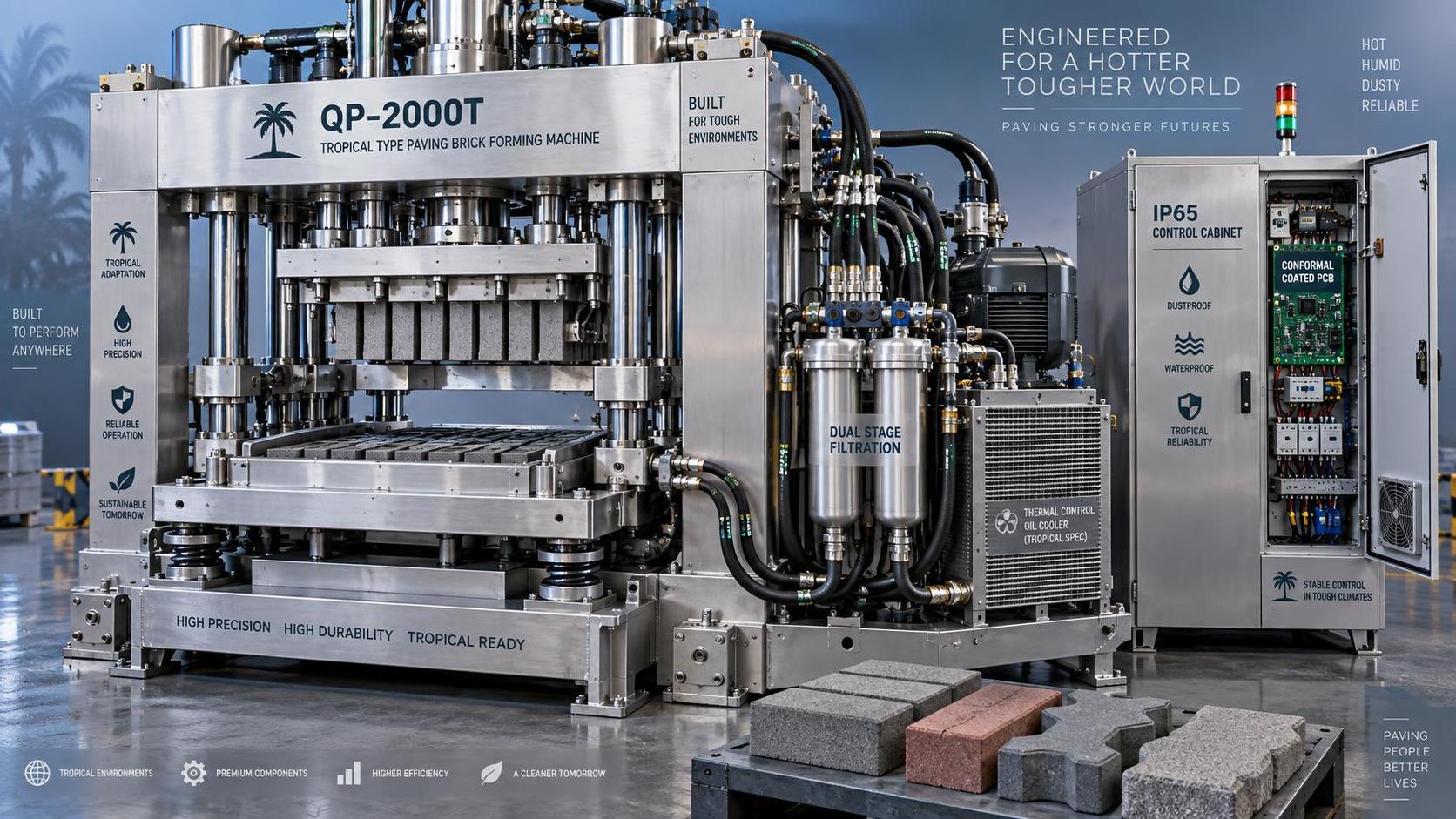
Which paving block machine is best suited for tropical climate regions?
Looking for a paving block machine for tropical climate regions? Discover corrosion-resistant, moisture-adaptive machines engineered for high humidity, heat & monsoons—built to deliver reliability, not just output.