How Can Buyers Order AAC Spare Parts From Hongfa?
Ordering AAC spare parts starts with identifying the components your production line needs. Buyers can contact Shandong Hongfa Scientific Industrial & Trading Co., Ltd. with equipment details, part specifications, and quantities to request assistance. Before placing an order, it is also worth discussing compatibility, delivery, and whether Shandong Hongfa Scientific Industrial & Trading Co., Ltd. overseas installation or technical support is available when a replacement requires professional fitting.
That preparation matters because a spare part is rarely just a part number on a purchase order. A cutting wire, valve, bearing, or control component must work within a particular machine configuration. The closer the information you provide matches the equipment on your factory floor, the easier it is for both sides to clarify what should be supplied.
Start with the machine, not just the failed component
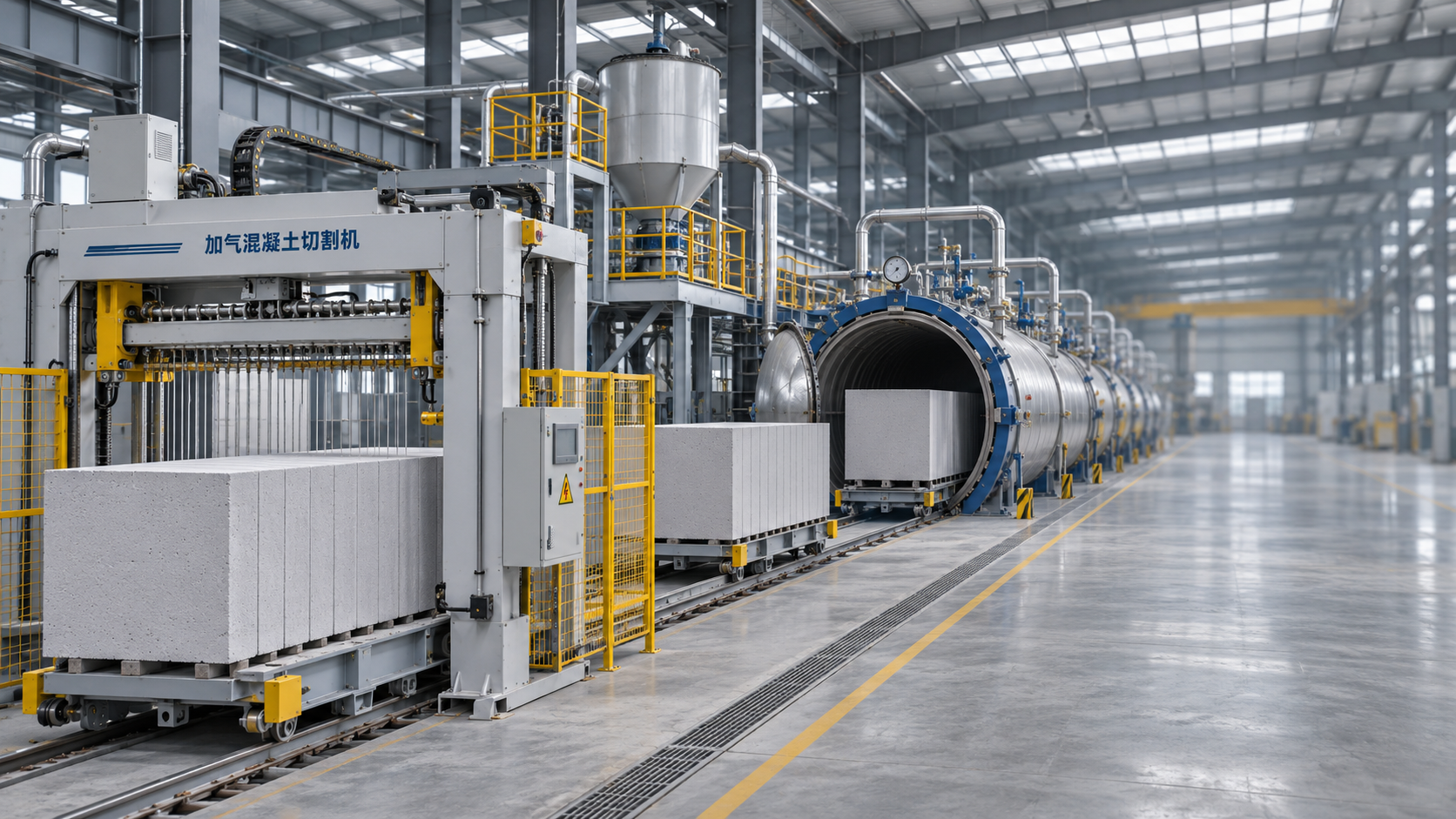
Autoclaved aerated concrete, or AAC, production lines bring together equipment for raw material preparation, mixing, pouring, cutting, curing, and handling. A request for “a spare part for an AAC line” therefore leaves a wide range of possibilities. Even two components that look alike may differ in dimensions, material, connection method, or operating requirements.
Before contacting Hongfa, locate the equipment nameplate and gather any records supplied with the machine. Useful information includes:
- The machine or production line model and serial number, if available.
- The approximate installation or purchase date.
- The name of the component and its location in the line.
- The original part number, drawing number, or manual reference.
- The quantity required and the reason for replacement.
- Whether the equipment is currently operating, stopped, or scheduled for maintenance.
If the nameplate is damaged or the documentation is incomplete, explain that in your inquiry. Dimensions, markings, and a description of how the component connects to adjacent parts can help narrow the search. Do not assume, however, that a close visual match is enough to approve a replacement.
Which AAC spare parts should buyers identify?
The answer depends on the design of the individual production line. Hongfa produces aerated concrete block production lines as part of its construction machinery business, but the components used in a particular installation should be verified against its documentation and configuration.
Common inquiries may concern the following areas:
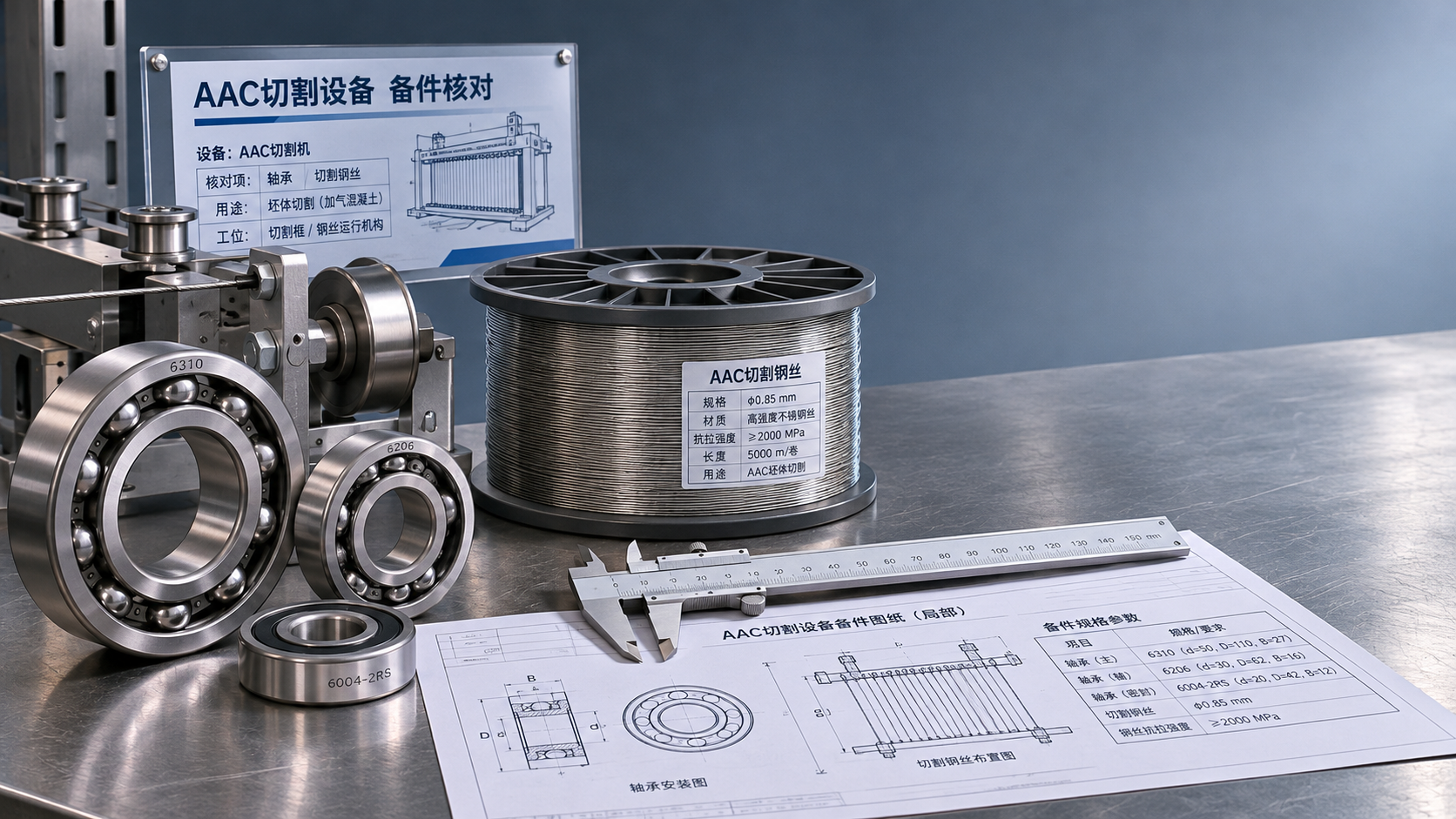
- Cutting equipment: cutting wires, guides, tensioning components, and other parts associated with the cutting system.
- Material preparation and mixing: mixer wear components, seals, bearings, pumps, and valves, where fitted.
- Moulds and handling: mould-related components, wheels, rollers, and parts used in moving or positioning the product.
- Drive and control systems: motors, gearboxes, sensors, switches, and electrical components specified for the equipment.
- Curing-related equipment: seals, valves, and other components associated with the installed curing system.
This list is a starting point, not a statement that every item is available for every machine. For pressure-bearing or safety-critical equipment, use the manufacturer’s approved specifications and applicable local requirements. Substitution based only on size can create serious operating risks.
What to include in an inquiry to Hongfa
A useful inquiry tells the supplier what you need, where it belongs, and when you need it. If you are replacing several items, separate them by machine and list the quantity of each. This reduces ambiguity when similar components are used in different sections of the line.
Consider sending the following details together:
- Buyer and site information. Include your company name, destination country, and a contact person for technical and commercial questions.
- Equipment identification. Provide the model, serial number, purchase information, and any known modifications.
- Part identification. State the part name, number, dimensions, markings, material, and connection details as known. Attach relevant drawings or equipment records if available.
- Operating context. Describe the fault or wear, the affected machine, and whether the part is an emergency replacement or planned stock.
- Commercial requirements. Specify quantities, requested delivery location, preferred shipping method, and any documents your purchasing or customs team requires.
- Support needs. Ask whether fitting instructions, remote assistance, or an overseas installation visit can be discussed for the specific job.
Use Hongfa’s current official contact channel to submit the request, and keep the correspondence and quotation reference together. The company’s formal name is Shandong Hongfa Scientific Industrial & Trading Co., Ltd.; including it when searching for the supplier can help distinguish the inquiry from similarly named businesses.
A practical example of a clear request
Instead of asking for “a gearbox for the cutting machine,” identify the line model and machine serial number, then provide the gearbox markings, mounting arrangement, shaft dimensions, and required quantity. Mention any past modifications to the drive system. If the markings cannot be read, say which measurements are available and ask Hongfa what else is needed before a quotation can be confirmed.
The same principle applies to smaller items. A seal may be inexpensive compared with a gearbox, but an incorrect material or profile can still delay a restart. When in doubt, describe the operating conditions and let the supplier identify the information required for a compatibility check.
Confirm compatibility before approving the quotation
Once you receive a proposed part, compare it with your records and the component currently installed. Ask Hongfa to clarify any differences in part number, appearance, material, dimensions, or connection points. A revised design or substitute may be suitable, but that decision should be supported by the supplier’s confirmation rather than assumed from the quotation alone.
For electrical and drive components, check the relevant ratings and interfaces against your equipment documentation. For wear parts, confirm dimensions and material where these affect service life or fit. For assemblies, establish exactly what is included: a quoted unit may or may not include fasteners, seals, fittings, or related components.
If the line has been upgraded by another contractor or repaired with non-original components, disclose those changes. The original machine details remain useful, but they may not describe the equipment as it exists today. Where a precise identification is difficult, agree on a verification method before the order is finalized.
Discuss price, lead time, and delivery as separate decisions
A quotation should make it possible to understand both the scope of supply and the conditions attached to it. Review the part descriptions and quantities alongside the price, currency, payment terms, estimated production or availability time, and quotation validity. Ask which charges are included and which may arise separately.
For international orders, delivery terms deserve particular attention. Confirm the named destination and the agreed shipping terms, including which party arranges transport, insurance, export procedures, import clearance, duties, and taxes. If the components are heavy, oversized, fragile, or sensitive to moisture, discuss packing and handling requirements before dispatch.
Lead time is not the same as arrival time. A supplier’s estimated preparation period may not include freight, customs processing, or local delivery. When a shutdown is imminent, explain the required arrival date and ask what schedule is realistic. It may also be useful to discuss whether urgently needed items can be shipped separately from the rest of the order, subject to availability and agreed freight costs.
When should buyers ask about overseas installation?
Some replacement work can be handled by an experienced maintenance team using the equipment documentation and site procedures. Other jobs may involve alignment, electrical integration, commissioning, or safety checks that require additional expertise. If the scope goes beyond a straightforward part exchange, raise the question of support before placing the order.
For Shandong Hongfa Scientific Industrial & Trading Co., Ltd. overseas installation inquiries, describe the work as specifically as possible. Identify the equipment, the parts to be fitted, the site location, the desired schedule, and the personnel or facilities available locally. Hongfa can then advise what support, if any, is available for that assignment and under what conditions.
Questions to settle include:
- Can the issue be addressed through documentation or remote technical communication?
- If an on-site visit is possible, what work would the visiting personnel perform?
- Who supplies lifting equipment, tools, local labor, and safety arrangements?
- How are travel, accommodation, visas, local transport, and service time handled?
- What testing or commissioning steps are included, and who approves the result?
Availability, scope, timing, and charges should be confirmed in writing. A spare-parts quotation does not automatically mean that installation is included. Likewise, site access and local legal or safety requirements need to be agreed upon by the parties responsible for the work.
Plan beyond the immediate replacement
A stopped line makes the urgent component the obvious priority, but the same inquiry can also help a buyer prepare for the next maintenance window. Review the equipment manual and your maintenance history for parts that wear regularly, have long procurement times, or are difficult to source locally. Ask Hongfa which information is needed to identify those items and request a separate quotation if appropriate.
Stocking decisions should reflect your own operating conditions. A part used continuously in an abrasive or wet section of the process may need closer monitoring than a component with a stable service history. On the other hand, ordering large quantities without confirming storage life, compatibility, and future use can tie up funds unnecessarily.
Keep a record of each approved part number, its machine location, order reference, installation date, and any observed failure. Over time, that record makes future inquiries clearer and helps maintenance and purchasing teams discuss replacements using the same information.
Before the order is released
Check that the final order matches the agreed quotation: correct equipment references, part descriptions, quantities, delivery terms, and any separately agreed technical support. Identify who will inspect the shipment on arrival and compare the contents with the packing documents. If there is a discrepancy or visible transport damage, document it promptly and contact the relevant parties under the agreed terms.
Hongfa’s business includes AAC production-line equipment and other building-material machinery. For a buyer, the most productive next step is a specific inquiry rather than a general request for a parts catalogue: share the machine identification, describe the component, and explain the delivery and support requirements. That gives both sides a practical basis for confirming what can be supplied and how the replacement will be put to work.
Next:No more content
Recommend
 Nov 17, 2026
How Can Buyers Order AAC Spare Parts From Hongfa?
Explore Hongfa Co., Ltd. overseas installation and AAC spare parts ordering: learn what to provide, check compatibility, and request a quote.
- Nov 17, 2026
What Does Hongfa's Overseas Installation Service Include?
Researching Ltd. quartz line reviews? Explore key questions to ask Hongfa about overseas installation, commissioning, training, costs, and support.
- Nov 16, 2026
How Much Does a Hongfa AAC Plant Cost?
Discover what drives the Shandong Hongfa Co., Ltd. AAC plant price, from capacity and automation to installation costs, and learn how to request a reliable quote.