Is a Semi-Automatic AAC Line Worth It for a Small Factory?
Is a semi-automatic AAC line worth it for a small factory? It can be, but the answer depends on more than the initial equipment price. Production capacity, labor costs, raw material availability, energy consumption, and local demand all influence the return on investment. For a manufacturer seeking a balance between automation and affordability, a semi-automatic aerated concrete block production line may be a practical starting point—provided the entire factory, not just the machinery, is planned around realistic sales.
The important distinction is that “small” describes the business, not necessarily a simple production process. Autoclaved aerated concrete requires controlled batching, cutting, steam curing, and quality checks. Before comparing quotations, a buyer needs to understand what those requirements mean for people, space, utilities, and working capital.
What does a semi-automatic AAC line actually involve?
AAC is a lightweight building material made from a mixture that commonly includes a silica-rich material such as sand or fly ash, cement, lime, water, and an expanding agent. The mixture is cast into molds, allowed to rise and develop enough strength for cutting, then cured in an autoclave using pressurized steam.
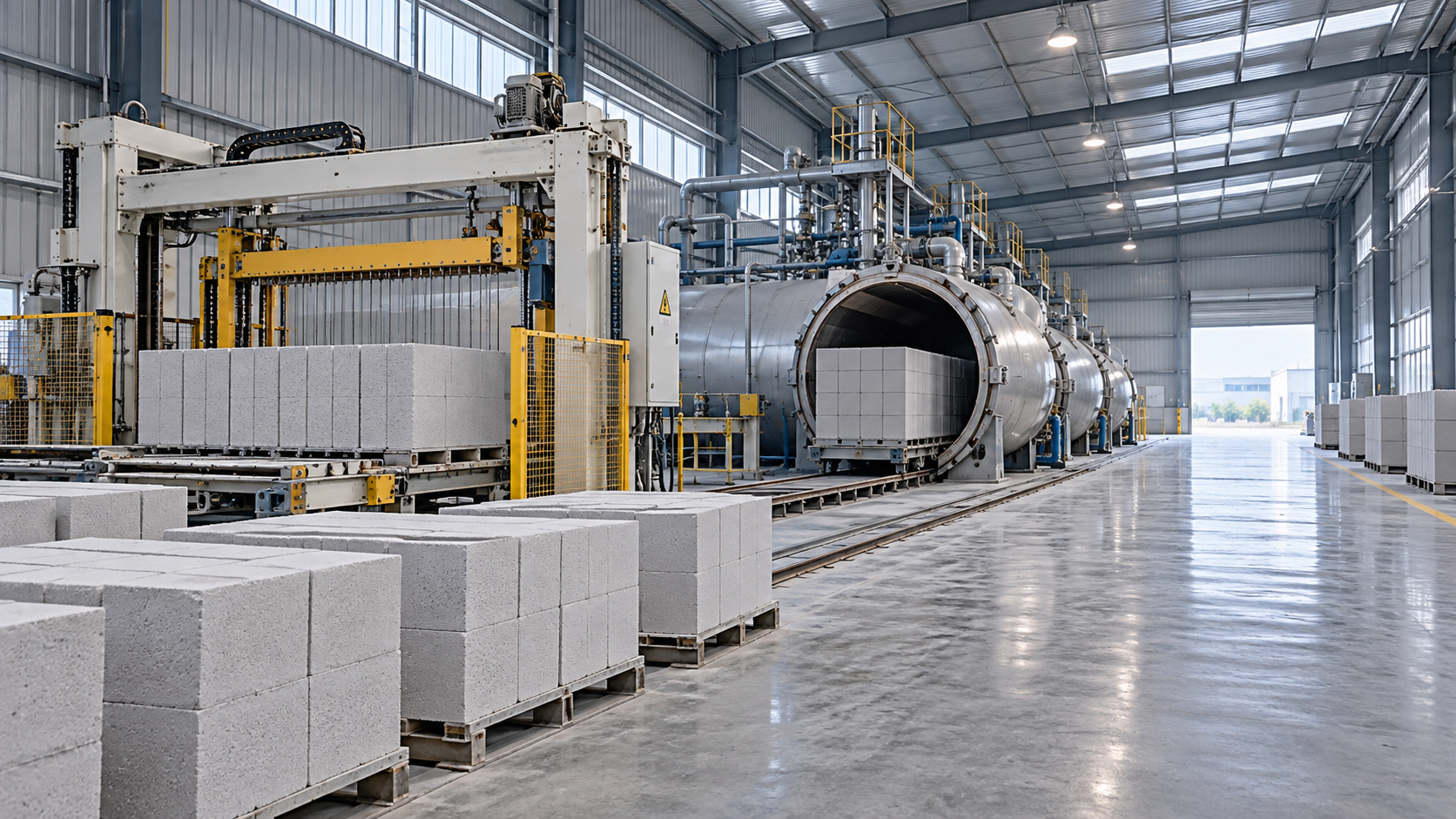
In a semi-automatic AAC production line, some operations are mechanized or controlled automatically, while others still rely on operators. Depending on the configuration, manual work may include moving materials, assisting with mold handling, monitoring the cutting process, separating finished products, or organizing packaging and storage.
Semi-automatic is not a standardized equipment specification. Two lines described with the same term may require very different staffing levels and material-handling arrangements. Ask each supplier to identify which steps are automatic, which are manual, and how materials move between them. A list of machines alone does not reveal how smoothly the complete line will run.
It is also worth confirming that the proposed plant produces autoclaved aerated concrete. Equipment for non-autoclaved lightweight blocks may serve a different market and cannot be assumed to provide the same production process or product characteristics.
Where the investment makes sense—and where it may not
A semi-automatic line is often worth investigating when a factory has a credible local market for AAC blocks but does not yet need the throughput or lower manual intervention of a more automated plant. It may also suit an owner who can manage a production team closely and has access to suitable raw materials, a dependable steam supply, and enough land for production and storage.
Consider a factory supplying regional builders. If buyers value lighter masonry products and orders are reasonably predictable, a line sized to that market may offer a way to enter AAC production without buying more automation than the business can use. The owner still needs to verify that customers will accept the product dimensions, quality, and delivery schedule.
The calculation looks different where demand is uncertain, fuel and electricity are unreliable, or skilled operators are difficult to retain. A lower equipment quotation cannot compensate for frequent interruptions, poor curing control, or blocks that remain in the yard because the sales channel is not established.
High labor costs can also change the comparison. More manual handling may be affordable in one location and expensive in another. If the factory expects rapid growth or operates where labor is scarce, a higher level of automation may deserve serious consideration from the start.
Look beyond the AAC production line price
The quoted cost of a semi-automatic AAC line is only one part of the investment. Before making a decision, build a budget that includes the expenses of commissioning and running the factory—not just the equipment arriving at the site.
- Buildings and civil works: Foundations, production halls, storage areas, equipment supports, and access routes for raw materials and finished blocks.
- Utilities: Electrical supply, water treatment where needed, compressed air, fuel, a steam system, and the infrastructure required for autoclave operation.
- Installation and startup: Transport, unloading, assembly, commissioning, operator training, and trial production.
- Operating supplies: Raw materials, cutting consumables, lubricants, replacement parts, packaging, and laboratory testing materials.
- Working capital: Wages, inventory, energy bills, maintenance, and other expenses while the factory builds sales and collects customer payments.
Ask whether the quotation includes the boiler or other steam source, autoclaves, material preparation equipment, cutting system, molds, cranes or transfer equipment, and finished-product handling. These items may be included, offered separately, or left to the buyer. Compare the scope line by line rather than assuming the lowest figure represents the lowest installed cost.
Estimate cost per saleable block, not just output
A useful calculation divides total operating costs over a period by the number of blocks that can actually be sold in that period. Include labor, raw materials, energy, maintenance, packaging, and an allowance for production losses. Treat loan interest and depreciation separately or include them consistently when comparing investment options.
Do not base the estimate entirely on advertised capacity. Production may be limited by shift length, curing cycles, maintenance, raw material preparation, or demand. Blocks damaged during handling or rejected for failing the required specification consume resources without generating normal sales revenue.
For a basic payback estimate, compare the initial investment with the expected annual cash generated after operating costs and applicable taxes. Then test less comfortable scenarios: slower sales, higher fuel costs, lower selling prices, or a delayed startup. This estimate is not a substitute for a detailed financial model, but it can reveal whether the project has enough margin for setbacks.
Three constraints that deserve attention before ordering
1. Raw material consistency
AAC production depends on a controlled mix. Sand or fly ash, lime, cement, and other ingredients can vary in properties, and that variation can affect expansion, cutting strength, curing, and finished-block quality. A material that is locally available is not automatically suitable for every AAC recipe.
Before finalizing the line, discuss representative raw material samples and their variability with the equipment supplier and an appropriate testing laboratory. Clarify whether grinding or other preparation is needed, how materials will be stored, and who will develop and adjust the production mix. Reliable supply is as important as an acceptable first sample.
2. Steam, energy, and site readiness
The autoclave is central to AAC production, so the steam system must be sized for the proposed production schedule. Energy costs will depend on fuel, equipment efficiency, local operating conditions, and how consistently the plant runs. An undersized or unreliable steam supply can restrict output even when the rest of the line is available.
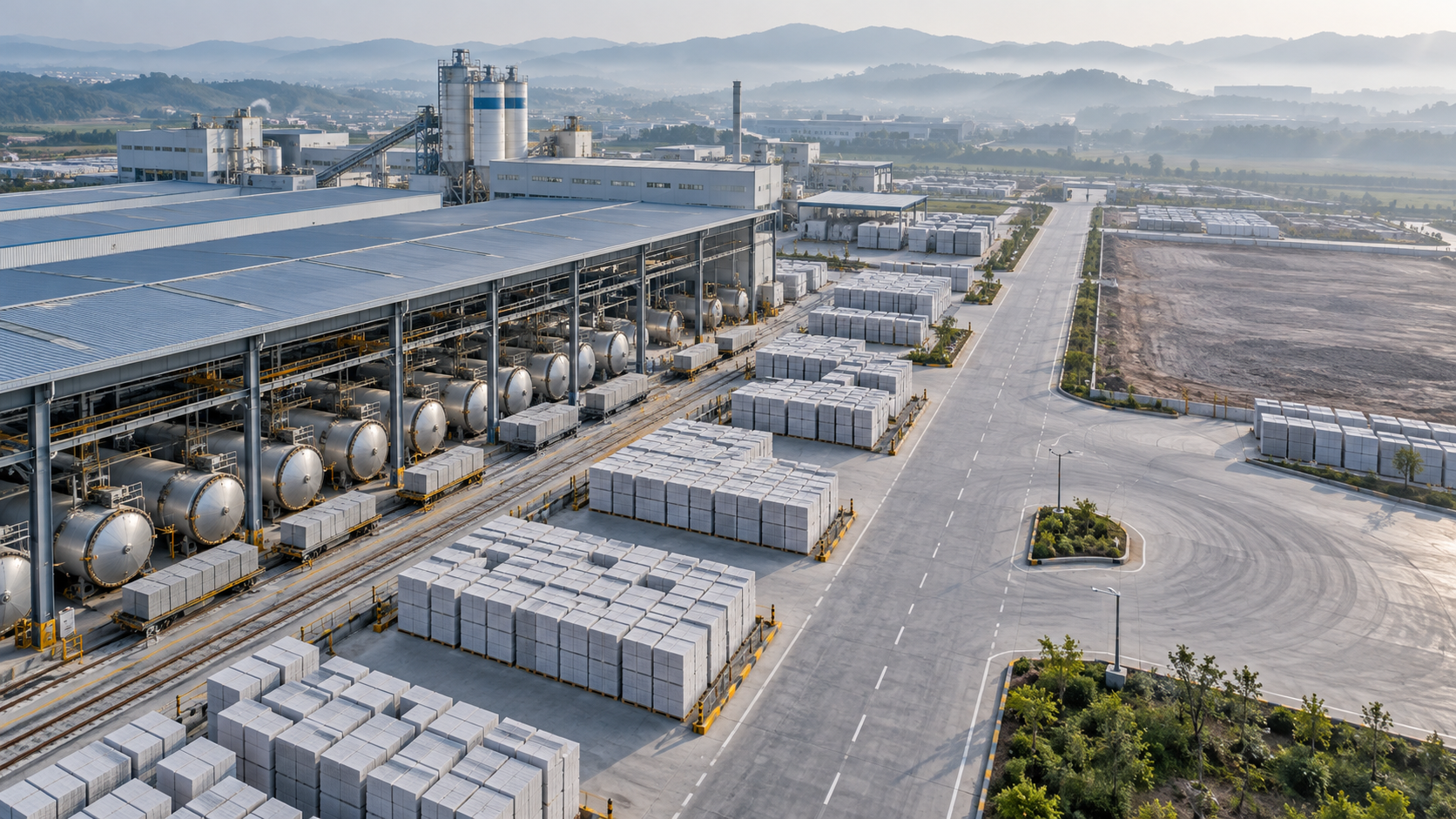
Space planning matters too. The factory needs practical routes for molds, cut products, autoclave loading, finished-block storage, and trucks. Check the proposed layout against the actual site, including maintenance access and any room required for future expansion. Pressure equipment must also meet applicable local inspection, installation, and safety requirements.
3. People and process control
Buying a semi-automatic line does not eliminate the need for trained staff. Operators must understand the sequence from batching and casting to cutting, curing, and handling. Supervisors need to recognize changes in the mix, track production records, and respond when products fall outside the required specification.
Ask the supplier for a staffing plan by shift and by workstation, including forklift or crane operators where relevant. Confirm what training is provided, how long commissioning is expected to take, and who is responsible for routine quality checks. A line that appears affordable on paper may be difficult to operate if its manual workload has not been properly counted.
Semi-automatic vs. fully automatic AAC production
The choice is not simply between a basic plant and a better one. It is a question of where to spend capital and where to accept ongoing work.
Neither configuration guarantees a profitable factory. A well-managed semi-automatic plant may be a better fit than a larger automated line operating far below its intended utilization. Conversely, choosing the least automated option can become expensive if labor, damage, or handling delays constrain production.
Can the factory upgrade later?
Expansion is possible in some designs, but it should never be assumed. Adding equipment later may require more than purchasing a new machine: foundations, power supply, control systems, steam capacity, building layout, and material flow may all need changes.
Ask for a phased plan before placing the order. Identify the likely bottleneck at the first production level and determine what would need to change to increase output. For example, a faster cutting or handling system will have limited value if autoclave capacity or steam generation cannot support additional batches.
It is also useful to ask whether spare parts and control components are readily available, which equipment interfaces are designed for future additions, and whether the supplier can provide updated layouts. A modest allowance for access and utility capacity at the beginning may prevent costly disruption later, but the right allowance should be based on a specific proposed upgrade.
Questions to put to an AAC equipment supplier
A productive supplier discussion should turn a general capacity target into a workable factory plan. Bring the proposed site dimensions, expected block sizes, available raw materials, utility details, and a realistic view of local demand. Then ask:
- What finished-product output is expected under the proposed shift pattern, and what assumptions support it?
- Which operations are automated, and how many people are needed for each shift?
- What equipment and services are included or excluded from the quotation?
- What steam, power, water, and fuel provisions does the proposed configuration require?
- How will local raw materials be evaluated, and who supports mix development?
- What are the installation, commissioning, training, maintenance, and spare-parts arrangements?
- Which local product standards and pressure-equipment requirements should be checked before installation?
Shandong Hongfa Scientific Industrial & Trading Co., Ltd. manufactures building-material machinery, including aerated concrete block production lines. For a small-factory project, discussing the intended capacity and site constraints with an AAC equipment manufacturer can help clarify the line configuration and the responsibilities that remain with the buyer. Request a written equipment list and technical proposal tailored to the project rather than relying on a general product description.
So, is a semi-automatic AAC line worth it for a small factory?
It can be a sensible investment when demand supports the planned output, raw materials and steam are dependable, and the business has accounted for labor, site preparation, quality control, and startup costs. Its value lies in matching the level of automation to the factory’s actual operating conditions—not simply choosing the lowest purchase price.
Before committing, compare complete quotations, calculate costs against saleable output, and test the project under less favorable sales and energy assumptions. If the numbers remain workable and the proposed line fits the site and workforce, a semi-automatic AAC plant may provide a practical foundation for entering or expanding in the local block market.
Next:No more content
Recommend
 Nov 10, 2026
Is a Semi-Automatic AAC Line Worth It for a Small Factory?
Is a semi-automatic AAC line worth it for a small factory? Explore costs, labor, energy needs, and ROI to make a confident investment decision.
- Nov 02, 2026
What Should an AAC Plant Installation Contract Include?
Choosing sand or fly ash? Learn what an AAC plant installation contract should include, from scope and safety to performance tests and warranties, to protect your investment.
- Nov 02, 2026
How Much Land Is Needed for an AAC Factory?
Which is better for AAC production: a compact plot or a larger site? Explore land needs, storage, utilities, and layout planning to choose your factory site with confidence.