What Does a Hongfa AAC Plant Cost?
The cost of a Hongfa AAC plant depends on more than the production line itself. Capacity, automation level, raw material preparation, installation, and supporting equipment can all influence the total investment.
For manufacturers planning an autoclaved aerated concrete project, understanding these factors is essential to comparing options and budgeting with confidence.
This guide explores the main cost considerations and how Shandong Hongfa Scientific Industrial & Trading Co. can help businesses assess equipment suited to their production goals.
A reliable Hongfa AAC plant price requires a project-specific quotation. Until the equipment scope, site conditions, and production targets are defined, any single figure would be an unreliable basis for investment.
For budgeting, separate the equipment purchase from freight, construction, utilities, commissioning, and working capital. These items can materially change the funding required before the plant generates revenue.
What Is Included in the Cost of a Hongfa AAC Plant?
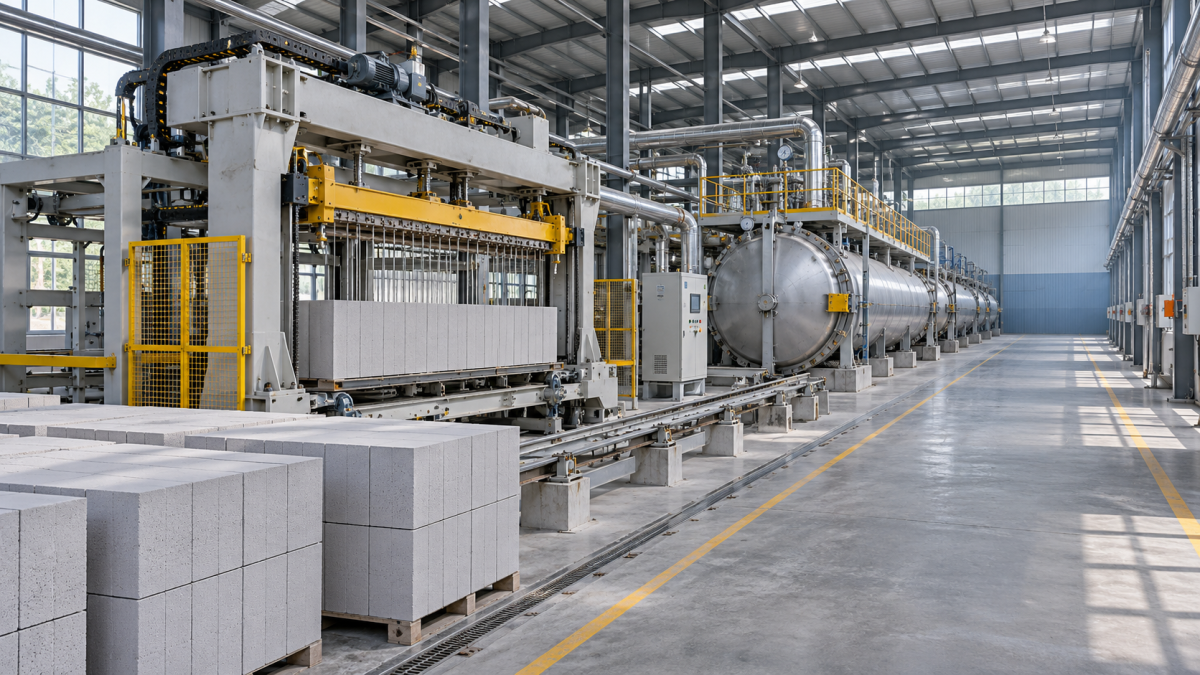
The quoted equipment price may cover a complete production line or only selected machines. Ask for an itemized list before comparing offers or calculating your total investment.
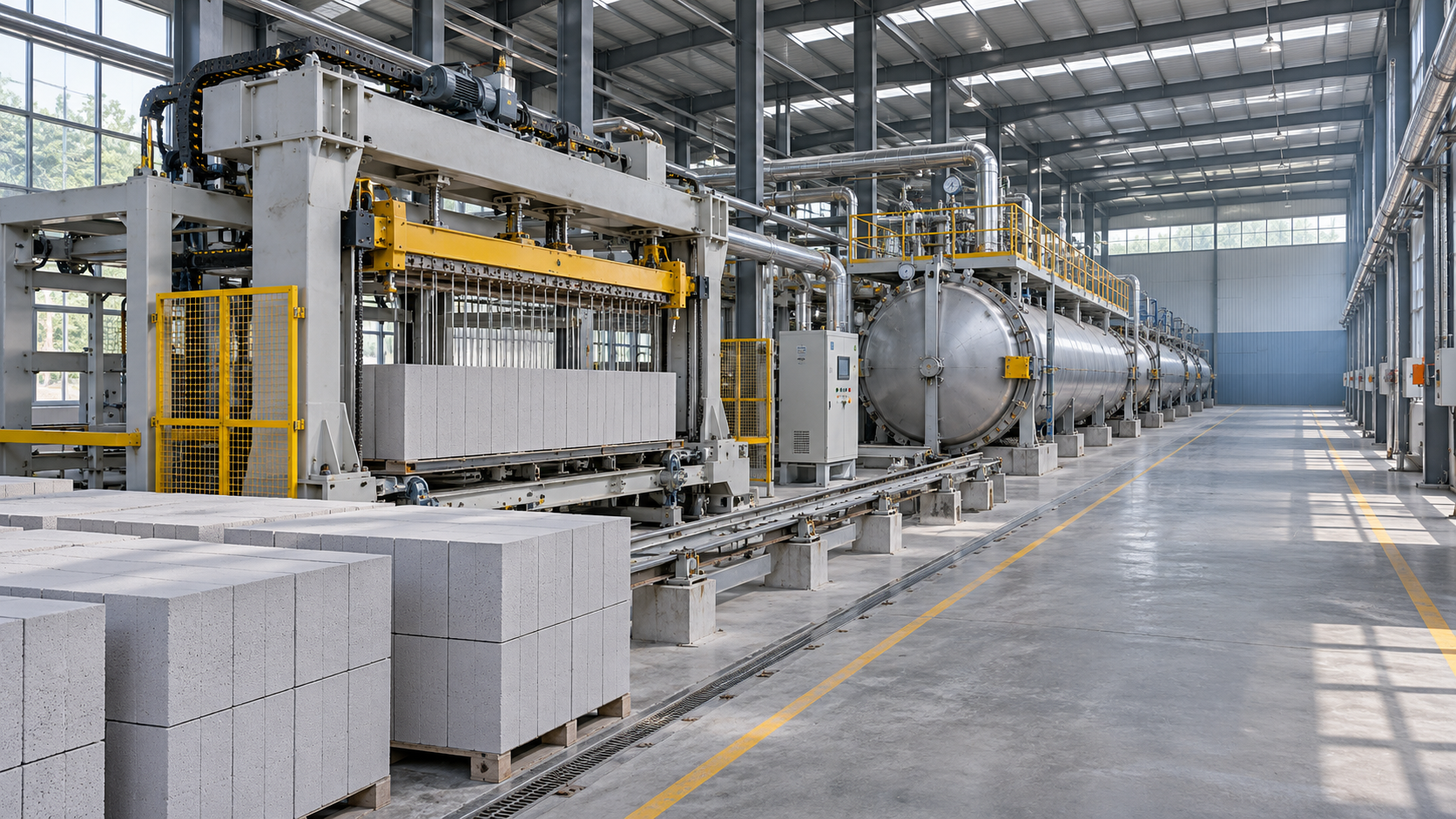
A typical AAC process includes raw material preparation, batching and mixing, casting, cutting, autoclaving, and finished product handling. Each stage requires equipment suited to the planned output.
Depending on the proposal, the package may also include molds, conveying systems, control equipment, boilers, or handling machinery. Their inclusion should never be assumed from the phrase “complete plant.”
Some quotations exclude buildings, foundations, electrical distribution, water treatment, fuel storage, laboratory equipment, or environmental controls. These exclusions can represent substantial additional spending at the project site.
Ask Shandong Hongfa Scientific Industrial & Trading Co. for a written scope showing included items, optional equipment, supplier responsibilities, and the assumptions behind the proposed production capacity.
Which Factors Have the Biggest Effect on AAC Plant Price?
The largest cost differences usually come from capacity, automation, process configuration, and local installation requirements. Understanding each factor helps buyers decide where additional spending creates value.
Production capacity and operating schedule
Higher output generally requires larger or additional equipment, more molds, greater autoclave capacity, and stronger utilities. It may also increase the space needed for materials and finished products.
Capacity figures are only comparable when they use similar assumptions. Confirm whether annual output is based on calendar days or working days, operating shifts, product dimensions, and expected downtime.
For example, a line rated at 100,000 cubic meters annually over 300 working days implies roughly 333 cubic meters per operating day before accounting for actual performance differences.
A smaller line may reduce initial spending, but it can limit growth or raise costs per cubic meter. Oversizing can leave expensive machinery underused while financing costs continue.
Automation and labor requirements
More automated batching, cutting, and handling can reduce repetitive manual work and improve process consistency. The tradeoff is a higher equipment price and potentially greater maintenance complexity.
Compare automation options using local wages, shift patterns, staffing availability, and maintenance skills. A feature that saves money in one market may be difficult to justify in another.
Request an estimated staffing plan for each configuration, including operators, maintenance personnel, and laboratory staff. Check whether the estimate covers all shifts and supporting operations.
Raw materials and product specifications
AAC is commonly made using a silica source, cement, lime, gypsum, water, and an expansion agent. Available materials and required preparation influence the equipment configuration.
For example, a project using sand may need different preparation equipment from one using suitable fly ash. Material testing helps determine whether grinding, storage, or additional processing is required.
Target density, block dimensions, and local performance standards can also affect the process design. Confirm these requirements early so the quotation matches the products you intend to sell.
Site location and utilities
Freight distance, import duties, construction costs, and local labor rates affect the delivered project cost. Site access can also influence unloading arrangements and the handling of large equipment.
Autoclaves require a dependable steam supply, while the line also needs electricity and water. The cost of providing sufficient utility capacity depends heavily on the selected site.
Before selecting a location, check power availability, water quality, fuel options, wastewater requirements, and permits. Utility upgrades can change the economics of an otherwise attractive site.
How Should You Build a Complete Project Budget?
A practical budget follows the project from equipment order through stable commercial production. Assign an owner and an estimated cost to every major activity, including items outside the supplier’s scope.
Start with the equipment quotation and identify optional items needed for your intended operation. Then add the costs of shipping, insurance, customs clearance, duties, and inland transport.
Budget separately for land preparation, buildings, foundations, equipment installation, and utility connections. Obtain local estimates rather than applying a generic percentage to the machinery price.
Include commissioning expenses such as travel, accommodation, interpretation, operator training, and initial testing materials. Confirm which of these are included in the supplier’s quoted service fees.
Working capital deserves its own line. The business may need funds for raw materials, wages, fuel, spare parts, inventory, and customer credit before sales receipts become dependable.
Finally, add a documented contingency for incomplete design information and execution risks. Its size should reflect the maturity of your estimates, site conditions, and financing arrangements.
How Can You Compare Hongfa AAC Plant Quotations?
Compare quotations against the same production target and product specification. A lower price is meaningful only when the equipment scope and performance assumptions meet your project needs.
Ask each supplier to identify the number and specifications of major machines, molds, and autoclaves. Check whether material preparation, steam generation, packaging, and handling are included.
Review the proposed layout and utility requirements alongside the price. A cheaper configuration may require more building space, manual handling, or infrastructure spending at your site.
Clarify the delivery term and destination. A price at the factory gate cannot be compared directly with a delivered price until transport, insurance, and import costs are added.
Examine payment milestones, delivery schedules, warranty conditions, and the availability of installation support. Confirm what happens if components arrive damaged or commissioning takes longer than expected.
Request written acceptance criteria for output and product quality, including test conditions and the responsibilities of both parties. Agree on how performance will be measured before signing.
Also check spare parts availability, recommended startup inventory, response times, and remote support arrangements. These details affect the cost of downtime after the plant begins operating.
What Does an AAC Plant Cost to Operate?
Purchase price is only one part of the investment decision. Operating costs determine the margin available on each cubic meter and influence how quickly the project can recover its investment.
Build a cost model around raw materials, fuel for steam generation, electricity, water, labor, maintenance, packaging, and waste. Use local supplier quotations wherever possible.
Separate variable costs from fixed costs. Materials and fuel generally rise with production, while many salaries, financing charges, and overhead expenses continue even when output is low.
Use expected sellable output rather than the equipment’s headline capacity. Startup losses, maintenance stoppages, demand fluctuations, and rejected products all reduce the volume available for sale.
For an illustrative calculation, suppose annual fixed costs are $300,000 and contribution after variable costs is $15 per sellable cubic meter. Operating break-even volume would be 20,000 cubic meters annually.
This example excludes taxes, financing, and other project-specific factors; it is a calculation method, not a Hongfa price or a forecast of actual plant performance.
Test the model against lower selling prices, higher energy costs, and slower utilization. If modest changes eliminate the expected margin, reconsider capacity, product mix, or financing.
What Information Should You Provide Before Requesting a Quote?
A useful quotation starts with a clear project brief. The more accurately you describe your market, materials, and site, the easier it is to identify suitable equipment.
- Planned location, site size, and preferred project schedule.
- Target annual output, working days, and number of shifts.
- Intended products, dimensions, density range, and applicable standards.
- Available raw materials, including representative samples or test results.
- Available electricity, water, fuel, and steam infrastructure.
- Preferred automation level, staffing assumptions, and future expansion plans.
- Required scope for shipping, installation, commissioning, training, and spare parts.
Ask for a preliminary equipment list, layout, utility estimates, delivery schedule, and clear exclusions. These documents provide a stronger basis for local construction estimates and financing discussions.
If raw material suitability remains uncertain, discuss testing before finalizing the configuration. A preliminary quote may need revision once material properties and product requirements are confirmed.
How Can Shandong Hongfa Support an AAC Plant Project?
Shandong Hongfa Scientific Industrial & Trading Co. manufactures construction machinery, including aerated concrete block production lines. Its supplied company profile states that the business began in 1990.
For a prospective buyer, the relevant question is how the proposed equipment and services match the project. Request technical documentation and a scope tailored to your production requirements.
Discuss plant configuration, capacity assumptions, installation responsibilities, training, and after-sales support directly with the supplier. Confirm current certification, service availability, and contractual terms during procurement.
Where possible, ask for relevant customer references or opportunities to inspect comparable equipment. Evaluate those examples against your own raw materials, operating conditions, and intended products.
Is a Hongfa AAC Plant the Right Investment?
A Hongfa AAC plant may suit a business seeking an equipment configuration aligned with its local market and production goals. The decision depends on the complete project economics.
Begin with realistic demand and sellable output, then compare the full installed cost with expected operating margins. Include startup funding and test whether the project remains viable under less favorable assumptions.
With a defined project brief and an itemized quotation from Shandong Hongfa Scientific Industrial & Trading Co., buyers can assess the investment on a clearer, more comparable basis.
Recommend
 Nov 25, 2026
How Can Buyers Verify Reviews of Hongfa Quartz Lines?
Compare Ltd. AAC plant price and learn how to verify Hongfa quartz line reviews, customer references, performance claims and after-sales support before investing.
- Nov 25, 2026
What Does a Hongfa AAC Plant Cost?
Shandong Hongfa Scientific Industrial & Trading Co.: Explore AAC plant cost factors, compare equipment options, and learn how to budget for your project.
- Nov 25, 2026
How Much Does a Quartz Stone Production Line Cost?
Explore Ltd. overseas installation considerations and quartz stone production line costs, from equipment and shipping to operating expenses. Plan your investment today.