How Much Does a Quartz Stone Production Line Cost?
The cost of a quartz stone production line depends on production capacity, automation, equipment configuration, and installation requirements. Beyond the purchase price, buyers should also consider factory preparation, shipping, labor, and ongoing operating costs.
For manufacturers comparing suppliers, Shandong Hongfa Scientific Industrial & Trading Co., Ltd. overseas installation arrangements may also be an important factor to discuss when requesting a quotation.
This guide explores the key cost drivers to help you plan your investment and choose a production line that fits your needs.
How Much Should You Budget for a Quartz Stone Production Line?
A production line can require a substantial investment, but there is no dependable universal price. Capacity, slab specifications, automation, and the equipment included can change quotations significantly.
Ask suppliers for a project-specific quotation before setting your final budget. An equipment-only price rarely represents the amount required to prepare a factory and begin commercial production.
Your working budget should cover machinery, freight, import charges, factory modifications, utilities, installation, commissioning, training, initial materials, and a contingency for unexpected expenses.
Also allow for working capital during startup. Payroll, electricity, raw materials, and other expenses may continue while operators learn the process and production reaches a stable yield.
A useful first step is to separate one-time investment from ongoing expenses. This makes it easier to compare proposals and assess whether projected sales can support the project.
What Equipment Is Included in the Quotation?
Engineered quartz slab production generally involves preparing aggregates, mixing them with resin and pigments, forming and pressing slabs, curing them, and finishing their surfaces.
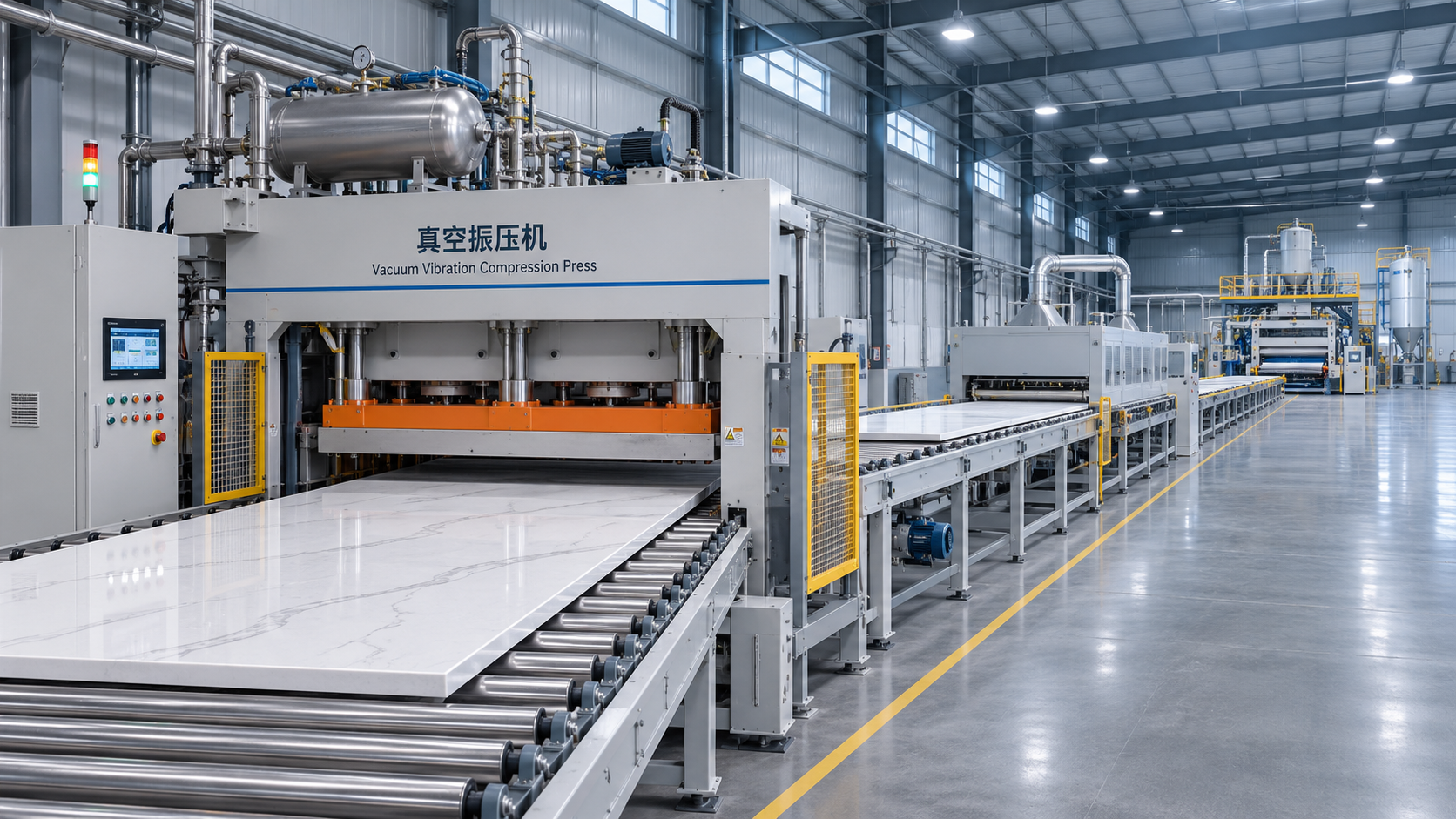
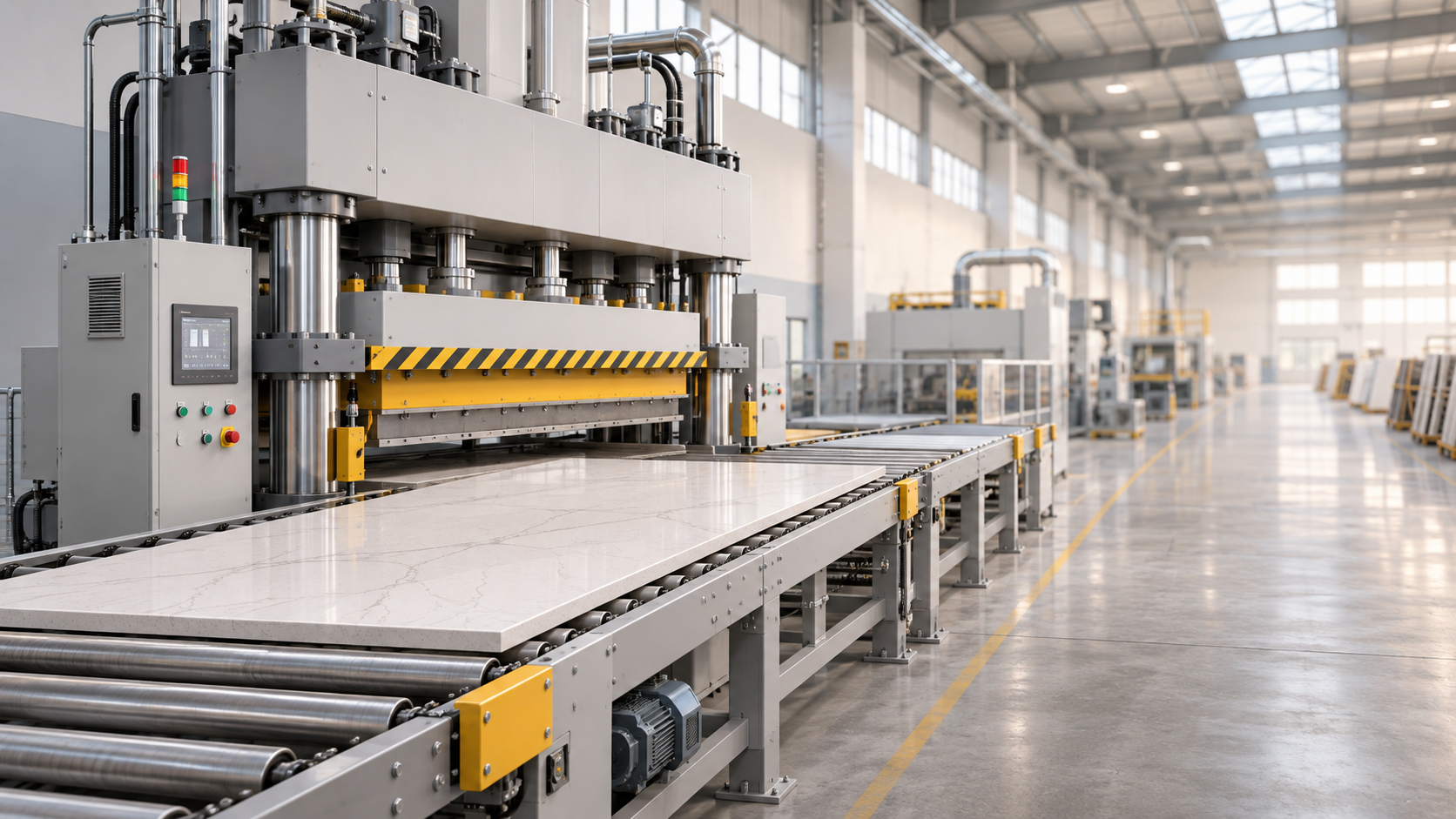
Depending on the process and product specification, a line may include batching and mixing equipment, a vacuum vibration press, curing equipment, and slab handling systems.
Grinding, calibration, polishing, cutting, and dust collection equipment may also be necessary. Some suppliers quote these items separately or expect buyers to source them locally.
Confirm whether the offer includes molds, conveyors, control systems, air compressors, spare parts, and quality inspection tools. Small omissions can create significant procurement and scheduling problems.
For each machine, request its model, quantity, rated power, main function, and proposed place in the process. A layout drawing helps identify missing connections or handling steps.
Finally, distinguish between equipment for unfinished slabs and equipment for polished slabs. Two quotations may look comparable while delivering products at different stages of completion.
Which Factors Have the Greatest Effect on Price?
Production capacity and operating schedule
Higher-capacity lines generally require more equipment, faster handling, greater utility provision, or multiple production units. These additions increase capital requirements but can reduce unit costs at suitable volumes.
Compare capacity using the same measure, such as square meters of finished slabs per shift. Specify slab thickness, dimensions, working hours, and expected operating days.
Rated output is an equipment benchmark, not a sales forecast. Changeovers, maintenance, operator learning, and rejected slabs can reduce actual saleable output, especially during startup.
Automation and labor requirements
Automated batching, material transfer, slab handling, and polishing can reduce manual work and improve process consistency. They also increase equipment costs and may require more technical maintenance.
For a market with uncertain demand, a less automated configuration may limit initial spending. A larger operation may benefit from automation if labor savings and throughput justify it.
Ask suppliers to estimate staffing by position and shift for each configuration. Check whether the estimate covers material preparation, quality inspection, packing, and maintenance.
Slab size, thickness, and finish
Larger slabs, tighter thickness tolerances, and demanding surface finishes may require different presses, handling equipment, curing capacity, or polishing systems. Specify your intended products before comparing prices.
Product design matters too. Colors, patterns, and recipes can affect batching arrangements, cleaning time, material consumption, and the practical output achieved during frequent changeovers.
Request samples made to your intended specifications where practical. Agree on how dimensions, appearance, surface quality, and other acceptance criteria will be assessed.
What Costs Come After Buying the Equipment?
Factory preparation and utilities
Before signing a contract, check floor space, building height, access routes, foundation requirements, and storage areas. Heavy machinery may need foundations designed for local site conditions.
Obtain the supplier’s preliminary utility schedule, including electrical load, compressed air, water, and ventilation. Have qualified local contractors assess whether your site can supply them.
Budget for electrical distribution, piping, lighting, fire protection, and material handling around the line. These items may fall outside the machinery supplier’s scope.
Dust extraction and ventilation deserve early attention because cutting, grinding, and handling mineral materials can generate hazardous dust. Confirm applicable local requirements and equipment specifications with qualified specialists.
Freight, customs, and delivery
Shipping costs depend on equipment dimensions, weight, destination, transport mode, and packing requirements. Oversized machinery may require special handling or inland transport arrangements.
Ask the supplier to state the delivery term, shipping point, packing method, and estimated number of containers. Confirm when responsibility for freight and insurance transfers.
Calculate import duties, taxes, customs clearance, port charges, and local delivery with a freight forwarder. Rates and procedures depend on the destination and product classification.
Installation, commissioning, and training
Installation costs can include mechanical assembly, electrical connection, lifting equipment, engineer travel, accommodation, interpreters, and local labor. The contract should identify who pays each item.
Commissioning should cover more than switching machines on. Define the test materials, trial duration, required operators, product specifications, and conditions for accepting the line.
Training should include normal operation, recipe handling, cleaning, routine maintenance, and basic troubleshooting. Ask for manuals, electrical diagrams, and a recommended spare-parts list.
For Shandong Hongfa Scientific Industrial & Trading Co., Ltd. overseas installation, ask what support is available for your destination, including engineer availability, travel costs, and the proposed schedule.
Availability and terms should be confirmed in the quotation or contract. Travel permissions, site readiness, and local support arrangements can affect when commissioning begins.
How Can You Estimate Operating Costs and Return?
The purchase decision depends on the cost of producing saleable slabs as well as the initial investment. Raw materials, energy, labor, and waste all affect margins.
Estimate the cost per saleable square meter by dividing total production costs for a period by the square meters that pass inspection and can be sold.
Include quartz aggregates and powder, resin, pigments, packaging, utilities, labor, maintenance, consumables, and disposal costs. Add overhead and financing costs when assessing the overall business case.
Resin prices and recipe proportions can have a meaningful effect on material costs. Ask for a representative recipe range and validate material availability and pricing locally.
Production yield also matters. If more slabs require rework or fail inspection, material and operating expenses are spread across fewer saleable square meters.
For example, if monthly production costs are $120,000 and the factory sells 6,000 square meters, production cost is $20 per square meter before separately excluded costs.
If the same costs produce only 5,000 saleable square meters, the figure rises to $24. The example illustrates the calculation; actual results depend on your operation.
To estimate simple payback, divide the initial project investment by expected annual cash contribution after relevant operating costs. Treat this as a screening tool, not a guaranteed outcome.
Test several scenarios for selling price, production volume, yield, and material costs. Include financing, taxes, working capital, and equipment replacement in a fuller financial assessment.
How Should You Compare Supplier Quotations?
Send each supplier the same requirements: target products, dimensions, thickness, finished output, shifts, available utilities, destination, and desired level of automation.
Request an itemized equipment list and identify optional items separately. A lower headline price is difficult to evaluate if freight, finishing equipment, or commissioning is excluded.
Compare the proposed production flow, factory layout, utility loads, staffing assumptions, and delivery schedule. Differences in these details can change both upfront spending and operating costs.
Ask for references or examples of comparable installations where available. Discuss the availability of remote troubleshooting, replacement components, technical documents, and response arrangements after commissioning.
Review warranty coverage and exclusions carefully. Clarify when the warranty starts, which components it covers, and who pays for travel, labor, and replacement parts.
Payment milestones should match defined deliverables, such as drawings, factory inspection, shipment, and commissioning. Have commercial and technical advisers review the agreement before signing.
What Should You Prepare Before Requesting a Quote?
Begin with your expected customers and sales volume. Decide whether the line will supply finished architectural slabs, further fabrication operations, or another clearly defined market.
Prepare a brief covering slab dimensions, thicknesses, colors, finish requirements, target output, operating shifts, and the range of products you expect to manufacture.
Share your proposed factory location, available floor plan, utility information, and intended startup date. Mention any local installation, environmental, or product requirements already identified.
Ask each supplier for a quotation that separates machinery, optional equipment, packing, shipping, installation, training, and recommended spares. Request a preliminary layout and utility schedule.
Shandong Hongfa Scientific Industrial & Trading Co., Ltd. lists quartz stone machinery production lines among its products. Buyers can use these project details to request a configuration and discuss overseas support.
Making the Investment Decision
The right budget covers the complete path from equipment purchase to reliable production. A detailed scope makes hidden costs easier to identify before they disrupt the project.
Choose capacity around realistic demand, compare quotations on the same finished-product basis, and test profitability against changes in yield, sales volume, and material prices.
Before committing, confirm installation responsibilities, acceptance criteria, after-sales support, and local site requirements in writing. These decisions are as important to the investment as the quoted machinery price.
Recommend
 Nov 25, 2026
How Can Buyers Verify Reviews of Hongfa Quartz Lines?
Compare Ltd. AAC plant price and learn how to verify Hongfa quartz line reviews, customer references, performance claims and after-sales support before investing.
- Nov 25, 2026
What Does a Hongfa AAC Plant Cost?
Shandong Hongfa Scientific Industrial & Trading Co.: Explore AAC plant cost factors, compare equipment options, and learn how to budget for your project.
- Nov 25, 2026
How Much Does a Quartz Stone Production Line Cost?
Explore Ltd. overseas installation considerations and quartz stone production line costs, from equipment and shipping to operating expenses. Plan your investment today.