What Export Experience Does Shandong Hongfa Building Machinery Have?
Shandong Hongfa has a manufacturing background relevant to international construction machinery projects: the company was founded in 1990, produces several types of building materials equipment, and operates four production bases in Shandong and Guangxi. When assessing Shandong Hongfa building machinery export experience, however, the most useful evidence is how the company has delivered and supported equipment comparable to the proposed purchase.
A block machine shipment and a complete aerated concrete plant involve different levels of coordination. Equipment selection, shipping arrangements, installation, commissioning, and spare parts support all affect whether an overseas project reaches stable production. Hongfa’s manufacturing resources provide context; project records and a clearly defined supply agreement show how those resources apply to an individual order.
What does Hongfa’s manufacturing background tell you?
Shandong Hongfa Scientific Industrial & Trading Co., Ltd. manufactures block machines and production lines, aerated concrete block production lines, concrete batching plants, and quartz stone machinery. Its business combines machinery manufacturing, technical development, and trading activities.
This product range is relevant because building materials production involves more than the main forming machine. Material preparation, batching, conveying, curing, handling, and control systems must work together. A manufacturer with engineering resources across several equipment categories has a useful foundation for discussing these interfaces.
Hongfa’s company profile describes four production bases and a substantial engineering and technical workforce. These resources matter when a project requires equipment adaptation, production drawings, or coordination between machines. Their practical value depends on the team assigned to the order and the responsibilities included in the contract.
The founding year establishes manufacturing history; it does not establish the starting date or scope of export activity. Overseas experience is better assessed through comparable deliveries, project documentation, and evidence of support after installation.
What evidence best demonstrates relevant export experience?
The strongest reference is an overseas installation with similar equipment, production requirements, and operating conditions. A supplier’s experience shipping a small block machine offers limited insight into its ability to coordinate a complete aerated concrete production line.
Useful project evidence connects the machinery supplied with the work completed. It should show the equipment configuration, delivery scope, installation responsibilities, and acceptance process. Where customer confidentiality limits disclosure, redacted records can still demonstrate how a project was organized.
Photographs and videos are useful supporting material, especially when they show a complete production sequence. They become more informative when linked to a machine configuration and project scope. A short clip of equipment running cannot explain who installed it, what material it processed, or whether the finished product met the agreed requirements.
Does experience with one Hongfa product apply to another?
Some export capabilities transfer across product categories, including documentation, packing, freight coordination, and communication. Process engineering experience is more specific.
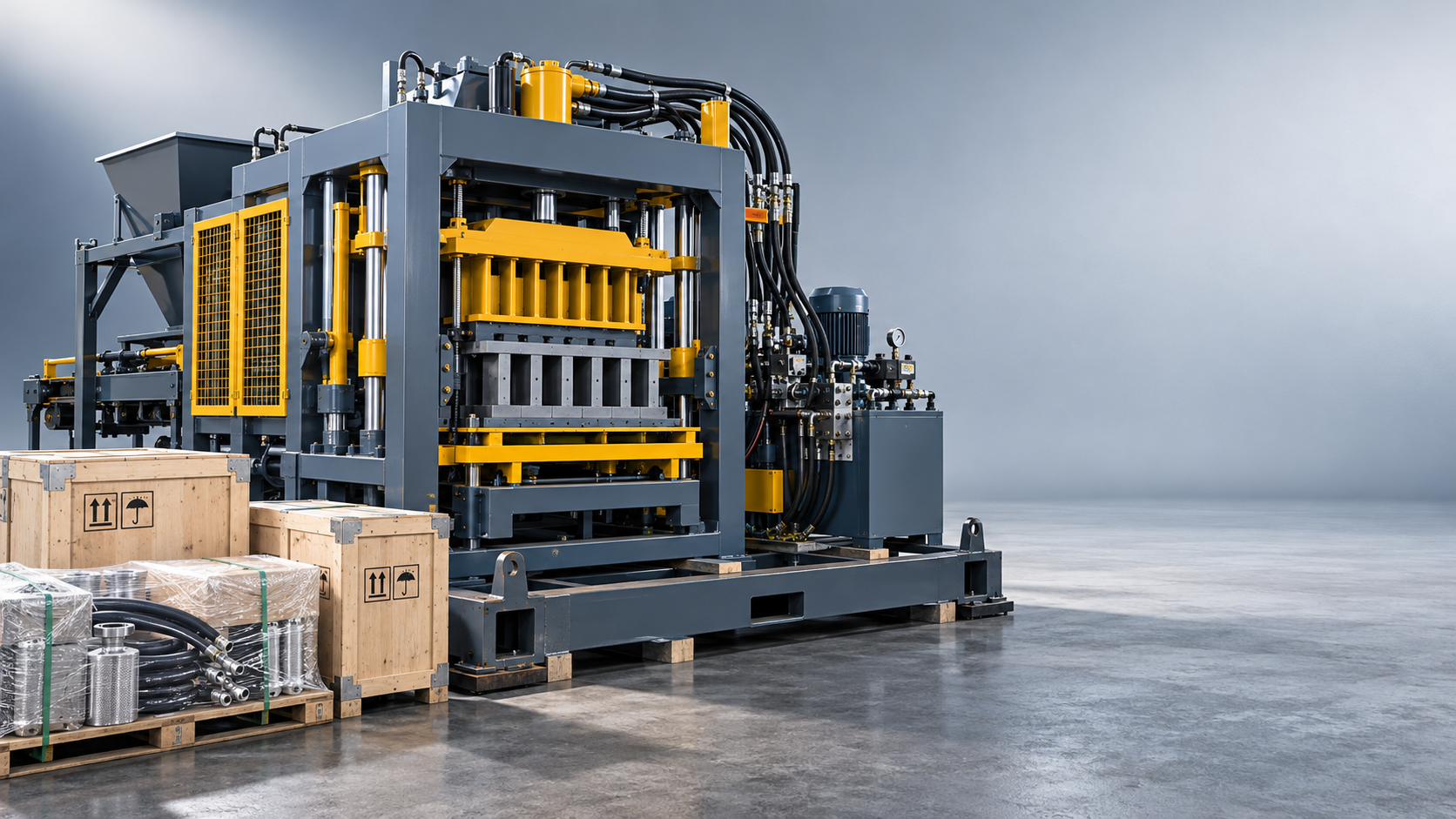
For a concrete block machine, relevant questions include aggregate characteristics, mold requirements, pallet compatibility, material feeding, and handling after forming. A standalone machine also places more responsibility on the purchaser to arrange mixing, conveying, and curing.
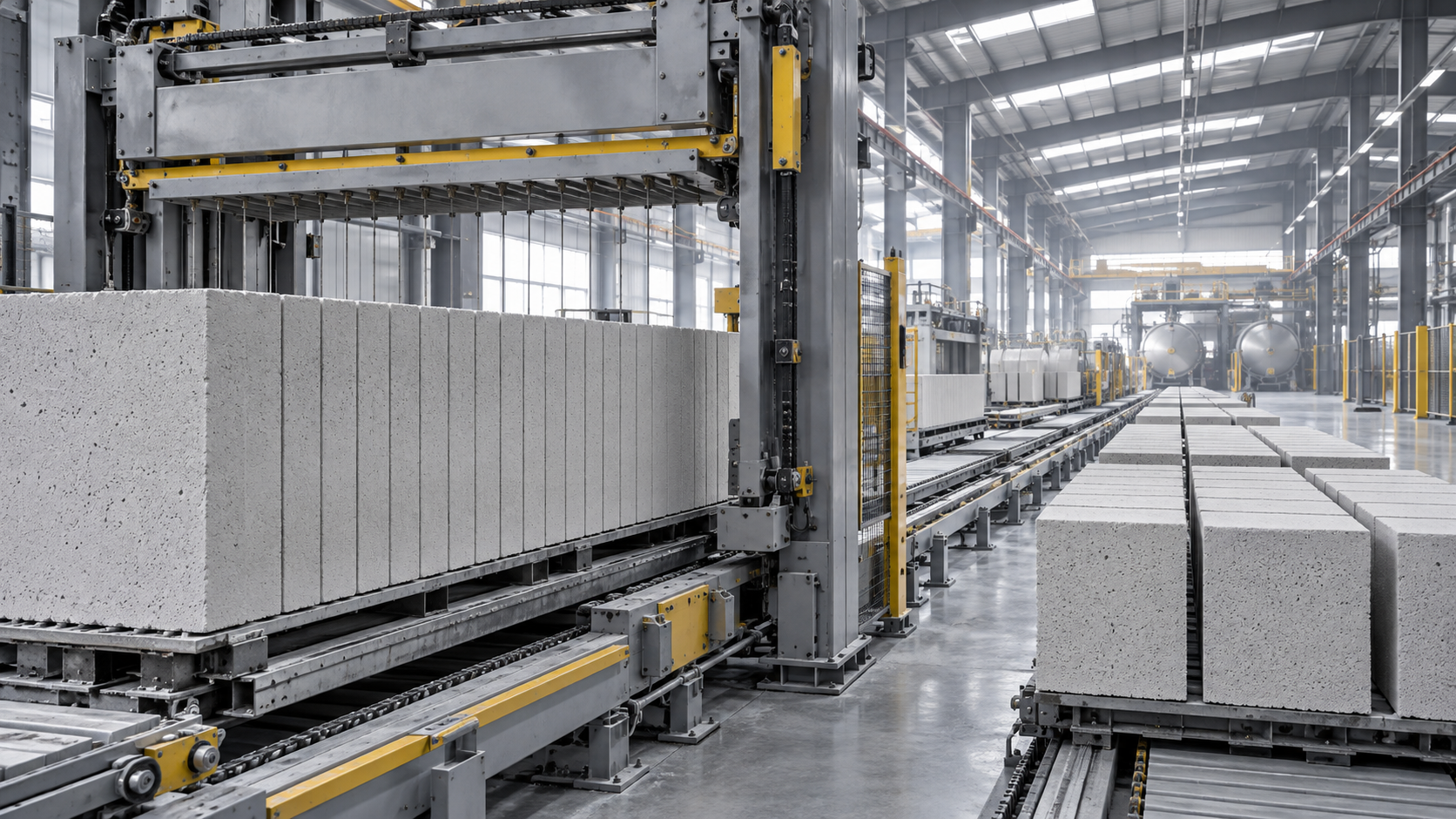
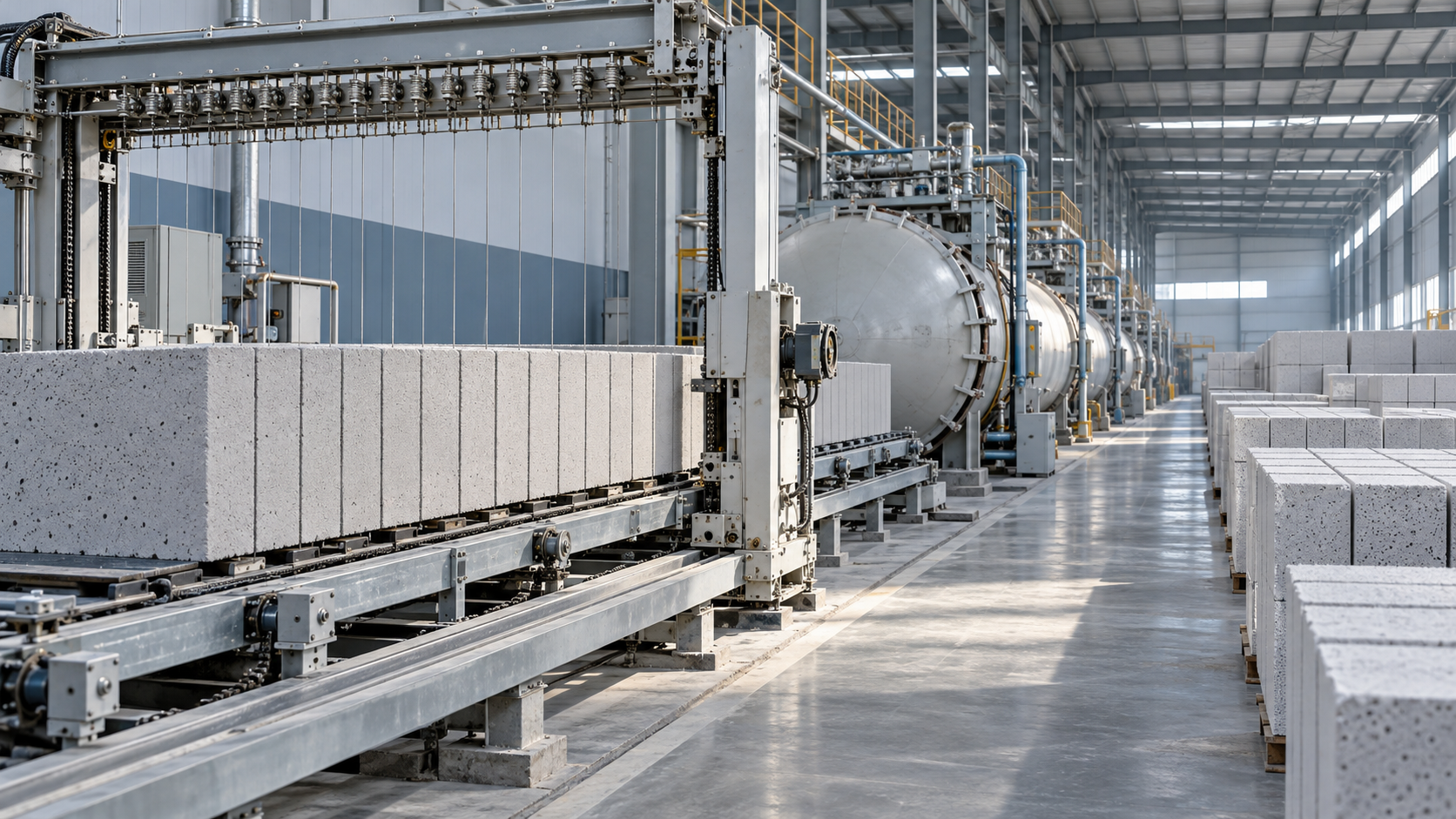
An aerated concrete block production line requires coordination across material preparation, batching, casting, cutting, and autoclave curing. Civil works, utilities, process control, and equipment interfaces affect the whole project. Experience delivering an integrated plant is therefore more relevant than experience exporting individual machines.
For a concrete batching plant, the assessment should focus on material storage, weighing, moisture control, discharge arrangements, and integration with the intended production operation. Site layout and access for maintenance can influence day-to-day usability as much as the nominal plant capacity.
A quartz stone production line introduces different concerns, including raw material preparation, mixing, forming, curing, and finishing. Reference projects should relate to the intended slab process and quality requirements. Hongfa’s broad product portfolio helps identify possible equipment sources, but each product category deserves its own technical review.
How should equipment be adapted for the destination?
Relevant export experience should appear in the questions a supplier asks before issuing a final specification. Destination voltage and frequency, available electrical capacity, raw materials, climate, utilities, and operator skills can all affect equipment selection.
Electrical adaptation involves more than changing the motor nameplate. The agreed configuration should address controls, protective devices, panel requirements, and the incoming power connection. Electrical drawings and component identification also help local maintenance staff diagnose faults after installation.
Raw materials deserve particular attention. A block machine may operate mechanically while producing inconsistent blocks if the aggregate grading or mix moisture differs from the assumptions used during selection. For a production line, material characteristics can influence several stages at once. Representative material information gives the supplier a sounder basis for recommending equipment and a process arrangement.
Site conditions also shape the design. Heat, dust, humidity, and cold can affect storage, lubrication, electrical enclosures, and maintenance access. A useful proposal explains the operating assumptions behind the configuration and identifies the site provisions needed to support it.
What should export packing and delivery arrangements cover?
International delivery should be planned around how the machinery will be unloaded, checked, stored, and assembled. Large equipment may travel partly dismantled, making clear identification essential.
A practical packing plan links package numbers to the packing list and assembly drawings. Sensitive electrical items, exposed machined surfaces, and components vulnerable to moisture need suitable protection. Lifting points and handling instructions help the receiving team prepare appropriate unloading equipment.
The supply agreement should also identify responsibility for transport arrangements, insurance where applicable, customs documentation, unloading, and storage. Ambiguous delivery language can leave an otherwise complete machine waiting at the destination while the parties resolve an overlooked responsibility.
For a production line, shipment sequence matters. Equipment needed early for assembly should be accessible when installation begins. Hongfa’s proposed packing and dispatch arrangements should fit the construction and installation schedule, especially where storage space is limited.
What installation and commissioning support should be included?
Installation support needs a defined scope. It may mean remote guidance, an engineer supervising local workers, or a broader service covering assembly and startup. Each arrangement can work, provided the purchaser understands the labor, tools, lifting equipment, and site preparation it must supply.
Before dispatch, the project should have agreed foundation requirements, equipment layout, utility connection points, and an installation sequence. Clarifying these items early reduces the chance that visiting engineers arrive before the site is ready.
Commissioning should progress beyond checking whether motors turn. Depending on the equipment, it may include safety checks, operation without material, trials with production materials, adjustment, and operator training. The agreement should define the materials, personnel, and utilities required for these activities.
Acceptance criteria should reflect the intended production task. For block equipment, relevant criteria may include product dimensions, consistency, and agreed output under stated conditions. For an integrated line, acceptance may also address coordination between stages. A useful agreement explains how performance will be measured and how unresolved items will be recorded and corrected.
How can overseas after-sales support be assessed?
After-sales capability becomes meaningful when a fault interrupts production. An overseas service arrangement should explain who receives the request, what information the operator should provide, and how the issue moves from diagnosis to corrective action.
Remote support works better when the machine has clear component labels, readable electrical diagrams, and accessible operating information. Photographs, alarm details, and a description of the sequence before a fault can help an engineer distinguish an equipment problem from a material, utility, or operating issue.
For spare parts, discuss three practical groups:
- Wear parts: components consumed through normal operation and requiring planned replacement.
- Parts that can stop production: components worth considering for initial stock because a failure could cause a lengthy shutdown.
- Locally obtainable components: standard items with sufficiently clear specifications for suitable local sourcing.
The initial spare parts package should reflect operating hours, maintenance capability, and replenishment time. A generic package may include many inexpensive items while omitting a component essential to restarting the line.
Warranty terms should explain coverage, exclusions, claim procedures, and responsibility for freight and service travel. Training should also cover routine inspection, safe adjustments, lubrication, and fault reporting so the operating team can use support effectively.
Do quality certificates and company awards prove export capability?
Quality management credentials can support an assessment of manufacturing procedures and traceability. Company awards may provide background about the business. Neither replaces evidence that the proposed equipment meets the project’s technical and contractual requirements.
Three questions should be kept distinct: how the manufacturer manages quality, whether the machine satisfies the applicable destination requirements, and whether the delivered system achieves the agreed production result. Each requires different evidence.
For example, a quality management certificate does not establish that a particular electrical cabinet suits the receiving site. Likewise, an equipment inspection before dispatch does not demonstrate successful operation with the purchaser’s raw materials. The documentation package should connect the ordered configuration, inspection results, operating instructions, and acceptance criteria.
What should you send Hongfa to obtain a useful export proposal?
A focused project brief makes it easier to judge the relevance of Hongfa’s response. Include the intended product, required output, raw material information, available site space, electrical supply, and preferred level of automation. Explain whether the order is for a standalone machine, an expansion, or a complete production line.
Ask for a proposal that identifies the equipment scope, site responsibilities, delivery arrangements, commissioning service, and initial spare parts provision. Request comparable project evidence for that configuration. This creates a practical basis for comparing suppliers because differences in scope become visible before price dominates the discussion.
Hongfa’s manufacturing history and range of building materials machinery provide a reasonable basis for a technical inquiry. The decision to proceed should rest on a proposal that connects relevant overseas project evidence with the actual production conditions, delivery obligations, and support needed for the new installation.
Next:No more content
Recommend
 Oct 29, 2026
What Export Experience Does Shandong Hongfa Building Machinery Have?
Assess Shandong Hongfa building machinery export experience through project records, delivery planning, and after-sales support. Discover what to verify before your next equipment purchase.
- Oct 29, 2026
What Do Reviews Say About Hongfa AAC Block Production Lines?
Hongfa AAC block production line reviews: Learn how to verify output, block quality, energy use, and service support before investing. Discover the evidence buyers should request.
- Oct 29, 2026
Is Shandong Hongfa a Reliable AAC Plant Supplier?
Is Shandong Hongfa a reliable AAC plant supplier? Explore key checks on operating references, raw materials, output guarantees, and support before making your investment decision.