Which Is More Durable: Color Tile or Concrete Roof Tile?
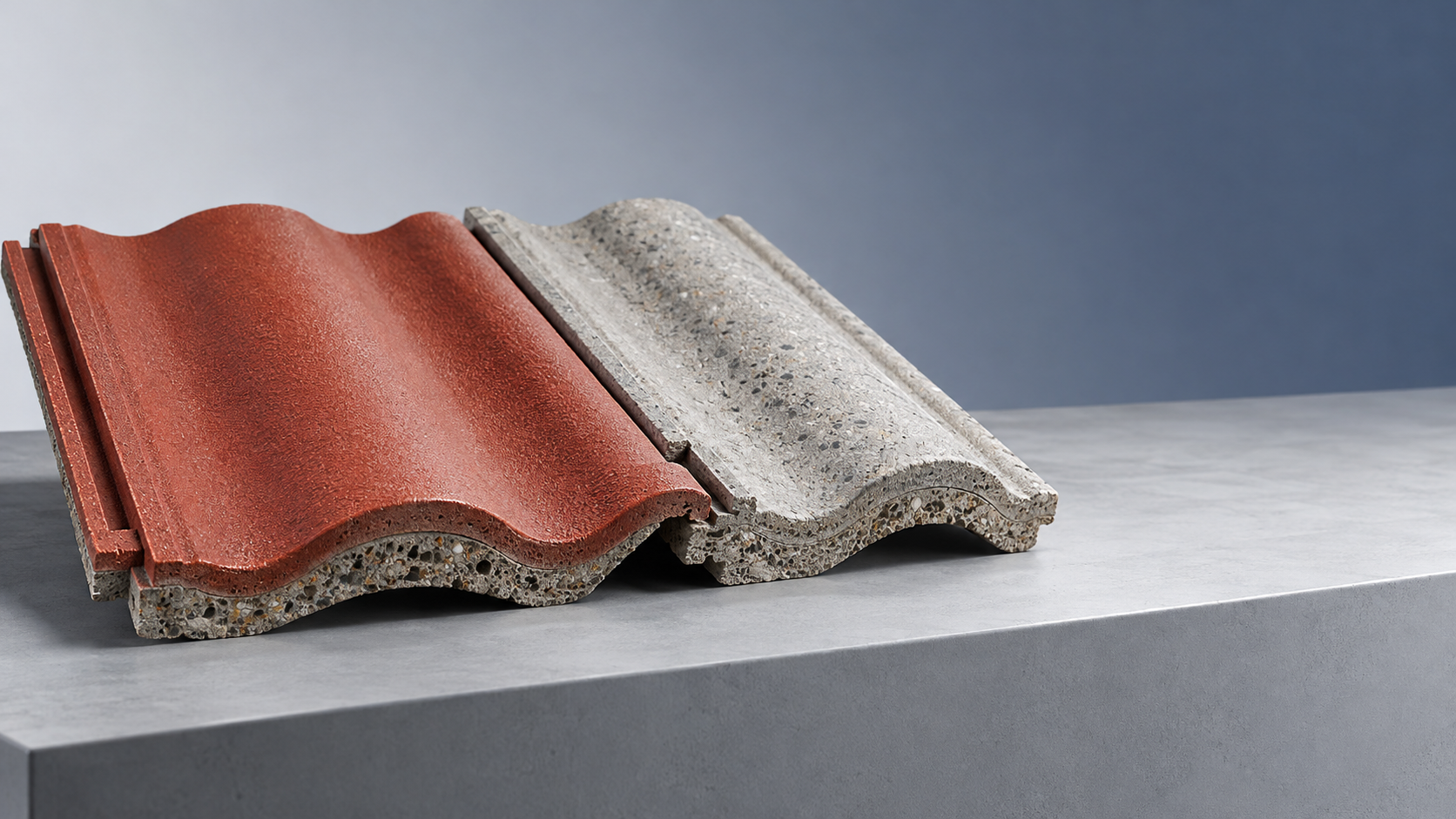
Which is more durable: color tile or concrete roof tile? There is no reliable winner until “color tile” is defined. It may mean colored concrete, glazed clay, or color-coated metal roofing. Colored concrete and ordinary concrete tiles share the same basic material; their durability depends on manufacturing quality and exposure, not simply their appearance. When comparing different materials, concrete offers a robust roof covering, but clay and coated metal have different strengths and failure risks.
This distinction matters when choosing roofing for a replacement project or evaluating tiles from a production line. A finish that fades can create an appearance problem without compromising the tile, while cracks, poor fixing, or unsuitable freeze–thaw performance can affect weather protection. Compare the tile body, surface finish, and installed roof system separately before deciding which product will last longer.
Are color tiles and concrete tiles actually different products?
“Color tile” describes appearance more clearly than composition. Before comparing quotations or samples, ask the supplier to identify the base material, how the color is applied, and which product specification applies. A painted cement-based tile should not be evaluated as though it were fired clay or a coated steel sheet.
If both samples are concrete, the comparison is primarily between manufacturing specifications and finish systems. A colored surface does not automatically make one stronger, and an uncoated appearance does not establish superior durability.
Does losing color mean a roof tile is wearing out?
Not necessarily. Appearance durability and structural durability are different. Pigment weathering, surface-coating erosion, and mineral deposits can change a roof’s appearance without proving that its tiles have lost their load-bearing capacity or weather resistance.
Color incorporated into the concrete body behaves differently from a surface-applied finish. Through-body pigmentation does not leave a separate paint film to peel, although the exposed surface can still weather. A coating can improve appearance and may reduce surface wetting, but its adhesion and weather resistance require separate evaluation.
White deposits on concrete tiles may be efflorescence: soluble salts carried to the surface by moisture. This is not the same as a crack or a coating failure. Persistent deposits accompanied by dampness below the roof, however, justify checking moisture entry, drainage, and ventilation rather than treating the issue as cosmetic.
Ask whether the warranty distinguishes color change, coating adhesion, tile integrity, and weather performance. A long appearance warranty should not be mistaken for coverage of the complete roof assembly.
Which material holds up better in the conditions on your roof?
Freezing weather and repeated rain
For concrete and clay, the concern is not simply whether water reaches the tile, but whether absorbed water can cause damage during repeated freezing and thawing. Pore structure, saturation, manufacturing quality, and drying conditions all influence performance. Water absorption results are useful, but they do not replace freeze–thaw testing where frost exposure is relevant.
Request evidence that the specific product is suitable for the intended climate. Check the test method, product identification, and acceptance criteria. Results measured under different methods may not be directly comparable, even when both suppliers describe their products as “low absorption.”
Strong sunlight and heat
Sunlight can affect pigments and organic coatings before the underlying roofing material fails. Fired clay color and a painted concrete finish do not weather in the same way, so color retention should be assessed against the actual finish rather than the label “color tile.”
Metal roofing expands and contracts with temperature changes. Its long-term performance depends partly on details that accommodate movement without damaging fasteners, seals, or connections. Concrete and clay roofs also need suitable junctions and flashing; a durable tile cannot compensate for poorly detailed interfaces.
Coastal exposure, hail, and wind
Salt exposure makes the protective system especially important for metal roofing. Scratches, exposed cut edges, incompatible metals, and unsuitable fasteners can create corrosion risks. Concrete or clay tile bodies do not undergo metallic corrosion, but their clips, screws, flashings, and supporting components may still be vulnerable.
Hail can fracture brittle tiles or dent metal, depending on impact severity and product construction. Neither thickness alone nor a visually heavy profile proves impact resistance. Where hail is a purchasing concern, look for relevant product test evidence.
Wind resistance is largely an installed-system issue. Tile profile, roof geometry, fixing pattern, perimeter details, and workmanship matter alongside the roofing material. A heavier concrete tile is not automatically secure without the required fixing arrangement.
What should you compare before accepting a durability claim?
A sample tile can reveal obvious defects, but it cannot establish long-term performance. Start with evidence for the exact product being supplied, then inspect whether delivered batches match that description.
- Confirm composition and finish. Identify concrete, clay, or metal, and determine whether the color is integral, glazed, painted, or another surface treatment.
- Request relevant performance results. For concrete and clay, these may include transverse strength, impermeability, dimensional tolerances, and climate-related testing. Metal roofing needs evidence appropriate to its substrate, protective coating, and fixing system.
- Check product traceability. A report should identify the tested product and applicable method. General factory literature does not establish that every profile or finish performs identically.
- Review installation requirements. Verify roof pitch limits, headlap, batten arrangement, fixing provisions, and any exposure-specific restrictions.
- Separate warranty coverage. Read exclusions concerning installation, coastal exposure, foot traffic, cleaning, coatings, and maintenance.
During delivery inspection, look for recurring cracks, distorted profiles, damaged interlocks, inconsistent dimensions, or poorly adhered finishes. A few transport-damaged units and widespread production defects call for different responses. Record the distribution of defects rather than judging the entire batch from one damaged tile.
Why can two concrete tiles have different durability?
Concrete tiles can look similar while having different internal quality. Aggregate grading, cement content, water control, forming, and curing influence the finished body. Color is only one part of the product.
Excess mixing water can increase porosity after drying. Insufficient or inconsistent water can also disrupt forming and hydration. The objective is a validated, repeatable mixture—not simply the lowest possible water addition. Aggregate moisture must be accounted for when controlling total mixing water.
Forming quality affects density, profile accuracy, and local weak points. Uneven thickness or damaged interlocks can create handling problems and compromise fit on the roof. Poor curing can leave a tile with inadequate strength development or increased susceptibility to surface defects, even when its initial appearance is acceptable.
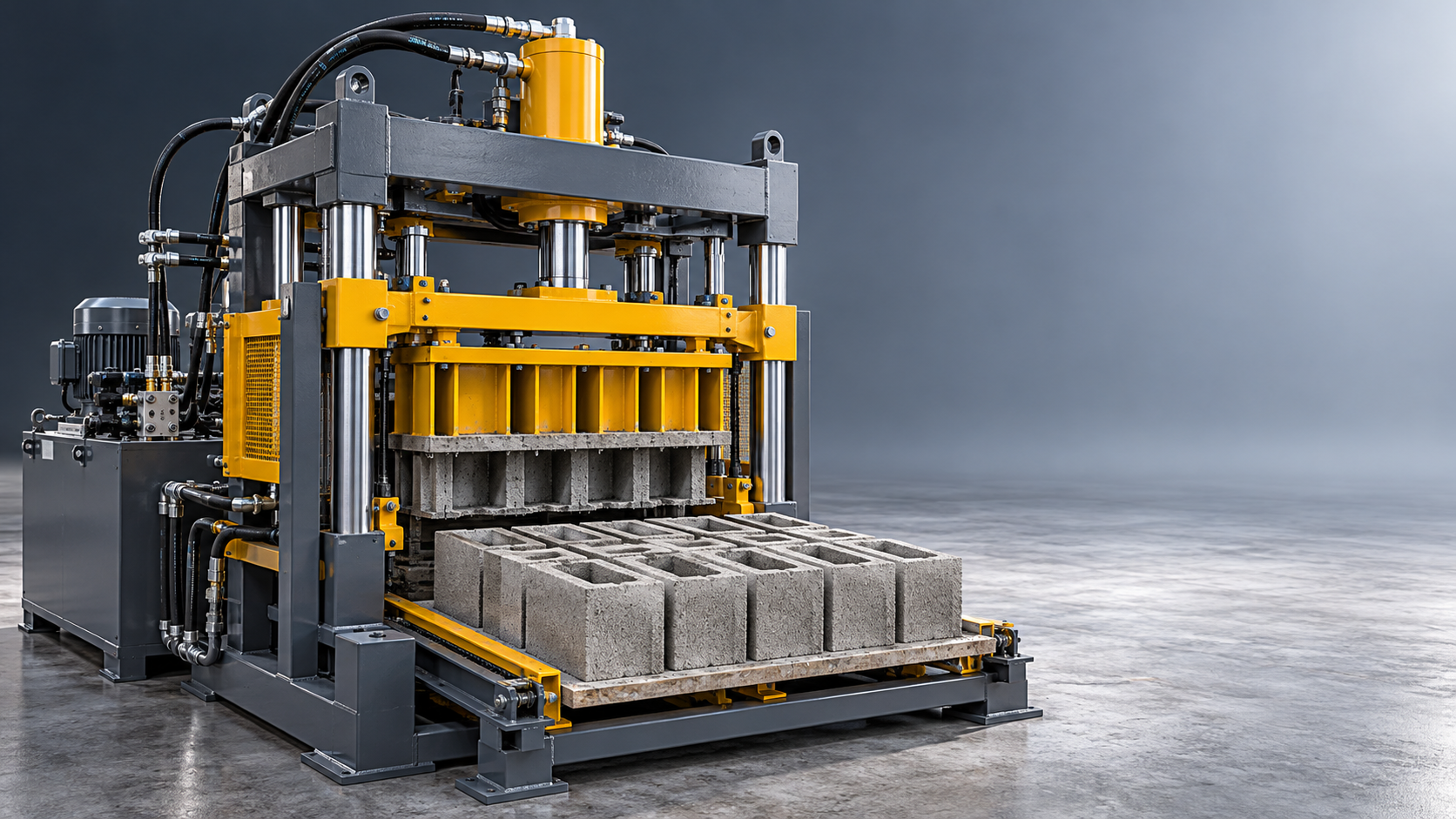
For manufacturers evaluating equipment, useful questions concern measurable process control: dosing repeatability, mixing uniformity, profile consistency, controlled handling, and curing management. Pigment and coating application require their own controls. A faster forming machine cannot, by itself, correct unstable raw materials or inadequate curing.
Production checks should connect operating conditions with finished-tile testing. Record material batches, mixture adjustments, curing conditions, and test results so that recurring defects can be traced. This provides a stronger basis for improvement than adding a thicker decorative finish to conceal inconsistent tile bodies.
Can a durable tile still produce a short-lived roof?
Yes. Tiles are only one layer of a weather-protection system. Leaks around valleys, roof penetrations, ridges, or abutments may originate in flashing or underlay rather than in the tile material. Replacing intact tiles with a different material will not necessarily resolve those defects.
When investigating leakage, begin with its location and surrounding details. Check displaced or cracked tiles, blocked drainage paths, damaged flashing, and underlay condition where accessible. Water can travel before becoming visible indoors, so the ceiling stain is not always directly below the entry point.
Roof replacement also requires a structural check when changing material weight. Concrete tiles generally impose a different dead load from lightweight metal roofing. Existing framing should not be assumed suitable merely because the new covering fits the same roof area.
Foot traffic is another avoidable source of damage. Tiles can crack under concentrated loads, particularly when stepped on in unsupported areas. Use access methods appropriate to the product and roof condition; inspection and repair should not create additional breakage.
Is a coating enough to extend the life of old concrete tiles?
A compatible restoration coating may improve appearance and surface protection on sound tiles. It does not restore lost section, repair structural cracks, correct distorted profiles, or replace defective flashing and underlay.
Before recoating, establish whether the problem is cosmetic weathering, surface deterioration, or failure elsewhere in the roof. Loose material, unsuitable cleaning, trapped moisture, and incompatible previous coatings can undermine adhesion. Aggressive pressure washing may damage surfaces or force water beneath the covering.
Where tiles are extensively cracked, crumbling, or losing material, obtain a condition assessment before spending on refinishing. The decision should address the remaining roof assembly, not just whether a new coating can make the exposed surface look uniform.
What is the practical choice when comparing two quotations?
For colored concrete versus plain concrete, prioritize verified body performance, batch consistency, climate suitability, and installation details. Evaluate color retention and recoating needs separately. Paying more for a finish is not the same as buying greater structural durability.
For concrete versus glazed clay, compare the specific products’ frost suitability, strength, dimensional accuracy, finish performance, and compatibility with the roof. Neither the word “glazed” nor “concrete” establishes a universal service-life advantage.
For concrete versus color-coated metal, first resolve structural loading and exposure requirements. Then compare tile breakage and maintenance risks against metal corrosion protection, coating maintenance, and fixing requirements. Request a written material description whenever the quotation says only “color tile”; without that detail, even a careful price comparison may be comparing entirely different roofing systems.
Next:No more content
Recommend
 Oct 31, 2026
Which Is More Durable: Color Tile or Concrete Roof Tile?
Which is more durable: color tile or concrete roof tile? Compare materials, weather resistance, and manufacturing quality to choose the right roofing with confidence.
- Oct 31, 2026
What Does Hongfa AAC Factory Planning Consulting Include?
Explore what Hongfa AAC factory planning consulting should cover, from raw materials and layouts to utilities and deliverables, to make informed investment decisions.
- Oct 30, 2026
Which Hongfa Hydraulic Brick Machine Specifications Should Buyers Check?
Compare Hongfa hydraulic brick making machine specifications, from forming pressure and output to molds and power demand. Discover what to verify before investing in your production line.