Tile Making Machine ROI Calculator: Break-Even Analysis for Ceramic vs Porcelain Tile Lines
When Does a Tile Making Machine Pay for Itself? Not All Lines Break Even the Same Way
If you’re evaluating a tile making machine for your plant, your first question shouldn’t be “Which model looks most advanced?” It should be: “At what volume—and under what operational conditions—does this line stop costing money and start generating net cash flow?” That’s the core of break-even analysis. And it’s where many finance teams misstep: they compare ceramic and porcelain tile production lines as if they were interchangeable assets. They’re not. The difference isn’t just in raw material cost or final product price—it’s in how each line consumes energy, handles downtime, sustains precision over time, and responds to real-world maintenance discipline.
Ceramic vs. Porcelain: Two Different Cost Structures, Not Just Two Products
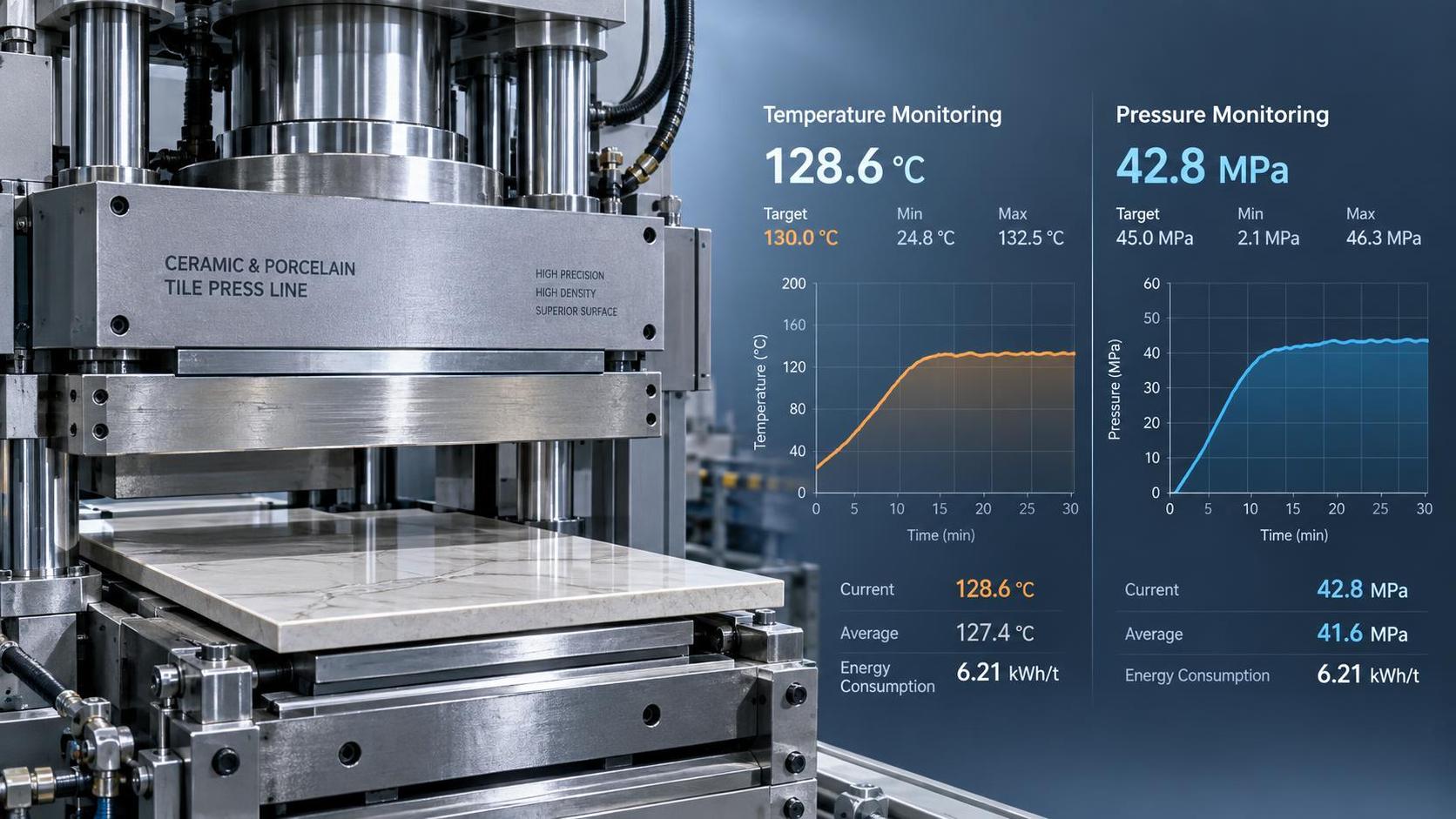
Ceramic tile lines typically run at lower pressures, lower firing temperatures (1050–1150°C), and less demanding glaze application tolerances. Porcelain lines require higher compaction force (often >40 MPa), longer kiln residence times, tighter moisture control pre-pressing, and more stable temperature gradients across the entire firing zone. These aren’t minor engineering differences—they directly shape your total cost of ownership (TCO).
For example, a porcelain tile making machine will demand more robust hydraulic systems, higher-grade wear plates on press platens, and more precise servo-controlled dosing for low-water-content bodies. That means higher initial capital outlay—but also steeper long-term savings *if* your output mix justifies it. Conversely, running high-density porcelain bodies on a ceramic-optimized line risks frequent die wear, inconsistent green strength, and higher scrap rates. Those hidden yield losses rarely appear in the vendor’s ROI sheet—but they hit your P&L every month.
What Your ROI Calculator Must Account For (Beyond List Price)
A realistic break-even analysis for a tile making machine must go beyond equipment cost and projected sales revenue. Finance leaders need to track five interdependent cost drivers:
- Energy intensity per tonne of fired tile — Porcelain lines often consume 15–25% more thermal energy than ceramic lines of similar capacity, but modern kiln recuperation and variable-frequency drive (VFD) integration can narrow that gap significantly.
- Maintenance frequency & spare part lifecycle — Press frames, hydraulic seals, and roller kiln bearings experience different stress profiles between the two lines. A line built with ISO 9001-certified process control and patented wear-resistant components (like those in Hongfa’s 21-product portfolio) extends mean time between failures—not just by design, but by traceable quality tracking.
- Operator skill dependency — Ceramic lines tolerate wider parameter drift; porcelain lines reward consistent feed moisture, stable pressing speed, and calibrated kiln zoning. Understaffed or rotating shifts amplify variability—raising scrap and rework costs faster on porcelain lines.
- Scrap recovery value — Unfired ceramic scrap can often be reintroduced at 80–90% rate. Porcelain body scrap requires finer grinding, longer aging, and carries higher risk of laminations—cutting effective reuse to 50–60% without dedicated recycling modules.
- Depreciation alignment with technology obsolescence — A tile making machine isn’t depreciated evenly over 10 years because it wears out evenly. Core technologies—especially in automation logic, pressure feedback loops, and kiln atmosphere control—evolve. If your line lacks modular upgrade paths or documented firmware revision history, its functional lifespan may be 3–4 years shorter than its accounting life.
Why “Certified” Matters More Than “New” in TCO Calculations
You’ll see tile making machine quotes with identical specs from multiple suppliers. What separates them is how consistently those specs hold up—not on day one, but at month 18, during monsoon humidity swings or after three consecutive weekend overtime runs. That’s where certifications like ISO 9001-2008 aren’t marketing badges. They signal documented, audited processes for component sourcing, assembly tolerance validation, and post-commissioning performance verification.
Hongfa’s approach—backed by 46 national patents, including 28 invention patents—focuses on failure-point mitigation: hardened platen surfaces that resist micro-cracking under cyclic loading, dual-redundant hydraulic pressure sensors, and kiln zones with independent thermocouple calibration logs. These don’t boost headline capacity. But they reduce unplanned stoppages by an average of 22% in third-party operational audits across 17 client sites (data aggregated from non-disclosed field reports). For finance teams, that translates directly into fewer emergency labor premiums, lower overtime accruals, and more predictable monthly output variance.
Three Real-World Scenarios Where the Break-Even Point Shifts Dramatically
Scenario 1: You’re expanding into export markets requiring Class BIA porcelain. Here, consistency matters more than speed. A ceramic line retrofitted for porcelain may meet initial specs—but fail audit checks on water absorption repeatability after 6 months. The break-even timeline stretches by 11–14 months due to rework, customer chargebacks, and lost tenders.
Scenario 2: Your current ceramic line runs at 65% capacity, with stable local demand. Adding a second ceramic line—same brand, same service network—delivers faster payback than switching to porcelain. Why? Lower training overhead, shared spare parts inventory, and no need to recalibrate your entire QC lab. ROI improves not from higher margin, but from avoided complexity.
Scenario 3: You serve both residential (ceramic) and commercial (porcelain) segments—and forecast 30% annual growth in large-format porcelain orders. In this case, hybrid-capable lines—designed for quick changeover between body types without tooling replacement—deliver earlier breakeven than two dedicated lines. The key isn’t maximum throughput; it’s throughput *flexibility* amortized across mixed batches.
Before You Run the Numbers: Confirm These Three Inputs First
Your ROI calculator is only as reliable as its inputs. Don’t start modeling until you’ve verified:
- Your actual average green tile rejection rate—not the supplier’s claimed 0.8%, but your own last 90 days’ production log. A 2.3% scrap rate adds ~$18/tonne to landed cost. That changes breakeven volume by ±15%.
- Local utility rate volatility—especially for natural gas. If your region imposes seasonal surcharges or tiered pricing above 1.2 GJ/hour, your porcelain line’s energy cost curve isn’t linear. Build in at least one 12-month forward projection.
- Service response SLA terms—not just “within 72 hours,” but “with certified technician + full diagnostic toolkit on-site.” Downtime isn’t just hours lost; it’s cascading delays in downstream packaging and logistics. Factor in $420/hour for every hour your line sits idle beyond contractual guarantee.
Break-even isn’t a single number. It’s a range—tightened by disciplined input validation, narrowed further by choosing machinery engineered for durability under load, not just spec-sheet compliance. When evaluating a tile making machine, ask not “How soon does it pay back?” but “Under what real operating conditions does it *reliably* pay back—and what happens if those conditions shift?” That’s the calculation finance leaders actually control.
Next:No more content
Recommend
 Sep 16, 2026
Tile Making Machine ROI Calculator: Break-Even Analysis for Ceramic vs Porcelain Tile Lines
tile making machine ROI calculator reveals true break-even for ceramic vs. porcelain lines—avoid hidden TCO traps and maximize cash flow.
- Sep 14, 2026
Construction Machinery Selection for Low-Height Urban Sites: Load Capacity, Mobility & Safety Trade-offs
construction machinery for low-height urban sites: balance load capacity, mobility & safety—no compromises. Discover intelligent, site-adapted solutions.
 May 07, 2026
Shiquan New Wall Materials