How Long Does It Take to Train AAC Plant Operators?
Training AAC plant operators can take anywhere from several weeks to several months. Basic instruction on a single, established workstation may take a few weeks, while independent operation across changing production conditions generally requires a longer period of supervised work. A new plant, an unfamiliar automated system, or responsibility for autoclaves and process adjustments can extend the timeline further.
These are planning estimates, not guaranteed training periods. A useful distinction is whether training covers routine operation only or also includes safe shutdown, fault response, quality checks, and coordination with other stations. Attendance at a course does not by itself establish that someone can run a shift independently.
What does the training timeline cover?
An autoclaved aerated concrete plant brings together raw material preparation, mixing, casting, pre-curing, cutting, autoclaving, and finished-product handling. Few roles require the same depth of knowledge at every stage. Training time should therefore be tied to a defined workstation and the decisions permitted there.
The following ranges are illustrative planning allowances, not established industry standards. They assume access to equipment, instruction, and repeated production opportunities; actual schedules require confirmation against the plant’s procedures and the trainee’s experience.
The periods overlap rather than add up automatically. A trainee can begin supervised station work during familiarization. Conversely, a production interruption can stretch calendar time without adding useful operating experience.
Which parts of an AAC line take longer to learn?
Raw material preparation and batching. Trainees learn how materials reach the mixer, where quantities are measured, and how to recognize problems such as a blocked feed or an unexpected reading. Water content in sand slurry and variation in raw materials affect the mix; a trainee needs to understand which measurements are available and who is authorized to change a recipe. Learning the controls is usually quicker than learning to recognize when the incoming material has changed.
Mixing and casting. Instruction includes the sequence for adding ingredients, monitoring the mix, filling molds, and recording batch information. The expansion stage is sensitive to the recipe and process conditions. A mold that rises differently from previous batches is a reason to report and investigate, not an invitation to make several simultaneous adjustments. Tracing the batch back to its materials and settings takes practice.
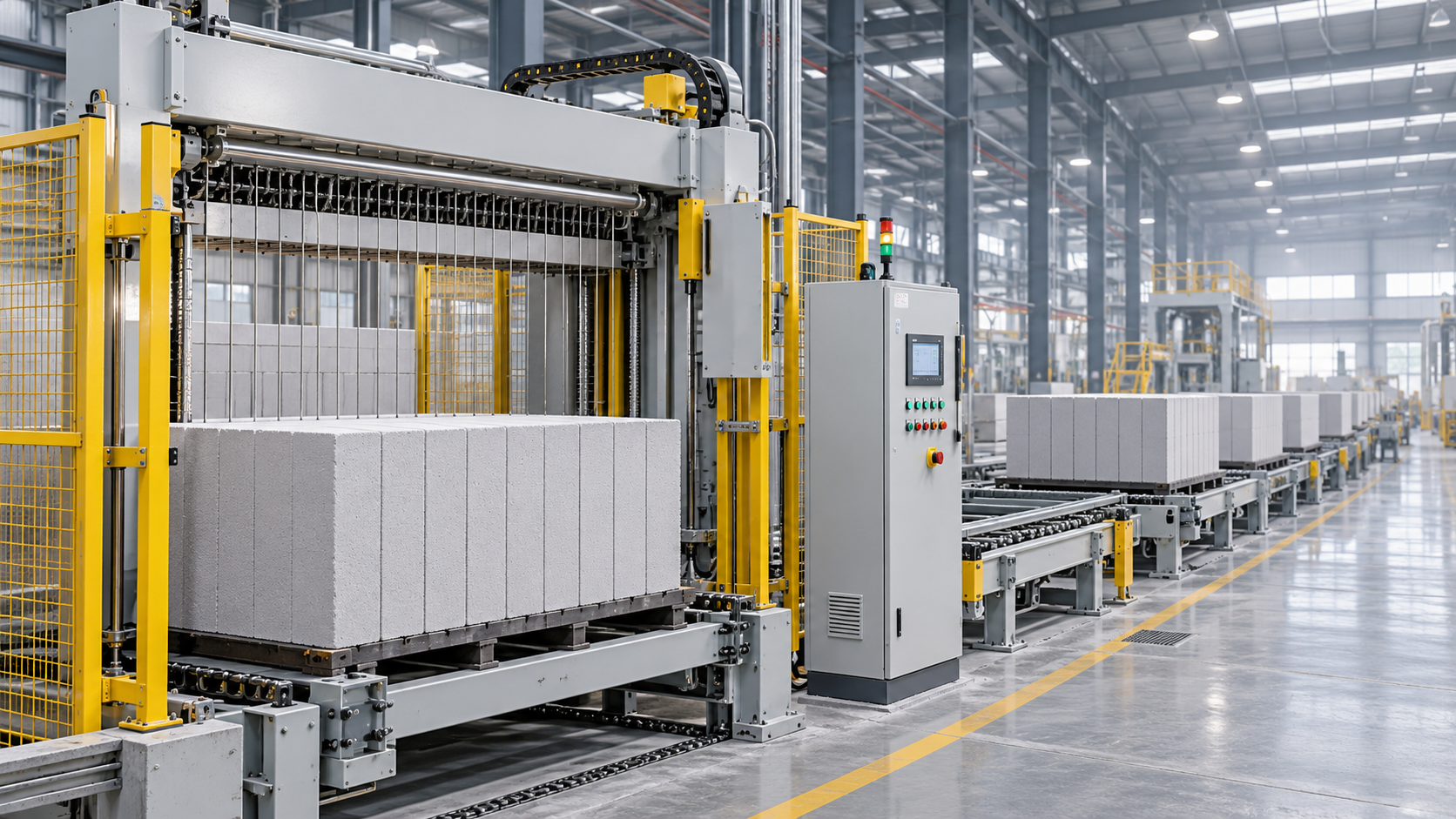
Pre-curing and cutting. The material must develop enough green strength to be handled and cut without excessive damage. Training therefore involves recognizing the condition of the cake as well as operating the cutting equipment. A cake that deforms during cutting can point to insufficient strength, handling damage, or an equipment issue. Replacing cutting wires alone will not resolve every defect.
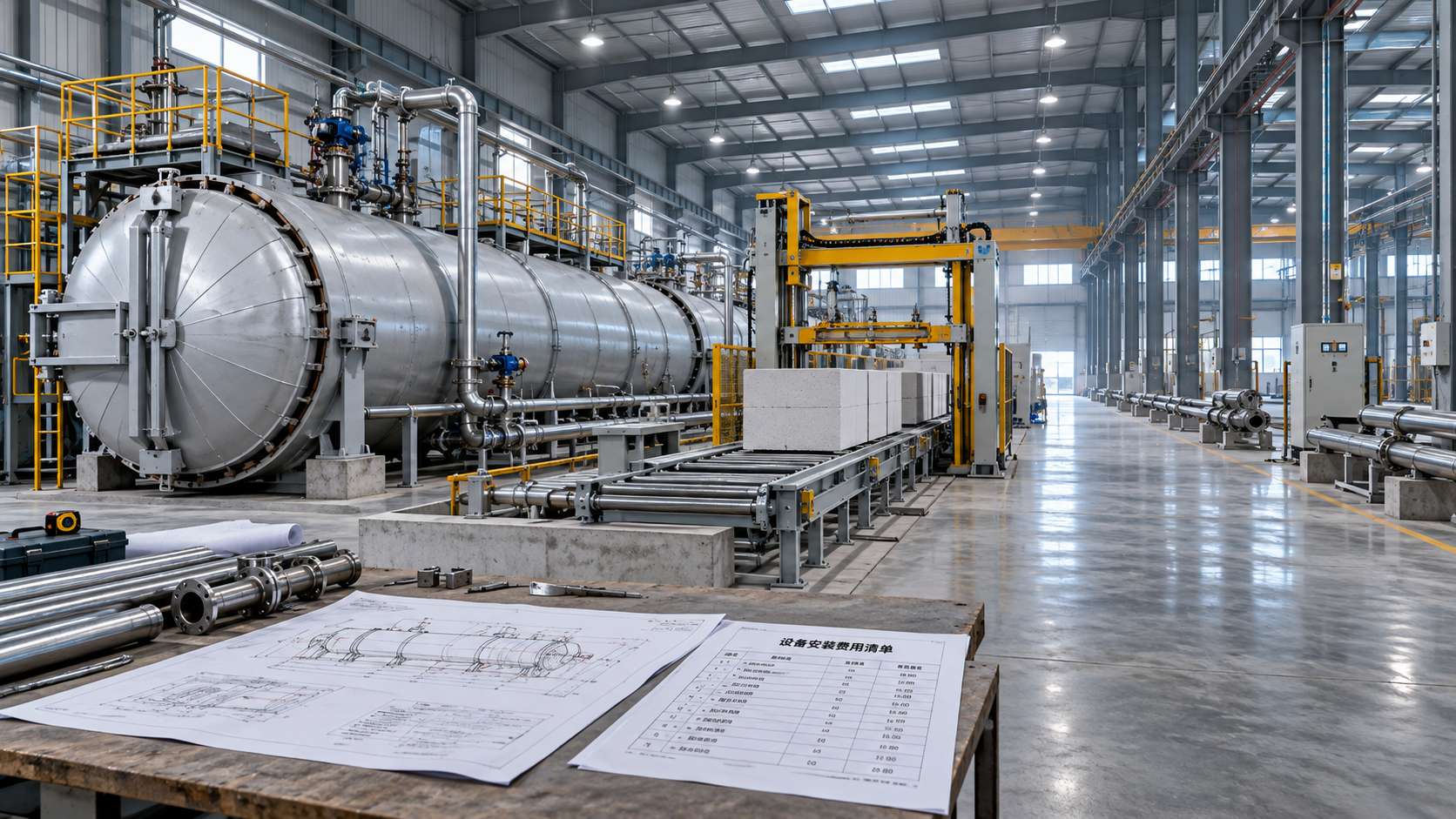
Autoclaving. Pressure vessels introduce hazards that require dedicated instruction and authorization under the site’s procedures. Training covers the loading sequence, door interlocks, cycle monitoring, communication between stations, and the conditions required before opening. No trainee should bypass an interlock or open a vessel based only on a timer or an assumption that pressure has fallen. Practical work remains supervised until the site’s competency and authorization requirements are met.
Finished-product handling and quality checks. Damage after curing can be confused with defects formed earlier. A trainee needs to distinguish obvious handling damage from cutting-related marks and to record where and when a defect was found. Measurement and sampling follow the plant’s specified method; visual appearance alone does not establish that a batch meets its intended requirements.
Does automation shorten operator training?
Automation can reduce the number of manual actions required during a normal cycle. It does not remove the need to understand the sequence, the meaning of alarms, or the relationship between a screen indication and the physical state of the equipment. A trainee who can select a recipe on a display still needs to know whether the correct materials are available and whether the line is ready to receive the batch.
Training can be shorter when the interface, recipes, and alarm messages are familiar from similar equipment. It can take longer when a plant uses unfamiliar controls or when several machines exchange signals. For example, a cutting station may stop because a downstream transfer is unavailable; restarting the cutter without understanding that dependency can create another stoppage.
Manual and automated lines also place emphasis on different skills. Manual handling requires close attention to sequence and physical positioning. An automated line demands confidence in status indications, permissions, and recovery procedures. Both require clear boundaries on which faults can be reset locally and which require maintenance or supervisory intervention.
How does previous experience change the schedule?
Experience with industrial machinery is useful, especially for lockout awareness, reading equipment status, and communicating during shift changes. Experience with concrete batching can also shorten the introduction to weighing and material flow. Neither automatically transfers to AAC expansion, green-cake cutting, or pressure-vessel operation.
A practical starting point is to assess skills by station. Someone familiar with automated conveyors may progress quickly through normal transfer sequences but still need substantial instruction on recognizing a poorly pre-cured cake. A trainee with AAC experience from another plant may understand the process while needing time to learn different interlocks, equipment layouts, and recipes.
Language and documentation affect the calendar as well. Training moves more slowly when screen messages, manuals, and shift records are not understood consistently. Clear terminology for molds, transfer positions, alarms, and vessel status helps prevent a handover from becoming an exercise in guessing what happened.
When can supervised work become independent work?
Time spent beside a machine is a weak measure on its own. Independent operation is more convincingly demonstrated when the trainee performs the assigned sequence consistently, explains the limits of the role, and responds correctly to realistic deviations. Assessment should use the actual plant procedures and equipment configuration.
For a cutting station, that might include preparing the equipment, recognizing an abnormal cake condition, stopping the process through the prescribed control, and communicating the problem without entering a hazardous area. For batching, it could include identifying a missing material or inconsistent reading and following the approved escalation route rather than changing a setpoint without authorization.
Some events are too infrequent or hazardous to wait for during a normal shift. In those cases, walkthroughs, simulations, or supervised discussions of an alarm scenario can test understanding. They supplement hands-on production; they do not replace any practical demonstration required by the plant’s procedures.
Sign-off should also identify what remains outside the assignment. Approval to run a normal cycle does not automatically include changing recipes, clearing a mechanical jam, maintaining electrical equipment, or authorizing an autoclave door to open. Those activities require their own training and permissions.
Why can commissioning make training take longer?
During commissioning, equipment may be tested while settings, material behavior, and operating routines are still being established. A trainee can learn a great deal from this phase, but an unstable process makes it harder to distinguish a normal operating pattern from a temporary adjustment. Training records should identify whether a procedure has been finalized and whether subsequent changes require refresher instruction.
Production may also be interrupted by installation work, material shortages, or mechanical adjustments. A trainee who observes one complete cycle and then waits a long time for the next has less opportunity to repeat the sequence. Calendar weeks are therefore less informative than the number and variety of supervised cycles actually completed.
Training at commissioning is most useful when responsibilities are clear: who explains the equipment sequence, who controls the line during a demonstration, and who records changes to the operating procedure. Equipment documentation, control-system instructions, and site-specific safety procedures should agree before they are used as the basis for independent operation.
What happens after initial sign-off?
Competence develops with exposure to different shifts, raw material conditions, and production interruptions. Early independent work can be limited to routine conditions, with an experienced person available when an unfamiliar alarm or quality issue appears. A review of shift records and rejected or damaged material can reveal whether the same uncertainty is recurring.
Refresher training is particularly relevant after a control-system change, a revised recipe, replacement of major equipment, or a long absence from a workstation. It can be focused on the changed sequence rather than repeating every introductory lesson. Where a change affects an interlock or pressure-vessel procedure, the revised authorization process takes precedence over previous sign-off.
A realistic schedule leaves room for this follow-up. The point at which someone first runs a station alone and the point at which they can handle a wider range of conditions are separate milestones, and both should be visible in the training record.
Recommend
 Nov 07, 2026
Who Pays for Supplier Engineers During Overseas AAC Installation?
Who pays for supplier engineers during overseas AAC plant installation? Explore common cost arrangements and contract terms to avoid surprises.
- Nov 07, 2026
How Long Does It Take to Train AAC Plant Operators?
How long does it take to train AAC plant operators? Explore practical timelines, safety requirements, and the skills needed for confident operation.
- Nov 06, 2026
How to Choose AAC Plant Capacity for Your Market
How do I choose the right AAC plant capacity for my market? Explore demand, production bottlenecks and costs to make a confident investment decision.