How to Verify a Block Machine Supplier's Factory Capacity
To verify a concrete block machine supplier’s factory capacity, ask for evidence that connects its facilities and current workload to your specific order. A large workshop or a long equipment list may show that a company has resources, but neither proves it can build, test, and ship your machine within the promised schedule.
Start with your machine configuration and required delivery date. Then examine where the equipment will be made, which operations the supplier performs itself, how much work is already scheduled, and what testing can be completed before shipment. The goal is not to identify the largest factory; it is to establish whether the supplier has enough suitable capacity for your project.
What does factory capacity mean for a block machine order?
Factory capacity is the supplier’s ability to complete a defined scope of work with the people, equipment, materials, and time available. For a standalone block machine, the critical work may include fabrication, machining, assembly, electrical wiring, and testing. A complete production line adds coordination between the block machine and other equipment, such as batching, conveying, and handling systems.
Keep two different measurements separate:
- Machine production capacity: the number of blocks a machine can produce under specified operating conditions.
- Supplier factory capacity: the manufacturer’s ability to produce and deliver the equipment you order.
A quotation may describe blocks per cycle or a projected daily output. Those figures help assess whether the machine suits your production plan, but they do not establish how many machines the supplier can build or whether your order fits its current schedule.
Capacity also depends on the configuration. A supplier may be comfortable assembling a standard machine but need additional engineering time for unusual block sizes, customized molds, a different electrical supply, or integration with equipment from another manufacturer. Ask for the schedule to be based on the exact scope in your quotation, not on a typical machine.
Which documents should you request before visiting?
Begin with a short evidence request linked to your proposed order. Useful documents include:
- A production scope showing which components and operations are handled in-house and which are outsourced.
- A current equipment list identifying the machinery relevant to your order, such as cutting, machining, welding, and lifting equipment.
- A proposed manufacturing schedule with major milestones for drawings, fabrication, purchased components, assembly, testing, packing, and shipment.
- A description of the inspection and factory testing planned for your particular machine or line.
- Examples of completed equipment with a comparable configuration, supported by records the supplier is permitted to share.
Look for consistency across the documents. If the quotation includes an automated handling system, for example, the schedule should show how that system will be supplied, integrated, and tested. If the equipment list includes machining centers, ask which parts of your machine will actually be produced on them.
Confidentiality may limit access to other customers’ names, prices, or complete contracts. A supplier can still provide redacted records, photographs of comparable assemblies, or a description of the work performed. The objective is to establish relevance, not to obtain another buyer’s commercial information.
How can you tell whether the workshop matches the supplier’s claims?
A factory visit is most useful when it follows the route your equipment will take: fabrication, machining, assembly, electrical work, inspection, and packing. Ask the supplier to identify the areas and people responsible for each stage. If the order involves multiple sites, establish which site will handle each major operation and where final inspection will take place.
Do not judge capacity by floor space alone. A large building may contain storage, unrelated products, or equipment that is not available for your order. A smaller, organized workshop can be suitable for a standard machine if it has the necessary processes and sufficient time in its production plan.
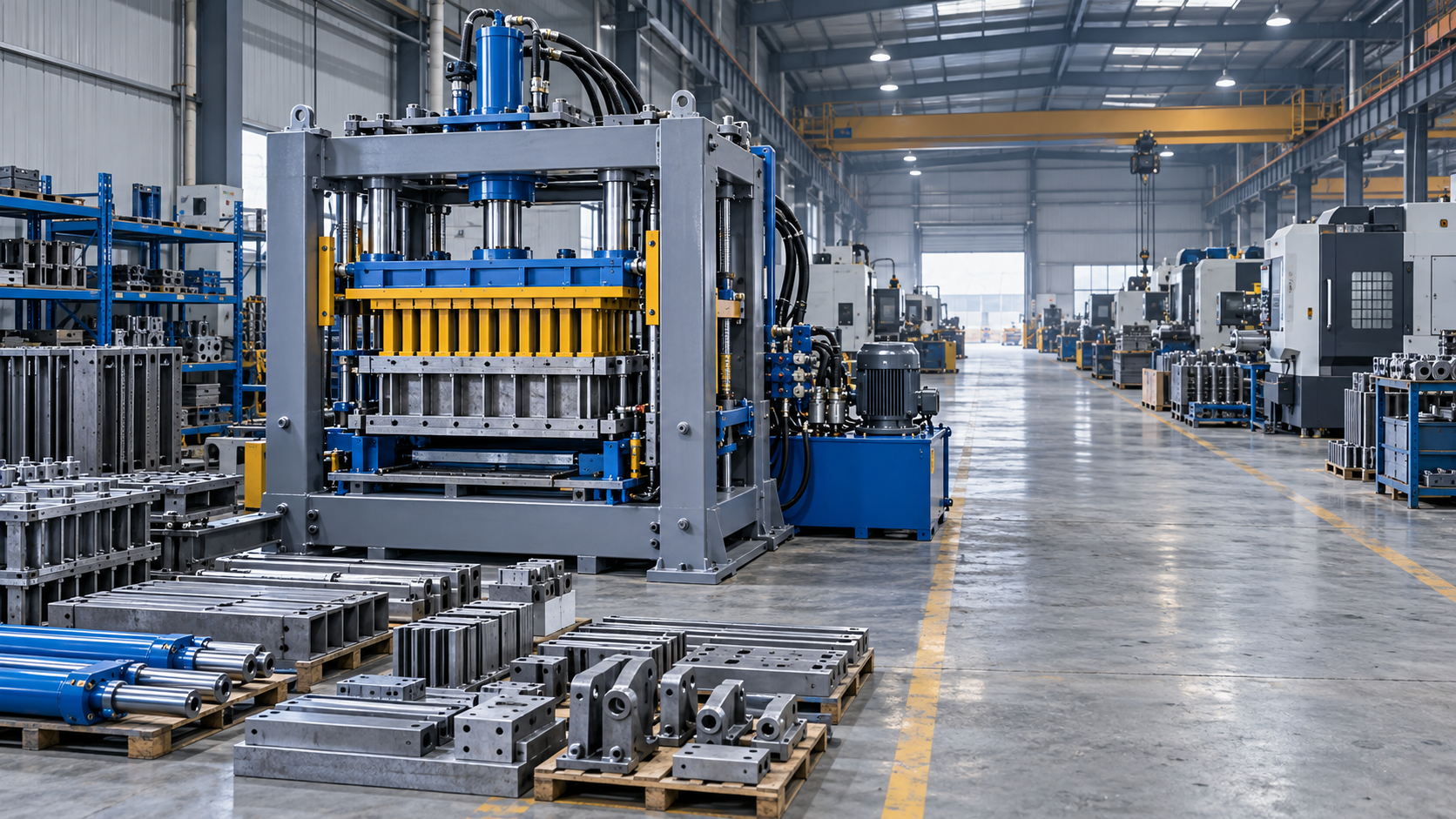
During the visit, look for work in progress that is relevant to block machinery. A machine frame under fabrication, mold components being machined, or a block machine in assembly can be more informative than a display of finished products. Ask how the supplier checks critical interfaces, such as the fit between a mold, vibration table, and machine frame, and how adjustments are recorded.
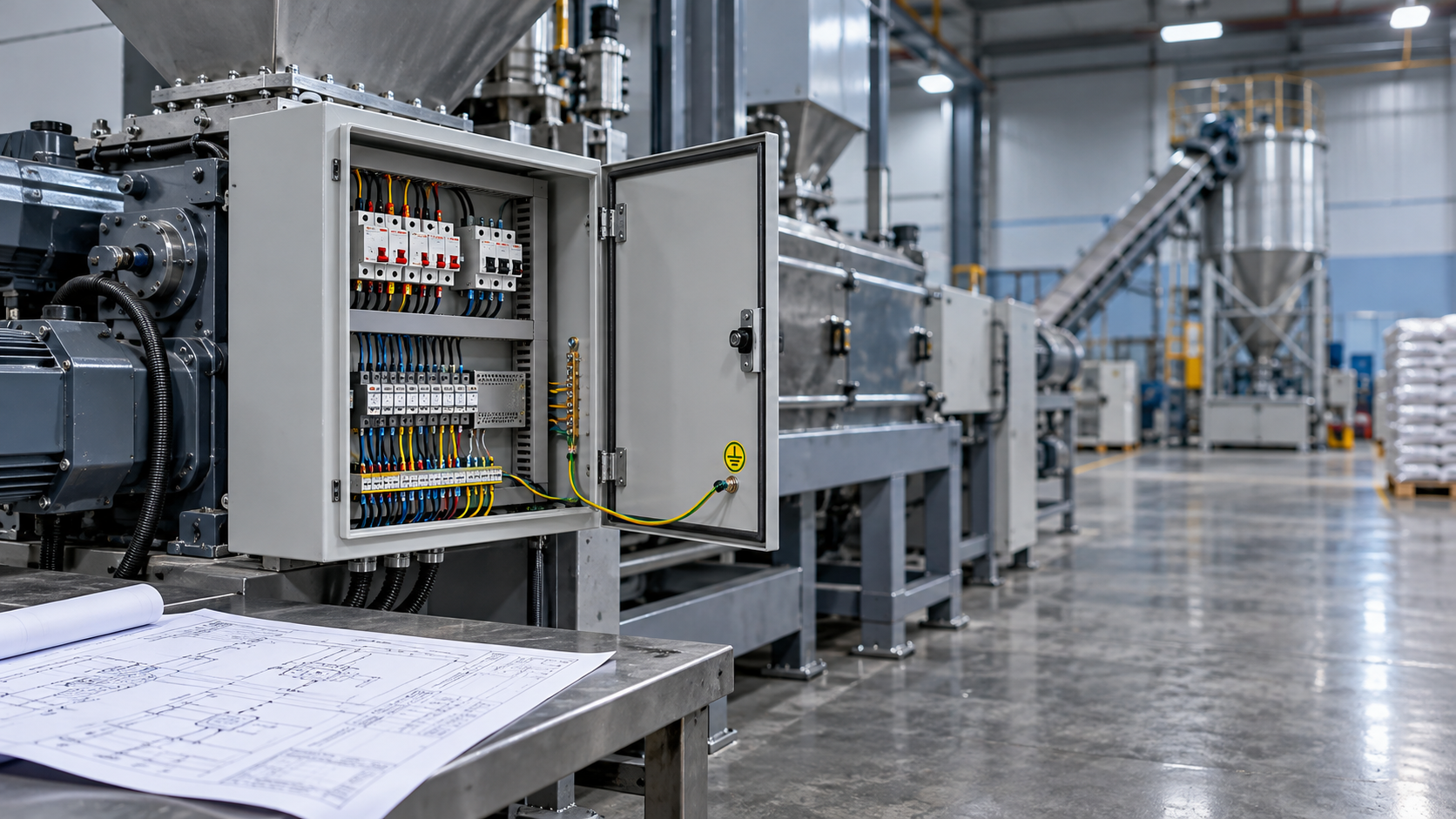
Also pay attention to practical constraints. Is there enough lifting capacity and floor space to assemble the equipment in the proposed configuration? Where are electrical cabinets wired? Can the supplier test the machine in a suitable area? A crowded workshop is not automatically a problem, but it should prompt a discussion about how the supplier will make room for your order.
For a remote assessment, request a live video walkthrough rather than relying only on edited promotional footage. Agree on the areas to see in advance, then ask the person conducting the tour to show the relevant equipment and explain the production flow. A remote tour provides useful visibility, although it is less effective than an independent visit for checking details and records.
Does the supplier need to manufacture every component itself?
No. Outsourcing machining, electrical components, hydraulic parts, or other work can be a reasonable production model. The risk is not outsourcing itself; it is an unclear division of responsibility or a schedule that ignores external lead times.
Ask the supplier to identify major subcontracted operations and purchased components, particularly those that control the delivery date. For each critical item, establish who places the order, who inspects it, and what happens if it arrives late or does not fit. The machine supplier should remain accountable for integrating the complete equipment within the agreed scope.
For a full block production line, pay particular attention to interfaces between machines. Even when individual units are available, differences in control signals, operating sequences, conveyor heights, or handling arrangements can delay commissioning. The supplier should be able to explain who is responsible for these interfaces and when the relevant drawings will be approved.
If equipment comes from several companies, define which party coordinates the overall line. A supplier that manufactures the block machine is not necessarily responsible for the batching plant, curing equipment, or site utilities unless those items are included in its contract.
How do you assess whether the promised delivery date is realistic?
Ask for a schedule that starts from a clearly defined event, such as receipt of the agreed deposit and approval of technical drawings. A delivery promise is difficult to assess if the start date, configuration, or approval responsibilities are still open.
The schedule should show more than a final shipment date. It should identify when the supplier expects to complete engineering, release materials for production, receive critical purchased parts, assemble the machine, carry out testing, and pack it. Compare those milestones with your own deadlines for foundation work, utilities, import arrangements, and installation.
Then discuss the factory’s existing commitments. A supplier may have the equipment and staff to build your machine but no immediate production slot. Ask when your order would enter the workshop, which operations share resources with other orders, and whether the proposed slot depends on earlier jobs finishing on time.
For customized equipment, drawing approval deserves particular attention. If mold dimensions, pallet size, electrical requirements, or line layout change after production begins, the original schedule may no longer apply. Agree on who approves each technical document and how changes will affect delivery and cost.
Request shipment or completion records for comparable orders where available. These records can support a discussion about delivery performance, but a past delivery alone does not prove that the supplier has spare capacity today. Current workload and the scope of your order still determine whether the proposed date is credible.
What should a factory acceptance test cover?
A factory acceptance test gives the buyer an opportunity to inspect agreed functions before shipment. Its value depends on a written test scope: what equipment will be present, what will be operated, what results will be recorded, and which issues must be corrected before dispatch.
For a block machine, the test plan may include checking the machine’s configuration, safety functions, electrical controls, hydraulic movements, vibration system, mold installation, and operating sequence. The exact checks depend on the supplied equipment and the agreed specification.
If the supplier proposes making sample blocks, establish the conditions in advance. Concrete mix, aggregate, moisture, pallets, molds, and operating settings affect the outcome. A demonstration with one material and block design does not by itself establish production output or product quality at your site under different conditions.
Some full-line conditions cannot be reproduced completely in a factory, particularly when curing arrangements, site utilities, or third-party equipment are unavailable. In that case, separate the checks that can be completed before shipment from those that must be performed during site commissioning. The contract should explain how outstanding issues will be recorded and resolved.
A test is also an opportunity to inspect documentation: electrical and hydraulic diagrams, operating instructions, spare-parts identification, and packing lists. These documents help the installation team and make later maintenance less dependent on verbal explanations.
Can certifications or company size prove capacity?
A quality management certificate can indicate that a supplier has a documented management system within a stated scope. It does not, on its own, confirm the performance of a particular block machine, the availability of a production slot, or the condition of every subcontractor’s work. Ask to see the certificate, its scope, and the inspection records relevant to your order.
Company profiles can provide useful context, but they should lead to more specific questions. Shandong Hongfa Scientific Industrial & Trading Co., Ltd., for example, describes manufacturing block machines and other construction machinery across multiple production bases. For an order placed with any multi-site supplier, the practical next step is to establish which facility will manufacture, assemble, and test the equipment, and who will coordinate the work between sites.
Workforce figures should be treated in the same way. A large technical team may support several product lines at once. For your project, ask who will handle mechanical design, electrical controls, production supervision, and after-sales coordination, particularly if the machine has a customized layout.
What should be agreed before placing the order?
Turn the findings from your assessment into a contract and technical agreement. At a minimum, the documents should identify the equipment scope, key specifications, responsibilities for interfaces, production milestones, inspection arrangements, and the definition of shipment or delivery. They should also state how design changes and test defects are handled.
For a complete line, include a clear boundary between factory supply and site work. Foundations, power supply, water, compressed air, installation equipment, and local labor may fall outside the machine supplier’s scope. An apparently short manufacturing schedule is of limited value if the buyer’s site cannot support installation when the equipment arrives.
Finally, agree on how progress will be reported. Milestone updates with dated photographs, inspection records, and a revised schedule can help the buyer identify delays while there is still time to respond. Those records do not replace a factory assessment, but they make the supplier’s commitment easier to follow after the order is placed.
Can an independent inspector assess a block machine factory?
Yes. An independent inspector can visit on the buyer’s behalf, review the agreed scope, observe production, and witness specified tests. Provide the inspector with the approved drawings, inspection criteria, and a list of questions beforehand. A general visit report is less useful than an assessment tied to the equipment and delivery milestones in your contract.
What if the supplier refuses to share its production schedule?
A supplier may reasonably withhold details of other customers’ orders, but it should still be able to explain your proposed production slot and milestones. Ask for a schedule that removes confidential customer information. If the supplier cannot show how your order fits into its workload, the delivery promise is harder to assess and should carry more weight in your purchasing decision.
Should payment be linked to production milestones?
Milestone-based payments can help align payments with identifiable progress, provided both parties agree on what evidence satisfies each milestone. For example, completion of assembly should be defined separately from a successful factory test. Payment terms, inspection access, and remedies for delays should be addressed together in the contract.
Recommend
 Nov 04, 2026
How to Check Imported Machinery for Local Electrical Compliance
How can I check whether imported machinery meets local electrical requirements? Explore a practical checklist to reduce safety risks, costly modifications, and delays.
- Nov 04, 2026
How to Verify a Block Machine Supplier's Factory Capacity
How do I verify a concrete block machine supplier's factory capacity? Discover practical checks for production schedules, workshop capabilities, testing, and delivery readiness.
- Nov 03, 2026
Do You Need a Ball Mill for Sand-Based AAC Production?
Do I need a ball mill for sand-based AAC production? Discover when grinding is essential, when you can skip it, and how to make a cost-effective choice.