How to Check Imported Machinery for Local Electrical Compliance
How can I check whether imported machinery meets local electrical requirements? Start by comparing the equipment’s voltage, frequency, wiring, control systems, and protective devices with the regulations applicable at the installation site.
Review the supplier’s electrical diagrams, component certifications, and test documentation, then confirm whether an inspection or approval by a qualified local professional is required.
For construction and building materials machinery, these checks can help prevent installation delays, unexpected modification costs, and electrical safety risks before the equipment enters service.
Start With the Installation Site, Not the Supplier’s Catalog
Electrical compliance depends on where the machine will be installed and how it will be used. A machine suitable for one market is not automatically acceptable elsewhere.
Identify the destination country, region, facility address, intended application, and expected installation date. Local rules, utility requirements, and enforcement practices may differ even within the same country.
Ask the facility’s electrical engineer, installer, or local authority which requirements apply to the machine, its installation, and any connected production equipment.
Also establish who has authority to accept the installation. Depending on the location, that may involve an electrical inspector, utility, workplace safety authority, insurer, or other body.
For a complete production line, clarify whether approval will cover individual machines, interconnected control panels, site wiring, or the entire assembled system. These are related but distinct questions.
Check the Supply Voltage, Frequency, and Power Capacity
Compare the machine nameplate and electrical drawings with the actual supply available at the installation point. Do this before purchase, not after the equipment arrives.
Record the rated voltage, number of phases, frequency, full load current, and any stated voltage tolerance. Confirm that the facility can support the required operating conditions.
A three-phase machine designed for 400 V at 50 Hz, for example, should not be assumed suitable for a 480 V, 60 Hz supply without engineering review.
A transformer may address a voltage difference, but it does not change supply frequency. Motors, pumps, cooling systems, and other components may need separate assessment or replacement.
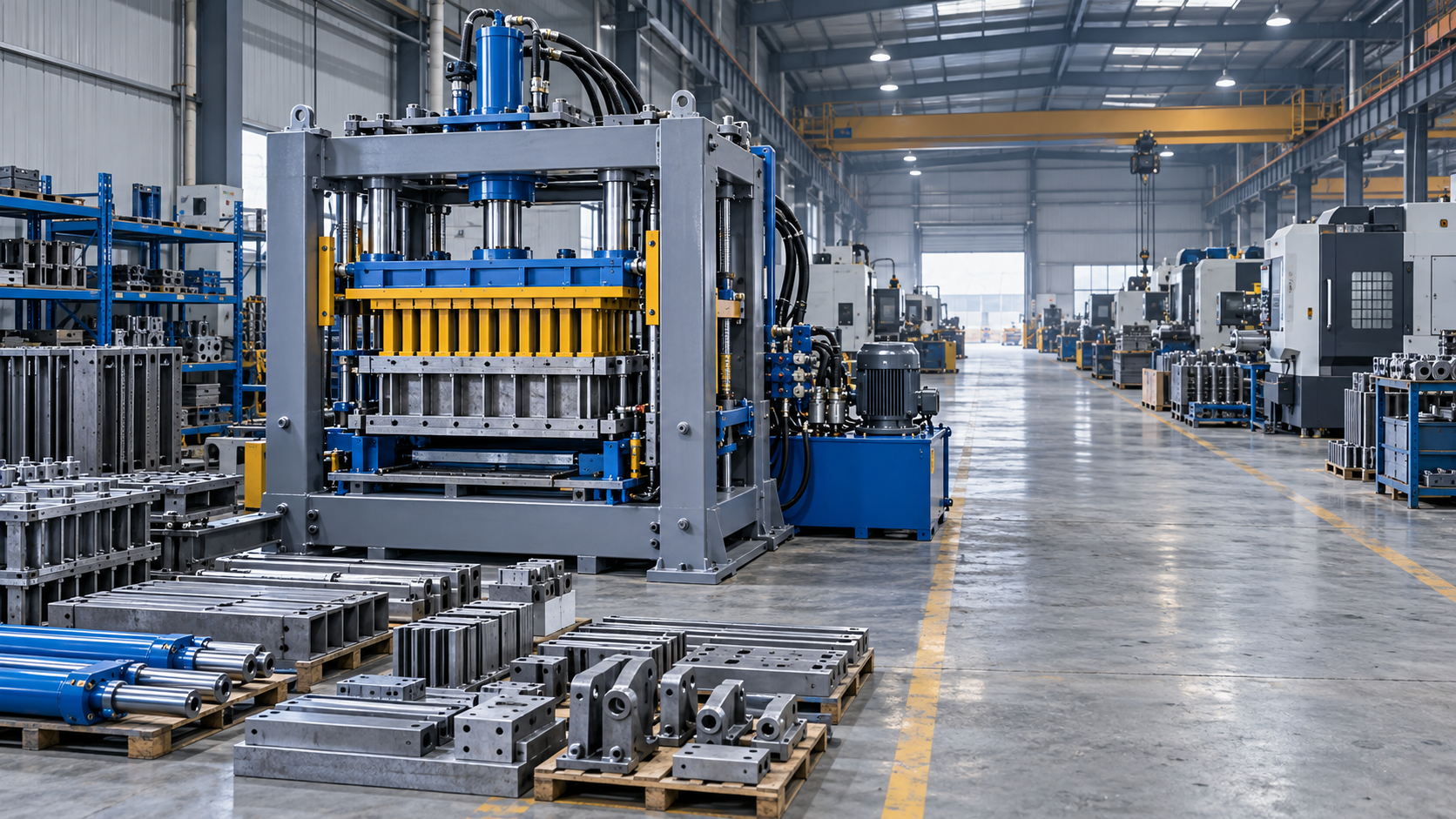
Review motor starting currents and simultaneous loads across the line. A block machine, batching plant, or quartz stone production line can include several motors with different starting patterns.
Ask an electrical engineer to assess the service capacity, feeder sizing, voltage drop, power quality, and available short-circuit current against the machine’s requirements and local rules.
Check whether the supplier’s stated power figure describes connected load, typical operating demand, or maximum demand. These values are not interchangeable when sizing the installation.
Which Documents Should You Request Before Ordering?
Request documentation for the exact machine configuration and destination market. Generic brochures and photographs of a similar panel are not sufficient for a reliable compliance review.
Ask the supplier to provide the following documents before finalizing the purchase, with updates whenever the design or selected components change:
- Machine nameplate information, electrical ratings, and a complete list of major electrical loads.
- Electrical schematics, control diagrams, terminal plans, and cable schedules for the supplied configuration.
- Details of protective devices, their ratings, settings, and coordination where applicable.
- Evidence of applicable component certification or listing, including model numbers and intended ratings.
- Declarations, certificates, or conformity documents required for the destination and the complete machine, where applicable.
- Factory electrical test reports, inspection records, operating instructions, and maintenance information.
- Details of field wiring, grounding connections, installation conditions, and customer-supplied equipment.
Check that documents identify the actual model, panel, components, and relevant standards or approval scheme. A certificate for a different configuration may not support your assessment.
Where documents are incomplete, ask the supplier to explain the gap and agree on a deadline for resolving it. Keep the answers with the procurement record.
Do Component Certifications Prove the Whole Machine Is Compliant?
No. A certified circuit breaker, drive, or control component does not automatically make the assembled control panel or complete machine compliant in the destination market.
Components must be suitable for their application, ratings, installation method, and local acceptance requirements. The way they are wired and combined also matters.
In the United States, for example, the authority having jurisdiction may consider whether equipment is listed or labeled by an accepted testing organization, or requires field evaluation.
In the European Union, applicable machinery and electrical legislation may require conformity assessment, technical documentation, an EU declaration of conformity, and CE marking, depending on the product.
CE marking is not a universal electrical approval, and a supplier’s ISO 9001 quality management certificate does not establish compliance of a particular machine or installation.
Requirements vary by product and jurisdiction, and legislation can change. Confirm the applicable rules and current transition dates with a qualified local professional before relying on any marking.
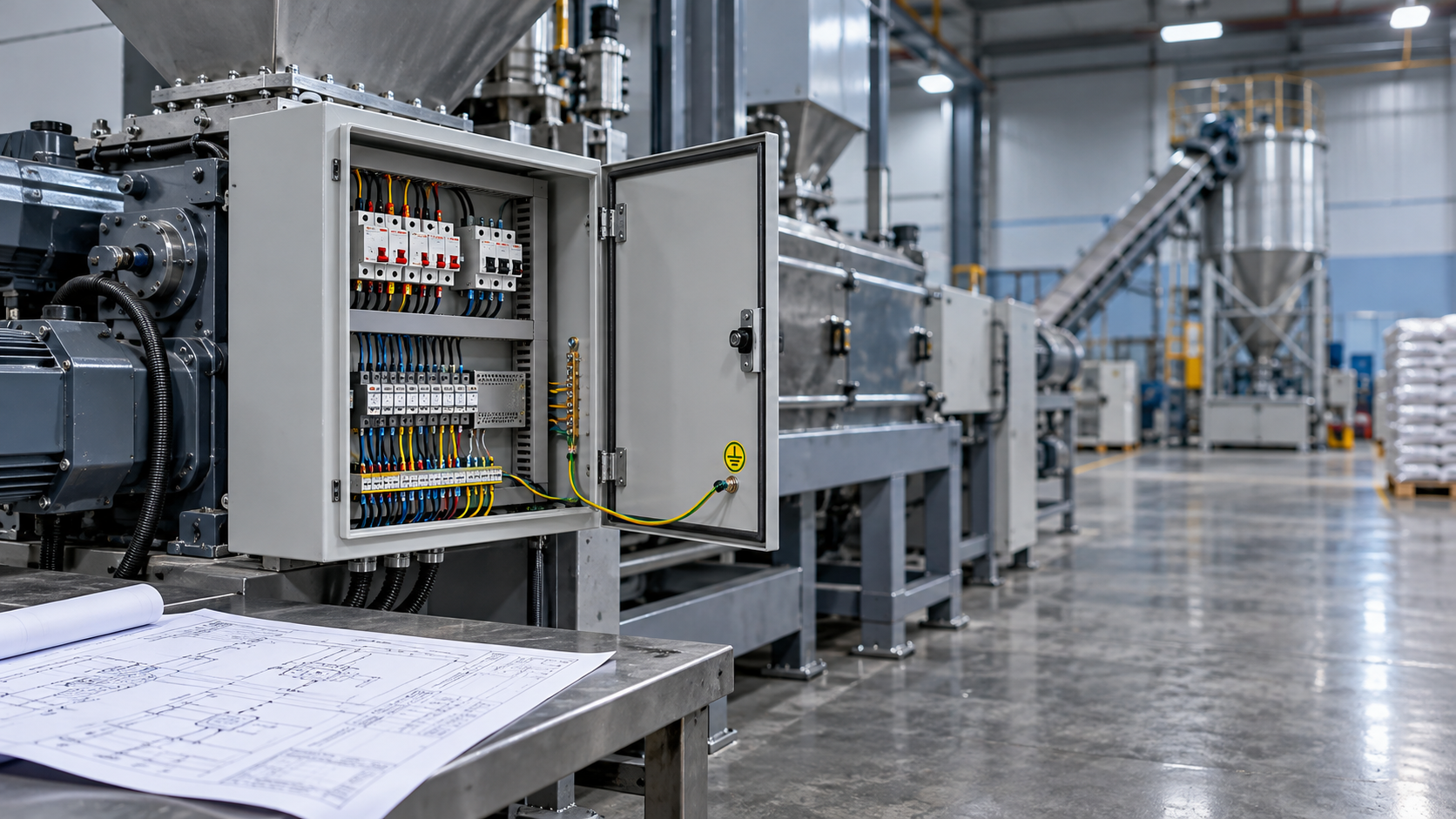
Inspect the Control Panel and Protective Devices
The control panel often determines whether imported machinery can be connected and accepted without major rework. Review its design while changes are still practical.
Ask a qualified reviewer to check enclosure suitability for dust, moisture, temperature, and the operating environment. Concrete and block production sites can expose electrical equipment to demanding conditions.
Verify that disconnecting means, overcurrent protection, motor protection, conductor sizing, and grounding arrangements match the design and applicable local requirements.
Check the panel’s short-circuit rating against the available fault current at the installation point. The supply connection should not be energized until the suitability of that combination is confirmed.
Review cable entries, terminal identification, conductor markings, labels, and access clearances. Local rules may also specify language, labeling, or installation requirements for operators and maintenance staff.
Variable frequency drives, transformers, and electronic controls deserve particular attention because their input ratings, protective devices, and installation instructions can differ from those of standard motors.
If a component is unavailable or unacceptable locally, ask whether a replacement affects panel layout, heat dissipation, protection coordination, documentation, or the machine’s conformity assessment.
Confirm Grounding, Controls, and Emergency Stops
Electrical compliance is not limited to supplying power. The machine must also have protective bonding and control functions appropriate to its hazards and intended operation.
Have the reviewer examine how exposed conductive parts, cabinets, motors, and connected machine sections are bonded. Confirm the required connection to the facility’s grounding system.
Emergency stop devices should be accessible and function as intended for the machine and its connected equipment. Their location and stopping behavior require a risk-based assessment.
Check guards, interlocks, restart prevention, isolation for maintenance, and control system behavior after power loss or restoration. Requirements depend on the machine’s hazards and applicable standards.
For linked production equipment, determine which emergency stops affect upstream and downstream machines. A stop on one section should not create an uncontrolled hazard elsewhere.
Ask the supplier for the machine’s risk assessment information and safety function descriptions. A local machinery safety specialist may need to evaluate the complete installed line.
Plan Factory Tests and Local Inspection
Agree on testing responsibilities before shipment. The supplier should identify which checks will be performed at the factory, what records will be supplied, and who will witness testing.
Depending on the equipment and applicable requirements, factory checks may include protective bonding continuity, insulation testing, functional checks, and verification of safety-related control functions.
Test methods and acceptance limits should be appropriate for the equipment. Sensitive electronics may require precautions, so testing should follow the manufacturer’s instructions and applicable standards.
Factory test results are useful evidence, but they do not necessarily replace inspection or tests after shipping, assembly, field wiring, and connection to the local supply.
Before commissioning, arrange the required local inspection or field evaluation. Ask the reviewing professional which documents, access, and test results are needed to avoid delays.
After installation, a qualified person should verify site connections, protective measures, and control functions before energization. Conduct operational and safety checks under an agreed commissioning procedure.
Record outstanding deficiencies, assign owners and deadlines, and retain evidence of corrections. Do not treat a preliminary inspection or a supplier’s verbal assurance as final approval.
What Should Be Agreed With the Supplier?
Put the destination market, installation supply, applicable requirements, and required documentation in the purchase specification. Attach the agreed electrical drawings and component requirements where practical.
State who is responsible for factory modifications, local field wiring, inspection fees, translation, replacement parts, and any changes identified during the acceptance process.
Define acceptance criteria and the point at which payment, shipment, or commissioning milestones are met. Include a process for handling nonconformities and changes to the supplied design.
For building materials machinery, ask whether the supplier can configure motors, control panels, and documentation for the destination before manufacture. Confirm the scope in writing.
Shandong Hongfa Scientific Industrial & Trading Co., Ltd. manufactures equipment including block machines, concrete batching plants, and quartz stone production lines. Buyers should discuss destination-specific electrical requirements for their chosen configuration.
Supplier experience can support the review, but the buyer should still obtain machine-specific evidence and confirm local acceptance with the responsible professionals and authorities.
Use a Simple Go or No-Go Decision
Proceed to shipment when the supply compatibility, applicable requirements, documentation, and planned inspection route are understood, with any remaining issues assigned to responsible parties.
Pause the purchase or shipment if the voltage and frequency cannot be reconciled, critical documentation is missing, or the local reviewer cannot identify an acceptable approval path.
Where modifications are necessary, compare their cost and lead time with a destination-ready configuration. Include engineering, replacement components, retesting, inspection, and potential production delays.
A successful electrical compliance check combines supplier evidence with local engineering judgment. Confirm both the machine and its installation before energization to reduce risk and protect the project schedule.
Next:No more content
Recommend
 Nov 04, 2026
How to Check Imported Machinery for Local Electrical Compliance
How can I check whether imported machinery meets local electrical requirements? Explore a practical checklist to reduce safety risks, costly modifications, and delays.
- Nov 04, 2026
How to Verify a Block Machine Supplier's Factory Capacity
How do I verify a concrete block machine supplier's factory capacity? Discover practical checks for production schedules, workshop capabilities, testing, and delivery readiness.
- Nov 03, 2026
Do You Need a Ball Mill for Sand-Based AAC Production?
Do I need a ball mill for sand-based AAC production? Discover when grinding is essential, when you can skip it, and how to make a cost-effective choice.