Is a Hydraulic Brick Making Machine Suitable for High-Altitude Areas?
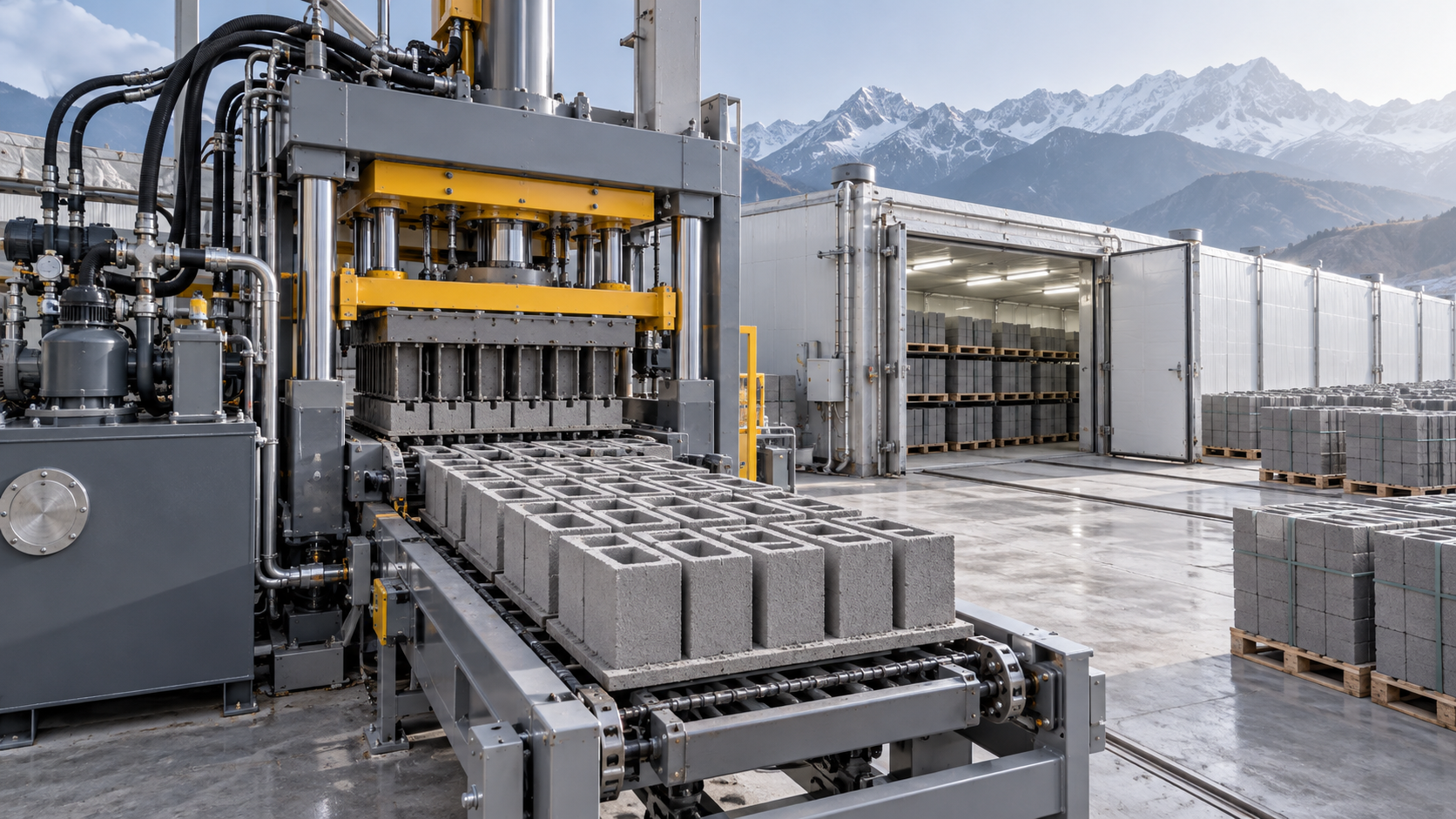
Yes, a hydraulic brick making machine can be suitable for high-altitude areas, but only when the complete production setup is matched to the local environment. Altitude itself does not prevent hydraulic pressing. A hydraulic system creates molding force through pressurized oil, so the basic compaction process is far less dependent on thin air than pneumatic equipment. The more practical concerns are cold starts, temperature swings, engine or motor capacity, material moisture control, curing conditions, and the difficulty of maintaining a machine in a remote location.
For a block producer in a mountain region, the right question is not simply whether the machine can operate at elevation. It is whether it can maintain repeatable pressure, cycle times, and brick quality through the local daily and seasonal conditions. A properly specified hydraulic brick making machine can do that well. A standard machine selected only by nominal output may not.
Why hydraulic brick machines are generally a good fit
A hydraulic brick making machine uses hydraulic cylinders to apply force to the mold. This is useful where stable, dense compaction is needed for concrete blocks, pavers, hollow blocks, or other cement-based products. Unlike systems that rely heavily on compressed air for their main forming force, the hydraulic press is not directly weakened by lower atmospheric pressure.
That does not mean altitude has no effect. The hydraulic circuit, pump, valves, cylinders, and oil tank still need to work within an appropriate temperature range. Electrical motors may need to be selected with local operating conditions in mind, and diesel-powered support equipment can lose available power as elevation rises. However, these are engineering and configuration issues, not reasons to rule out hydraulic brick production.
In practice, hydraulic pressing is often preferred in demanding locations because it provides controllable molding pressure and can support consistent product density when the feed material and mold filling are properly managed.
The conditions that actually change the decision
High-altitude sites differ widely. A relatively mild inland plateau creates different problems from a cold mountain valley where temperatures drop sharply overnight. Before selecting equipment, assess the site as an operating environment rather than treating elevation as a single number.
Cold temperatures and hydraulic oil behavior
Low temperature is usually the first issue to address. Hydraulic oil becomes more viscous in cold conditions. When oil is too thick at startup, the pump works harder, movement becomes slow or uneven, pressure response may lag, and filters can experience excessive resistance. Repeated cold starts also increase wear on pumps and seals.
The practical response is not merely to use a larger machine. The system should use hydraulic oil suited to the expected temperature range, and the equipment may need an oil heater, thermal insulation around exposed components, or a warm-up procedure before full production begins. Where daytime and nighttime temperatures differ substantially, the oil cooling arrangement must also avoid overcooling the circuit during cold weather.
A common mistake is to judge suitability from the machine's maximum pressing force alone. A machine can have adequate tonnage on paper yet produce inconsistent blocks if the hydraulic system cannot reach stable working conditions at the start of a cold shift.
Electrical power and motor selection
Most stationary brick plants use electric motors for hydraulic pumps, conveyors, mixers, and auxiliary equipment. At elevation, lower air density can reduce natural cooling around electrical motors. Dusty sites, enclosed machine rooms, and long production runs can make that effect more noticeable.
The motor should therefore be chosen with the actual installation environment in mind: altitude, ambient temperature, ventilation, available voltage, and expected duty cycle. A sealed or poorly ventilated control area can cause more trouble than altitude itself. Good panel protection, clean airflow, and appropriate electrical sizing are often more valuable than adding unnecessary machine capacity.
Where grid power is weak or unstable, the issue becomes broader than the brick machine. Voltage drops can affect the hydraulic pump motor, vibration system, and automatic controls. A site power review should include startup loads, not just normal running consumption.
Material moisture is harder to control than many buyers expect
Hydraulic compression cannot compensate for poorly prepared material. At high altitude, dry air, strong wind, and rapid weather changes can cause aggregate and sand moisture to vary during the day. That changes the behavior of the concrete mix. A mix that was workable in the morning may become too dry later, leading to weak edges, incomplete mold filling, cracking during demolding, or inconsistent dimensions.
The solution is a disciplined batching process. Store aggregates where rain, wind, and direct sun do not cause large moisture changes. Check material condition regularly, control water addition through the batching process, and keep mixing time consistent. If fly ash, crushed stone fines, quarry dust, or other local materials are used, test the mix under actual production conditions rather than relying only on a recipe developed elsewhere.
For high-altitude production, repeatable moisture control often has a greater effect on block quality than a small increase in hydraulic pressure.
Brick curing may become the limiting stage
A machine can form blocks successfully while the curing area prevents the plant from achieving reliable finished strength. Cement-based bricks need suitable moisture and temperature conditions after demolding. Cold, dry, windy environments can pull water from fresh products too quickly, while freezing conditions can damage green blocks before they develop enough strength.
Open-yard curing may work in a mild climate but become unreliable in an exposed mountain area. Depending on local conditions, producers may need covered curing zones, wind protection, controlled moisture retention, insulated storage, or an enclosed curing arrangement. The correct option depends on production volume, local climate, product type, and available energy sources.
This is an important purchasing point: do not evaluate the hydraulic brick making machine separately from the curing plan. If the curing process cannot keep pace with molding output, increasing machine speed only increases handling pressure and product risk.
How to specify a machine for a high-altitude site
A productive discussion with a manufacturer should start with site conditions and production goals, not a request for a generic model. The following information helps determine whether a configuration is appropriate:
- Expected lowest and highest operating temperatures, including overnight conditions.
- Altitude and whether the plant will operate in enclosed, semi-enclosed, or open areas.
- Available electrical supply, voltage stability, and backup-power requirements.
- Brick type, mold size, daily production target, and required density or appearance.
- Raw materials available locally and how they will be stored and batched.
- Whether the site has covered mixing, product transfer, and curing areas.
- Access for delivery, installation, replacement molds, hydraulic parts, and service personnel.
These details influence choices such as motor rating, hydraulic oil grade, oil heating or cooling provisions, control cabinet protection, conveyor arrangement, mold handling, and the level of automation. A high-altitude plant with reliable power and a controlled indoor workspace may use a configuration close to a lowland plant. A remote site with freezing weather and limited technical support needs more deliberate preparation.
Remote logistics matter as much as machine design
Mountain roads, narrow access points, and long travel distances can affect installation and maintenance. A large fully assembled line may be difficult to transport or position, even when the main machine itself is suitable. Site access should be checked for equipment delivery, crane use, foundation work, raw-material supply vehicles, and finished-product dispatch.
Maintenance planning also changes in remote areas. Hydraulic equipment needs clean oil, correct filter replacement, leak inspection, sound electrical connections, and properly trained operators. Keeping ordinary consumables and critical wear parts available on site can reduce downtime when delivery lead times are long. This does not require a large spare-parts inventory; it requires identifying which items are likely to be needed during normal operation and selecting a machine with accessible service points.
Automation can improve repeatability, but it should match the site's ability to support it. A highly automated line is useful when material supply, power, operators, and curing capacity are all stable. In a location with variable inputs or difficult maintenance access, a simpler configuration with dependable controls can be the more practical production choice.
When a hydraulic brick making machine may not be the right answer
A hydraulic machine is not automatically the best choice simply because it can work at altitude. It may be a poor fit when the proposed plant lacks dependable electrical power, has no workable plan for winter curing, cannot keep materials dry and consistent, or has no trained operator available for routine hydraulic and mold maintenance.
It can also be the wrong scale of investment when local demand is irregular and product handling capacity is limited. A high-output machine does not solve a shortage of pallets, storage space, curing racks, forklifts, or delivery vehicles. In these cases, a smaller or less automated line with a realistic workflow may produce better economic results than a larger press that cannot be used consistently.
Another weak approach is choosing a model based only on the number of blocks advertised per shift. Output claims depend on mold design, material supply, mix preparation, operator coordination, handling equipment, and curing space. The relevant capacity is the number of acceptable finished products the whole plant can produce, not the fastest theoretical cycle of the press.
What to ask before placing an order
Ask the supplier to explain how the proposed hydraulic system will start and operate in the site's coldest normal conditions, what oil and filtration arrangement is recommended, and how the electrical system should be configured for the installation environment. Request a clear list of the foundation, power, water, compressed-air, material-feeding, and curing requirements that remain the buyer's responsibility.
It is also sensible to discuss the intended raw-material mix and product mold before finalizing the machine. Mold design, vibration settings, feed arrangement, and pressure control should support the actual block being sold, rather than a generic demonstration product.
Manufacturers with experience in block machines, concrete batching equipment, and complete building-material production lines can be useful at this stage because the press is only one part of the production chain. Shandong Hongfa Scientific Industrial & Trading Co., Ltd. produces block machinery and concrete batching equipment, so a site-specific conversation can address the connection between batching, molding, and downstream handling rather than treating the brick machine as an isolated purchase.
FAQ
Does lower air pressure reduce the pressing force of a hydraulic brick machine?
Not in the same direct way it affects pneumatic equipment. Hydraulic pressing force is generated by oil pressure and cylinder area. The machine still needs suitable motor cooling, hydraulic oil management, and reliable electrical supply at the installation site.
Is an oil heater necessary for every high-altitude installation?
No. It depends mainly on the lowest operating temperature and the machine's working schedule. In cold climates or where the plant starts early after cold nights, oil heating or a controlled warm-up process is often justified.
Can bricks be cured outdoors in a mountain area?
They can be in favorable weather, but exposed outdoor curing is less predictable where there is frost, strong wind, rapid drying, or large temperature changes. Covered and protected curing provides more consistent results when local conditions are harsh.
Should I buy a larger machine to compensate for altitude?
Usually not. Capacity should be based on demand, product type, material supply, handling capability, and curing space. Environmental adaptation is more important than oversizing the press.
The practical conclusion is straightforward: hydraulic brick making equipment is suitable for high-altitude areas when the hydraulic system, electrical installation, material handling, and curing process are designed as one operating system. Start with the local climate and production workflow, then select the machine configuration that can maintain stable conditions day after day.
Next:No more content
Recommend
 Oct 17, 2026
Is a Hydraulic Brick Making Machine Suitable for High-Altitude Areas?
Is a hydraulic brick making machine suitable for high-altitude areas? Explore climate-ready configurations, curing solutions, and reliable production tips.
- Oct 16, 2026
What Monthly Maintenance Does a Paving Block Machine Need?
What maintenance does a paving block machine need monthly? Discover essential checks for hydraulics, molds, vibration, safety, and reliable block quality.
- Oct 15, 2026
Can a Hollow Block Making Machine Produce Different Block Sizes?
Can a hollow block making machine produce different block sizes? Discover how interchangeable molds, smart settings, and reliable equipment improve flexibility and output.