Can a Hollow Block Making Machine Produce Different Block Sizes?
Can a Hollow Block Making Machine Produce Different Block Sizes?
Can a hollow block making machine produce different block sizes? Yes. Most modern machines can manufacture several hollow block dimensions when equipped with correctly designed interchangeable molds.
The practical answer depends on machine structure, mold compatibility, hydraulic capacity, vibration performance, and production planning. Multi-size capability is valuable only when quality remains stable.
For block producers, contractors, and building-material investors, the main issue is not whether different sizes are theoretically possible. It is whether changeovers remain efficient and profitable.
This article explains how multi-size hollow block production works, which configurations are suitable, what limitations to expect, and how buyers can evaluate equipment before investing.
How One Machine Produces Different Hollow Block Sizes
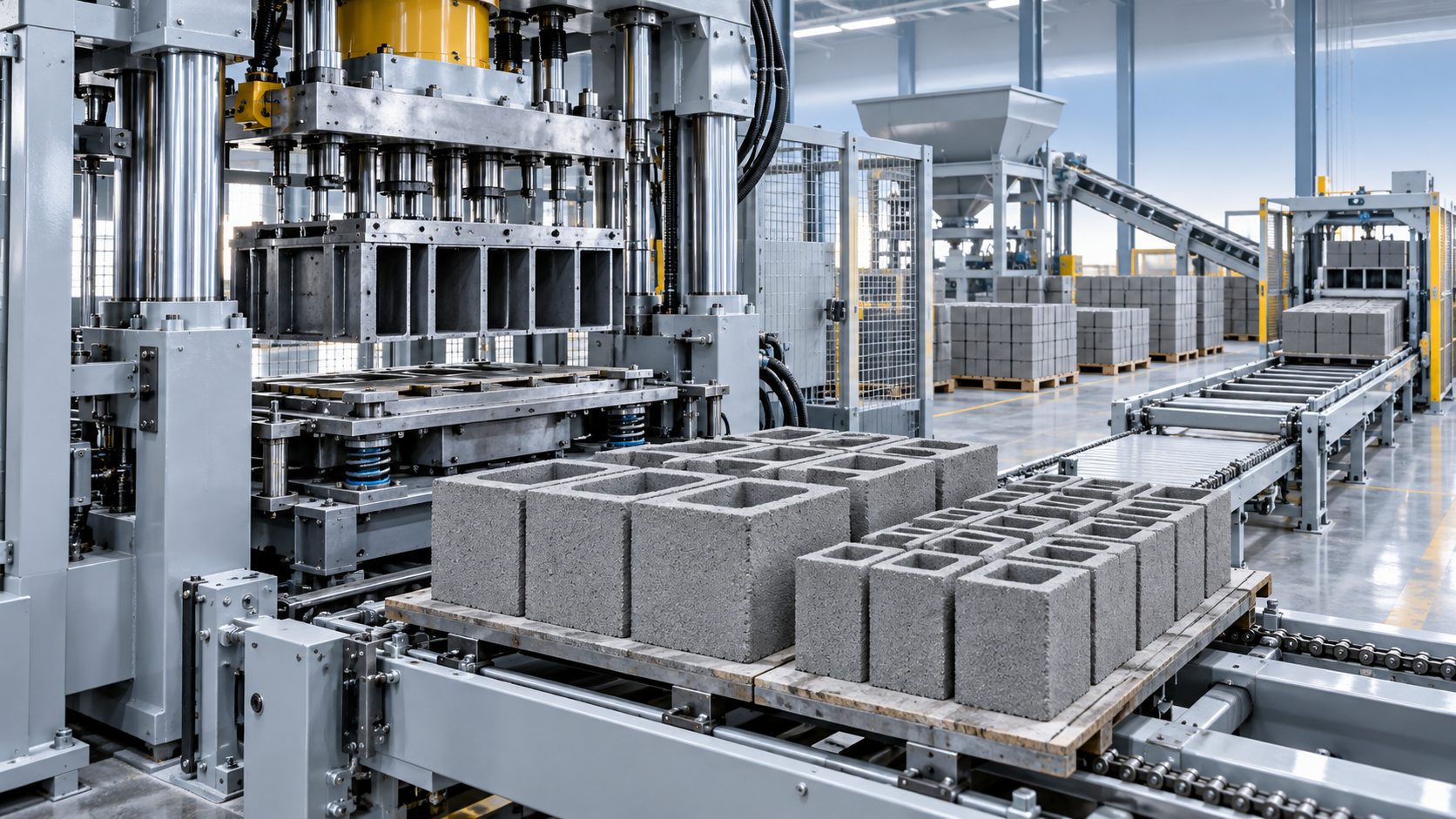
A hollow block making machine forms concrete products inside a steel mold. The mold determines the external dimensions, internal cavities, wall thickness, and shape of each block.
To produce another block size, the operator normally replaces the existing mold set with a mold designed for the new specification. This includes the mold box, tamper head, and related inserts.
For example, one production line may manufacture 400 x 200 x 200 mm hollow blocks in the morning and 400 x 150 x 200 mm blocks later.
The machine frame usually stays unchanged. Instead, manufacturers adapt the mold assembly to fit the same vibration table, hydraulic system, feeding mechanism, and control platform.
Some models also allow adjustments to pallet dimensions, material feed settings, vibration time, pressure parameters, and mold height. These adjustments support stable production across different products.
However, not every block size is suitable for every machine. A compact machine has limitations in mold area, output height, mold weight, cycle time, and hydraulic force.
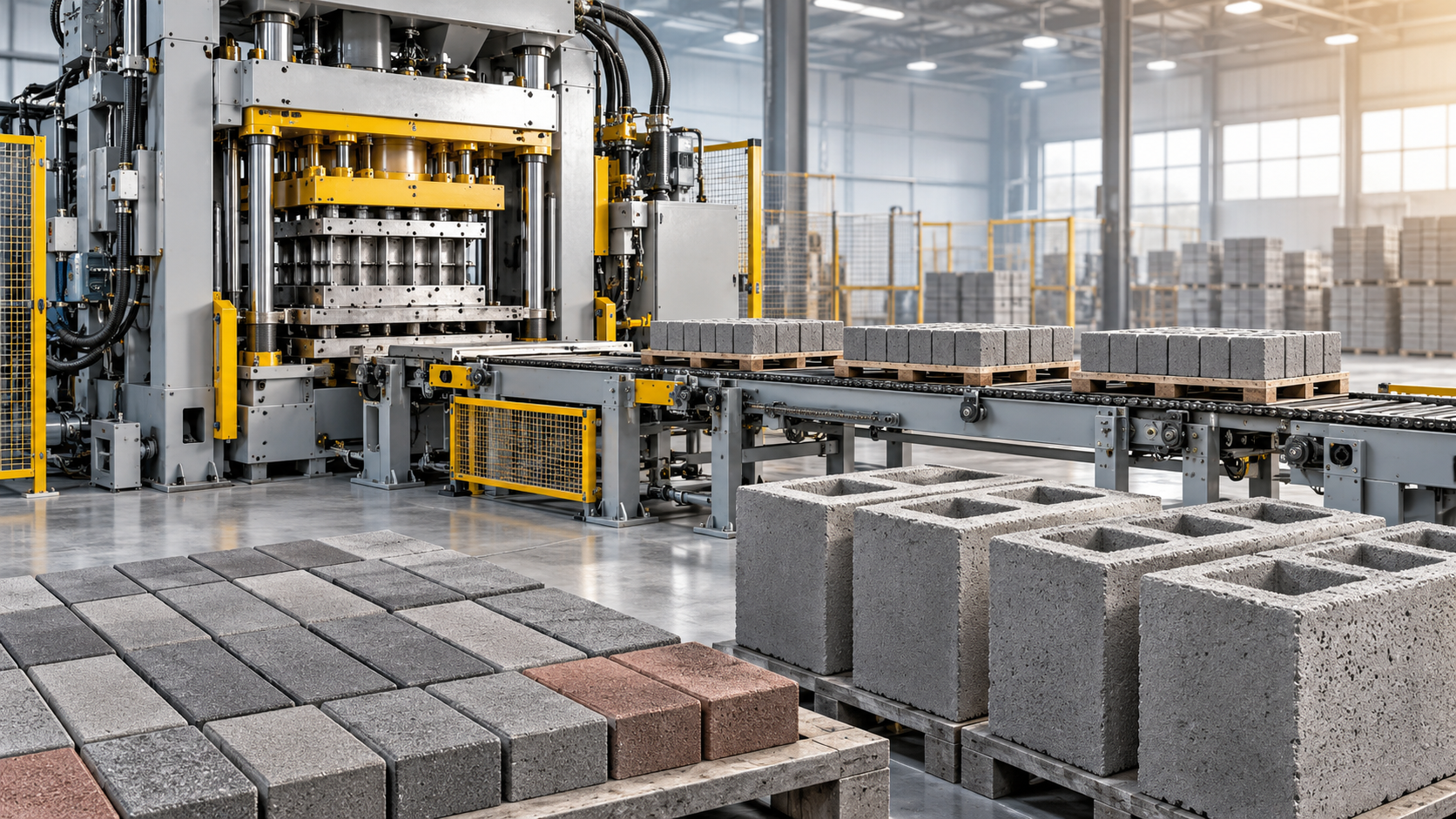
A larger automatic production line can generally accept more mold configurations. It can often produce hollow blocks, solid bricks, paving blocks, curbstones, and specialty concrete products.
Therefore, buyers should ask not only whether the machine supports different molds, but also which products can run at commercial output levels with consistent quality.
Interchangeable Molds Are the Core of Multi-Size Production
The mold is the most important component for changing hollow block sizes. Its accuracy directly affects product dimensions, cavity consistency, edge quality, and ease of demolding.
High-quality molds are commonly fabricated from durable steel and treated to improve wear resistance. Mold material matters because concrete abrasion gradually changes dimensions and surface finish.
A properly engineered mold must match the machine’s mounting points, vibration characteristics, tamper system, and pallet size. Poor fit can cause uneven density or excessive mechanical wear.
When ordering molds, producers should specify the exact block length, width, height, cavity design, wall thickness, strength requirement, and local construction standard.
It is also important to define aggregate type and mix design. A mold intended for one concrete consistency may not perform equally well with another mix.
For frequent product changes, quick mold-change systems can reduce downtime. These systems may include positioning guides, hydraulic clamping, lifting devices, and stored production recipes.
Manual mold changes can still be appropriate for smaller factories. The decision should consider labor availability, product-change frequency, production volume, and the cost of idle equipment.
Before purchase, request drawings and a confirmed mold list. This avoids the common mistake of buying a machine that supports a theoretical mold range but not required products.
Which Hollow Block Sizes Can Usually Be Produced?
Common hollow block dimensions vary by country, building code, wall system, transport conditions, and customer preference. There is no single global size standard for every market.
Typical products include 390 x 190 x 190 mm, 400 x 200 x 200 mm, 400 x 150 x 200 mm, and smaller partition-wall blocks.
Many producers also manufacture 100 mm, 120 mm, 150 mm, 190 mm, and 200 mm thick blocks. These options serve non-load-bearing partitions and structural wall applications.
The machine can often produce several lengths and widths, provided the mold fits inside the available molding area. Height is limited by mold design and machine clearance.
Blocks with deeper cavities, thinner walls, or unusual geometry may require different vibration settings. They can also demand more precise control of moisture content and feed distribution.
Specialty products may include insulated blocks, interlocking blocks, light-weight aggregate blocks, decorative facing units, and blocks designed for regional masonry systems.
Changing from standard hollow blocks to paving stones or curbstones is possible on many machines, but these products usually require separate molds and different production parameters.
Buyers should prioritize local sales demand rather than collecting molds for every possible product. A focused product range typically delivers better mold utilization and faster payback.
What Changes When You Switch Between Block Sizes?
Changing mold dimensions affects more than product shape. It can alter material consumption, machine cycle time, vibration requirements, pallet loading, curing capacity, and final product handling.
Large hollow blocks usually consume more concrete per unit, but fewer units may be required per square meter of wall. Their commercial value depends on local labor economics.
Smaller blocks often increase the number of units produced per pallet. This may raise packing and handling needs even when the machine’s total concrete throughput remains similar.
Different cavity layouts also affect compaction. Large cavities can reduce material usage, yet weak compaction around internal webs may lower compressive strength or damage edges.
The control system should store separate recipes for each product. A recipe can define feeder movement, vibration frequency, vibration duration, pressure sequence, and demolding timing.
Operators must also inspect the first blocks after every changeover. Early checks should confirm dimensions, unit weight, visual appearance, strength development, and cavity formation.
When production parameters are not adjusted, blocks may crack, stick to the mold, deform during demolding, or show uneven density across the pallet.
Reliable equipment reduces these risks through stable hydraulics, synchronized vibration, accurate mold guidance, and automated controls that repeat verified settings for each product type.
Production Flexibility Must Be Balanced With Output Efficiency
Multi-size capability provides flexibility, but excessive changeovers can reduce total plant efficiency. Every mold replacement requires machine stoppage, setup work, cleaning, and quality verification.
A plant producing large volumes of one block size may benefit more from dedicated production scheduling than from frequent switching between several low-volume products.
Conversely, regional suppliers serving contractors, retailers, and municipal projects may need multiple sizes to respond quickly to changing orders and seasonal construction demand.
The best production plan groups orders by product type. This reduces mold changes while maintaining enough product variety to support customer relationships and broader market coverage.
For medium-volume operations, one versatile machine with several molds can be more economical than multiple dedicated machines. This lowers initial capital expenditure and floor-space requirements.
For high-volume plants, dedicated lines may become more efficient. The right decision depends on sales volume, product mix, operating hours, labor cost, and delivery commitments.
Buyers should calculate output using realistic cycle times and planned changeovers. Catalog capacity figures often assume ideal conditions and may not represent a mixed-product production schedule.
Ask the supplier for hourly and daily estimates for each intended block size. Request assumptions for raw materials, number of cavities, operator staffing, curing time, and working shifts.
Key Machine Features to Evaluate Before Buying
Machine rigidity is essential when producing different block sizes. A stable frame helps maintain accurate vibration transfer and reduces deformation when heavy molds operate continuously.
Hydraulic capacity should match the heaviest intended mold and product range. Insufficient pressure or slow hydraulic response can affect demolding quality and changeover efficiency.
The vibration system deserves close attention. Consistent vibration helps concrete fill narrow mold sections and creates uniform density without damaging edges after the block leaves the mold.
Automatic feeding systems should distribute material evenly across every mold cavity. Uneven feeding becomes more noticeable when manufacturing blocks with complex cavities or thin internal webs.
Control systems should allow operators to store and recall settings. This is especially useful when the factory alternates between proven block designs over many production cycles.
Check whether the pallet size supports all planned molds. A larger molding area can increase output, but it also requires suitable pallets, handling equipment, curing racks, and factory space.
Consider mold-change accessibility as well. Safe lifting points, guide rails, mold carts, and clear maintenance access can reduce downtime while protecting operators and expensive tooling.
Finally, evaluate supplier service capability. Mold design support, spare-part availability, commissioning assistance, training, and remote troubleshooting all affect long-term production reliability.
Raw Materials and Curing Also Affect Multi-Size Block Quality
A machine alone cannot guarantee good hollow blocks. Cement content, aggregate grading, water level, admixtures, and batching accuracy strongly influence results across different block sizes.
Mixes with excessive water can cause slumping after demolding. Mixes that are too dry may not compact properly, creating weak corners, rough surfaces, or incomplete cavities.
Different block sizes may need small adjustments in mix moisture and vibration time. Larger units can require more attention to material flow and compaction in deep mold sections.
Curing conditions are equally important. Fresh blocks must gain sufficient strength before stacking, transport, or delivery, especially when wall thickness is reduced for lighter products.
Factories should establish documented quality checks for each mold. These checks can include length, width, height, weight, density, absorption, compressive strength, and visual defects.
Consistent batching equipment supports this process. Concrete batching systems with reliable weighing and moisture control help operators repeat successful production recipes from one shift to another.
When a plant introduces a new size, trial production should happen before accepting major customer orders. This gives the team time to verify strength, curing behavior, and packaging stability.
Equipment suppliers with building-material experience can provide useful process guidance. Their role should extend beyond selling the machine to supporting mold selection and startup performance.
How to Choose the Right Hollow Block Making Machine
Start with the products customers actually buy. Identify the block sizes, wall applications, local building standards, expected monthly demand, and likely growth opportunities in your market.
Next, estimate production volume for each block type. This reveals whether a manual, semi-automatic, or fully automatic hollow block making machine is the appropriate investment.
Small operations may value lower investment and straightforward maintenance. Larger factories usually benefit from automated material handling, quicker mold changes, higher output, and better process consistency.
Ask the manufacturer for actual customer references producing similar block sizes. References can show whether the proposed machine performs reliably with comparable aggregates and market requirements.
Review the complete system rather than only the block machine. A practical line may include batching equipment, mixers, conveyors, pallets, molds, curing systems, cubers, and packaging equipment.
Also compare lifetime operating costs. Energy consumption, mold durability, spare parts, labor needs, maintenance intervals, and unplanned downtime can matter more than a low initial price.
Shandong Hongfa Scientific Industrial & Trading Co., Ltd. supplies building-material machinery backed by long-term engineering experience, manufacturing capacity, quality management, and technical development resources.
For buyers requiring several hollow block sizes, a supplier should confirm mold compatibility, configuration details, expected output, installation requirements, and after-sales support before contract finalization.
Conclusion: Multi-Size Production Is Practical With the Right Configuration
Can a hollow block making machine produce different block sizes? Absolutely, provided the machine is designed for compatible interchangeable molds and correctly adjusted production parameters.
The strongest value comes from matching mold choices to market demand. Flexibility is useful when it helps a producer serve profitable orders without causing excessive downtime or quality variation.
Buyers should evaluate mold range, machine rigidity, hydraulic and vibration performance, automation level, raw-material control, curing capacity, and supplier technical support as one complete system.
With a well-configured production line, manufacturers can produce multiple hollow block sizes consistently, broaden their product offering, and respond more effectively to changing construction-market requirements.
Next:No more content
Recommend
 Oct 15, 2026
Can a Hollow Block Making Machine Produce Different Block Sizes?
Can a hollow block making machine produce different block sizes? Discover how interchangeable molds, smart settings, and reliable equipment improve flexibility and output.
- Oct 14, 2026
What Is the Difference Between a Concrete Brick Machine and a Block Machine?
What is the difference between concrete brick machine and block machine? Compare products, molds, output, and find the right solution for your plant.
- Oct 13, 2026
How to Choose a Wall Panel Production Machine for Export Quality?
How to choose a wall panel production machine for export quality? Explore essential factors for consistent output, curing, automation, quality control, and supplier support.