What Monthly Maintenance Does a Paving Block Machine Need?
What Monthly Maintenance Does a Paving Block Machine Need?
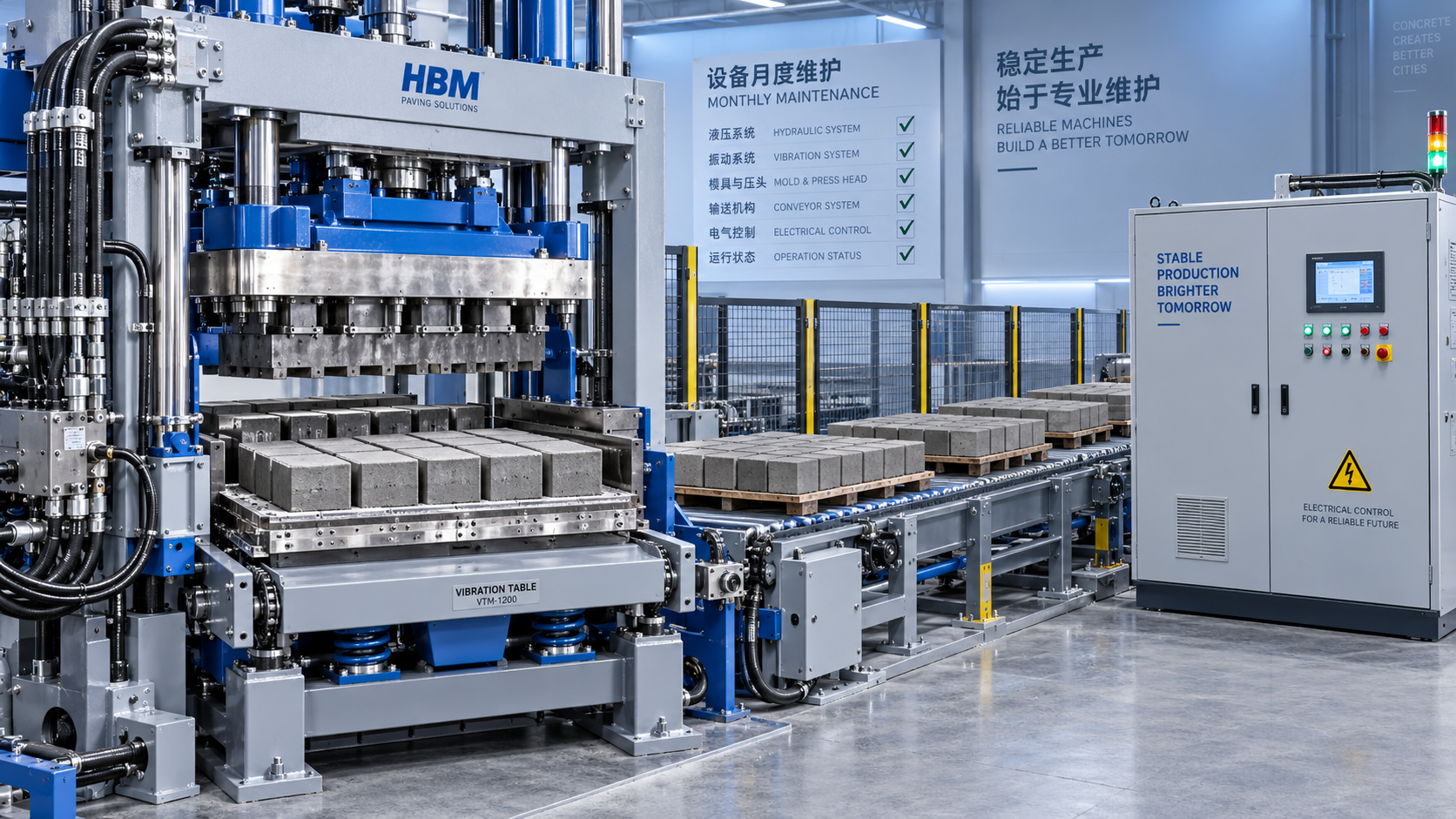
What maintenance does a paving block machine need monthly? The priority is preventing quality drift, hydraulic failures, mold wear, and unplanned production stoppages before they become expensive repairs.
A monthly maintenance routine should combine inspection, cleaning, lubrication, adjustment, testing, and documented corrective action. It is more detailed than daily operator checks but less intrusive than annual overhaul work.
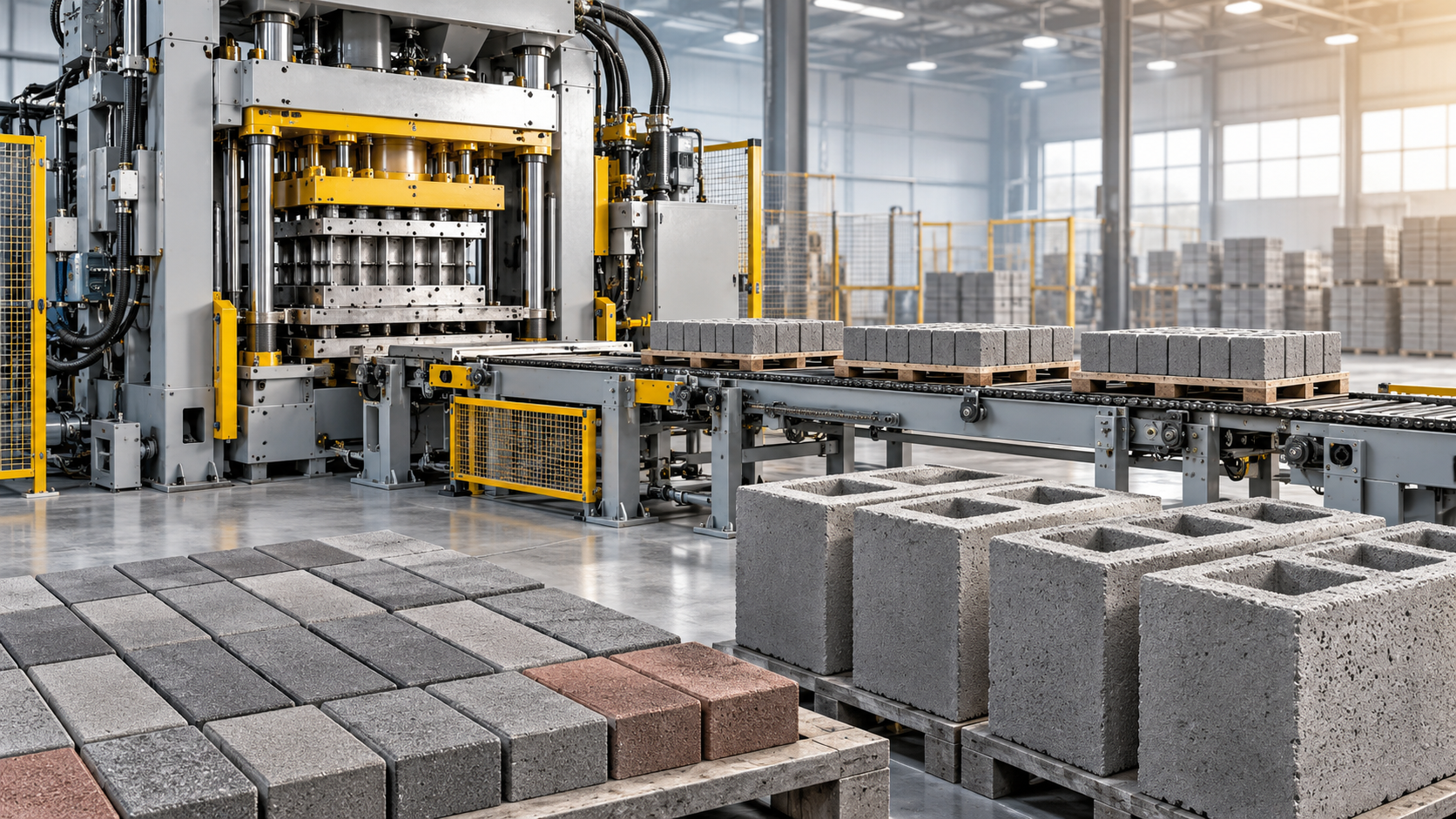
For block producers, the right schedule protects machine availability while helping maintain consistent block dimensions, compaction density, surface finish, and cycle time throughout demanding production periods.
Start With Safety, Records, and Machine Condition
Before maintenance begins, stop production, isolate electrical power, release hydraulic pressure, and apply the facility lockout and tagout procedure required for the specific paving block machine.
Monthly maintenance is most effective when technicians compare current findings with previous inspection records. Repeated leaks, recurring alarms, or faster wear often reveal a developing underlying problem.
Review production hours, block output, downtime events, rejected-block rates, and operator comments before opening panels or dismantling components. These operating signals help prioritize the inspection sequence.
Walk around the entire machine and look for oil stains, loose fasteners, cracked guards, unusual vibration marks, damaged hoses, and accumulated concrete debris around moving assemblies.
Pay attention to changes in sound during normal operation. Knocking, squealing, grinding, or irregular hydraulic noise may indicate insufficient lubrication, bearing wear, air ingress, or alignment issues.
Clean the machine exterior before inspecting it closely. Hardened concrete, dust, and oil residue can conceal cracks, loose fittings, damaged cables, and early evidence of component failure.
Document each finding with a date, location, probable cause, action taken, and responsible technician. Clear maintenance records support better spare-parts planning and reduce dependence on individual experience.
Inspect the Hydraulic System Carefully
Hydraulic performance directly affects vibration, compaction, mold movement, pallet handling, and block density. A monthly hydraulic inspection should receive more attention than a simple visual oil-level check.
Check the hydraulic oil level only under the machine conditions specified by the manufacturer. Incorrect readings can result when cylinders are extended, oil is hot, or reservoirs are not settled.
Inspect oil color, odor, and visible contamination. Darkened oil, burnt smell, foaming, or water-like appearance can signal overheating, oxidation, moisture contamination, or air entering the circuit.
Examine hoses, fittings, valves, manifolds, cylinders, and pump connections for seepage. Even small leaks should be corrected because pressure loss and contamination can rapidly damage hydraulic components.
Check hose routing and clamps to ensure hoses do not rub against frames, sharp edges, or moving parts. Abrasion can create sudden hose failure and serious safety hazards.
Inspect cylinder rods for scoring, corrosion, pitting, and concrete buildup. Damaged rod surfaces can destroy seals, reduce positioning accuracy, and eventually allow hydraulic oil to leak externally.
Verify hydraulic pressure and cycle response against the machine specification. Slow movement, inconsistent pressure, or excessive heat may require filter replacement, valve inspection, pump diagnosis, or oil analysis.
Lubricate Moving Parts and Check Wear Points
Monthly lubrication prevents premature wear in the components that repeatedly absorb vibration, load transfer, and movement. Use only the grease grades and intervals recommended for the machine model.
Inspect automatic lubrication systems if fitted. Confirm that lubricant reservoirs are filled, lines are not blocked, injectors are functioning, and grease reaches every intended bearing point.
For manual lubrication points, clean fittings before applying grease. Dirt pushed through a grease nipple can contaminate bearings and shorten the service life of pins, bushes, and guides.
Focus on guide columns, guide bushes, linkages, pallet-feeder joints, lifting mechanisms, press-head guides, and other parts subject to repetitive motion during every production cycle.
Check bearings for heat, looseness, noise, or rough rotation. A bearing may still operate during production while already creating vibration that damages nearby shafts, housings, and fasteners.
Measure or assess play in pins, bushes, guides, and sliding surfaces. Excessive clearance can reduce mold alignment and produce blocks with inconsistent edges, dimensions, or interlocking profiles.
Inspect bolts on vibration units, frames, presses, and moving mechanisms. Retighten them using the correct torque values, because vibration can loosen fasteners gradually without obvious visible movement.
Examine Molds, Press Heads, and Product-Forming Parts
Mold condition has a direct effect on saleable block quality. Monthly inspection should identify wear before it causes chipped edges, uneven dimensions, sticking products, or excessive reject rates.
Clean molds thoroughly and remove compacted concrete from cavities, partitions, and venting areas. Residue changes the effective mold dimensions and prevents products from releasing smoothly after compaction.
Inspect mold walls, divider plates, welds, mounting surfaces, and cavity corners for deformation, cracks, wear, or damage caused by aggregate abrasion and repeated vibration.
Check the press head, tamper shoes, and compaction plates for flatness, wear pattern, and secure mounting. Uneven contact can produce density variation across the same pallet.
Verify the alignment between the mold, press head, and vibration table. Misalignment can accelerate wear, damage expensive tooling, and create blocks with poor geometry or weak corners.
Review product dimensions using calibrated gauges or sample checks. Comparing results with the approved block specification helps determine whether an adjustment is needed before quality complaints increase.
Replace worn mold inserts, damaged tamper shoes, and broken fasteners promptly. Delaying replacement often increases the risk of secondary damage to the mold frame and machine structure.
Check the Vibration Table and Compaction Performance
Consistent vibration is essential for producing dense paving blocks with reliable strength. Monthly checks should confirm that vibration energy remains balanced, stable, and appropriate for the material mix.
Inspect vibrator motors, eccentric shafts, couplings, and mountings for loose bolts, cracks, abnormal heat, or evidence that the assembly has shifted from its designed position.
Listen for unusual vibration sounds during a controlled test cycle. Rattling or irregular noise can indicate loose fasteners, damaged bearings, imbalanced eccentric weights, or worn support components.
Check vibration-table springs, rubber buffers, and isolators for cracking, compression damage, or uneven height. Damaged supports can transfer vibration into the frame and affect compaction consistency.
Inspect electrical connections to vibration motors, especially terminals exposed to dust and repeated movement. Loose connections can cause overheating, unstable motor performance, or unexpected shutdowns.
Compare cycle times and block density with normal production data. If density declines without a mix-design change, investigate vibration settings, hydraulic pressure, material moisture, and mold condition.
Do not adjust vibration frequency or amplitude casually. Any changes should follow documented production trials because aggressive settings can accelerate machine wear without improving finished block quality.
Inspect Electrical Controls, Sensors, and Safety Devices
Electrical and automation faults often create intermittent downtime that operators cannot easily diagnose. Monthly checks should focus on connections, sensors, control cabinets, and safety interlocks.
Open electrical cabinets only after proper isolation. Remove dust carefully, inspect cooling fans and filters, and look for discoloration, loose terminals, moisture, or overheated electrical components.
Check cables along moving routes for damaged insulation, crushing, loose connectors, and inadequate support. Cable failures may cause false sensor signals or stop the machine mid-cycle.
Test limit switches, proximity sensors, photoelectric sensors, and position feedback devices. Confirm that each sensor provides accurate signals at the required machine position and timing.
Inspect the control panel for fault messages, inconsistent indicator lights, and damaged pushbuttons. Record recurring alarms rather than simply resetting them, since repetition requires root-cause investigation.
Test emergency-stop devices, guarding interlocks, warning indicators, and safety switches according to site procedures. These systems must work reliably before the machine returns to production.
Back up programmable controller settings and production recipes where the control system allows it. A current backup can substantially reduce recovery time after electrical replacement or software failure.
Review Feeding, Pallet Handling, and Material Flow
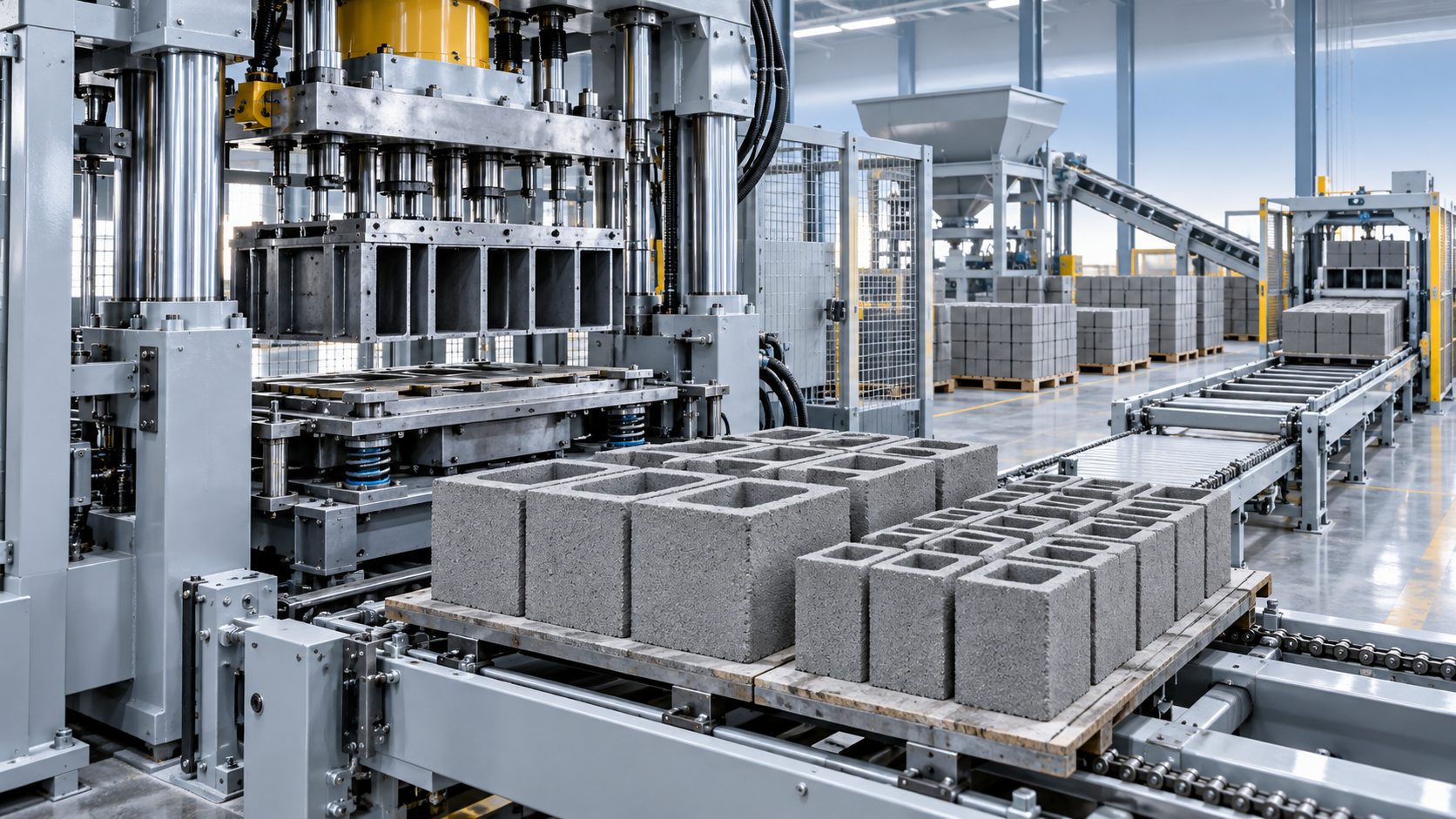
A paving block machine cannot maintain output when material feeding or pallet movement becomes inconsistent. Monthly inspections should cover the assemblies that support stable, repeatable cycle operation.
Inspect the concrete feeder box, agitators, scraper blades, and material distribution components. Look for hardened material, uneven wear, damaged seals, and movement that is no longer smooth.
Check hopper gates, cylinders, and linkages for correct opening and closing. Incomplete filling creates low-density areas, while excessive material can increase cleanup requirements and mold contamination.
Inspect pallet magazines, pallet feeders, transfer chains, rollers, and guides. Misaligned or damaged pallets can jam the line, affect block bottoms, and cause downstream handling problems.
Measure pallet flatness and replace warped or cracked boards. Uneven pallets reduce the accuracy of block height and may place abnormal load on the mold and press components.
Check chains, sprockets, belts, and drive units for tension, lubrication, alignment, and wear. Replace components as matched sets when required to avoid uneven motion and repeated adjustment.
Observe one complete production cycle after maintenance. Watch material filling, compaction, demolding, pallet transfer, and discharge to confirm that all synchronized movements remain stable.
Plan Repairs, Spares, and Performance Improvements
The value of monthly maintenance comes from decisions made after inspection. Classify findings by immediate safety risk, production impact, block-quality risk, and expected repair cost.
Correct safety-critical defects and active leaks before restarting the machine. Schedule quality-related adjustments quickly, especially when they affect dimensions, compaction, appearance, or customer acceptance requirements.
Use the maintenance report to forecast spare parts such as seals, hoses, bearings, mold inserts, springs, sensors, and wear plates. Planned replacement is usually less costly than emergency purchasing.
Track failures by component and operating hours. This information helps managers identify whether a recurring problem is caused by incorrect operation, unsuitable materials, poor installation, or part quality.
Discuss inspection findings with operators because they often notice changes first. Their observations about sounds, cycle delays, material behavior, and demolding problems can improve diagnostic accuracy.
For high-output plants, combine monthly checks with periodic support from the equipment manufacturer. Specialist inspection can identify calibration, structural, hydraulic, and automation issues that routine teams may miss.
Reliable manufacturers can also provide machine-specific service guidance, technical documentation, original spare parts, and upgrade recommendations based on the production line configuration and block types produced.
Conclusion: Treat Monthly Maintenance as Production Control
What maintenance does a paving block machine need monthly? It needs systematic attention to hydraulics, lubrication, molds, vibration, electrical controls, feeding systems, pallets, and safety devices.
The most effective approach is not simply replacing parts on a calendar. It is using inspection results, production data, and block-quality checks to identify deterioration before failure occurs.
When monthly maintenance is documented and completed consistently, manufacturers can reduce unexpected downtime, protect tooling investment, stabilize output quality, and extend the useful life of their paving block machine.
Next:No more content
Recommend
 Oct 16, 2026
What Monthly Maintenance Does a Paving Block Machine Need?
What maintenance does a paving block machine need monthly? Discover essential checks for hydraulics, molds, vibration, safety, and reliable block quality.
- Oct 15, 2026
Can a Hollow Block Making Machine Produce Different Block Sizes?
Can a hollow block making machine produce different block sizes? Discover how interchangeable molds, smart settings, and reliable equipment improve flexibility and output.
- Oct 14, 2026
What Is the Difference Between a Concrete Brick Machine and a Block Machine?
What is the difference between concrete brick machine and block machine? Compare products, molds, output, and find the right solution for your plant.