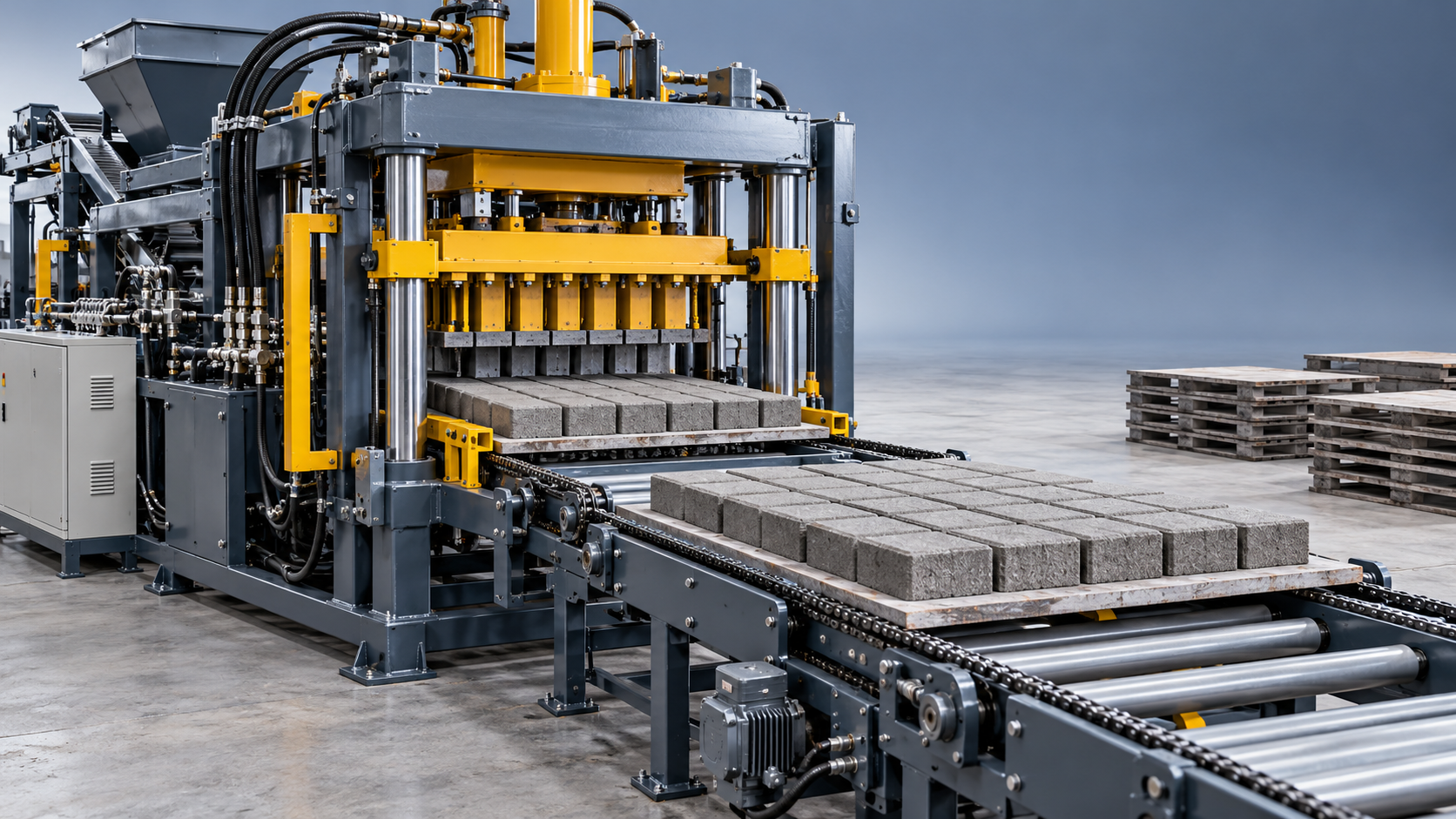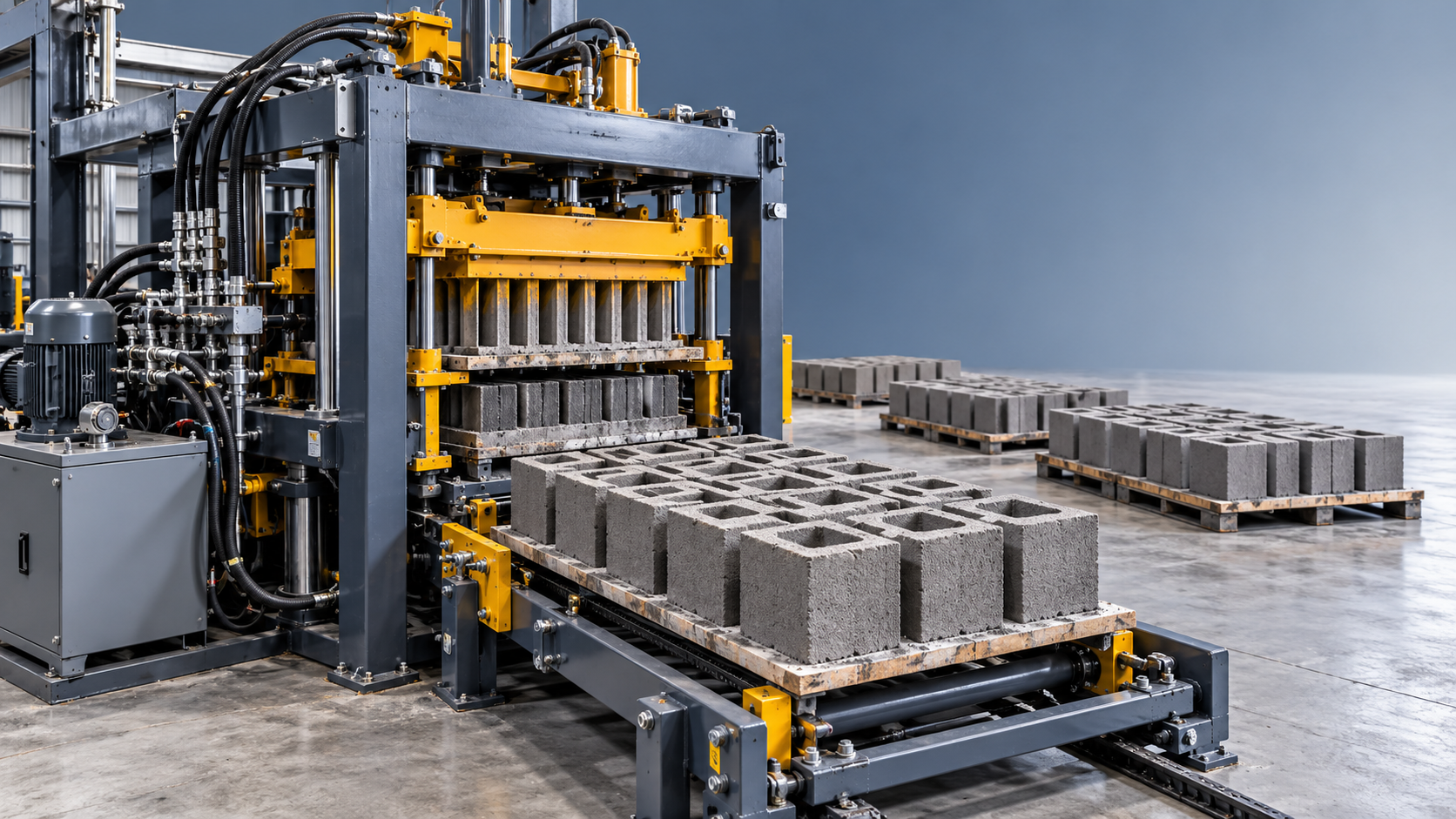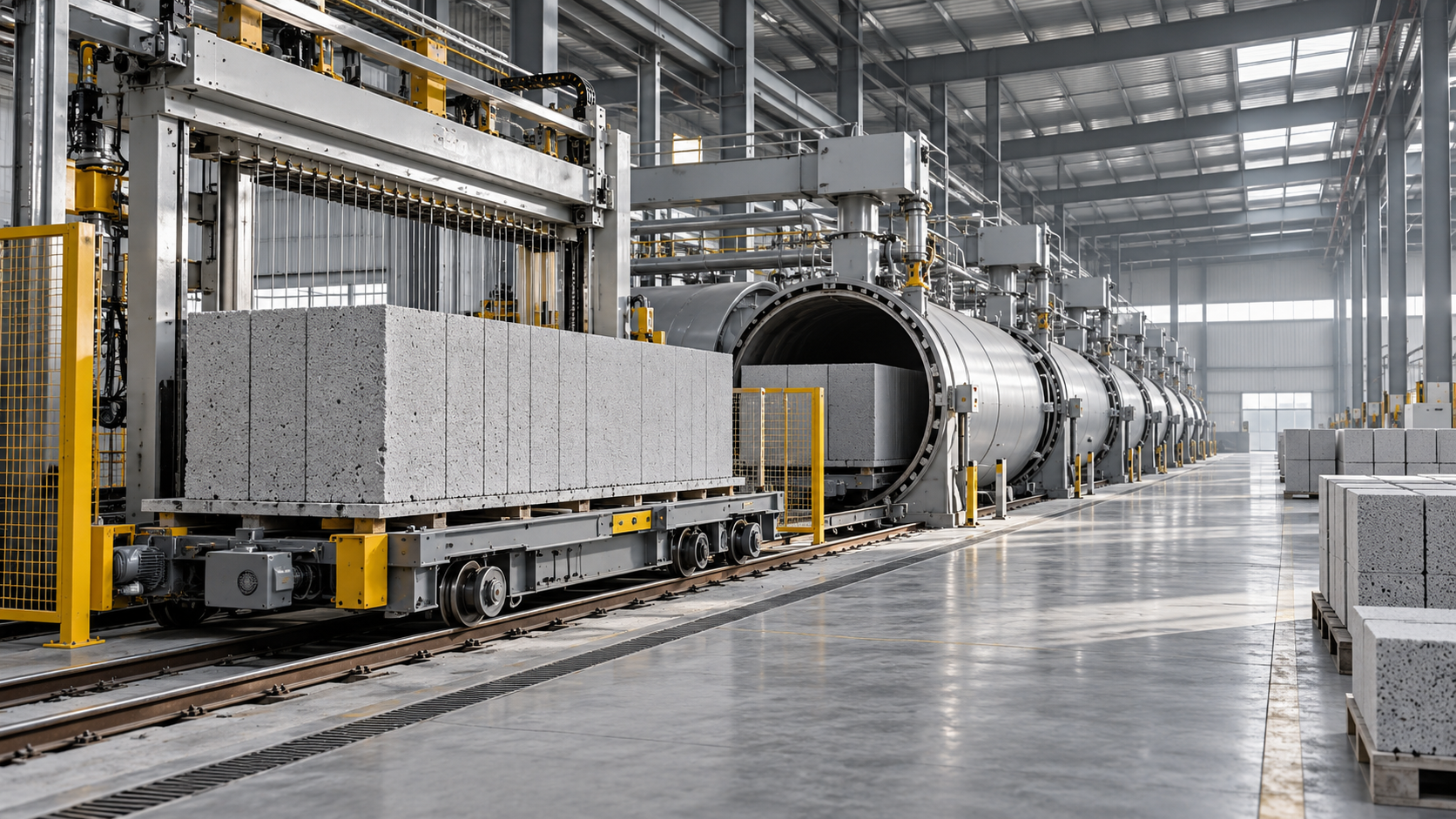
Can a Hollow Block Making Machine Meet Export Project Requirements?
Can a hollow block making machine meet export project requirements? Yes—but suitability depends on much more than its advertised production capacity. For an overseas contractor or building materials producer, the machine must produce blocks that meet the destination market’s specifications, work with available raw materials, suit local utilities, and remain maintainable after installation.
The expensive mistake is buying a machine that performs well at the supplier’s factory but struggles under actual site conditions. A different aggregate grading, unstable power supply, or insufficient curing space can turn an apparently suitable production line into a project bottleneck.
Drawing on the manufacturing background of Shandong Hongfa Scientific Industrial & Trading Co., Ltd., which began producing construction machinery in 1990, this guide explains what buyers should verify before ordering. The goal is straightforward: turn an export inquiry into a clear, testable equipment specification.
Start with the block the project must accept
Before comparing machine models, obtain the project’s masonry unit requirements. “Standard hollow block” is not a sufficiently precise specification. External dimensions may look familiar while wall thickness, void arrangement, strength requirements, and test procedures differ between markets.
A useful starting document should identify:
- Block length, width, height, and permitted dimensional tolerances.
- Whether the units are intended for loadbearing or non-loadbearing construction.
- Required compressive strength, including the test age and calculation basis.
- Limits for water absorption, density, or other properties specified by the project.
- Minimum face-shell and web dimensions where applicable.
- Requirements for appearance, handling damage, sampling, and acceptance.
Some projects reference ASTM C90 or ASTM C129; others use EN 771-3 or national standards. These references are not interchangeable. Confirm the applicable edition, local adoption, and project-specific amendments with the responsible engineer or testing laboratory.
Machine conformity and block conformity are separate questions. Machinery documentation does not prove that finished blocks meet a building specification. Equally, a successful block test does not establish that the equipment satisfies destination-country machinery safety requirements.
Local raw materials decide whether factory results can be repeated
A hollow block making machine forms and compacts a concrete mixture. It cannot compensate indefinitely for unsuitable aggregates, inconsistent batching, or incorrect moisture. This is particularly important when a supplier’s demonstration uses materials that differ substantially from those available at the overseas site.
Send the supplier information about local cement, sand, crushed stone, stone dust, and any proposed supplementary materials. Aggregate grading, maximum particle size, contamination, and moisture variation all deserve attention. Materials must suit both the concrete mix and the mold geometry, especially where thin webs or narrow sections are involved.
Ask for a material-based trial, not just a running video
Where practical, arrange trials with representative buyer materials or a documented equivalent. Record the mix proportions, material properties, moisture conditions, machine settings, and curing method. Without those details, attractive sample blocks provide limited evidence of repeatable production.
Assess fresh blocks for shape retention and handling stability, then test cured samples against the agreed specification. High compaction pressure or a short molding cycle is not, by itself, proof of satisfactory strength.
If local materials are unavailable before shipment, agree on a commissioning trial at the destination. State who will develop the initial mix, arrange laboratory testing, and pay for additional trials. This avoids leaving a critical responsibility unresolved until technicians are already on site.
Translate advertised capacity into saleable daily output
Buyers often compare machines by blocks per hour. That figure can be useful, but only when the assumptions are visible. Capacity varies with block dimensions, mold configuration, mix behavior, feeding time, vibration settings, and handling arrangements.
A practical calculation is:
Saleable output = blocks per cycle × actual cycles per hour × operating hours × operating availability × acceptance rate.
For illustration only, a machine producing six blocks per cycle at an actual 25-second cycle would have a theoretical rate of 864 blocks per hour. Over an eight-hour shift, that equals 6,912 blocks before allowances. At 80% operating availability and a 97% acceptance rate, the result would be approximately 5,364 saleable blocks. These are calculation assumptions, not a Hongfa machine performance claim.
The difference matters when a construction schedule depends on daily deliveries. Ask suppliers to distinguish theoretical output, expected operating output, and any contractually guaranteed output under defined conditions.
Then check the rest of the line. An undersized mixer, slow pallet return, limited forklift availability, or crowded curing area can restrict production even when the molding machine has spare capacity. Request a line balance covering batching, mixing, forming, fresh-block transfer, curing, and finished-block handling.
Match automation to the site—not to the brochure
A fully automatic hollow block production line can reduce repetitive handling and improve process consistency. However, it also requires suitable maintenance skills, dependable utilities, and access to replacement components. A simpler configuration may be more practical for a smaller operation with limited technical support.
Clarify what “automatic” includes. One quotation may cover only the molding cycle; another may include batching, conveying, stacking, and pallet return. Compare complete operating scopes rather than labels.
Check the export installation before the machine is built
Electrical compatibility requires more than matching a voltage on the quotation. Confirm voltage, frequency, phase arrangement, available supply capacity, earthing requirements, and local electrical rules. Motors, controls, and protective devices should be selected for the agreed supply conditions.
Provide the supplier with site information early: ambient temperature, humidity, elevation where relevant, dust exposure, and whether equipment will operate indoors or under a shelter. These conditions may affect component selection, cooling, storage, and maintenance.
The civil works package is equally important. Obtain foundation drawings, equipment loads, anchor requirements, access clearances, and the proposed line layout before construction begins. Leave room for maintenance and safe vehicle movement, not merely enough space to fit the equipment.
Water storage, drainage, compressed air where required, aggregate bays, and curing facilities should appear in the preparation checklist. Curing is particularly easy to underestimate. Even correctly formed blocks can fail strength or appearance requirements when moisture retention and handling are poorly controlled.
Confirm which compliance documents actually apply
The destination may require machinery safety documentation, electrical records, inspection certificates, or other import approvals. Establish these requirements with the importer, local authorities, and qualified advisers before finalizing the purchase.
Do not assume that an ISO quality management certificate substitutes for product conformity documents. Check the scope, validity, and relevance of any certificate offered, and confirm that required documents cover the equipment being supplied.
Write acceptance criteria before paying the deposit
The purchase agreement should translate expectations into observable checks. Phrases such as “good quality,” “high output,” or “easy operation” leave too much room for disagreement.
A factory acceptance test can verify the machine configuration, mold dimensions, operating sequences, safety functions, and production performance under agreed factory conditions. It can also identify missing accessories before packing. Record the materials used and the duration of the test; a brief demonstration may not reveal recurring stoppages.
Site acceptance should address performance after installation using the agreed utilities, local materials, trained operators, and curing arrangements. Where cured block results form part of acceptance, allow enough time for the specified testing age.
Define the following in writing:
- The block types and molds included in the order.
- The conditions under which output and quality will be assessed.
- Sampling methods and the laboratory responsible for testing.
- Permitted stoppages, exclusions, and retest procedures.
- Responsibilities for installation, commissioning, and operator training.
- The remedy and timetable if agreed acceptance criteria are not achieved.
This protects both parties. The buyer gains measurable expectations, while the supplier is not held responsible for unspecified materials or unfinished site works.
Shipping and service belong in the production plan
A machine that arrives without the necessary unloading plan or assembly information is not ready for production. Request a packing list showing package dimensions, weights, lifting points, and any special handling requirements. Check these against port facilities, inland transport restrictions, and site lifting equipment.
Agree on corrosion protection and moisture protection appropriate to the route and storage period. If wooden packaging is used, verify applicable phytosanitary requirements. Confirm the Incoterms rule, named place, and version, then clarify responsibility for insurance, customs clearance, unloading, and inland delivery.
For after-sales support, ask specific operational questions rather than accepting a general promise of assistance. Which time zone does the service team cover? What information is needed for remote diagnosis? Are electrical drawings, operating manuals, parameter backups, and parts lists supplied in an agreed language?
The initial spare-parts package should reflect the selected machine and the consequences of downtime. Discuss wear components, sensors, seals, and other critical items with the supplier, along with part numbers and replacement procedures. Mold maintenance and replacement planning also deserve attention because tooling condition directly affects block dimensions and appearance.
Where Hongfa fits into the evaluation
Shandong Hongfa Scientific Industrial & Trading Co., Ltd. manufactures construction machinery, including block machines and production lines, concrete batching plants, and aerated concrete block production lines. Its manufacturing history dates to 1990. For an export buyer, this range makes it relevant to discuss the interaction between material preparation, batching, molding, and downstream handling—not just the standalone machine.
However, manufacturing history should be treated as a starting point for technical discussion, not a substitute for project verification. Ask Hongfa to propose a configuration against your block specification, material information, production target, and site conditions. Obtain current model documentation, applicable certificates, a defined supply scope, and written service arrangements.
A hollow block making machine can meet export project requirements when the complete production system is matched to the project and verified against agreed criteria. Before requesting a final quotation, prepare a brief containing the destination, required block drawings, applicable standards, daily saleable output target, raw material details, power supply, and site layout. That preparation makes competing offers easier to compare—and gives the eventual production line a much better chance of performing as expected after delivery.
Recommend
 Oct 25, 2026
How Much Does a Paving Block Machine Cost to Operate?
How much does a paving block machine cost to operate? Explore material, labor, energy, and maintenance costs per saleable paver to compare machines and protect your margins.
- Oct 25, 2026
Can a Hollow Block Making Machine Meet Export Project Requirements?
Can a hollow block making machine meet export project requirements? Discover how to verify block standards, output, site compatibility, and supplier support before you invest.
- Oct 24, 2026
How Do You Choose an AAC Block Machine for a New Plant?
How do I choose an AAC block machine for a new plant? Discover how to match output, raw materials, autoclaves, and costs to select a balanced production line and avoid costly mistakes.