How Much Does a Shandong Hongfa AAC Plant Cost?
A Shandong Hongfa AAC plant has no reliable single price without a defined production capacity, equipment scope, and delivery location. The quoted machinery price is also only one part of the project budget: freight, foundations, utilities, installation, commissioning, and working capital can materially change the amount required to start production. A meaningful price comparison begins with an equipment list and a clear statement of what is included.
Shandong Hongfa Scientific Industrial & Trading Co. is associated with aerated concrete block production lines, but a project-specific quotation is needed to establish the cost of a particular configuration. Capacity alone is not enough: two lines described with the same annual output can have different levels of automation, different curing equipment, and different assumptions about operating time.
What the plant price needs to cover
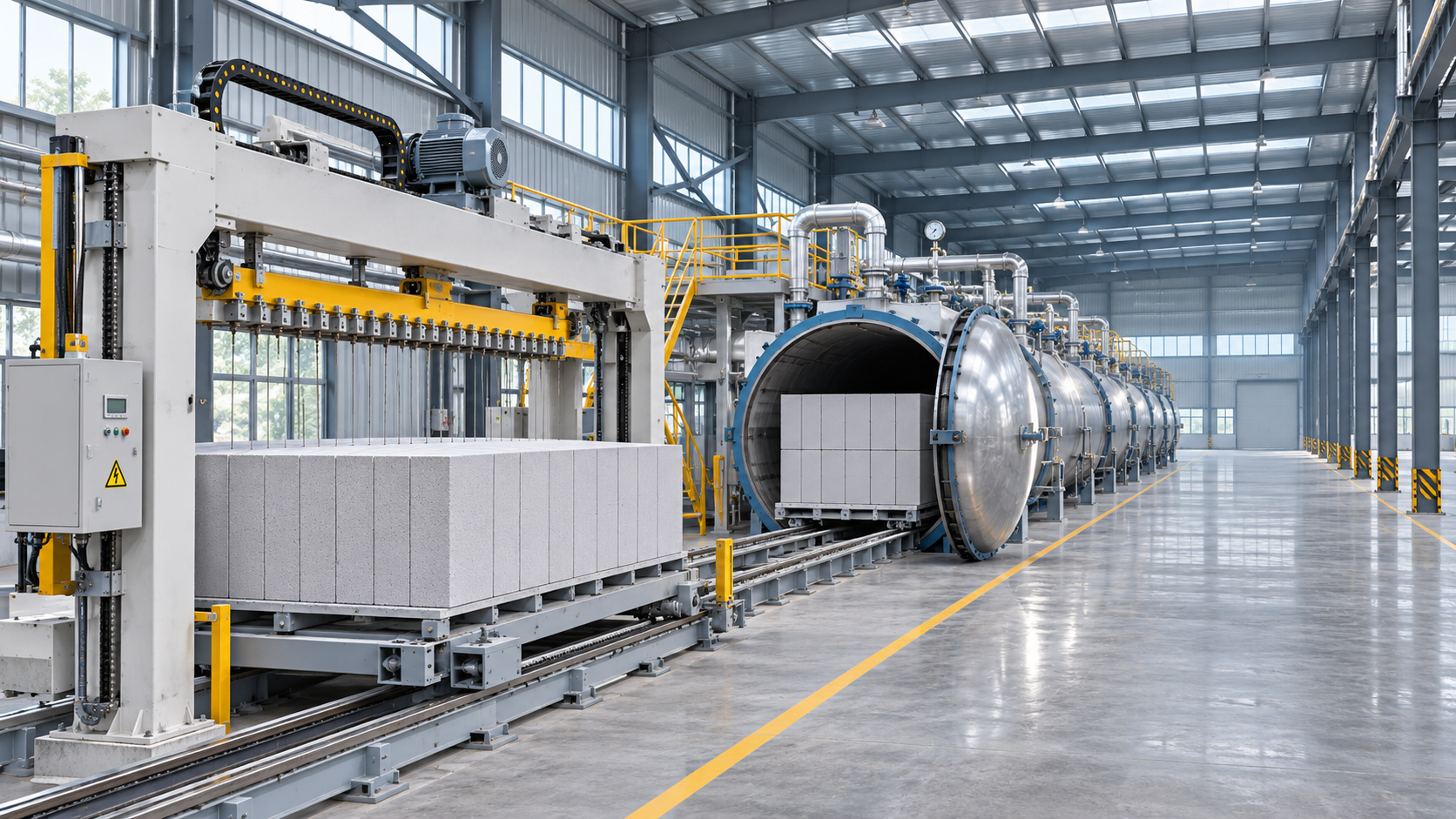
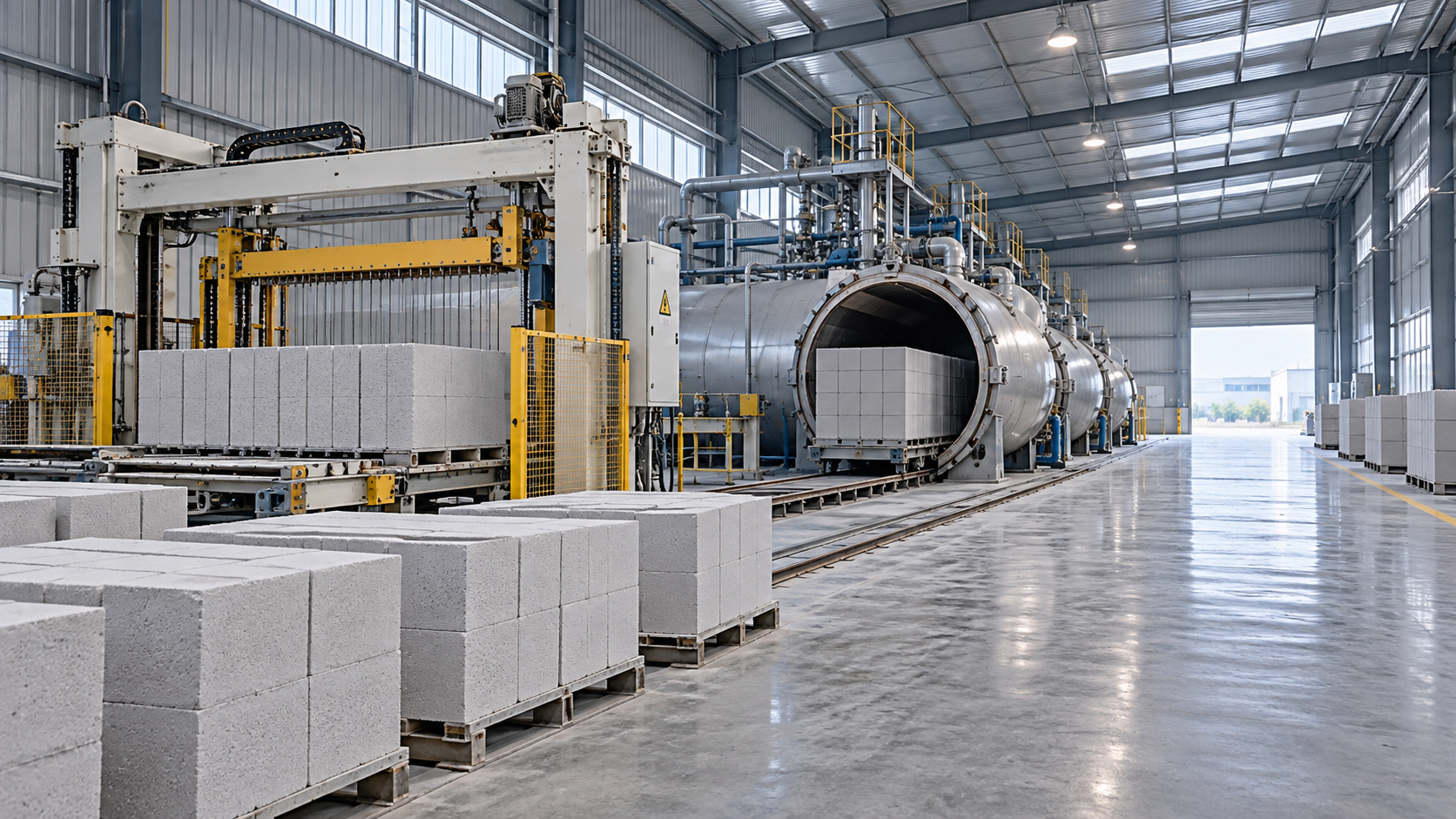
An AAC line turns a prepared slurry into aerated, cut, and steam-cured products. A complete production sequence generally includes raw material preparation, batching and mixing, casting, pre-curing, cutting, autoclave curing, and finished-product handling. The commercial boundary around those stages determines what the price represents.
For example, a quotation might include a mixer, molds, a cutting machine, and autoclaves while leaving the boiler, water treatment, electrical distribution, or factory crane to a separate contract. Those omissions do not necessarily make the offer unsuitable, but they do create additional costs and coordination work. The same applies to storage silos, conveyors, slurry tanks, laboratory equipment, and packaging machinery.
Ask for a line-item scope that identifies equipment quantities, principal specifications, and the connection points for services. A drawing showing the flow of material and the location of major machines makes omissions easier to detect than a short list of machine names. It also reveals whether space is needed for equipment that will be sourced separately.
Capacity is a specification, not a price by itself
Plant output is often expressed as a volume per year. That figure is useful only when the underlying schedule is stated. Annual output based on continuous operation cannot be directly compared with output based on fewer shifts or planned production days. Request the assumed operating days, shifts, availability, and product mix alongside the stated capacity.
The curing cycle also limits throughput. A cutting machine can process material quickly, yet completed cakes still need sufficient autoclave space and time. The number and dimensions of autoclaves, the loading arrangement, and the steam cycle must fit the proposed production schedule. Adding a faster cutter does not automatically raise plant output if curing remains the constraint.
Product dimensions and target density matter as well. The volume reported at the casting stage is not necessarily identical to saleable finished volume after cutting, handling losses, and quality rejection. A useful capacity statement identifies the point at which output is measured and explains whether it represents theoretical equipment throughput or expected saleable production under stated conditions.
If future expansion is important, ask which parts of the initial layout limit it. Space for an additional autoclave has little value if the steam system, rail arrangement, or building access cannot support it without extensive reconstruction. Conversely, purchasing every expansion component at the outset ties up capital before the additional capacity is needed.
Raw materials change the equipment configuration
The choice of sand, fly ash, cement, lime, gypsum, and aerating agent affects material preparation and the equipment included in a line. Sand-based production may require grinding and slurry preparation; the characteristics of available fly ash influence whether additional processing or storage is needed. The exact arrangement should follow tests of the materials intended for the plant.
Two quotations that assume different raw materials are therefore not directly comparable. A lower machinery price based on ready-to-use material may exclude a mill, slurry storage, or handling equipment required at the proposed site. The purchase price of those components is only part of the difference: they also affect building space, power demand, water use, maintenance, and operating procedures.
Share representative material samples or test results when requesting a detailed configuration. The relevant information includes moisture, fineness, chemical composition where available, and consistency of supply. Changes in lime reactivity or raw material fineness can alter how the mix behaves during rising and setting, which in turn affects the timing of cutting and the amount of usable output.
The intended block properties belong in the same discussion. Density, dimensions, and required strength influence the mix design and production settings. A quotation based on an unspecified product range leaves open the question of whether the proposed equipment and mold arrangement match the finished blocks.
Automation and handling equipment
Automation affects both the initial quotation and the way the plant is staffed and operated. Automated batching, mold movement, cutting controls, and product handling add equipment and controls. They also introduce sensors, drives, and control components that need maintenance and replacement over the plant’s life.
Compare the actual functions included rather than relying on terms such as “automatic” or “semi-automatic.” A line may automate dosing but still require substantial manual handling of molds or finished blocks. Another may include transfer cars and separation equipment while excluding packaging. The interfaces between stages often explain a substantial part of the price difference.
Finished-product handling deserves particular attention. Freshly cured blocks must be moved, separated where necessary, and prepared for storage or dispatch without excessive breakage. If the quotation stops at the autoclave exit, the cost of cranes, clamps, pallets, strapping, or wrapping must be considered separately. The appropriate arrangement depends on block dimensions, site layout, and how the finished product will leave the factory.
Freight, installation, and commissioning
Large vessels, cutting frames, and other bulky components can make transport and installation significant parts of the budget. The quoted delivery term should identify the point at which responsibility for freight, insurance, import charges, unloading, and inland transport changes hands. A price quoted at the factory and a price delivered to the site cover different work.
Site conditions also affect installation. Autoclaves and heavy machinery require suitable foundations, alignment, lifting access, and enough clearance for assembly and maintenance. A compact building may appear economical until it prevents a vessel from being positioned or a major component from being removed for repair. Obtain foundation loads and layout requirements before finalizing civil works.
Installation supervision and physical installation are separate items. A quotation for a visiting technician does not necessarily include local fitters, electricians, cranes, scaffolding, travel, accommodation, or interpretation. The contract should state who supplies each resource and how long the included supervision period lasts. Delays caused by incomplete foundations or unavailable utilities can extend the work beyond that period.
Commissioning should have an equally clear boundary. Cold testing, steam testing, trial batches, recipe adjustment, and production acceptance require different resources. Identify who supplies raw materials and energy during trials, what training is included, and how acceptance output and product properties will be measured. If acceptance depends on specified raw materials or utility conditions, record those conditions in the agreement.
Utility costs can change the project decision
AAC curing requires steam, so the boiler and steam distribution system deserve the same scrutiny as the production machines. Establish whether the boiler is included, which fuel it is designed to use, and whether the quoted steam capacity matches the planned autoclave schedule. Insulation, condensate return, water treatment, and the distance between the boiler and autoclaves influence the installed system and its operating cost.
Electrical requirements should be expressed as a connected load and a practical operating demand, where available. The two are different: not every motor runs at full load at the same time. A site with limited grid capacity may need transformer upgrades or other electrical work that is absent from the equipment quote. Confirm voltage, frequency, and the location of the supplier’s electrical connection points.
Water availability matters for slurry preparation, steam generation, and cleaning. The quality required by the boiler system can differ from that required for production. If treatment equipment is excluded, allow for its purchase, installation, and ongoing consumables. Establish where production slurry and wash water will be collected and whether the proposed line includes equipment for returning suitable material to the process.
Turn the quotation into a working budget
Build the budget around the same physical scope for every offer. Start with the equipment price, then add the amounts assigned to freight, site works, utilities, installation, commissioning, and initial operation. List unresolved items separately so that an excluded boiler or an unpriced foundation is visible rather than treated as zero cost.
Payment terms affect the cash schedule even when the total contract price is unchanged. Identify deposits, manufacturing milestones, delivery payments, and any balance linked to acceptance. Currency, exchange-rate exposure, taxes, and the validity period of the offer also affect the amount ultimately paid. Spare parts, replacement cutting wires, lubricants, and maintenance tools should be identified by quantity and price rather than assumed to be included.
For operating projections, request equipment power ratings and the utility assumptions used for the proposed output. Then apply local energy, fuel, water, raw material, and labor costs to the intended schedule. Treat trial production separately from steady operation: early batches can consume materials and time while the process is being adjusted.
Information needed for a useful price request
A detailed inquiry should specify the desired annual or daily saleable output, planned operating schedule, block dimensions, target density and strength, and the raw materials available at the site. Include the destination, site constraints, available voltage, water supply, and intended boiler fuel. State whether the requested scope includes buildings, steam generation, installation, training, and finished-product packaging.
Ask for a written equipment list, process layout, utility requirements, delivery terms, commissioning scope, and an itemized list of exclusions. Where an assumption has not yet been tested—such as raw material suitability or achievable output—identify it in the quotation and agree on how it will be resolved before the specification is finalized.
Recommend
 Nov 13, 2026
How to Evaluate Shandong Hongfa Quartz Line Reviews
Ltd. AAC plant price searches can mix unrelated results. Learn how to evaluate Shandong Hongfa quartz line reviews, costs, performance, and support before you buy.
- Nov 13, 2026
How Much Does a Shandong Hongfa AAC Plant Cost?
Shandong Hongfa Scientific Industrial & Trading Co. AAC plant costs depend on capacity, equipment and delivery. Explore key budget factors before requesting a quote.
- Nov 10, 2026
Is a Semi-Automatic AAC Line Worth It for a Small Factory?
Is a semi-automatic AAC line worth it for a small factory? Explore costs, labor, energy needs, and ROI to make a confident investment decision.