How Much Does an Automated AAC Production Line Cost?
How Much Does an Automated AAC Production Line Typically Cost?
An automated AAC production line can represent a major industrial investment, and the price is rarely a single, universal figure. Depending on capacity, automation scope, raw-material conditions, autoclave configuration, plant layout, and local construction requirements, a project may range from a few million US dollars for a compact line to well above US$10 million for a high-capacity, fully integrated facility.
For many investors, the real question is not simply “What is the machine price?” It is: What level of production capacity and automation will produce competitive AAC blocks or panels at a sustainable cost? A lower initial quotation may exclude critical items such as steam systems, cutting tools, mold circulation, installation support, dust collection, or electrical controls. Conversely, a more complete solution may require a larger budget upfront but reduce labor dependence, material waste, downtime, and quality variation over many years.
As a practical starting point, an automated AAC block production line is often evaluated in these broad investment bands:
These figures should be treated as planning references rather than fixed offers. They may cover the principal production equipment, but not necessarily land, factory buildings, civil works, taxes, utilities, local permits, freight, installation labor, or working capital. The final automated AAC production line cost depends on the project boundary defined in the technical proposal.
Why AAC Line Prices Vary So Widely
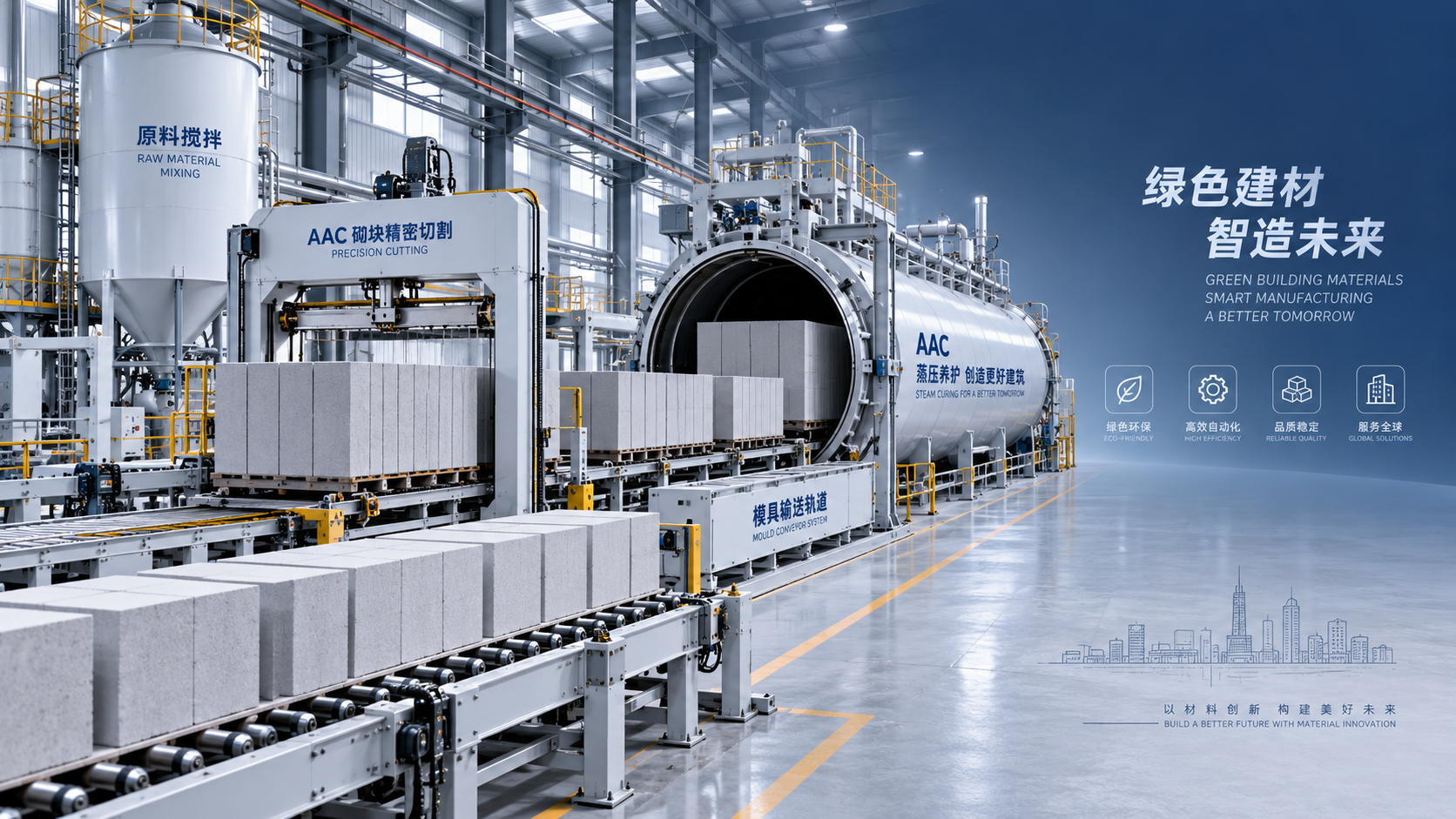
AAC manufacturing is a connected process rather than a single machine purchase. Raw materials are prepared, batched, mixed, poured into molds, pre-cured, cut, autoclaved, packed, and moved through the factory. Every link affects both investment cost and finished-product consistency.
Two lines with the same stated annual output can therefore have very different prices. One may use manual mold handling and simplified material transport; another may include automatic dosing, intelligent batching, hydraulic mold circulation, servo-controlled cutting, automated grouping, finished-product conveying, and centralized control software.
When comparing quotations, buyers should look beyond the annual capacity printed at the top of the document. A useful question is: Which processes are automated, and which processes still require manual intervention?
Production Capacity and Daily Operating Hours
Capacity is usually the strongest cost driver. A plant designed for a modest regional market does not require the same number of molds, autoclaves, cutting frames, conveyors, or handling systems as a facility intended to serve several cities or export markets.
However, annual capacity figures need context. A supplier may calculate output based on ideal operating conditions, a certain number of production days, or a specific product density. Investors should clarify the planned shift pattern, mold size, autoclave cycle time, product dimensions, and expected yield after cutting and quality inspection.
A line designed too small can create delivery pressure as demand grows. A line built far beyond realistic market demand can burden the business with depreciation, energy consumption, and underused equipment. The right capacity is often the one that matches local construction demand, distribution reach, and available working capital—not necessarily the largest available line.
Automation Level: More Than a Control Room
“Fully automatic” can mean different things in different proposals. In a well-defined AAC project, automation may include automated raw-material feeding, weighing and dosing, slurry preparation, mold transfer, cake positioning, vertical or horizontal cutting, autoclave loading, finished-block separation, packaging, and production data monitoring.
Higher automation generally increases the initial line price, but it can bring important operational benefits:
- More consistent batching and density control;
- Reduced dependence on manual handling at high-temperature or high-load stations;
- Better synchronization between cutting, curing, and packing;
- Lower risk of avoidable damage during mold and block transfer;
- Improved traceability for production and maintenance decisions.
Still, automation should be selected with local realities in mind. Labor cost, operator skill, power stability, maintenance resources, and production volume all matter. A highly automated system is most valuable when the factory has the management and technical capability to use it well.
Raw Materials and Preparation Systems
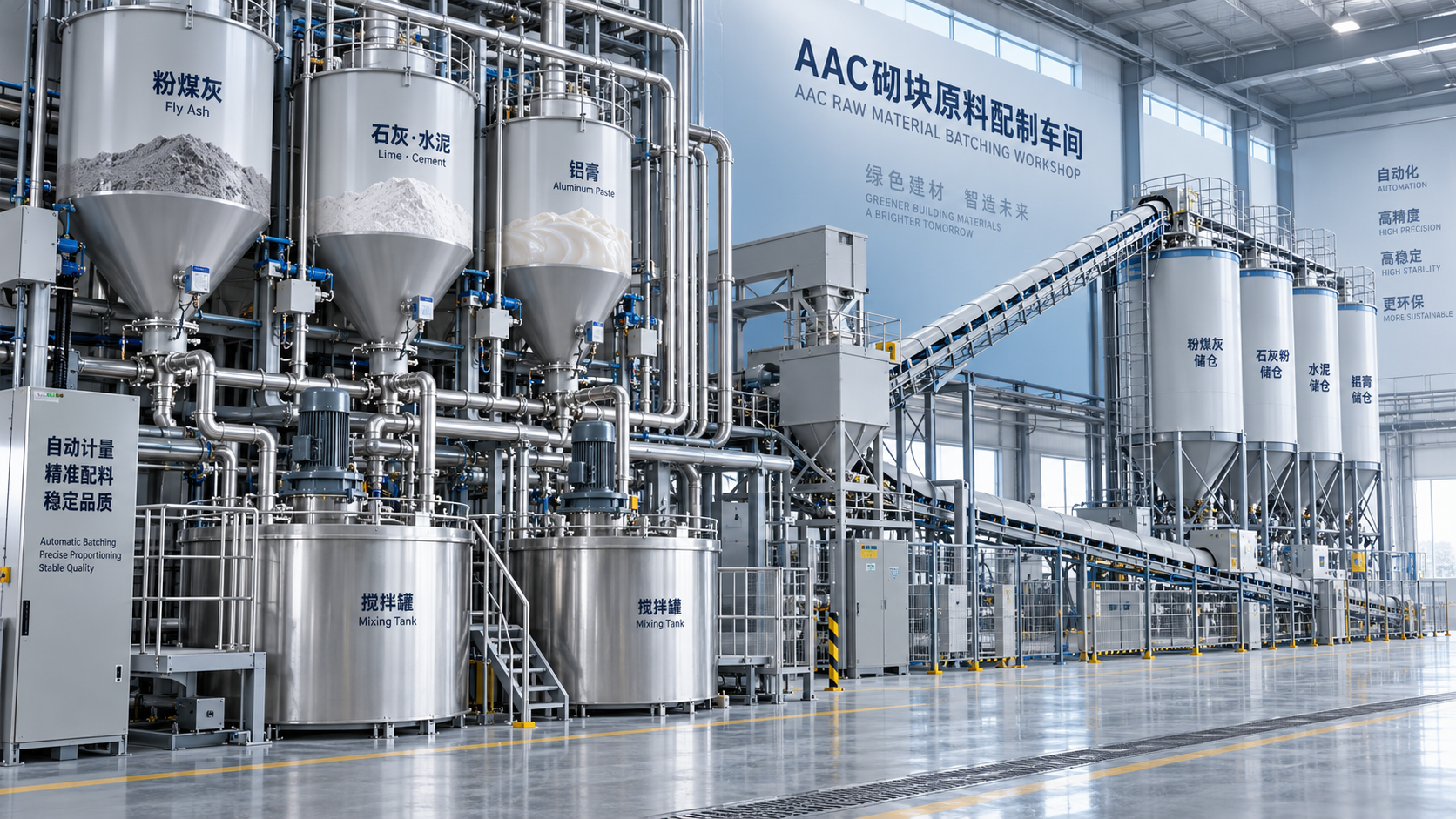
AAC commonly uses silica sand or fly ash, cement, lime, gypsum, aluminum powder or paste, and water. The condition of those materials changes the equipment configuration.
For example, silica sand may require crushing, grinding, slurry storage, and pumping systems. Fly ash-based production may require different receiving, storage, and conditioning arrangements. If materials arrive with inconsistent moisture, particle size, or chemical composition, the line may need more robust preparation and quality-control measures.
Raw-material handling is sometimes underestimated during early budgeting because it is less visible than an autoclave or cutting machine. Yet unstable material preparation can affect slurry behavior, pore structure, density, strength, and cutting performance. Investing in reliable batching and preparation often protects product quality long after the initial purchase decision has been made.
The Autoclave System Can Change the Entire Budget
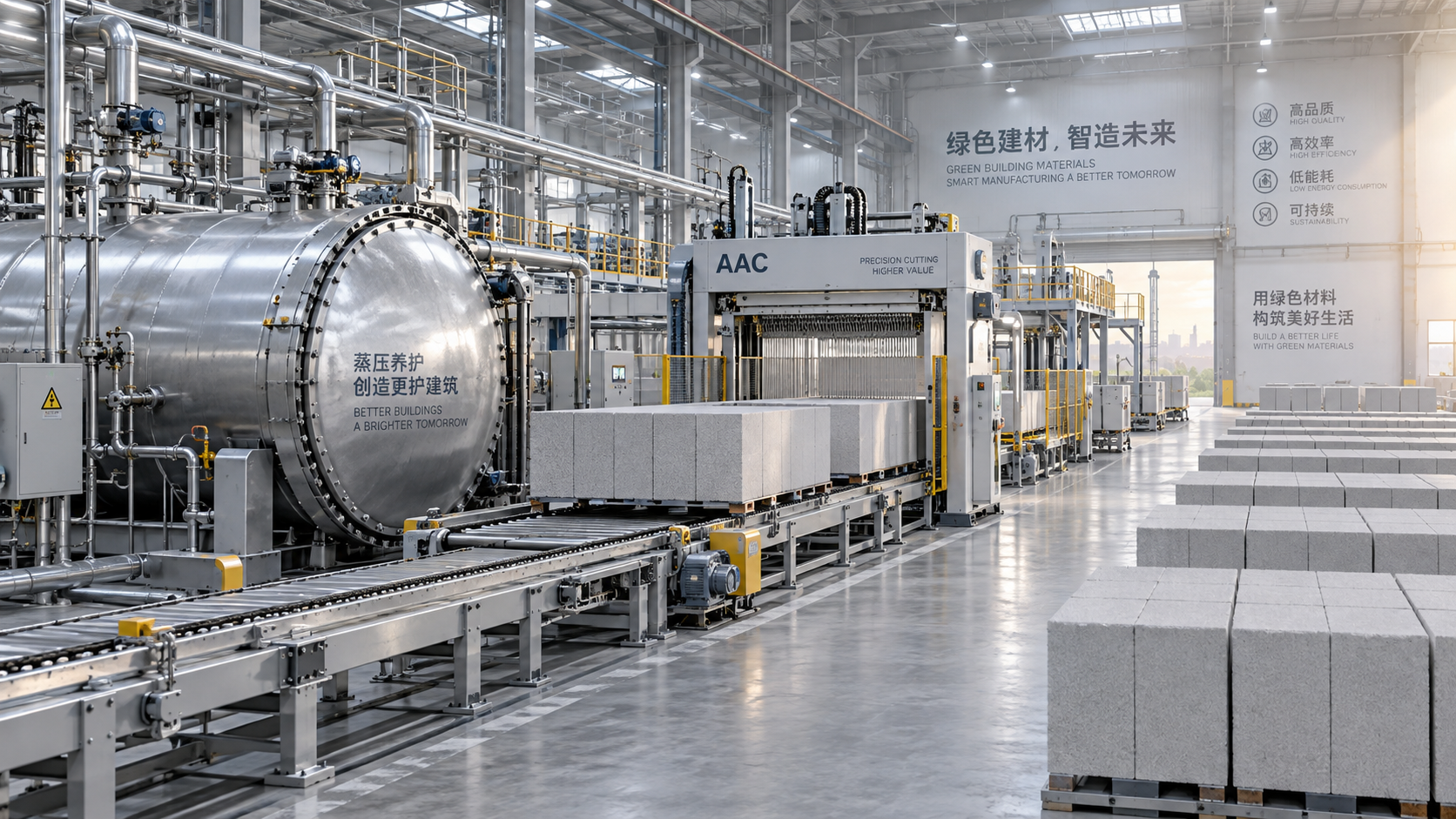
Autoclaves are among the most capital-intensive parts of an AAC plant. They cure the cut green cakes under high-pressure steam, giving AAC its structural characteristics and dimensional stability. The number, diameter, length, pressure rating, loading arrangement, and steam supply method all influence the total project cost.
A plant with limited autoclave capacity may become constrained even if the mixing and cutting sections are capable of higher output. On the other hand, installing more autoclave capacity than the sales market can absorb may tie up capital unnecessarily.
The autoclave package should also be evaluated together with the boiler or steam source, steam piping, condensate recovery, insulation, safety valves, pressure instrumentation, and compliance requirements. In some regions, local regulations for pressure vessels and boiler systems can significantly affect engineering, inspection, and installation costs.
Equipment Price Is Not the Same as Total Project Cost
This distinction prevents many unpleasant surprises. A machinery supplier may quote an FOB equipment price, while an investor is trying to estimate the budget required to begin commercial production. Those are very different numbers.
A complete AAC plant budget may include the following categories:
- Core production machinery and automation controls;
- Autoclaves, boilers, steam pipelines, and water systems;
- Raw-material storage, silos, tanks, and conveying equipment;
- Electrical cabinets, transformers, cables, and plant lighting;
- Factory steel structure, foundations, roads, drainage, and workshops;
- Freight, insurance, import duties, and inland transportation;
- Installation, commissioning, operator training, and trial production;
- Laboratory equipment, spare parts, molds, cutting wires, and consumables;
- Initial raw-material purchases, payroll, sales development, and working capital.
For this reason, investors should ask suppliers to separate the quotation into clear sections. It is much easier to compare proposals when equipment supply, optional automation, civil work responsibilities, utilities, and services are shown individually.
What Should Be Included in an AAC Equipment Quotation?
A serious quotation should explain the process flow rather than simply list machine names. At minimum, it should identify what is included from raw-material feeding through finished-product handling.
Important items to check include the mixer and batching system, pouring machine, molds and mold cars, pre-curing area, demolding equipment, cutting line, waste slurry recovery, autoclave loading and unloading systems, packing equipment, conveyors, electrical control system, and central operating platform where applicable.
Buyers should also confirm the number of molds, cutting-wire specifications, spare-part recommendations, installed motor power, compressed-air demand, water consumption, steam consumption assumptions, and staffing expectations. These details reveal whether the proposed line is balanced or whether a hidden bottleneck may appear after commissioning.
For projects intended to produce AAC panels as well as blocks, the budget and technical requirements are normally higher. Reinforcement processing, anti-corrosion treatment, cage placement, product handling, and more demanding dimensional control may be required. A block-only line should not be assumed to convert into a panel line without additional engineering.
How to Compare Two AAC Production Line Offers Fairly
The lowest quotation is not always the lowest-cost project. A disciplined comparison should place both proposals on the same basis: same capacity, same product type, same automation boundary, same delivery term, and same service scope.
Ask each supplier to state whether the capacity is calculated for blocks, panels, or both. Request the expected density range, block dimensions, mold volume, autoclave cycle, annual operating days, and anticipated reject rate. If one offer includes packing and another does not, the difference should be visible rather than hidden in the final installation phase.
Technical experience also matters. AAC production combines mechanical design, thermal curing, process control, and practical commissioning knowledge. A manufacturer with an established engineering team can help align the line with local raw materials and market requirements instead of forcing every project into an identical layout.
Shandong Hongfa Scientific Industrial & Trading Co., Ltd., founded in 1990, manufactures building-material machinery including AAC block production lines, block machinery, batching plants, and quartz stone equipment. With production bases in Shandong and Guangxi, along with engineering and technical personnel supporting equipment development, Hongfa approaches AAC projects as integrated production systems rather than isolated machines. Its quality-management background, patented technologies, and building-material equipment research capabilities can be relevant for investors who need technical discussion before defining the final configuration.
Questions Investors Should Answer Before Requesting a Price
A detailed inquiry produces a more useful quotation. Before contacting an AAC line manufacturer, prepare answers to these questions:
- What annual output is realistic for the local market?
- Will the plant produce blocks only, or blocks and reinforced panels?
- Is silica sand, fly ash, or another siliceous material available nearby?
- What are local costs for electricity, fuel, water, steam generation, and labor?
- How much land is available, and what are the site dimensions?
- Are there restrictions related to emissions, pressure vessels, noise, or building permits?
- What block sizes, densities, and strength grades are demanded by local contractors?
- Will installation and maintenance teams be available locally?
These answers help the supplier recommend the appropriate capacity and process layout. They also reduce the risk of paying for features that are unnecessary—or discovering later that essential systems were not included.
Does a More Expensive AAC Line Deliver Better Returns?
Not automatically. Return on investment depends on sales volume, selling price, raw-material cost, energy efficiency, product quality, logistics, and the plant’s ability to maintain stable production. Yet equipment design has a direct effect on several of these factors.
Accurate dosing can reduce density variation. Reliable cutting can improve dimensional consistency and reduce breakage. Well-coordinated mold and autoclave logistics can prevent production delays. Energy-conscious steam and condensate management can influence operating cost over the life of the plant.
In other words, the value of a line is measured not only by how many blocks it can make on paper, but by how many saleable blocks it can produce consistently, safely, and economically. Investors should calculate total cost of ownership over several years, including maintenance parts, energy use, staffing, downtime risk, and expected expansion needs.
Frequently Asked Questions
Can I buy an automated AAC line for less than US$1 million?
A very limited or partially configured system may appear below that level, but a complete industrial AAC operation typically requires much more than the visible core machines. Autoclaves, steam generation, material preparation, molds, installation, and factory infrastructure can quickly increase the budget. Carefully define what the quoted price includes before using it for investment planning.
How long does it take to install an AAC production line?
The schedule depends on equipment manufacturing time, shipping, site readiness, civil construction, local approvals, installation complexity, and commissioning. A project should be planned as a coordinated engineering program, not simply as a machinery delivery. Delays often arise when foundations, utilities, or pressure-vessel approvals are not ready when equipment arrives.
Is it better to start with a smaller line and expand later?
That can be sensible when market demand is still developing. However, expansion should be considered in the original plant layout. Land, boiler capacity, electrical infrastructure, raw-material storage, and autoclave positioning may need to accommodate future growth. A scalable plan is often more economical than rebuilding the factory around a poorly planned first stage.
Getting to a Reliable Budget
So, how much does an automated AAC production line cost? For preliminary planning, expect a broad range from roughly US$1.5 million for a smaller automated equipment package to US$10 million or more for a large, highly integrated AAC facility. The final figure depends on what the project must accomplish, not merely on the nameplate capacity of the line.
The most reliable route is to begin with market demand, available raw materials, desired product range, site conditions, and utility costs. Then request a process-based technical proposal that clearly distinguishes machinery supply from total project investment. When the scope is transparent, investors can make a decision with far more confidence—and build an AAC plant designed for durable production rather than short-term price appeal.
Next:No more content
Recommend
 Oct 12, 2026
How Much Does an Automated AAC Production Line Cost?
How much does an automated AAC production line typically cost? Explore investment ranges, key cost drivers, and smart tips for planning a profitable AAC plant.
- Oct 11, 2026
What Raw Materials Does a Fly Ash AAC Plant Need?
What raw materials are needed for a fly ash AAC plant? Explore fly ash, lime, cement, gypsum, aluminum, water, and sand for stable, high-quality AAC production.
- Oct 10, 2026
Is AAC Block Production Profitable in Developing Countries?
Is AAC block production profitable in developing countries? Explore demand, energy, raw materials, logistics, capacity planning, and the key factors shaping sustainable AAC plant returns.