What Does a Semi-Automatic AAC Plant Cost?
A semi-automatic AAC plant does not have a dependable single price: the amount depends on the plant’s output, the equipment included, site conditions and the services needed to bring it into production. A machinery quotation can represent only part of the investment. The buyer may still need to fund buildings, a boiler, raw material handling, installation, freight and the cash required to operate before sales revenue arrives.
For an initial budget, ask suppliers for a defined equipment scope and build a separate estimate for site and operating costs. Shandong Hongfa Scientific Industrial & Trading Co., Ltd. manufactures AAC production lines and block machinery; when considering its block machine export experience or that of another supplier, ask which services are included for the destination country. A useful comparison starts with what each offer covers, not just the number at the bottom of the quotation.
What does the quoted plant price actually cover?
There is no reliable price range that applies to every semi-automatic AAC project without specifying capacity, process equipment and delivery scope. A small line supplied as machinery only and a larger line supplied with installation, steam equipment and commissioning assistance are different purchases. Even two offers for the same stated capacity can leave the buyer with very different costs after delivery.
Before treating any figure as a plant price, establish whether it refers to the equipment package, delivered equipment or a working production facility. The table below shows where the boundary often matters.
Ask for an itemized list that identifies each major machine, its quantity and its role in the process. The list should also state exclusions. For example, an offer that includes autoclaves but excludes the boiler, steam distribution and installation does not cover the full curing system. A low equipment figure may still be attractive, but only after the buyer has priced the missing work.

How capacity and automation change the investment
Capacity is one of the first inputs a supplier needs, but the number is useful only when its basis is clear. Ask whether the quoted output is calculated per hour, per shift or per year, and what operating schedule, product size and process assumptions support it. The capacity of an individual machine is not necessarily the output of the complete line: cutting, handling and autoclave curing must all support the proposed production rate.
Compare capacity with the volume the business can reasonably sell and the raw materials and utilities it can secure. A larger plant may offer lower equipment cost per unit of designed capacity, yet it also requires more capital and may carry more idle capacity while demand develops. A smaller line can reduce the initial commitment, although frequent manual handling or a constrained curing system may limit later expansion.
The term semi-automatic does not define a fixed equipment configuration. One supplier may automate batching and cutting while relying on operators for mold handling; another may offer different combinations of controls and manual tasks. Ask for a process-by-process description of what operators do, how many people are assumed on each shift and what handling equipment is included.
That detail matters because a lower purchase price can transfer costs into daily operations. More manual handling may require additional workers, increase dependence on operator skill and constrain output between production stages. The right balance depends on local labor availability, labor cost, desired output and the consistency required by customers. A higher level of automation is worth evaluating against those costs over the intended life of the plant, not simply against the initial machinery price.
Check expansion before buying a smaller line
If expansion is part of the business plan, ask the supplier which equipment would need replacement and which could be retained. The answer may affect the size of the building, the layout of the cutting area and the provision for future steam capacity. Space for an additional autoclave, for example, is of limited use if the boiler, piping or material flow would also need major changes.
Request a layout for the proposed initial configuration and a description of the intended expansion. Price the first stage on its own merits; treat future capacity as an option with a defined scope rather than assuming it will be inexpensive to add.
The costs outside the machinery quotation
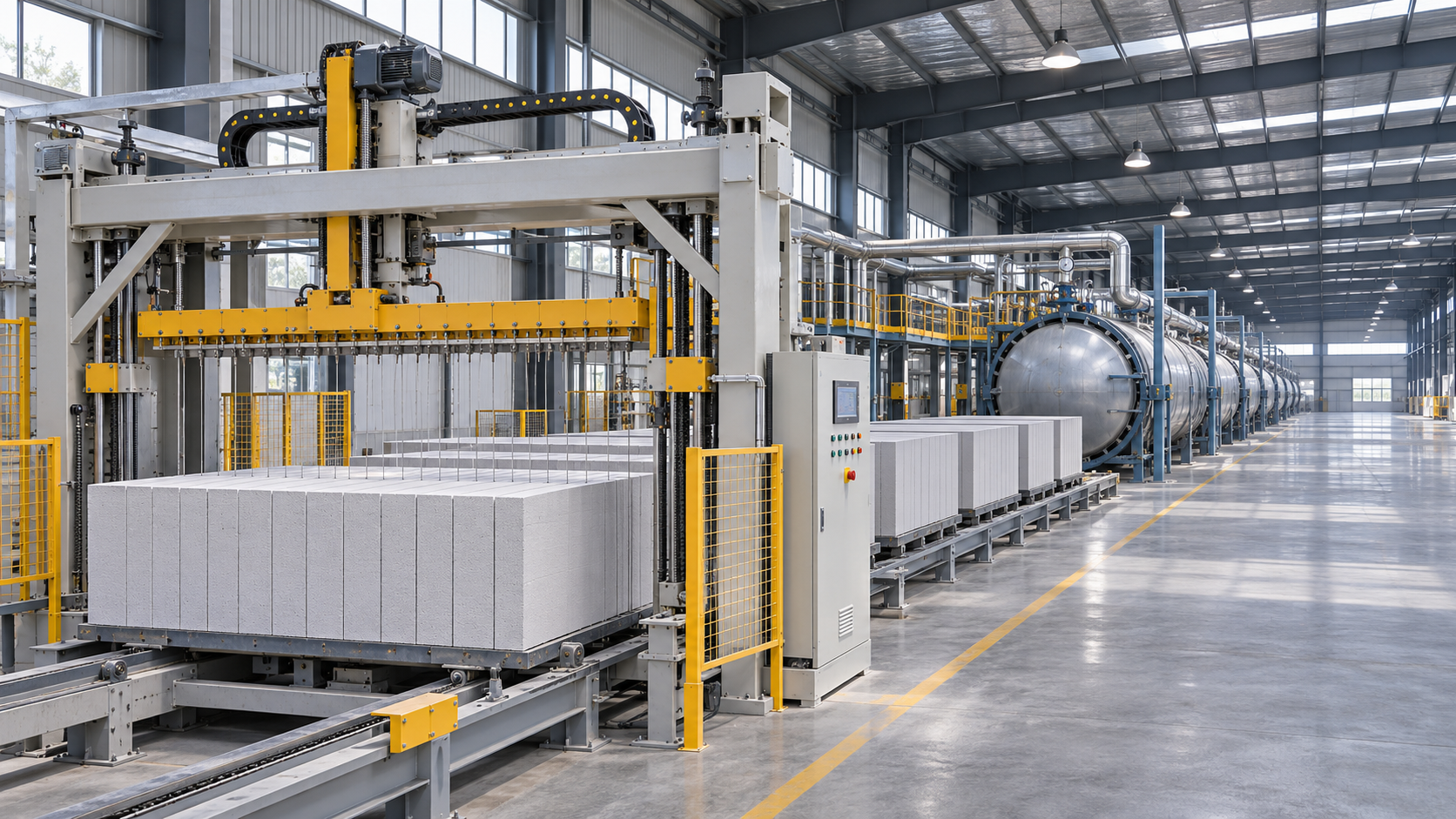
To turn a supplier’s offer into an investment budget, follow the material through the factory and identify what the site needs at each stage. AAC production generally involves preparing and mixing raw materials, casting and cutting the product, and curing it in autoclaves. Every stage requires equipment, space, utilities or labor, whether supplied by the machinery vendor or arranged locally.
Raw material preparation can be a significant variable. The preparation equipment required depends on the recipe and on the form and consistency of materials available locally. A quotation based on ready-to-use material may exclude grinding, storage or conveying equipment that another project needs. Give suppliers information about the intended raw materials and ask them to state the assumptions behind their proposed line.
Steam, water and electricity deserve a separate review. An autoclave needs a suitable steam supply, and the wider plant needs electrical distribution and water infrastructure. Determine whether the offer includes only the main equipment or also the supporting systems. Ask for consumption and connection requirements under the proposed operating conditions, then obtain local costs for providing those utilities.
Civil works and installation can vary with the site. Foundations must suit the equipment and layout; the project may also require lifting arrangements, access for delivery, drainage and areas for material and finished-product storage. Establish who is responsible for design information, local construction, mechanical assembly, electrical work and testing. If supplier personnel will supervise installation, clarify whether their travel, accommodation and time on site are included.
Freight and import costs should be calculated from the stated delivery point. Confirm packing, loading, sea or other main transport, insurance, port charges, customs clearance, duties and transport to the plant site. The contract’s delivery terms should make clear which party pays each cost and where responsibility transfers. Also check whether large components require special transport or lifting arrangements at the destination.
Finally, allow for working capital. The project will need raw materials, labor, utilities and other operating resources before it receives regular payment for finished blocks. Start-up output and sales may take time to reach the level assumed in the business plan. A budget that ends when equipment arrives leaves no room for that transition.
Compare quotations on the same basis
Give each supplier the same project brief: target saleable output, expected operating schedule, product range, available raw materials, site location and the utilities already available. State whether the request is for equipment only or should include installation, training and start-up assistance. The more clearly these boundaries are defined, the easier it is to identify why offers differ.
Then put the offers into a common cost model. A practical sequence is:
- Record the quoted equipment price and the exact delivery point.
- Add the cost of omitted process equipment and utility systems needed for the specified plant.
- Add freight, insurance, import charges and delivery to site that are outside the offer.
- Add local civil works, installation labor, commissioning and training expenses.
- Add initial operating cash needs and a project contingency suited to the uncertainties still open.
Keep the supplier’s stated price separate from buyer estimates, and identify the basis for each estimate. If a civil contractor has not yet inspected the site, for example, the civil works allowance carries more uncertainty than a contracted freight charge. Update the model as layouts, utility requirements and local quotations become firmer.
Do not overlook performance assumptions when comparing the totals. An offer may appear cheaper because it assumes fewer operating shifts, a different product size, less material preparation or more work by the buyer’s staff. Ask suppliers to explain the assumptions behind capacity and staffing, and specify how commissioning and acceptance will be handled. The contract should identify the conditions for any output or performance commitments, including the materials and utilities the buyer must provide.
When is a semi-automatic plant a sensible investment?
A semi-automatic configuration can fit a business that has a credible market for its planned output, access to trained operators and a site that can support steam, power and material handling. It may also suit a buyer who wants to limit initial equipment spending while retaining some manual operations. Its economics become less attractive if labor is difficult to secure, handling limits the required output or the project must quickly run at a high, consistent production rate.
Before committing, compare the expected cost per saleable unit with the achievable selling price. Include raw materials, energy, labor, maintenance, financing and the effect of production losses, using assumptions appropriate to the proposed site. Test the result at more than one sales or production level: a plant that looks viable only when every shift operates at its planned output has little room for a slower start.
The most useful price is therefore the total required to deliver, install and operate the specified plant at the intended site. Once the scope and operating assumptions are aligned, the buyer can judge whether the lower-priced offer is a saving, a different capacity or a larger package of work left to arrange.
A semi-automatic AAC plant does not have a dependable single price: the amount depends on the plant’s output, the equipment included, site conditions and the services needed to bring it into production. A machinery quotation can represent only part of the investment. The buyer may still need to fund buildings, a boiler, raw material handling, installation, freight and the cash required to operate before sales revenue arrives.
For an initial budget, ask suppliers for a defined equipment scope and build a separate estimate for site and operating costs. Shandong Hongfa Scientific Industrial & Trading Co., Ltd. manufactures AAC production lines and block machinery; when considering its block machine export experience or that of another supplier, ask which services are included for the destination country. A useful comparison starts with what each offer covers, not just the number at the bottom of the quotation.
What does the quoted plant price actually cover?
There is no reliable price range that applies to every semi-automatic AAC project without specifying capacity, process equipment and delivery scope. A small line supplied as machinery only and a larger line supplied with installation, steam equipment and commissioning assistance are different purchases. Even two offers for the same stated capacity can leave the buyer with very different costs after delivery.
Before treating any figure as a plant price, establish whether it refers to the equipment package, delivered equipment or a working production facility. The table below shows where the boundary often matters.
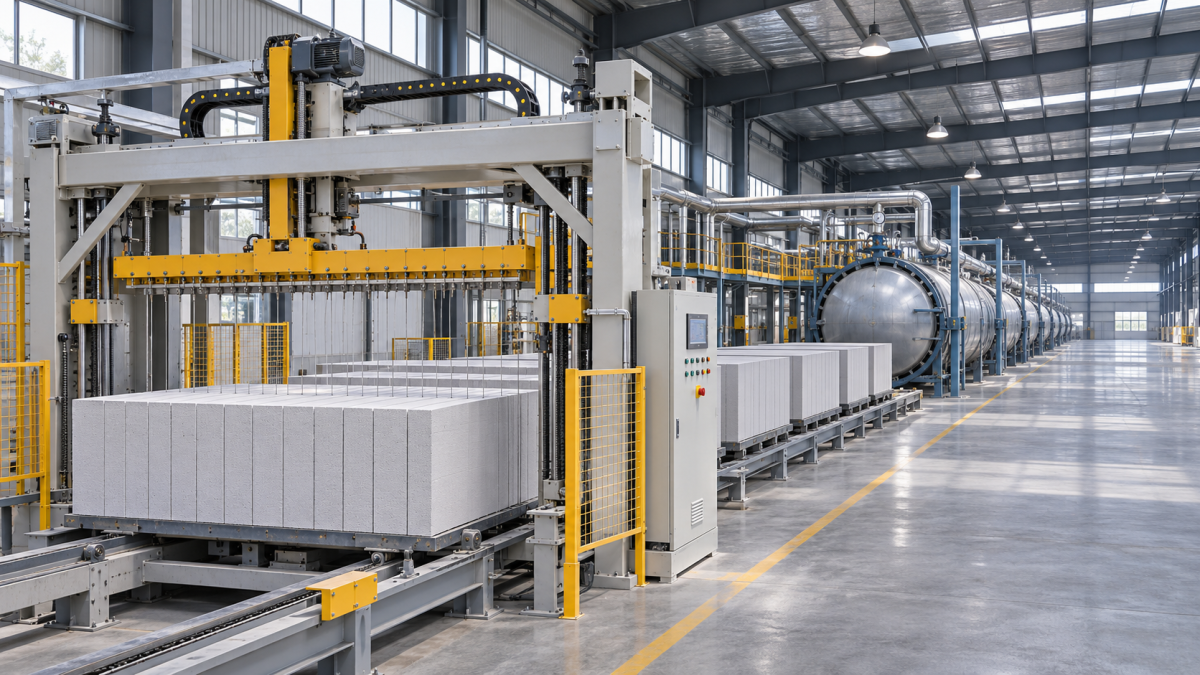
Ask for an itemized list that identifies each major machine, its quantity and its role in the process. The list should also state exclusions. For example, an offer that includes autoclaves but excludes the boiler, steam distribution and installation does not cover the full curing system. A low equipment figure may still be attractive, but only after the buyer has priced the missing work.
How capacity and automation change the investment
Capacity is one of the first inputs a supplier needs, but the number is useful only when its basis is clear. Ask whether the quoted output is calculated per hour, per shift or per year, and what operating schedule, product size and process assumptions support it. The capacity of an individual machine is not necessarily the output of the complete line: cutting, handling and autoclave curing must all support the proposed production rate.
Compare capacity with the volume the business can reasonably sell and the raw materials and utilities it can secure. A larger plant may offer lower equipment cost per unit of designed capacity, yet it also requires more capital and may carry more idle capacity while demand develops. A smaller line can reduce the initial commitment, although frequent manual handling or a constrained curing system may limit later expansion.
The term semi-automatic does not define a fixed equipment configuration. One supplier may automate batching and cutting while relying on operators for mold handling; another may offer different combinations of controls and manual tasks. Ask for a process-by-process description of what operators do, how many people are assumed on each shift and what handling equipment is included.
That detail matters because a lower purchase price can transfer costs into daily operations. More manual handling may require additional workers, increase dependence on operator skill and constrain output between production stages. The right balance depends on local labor availability, labor cost, desired output and the consistency required by customers. A higher level of automation is worth evaluating against those costs over the intended life of the plant, not simply against the initial machinery price.
Check expansion before buying a smaller line
If expansion is part of the business plan, ask the supplier which equipment would need replacement and which could be retained. The answer may affect the size of the building, the layout of the cutting area and the provision for future steam capacity. Space for an additional autoclave, for example, is of limited use if the boiler, piping or material flow would also need major changes.
Request a layout for the proposed initial configuration and a description of the intended expansion. Price the first stage on its own merits; treat future capacity as an option with a defined scope rather than assuming it will be inexpensive to add.
The costs outside the machinery quotation
To turn a supplier’s offer into an investment budget, follow the material through the factory and identify what the site needs at each stage. AAC production generally involves preparing and mixing raw materials, casting and cutting the product, and curing it in autoclaves. Every stage requires equipment, space, utilities or labor, whether supplied by the machinery vendor or arranged locally.
Raw material preparation can be a significant variable. The preparation equipment required depends on the recipe and on the form and consistency of materials available locally. A quotation based on ready-to-use material may exclude grinding, storage or conveying equipment that another project needs. Give suppliers information about the intended raw materials and ask them to state the assumptions behind their proposed line.
Steam, water and electricity deserve a separate review. An autoclave needs a suitable steam supply, and the wider plant needs electrical distribution and water infrastructure. Determine whether the offer includes only the main equipment or also the supporting systems. Ask for consumption and connection requirements under the proposed operating conditions, then obtain local costs for providing those utilities.
Civil works and installation can vary with the site. Foundations must suit the equipment and layout; the project may also require lifting arrangements, access for delivery, drainage and areas for material and finished-product storage. Establish who is responsible for design information, local construction, mechanical assembly, electrical work and testing. If supplier personnel will supervise installation, clarify whether their travel, accommodation and time on site are included.
Freight and import costs should be calculated from the stated delivery point. Confirm packing, loading, sea or other main transport, insurance, port charges, customs clearance, duties and transport to the plant site. The contract’s delivery terms should make clear which party pays each cost and where responsibility transfers. Also check whether large components require special transport or lifting arrangements at the destination.
Finally, allow for working capital. The project will need raw materials, labor, utilities and other operating resources before it receives regular payment for finished blocks. Start-up output and sales may take time to reach the level assumed in the business plan. A budget that ends when equipment arrives leaves no room for that transition.
Compare quotations on the same basis
Give each supplier the same project brief: target saleable output, expected operating schedule, product range, available raw materials, site location and the utilities already available. State whether the request is for equipment only or should include installation, training and start-up assistance. The more clearly these boundaries are defined, the easier it is to identify why offers differ.
Then put the offers into a common cost model. A practical sequence is:
- Record the quoted equipment price and the exact delivery point.
- Add the cost of omitted process equipment and utility systems needed for the specified plant.
- Add freight, insurance, import charges and delivery to site that are outside the offer.
- Add local civil works, installation labor, commissioning and training expenses.
- Add initial operating cash needs and a project contingency suited to the uncertainties still open.
Keep the supplier’s stated price separate from buyer estimates, and identify the basis for each estimate. If a civil contractor has not yet inspected the site, for example, the civil works allowance carries more uncertainty than a contracted freight charge. Update the model as layouts, utility requirements and local quotations become firmer.
Do not overlook performance assumptions when comparing the totals. An offer may appear cheaper because it assumes fewer operating shifts, a different product size, less material preparation or more work by the buyer’s staff. Ask suppliers to explain the assumptions behind capacity and staffing, and specify how commissioning and acceptance will be handled. The contract should identify the conditions for any output or performance commitments, including the materials and utilities the buyer must provide.
When is a semi-automatic plant a sensible investment?
A semi-automatic configuration can fit a business that has a credible market for its planned output, access to trained operators and a site that can support steam, power and material handling. It may also suit a buyer who wants to limit initial equipment spending while retaining some manual operations. Its economics become less attractive if labor is difficult to secure, handling limits the required output or the project must quickly run at a high, consistent production rate.
Before committing, compare the expected cost per saleable unit with the achievable selling price. Include raw materials, energy, labor, maintenance, financing and the effect of production losses, using assumptions appropriate to the proposed site. Test the result at more than one sales or production level: a plant that looks viable only when every shift operates at its planned output has little room for a slower start.
The most useful price is therefore the total required to deliver, install and operate the specified plant at the intended site. Once the scope and operating assumptions are aligned, the buyer can judge whether the lower-priced offer is a saving, a different capacity or a larger package of work left to arrange.
Recommend
- Nov 27, 2026
How Much Does a Concrete Roof Tile Machine Cost?
Ltd. AAC spare parts differ from roof tile machine components. Explore concrete roof tile machine costs, hidden expenses, and quote comparisons before you buy.
- Nov 27, 2026
What Does a Semi-Automatic AAC Plant Cost?
Explore Ltd. block machine export experience and the key factors behind semi-automatic AAC plant costs, from equipment and freight to installation.
- Nov 26, 2026
How Much Does a Quartz Stone Production Line Cost?
Explore Ltd. overseas installation considerations and the key factors affecting quartz stone production line costs. Compare budgets and plan with confidence.