What Should an Annual Hydraulic Brick Machine Maintenance Budget Cover?
What Should an Annual Hydraulic Brick Machine Maintenance Budget Cover?
An annual maintenance budget should protect your hydraulic brick machine from costly breakdowns—not just cover oil changes. For plant owners and production managers, understanding hydraulic brick making machine maintenance cost means accounting for hydraulic fluid, filters, seals, wear parts, inspections, labor, and potential downtime. Operating hours, material abrasiveness, and service conditions all affect what you need to set aside.
The difficult part is not listing expenses. It is separating predictable work from uncertain repairs, then making sure neither disappears from the budget. A machine can have a modest parts bill and still be expensive to operate if repeated stoppages interrupt production. The annual plan needs to show both the cash required for maintenance and the production exposure when maintenance is delayed.
Define the equipment boundary before estimating costs
“Brick machine maintenance” can mean the press alone or an entire concrete block production line. Those are very different budgets. Decide whether your estimate includes the hydraulic power unit, molding assembly, vibration system where fitted, feeder, controls, and pallet-handling equipment. Mixers, conveyors, batching equipment, and downstream handling may need separate cost centers.
This matters when comparing supplier estimates. One quotation may cover hydraulic servicing only; another may include the associated production equipment. Unless the boundaries match, the lower figure tells you little.
Also separate routine maintenance from capital improvements. Replacing a worn seal is maintenance. Installing a redesigned handling system is usually a different investment decision, subject to your accounting policy. Major overhauls should be identified separately rather than hidden inside a normal annual allowance.
Hydraulic servicing needs more than an oil allowance
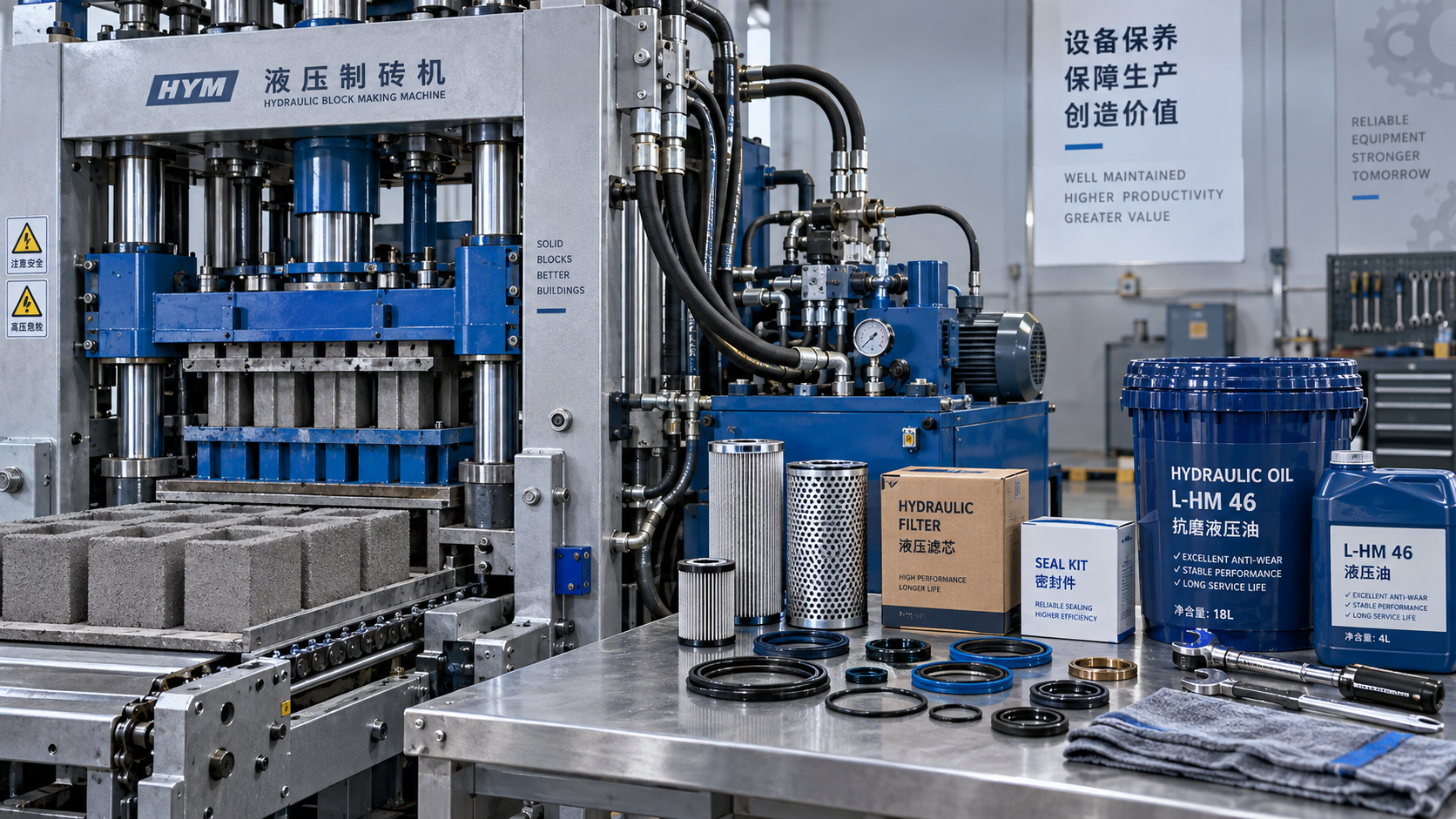
Hydraulic fluid, filtration, and contamination control belong at the center of the budget. They affect pumps, valves, and cylinders, so underfunding them can expose several expensive components at once. Estimate the required fluid quantity from the machine documentation, including relevant circuit volumes—not just an assumed tank size.
Use the manufacturer’s specified fluid grade and service requirements. There is no universal annual oil-change interval suitable for every hydraulic brick machine. Operating hours, oil condition, temperature, contamination, and OEM guidance should determine the plan. Where appropriate, budget for oil analysis to support replacement decisions rather than relying on appearance alone.
The hydraulic service allowance should include:
- Approved hydraulic fluid, planned replacements, and a realistic top-up allowance.
- Filter elements, breathers, and other serviceable filtration components fitted to the machine.
- Sampling, laboratory testing where justified, and clean fluid-transfer equipment.
- Reservoir cleaning or flushing when required by contamination or repair conditions.
- Used-fluid collection and disposal according to applicable local requirements.
Do not treat regular top-ups as a substitute for fixing leaks. Record oil consumption and investigate changes. Likewise, a replacement filter must match the required filtration performance, flow capacity, and pressure characteristics; physical fit alone is not enough.
Plan for seals and hoses without replacing everything blindly
Cylinder seal kits, hoses, fittings, and couplings need their own allowance. Their condition depends on pressure cycles, heat, movement, abrasion, installation, and age. Inspection findings and OEM recommendations should guide replacement, with critical items stocked where procurement delays would stop production.
Include the work around the part: depressurization, safe isolation, access, cleaning, installation, and testing. Hydraulic systems can retain hazardous pressure after shutdown, so servicing requires trained personnel and the specified isolation procedure. A cheap seal is not a cheap repair if cylinder removal takes substantial labor.
Mechanical wear can dominate the annual spend
The hydraulic system supplies force, but much of the wear occurs where material is fed, compacted, and released. Molds, tamper heads, guides, liners, bearings, and feeder wear surfaces deserve attention according to the machine’s design. On equipment with vibration assemblies, include their specified inspection and servicing requirements.
Material characteristics matter. Abrasive aggregate and fines can accelerate wear, while buildup can interfere with movement or filling. Product changes also affect maintenance: different molds may have different repair needs, and frequent changeovers create additional inspection and adjustment work.
Estimate tooling wear against production cycles or output where records support it. Calendar age alone is a weak basis for comparing a single-shift operation with a heavily utilized plant. Keep repair, refurbishment, and replacement costs separate, because they involve different downtime and logistics.
Do not automatically classify every new mold as maintenance. Tooling purchased for a new product may belong to a product-development or expansion budget. Replacement tooling for an existing product is a different requirement. Making that distinction prevents production growth from distorting maintenance performance.
Budget for finding problems, not only fixing them
Inspection time is easy to omit because it does not always generate a supplier invoice. Yet checks on leakage, hose condition, lubrication, alignment, fastening, cooling performance, and abnormal noise can reveal developing problems before a forced shutdown.
Electrical and control checks also belong in the plan. Depending on the equipment, this may include sensors, switches, cables, terminals, cabinet cooling, and safety devices. Repairs to these items can be relatively small while their production impact is large. Safety-device testing should follow the equipment instructions and applicable requirements.
Reserve time for checking pressure, temperature, and cycle behavior under comparable operating conditions. Slower movement or inconsistent forming does not automatically mean pump failure. Leakage, valve issues, material feeding, tooling condition, or control faults may produce similar symptoms. Paying for competent diagnosis can prevent an unnecessary major-component purchase.
Labor and spare-parts availability change the real repair cost
Calculate internal maintenance labor using a consistent loaded hourly rate, even when technicians are salaried. Their time is a real resource. Include planned servicing, troubleshooting, changeover-related maintenance, documentation, and recommissioning. For external support, account for travel, accommodation where relevant, minimum call-out charges, and specialist testing.
Parts quotations should be evaluated on delivered cost. Freight, import charges where applicable, and emergency shipping can change the economics considerably. A component that is inexpensive at the factory may be costly to obtain during a breakdown.
Use criticality rather than price alone to decide what to stock:
Keep spare-parts investment distinct from annual consumption. Buying an initial stock of critical spares creates a cash requirement, but not every stocked item will be used that year. Avoid counting the same part as both a stock purchase and a consumed replacement without the corresponding inventory adjustment.
Show downtime exposure separately from maintenance spending
A practical annual budget has a planned-maintenance baseline and a corrective-repair reserve. The baseline covers known tasks, labor, consumables, inspections, and expected wear replacements. The reserve covers plausible unplanned repairs based on machine condition, service history, operating intensity, and parts availability—not an arbitrary percentage presented as an industry rule.
Downtime deserves a separate operational estimate. Consider unrecoverable production, restart scrap, overtime, and schedule disruption. Use contribution margin rather than gross sales revenue when estimating lost output, and avoid double-counting labor or other costs already included elsewhere. If production can be recovered later, the financial impact differs from output permanently lost.
This distinction helps justify preventive work. A planned shutdown during a low-demand period may have a very different cost from an unexpected stoppage during a committed delivery run. The maintenance task might be identical; the timing is not.
Turn the annual estimate into a usable maintenance plan
Build the estimate from the machine’s actual configuration, forecast operating hours, production mix, maintenance history, and current condition. For each planned task, record its trigger, required parts, labor hours, shutdown needs, and purchasing lead time. Then price those requirements with current quotations and review spending during the year.
Shandong Hongfa Scientific Industrial & Trading Co., Ltd., established in 1990, manufactures building-materials machinery, including block production equipment and concrete batching plants. That range makes equipment scope especially relevant: a press service plan should not be mistaken for a complete line-maintenance plan. When seeking guidance from Hongfa, provide the model, serial number, installed options, operating hours, and recent fault history so recommendations can be matched to the equipment.
The most useful hydraulic brick making machine maintenance cost estimate is therefore not a single percentage of purchase price. It is a documented plan with priced service tasks, identified wear items, realistic labor, critical-spares decisions, and a separate view of breakdown exposure. Before approving the budget, check one thing: if the machine stops tomorrow, does the plan identify who will diagnose it, which parts are available, and how long restoration could take?
Next:No more content
Recommend
 Oct 23, 2026
What Should an Annual Hydraulic Brick Machine Maintenance Budget Cover?
Understand hydraulic brick making machine maintenance cost: budget for oil, wear parts, labor, and repairs. Discover how to plan annual spending and reduce costly downtime.
- Oct 23, 2026
How Should Buyers Compare Energy Use Across Roof Tile Machines?
Roof tile making machine energy consumption comparison: learn to assess kWh per saleable tile, verify supplier data, and choose equipment that lowers operating costs.
- Oct 22, 2026
How Can Buyers Verify a Hydraulic Roof Tile Machine's Output Capacity?
Verify hydraulic roof tile machine production capacity with witnessed trials, downtime logs, and cured-tile quality checks. Learn how to confirm reliable output before you buy.