How Can Buyers Verify a Hydraulic Roof Tile Machine's Output Capacity?
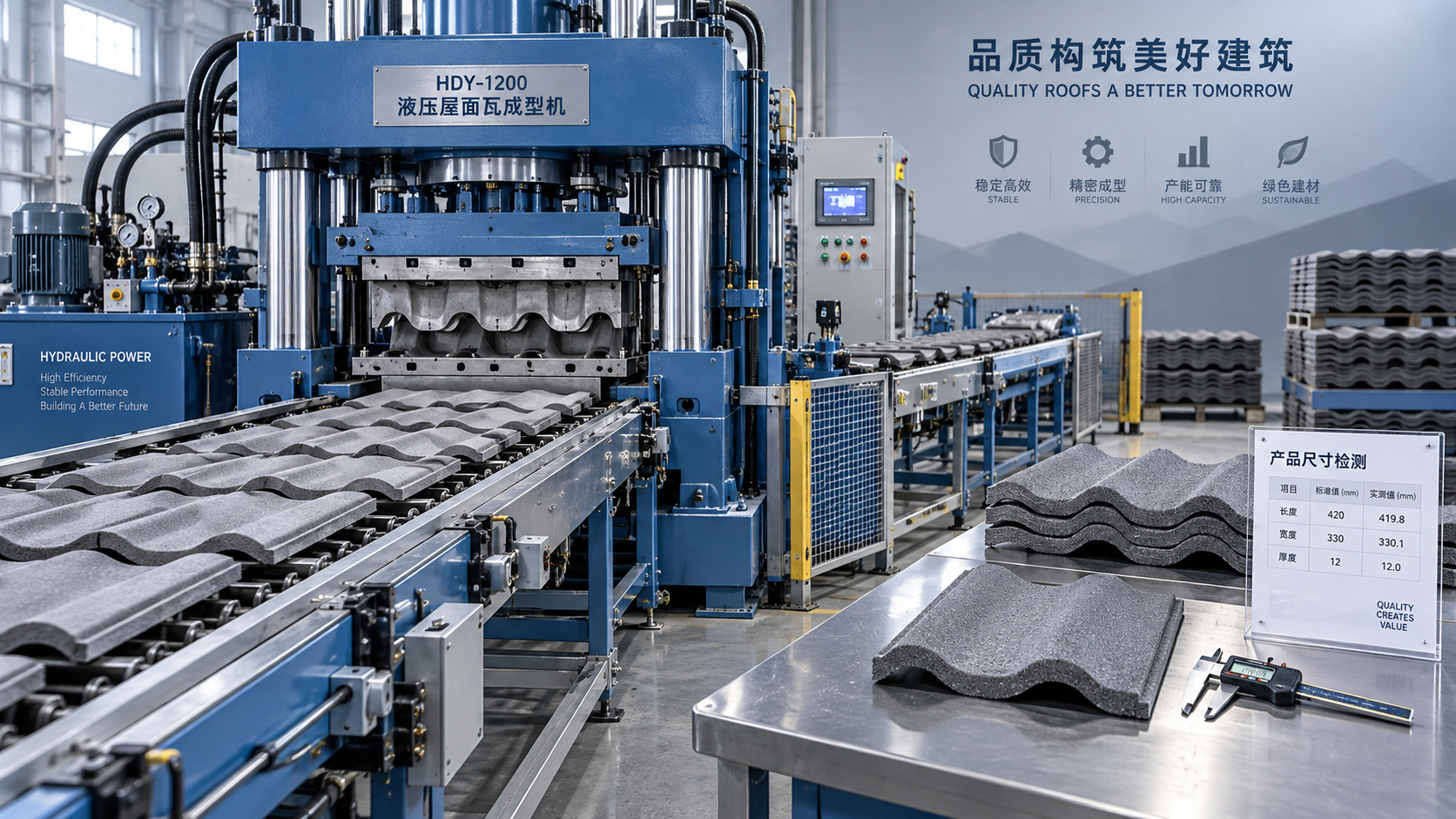
Verify a hydraulic roof tile machine’s output by measuring how many acceptable tiles it produces during a witnessed trial under agreed production conditions. The trial should use your intended tile profile, material mix, staffing, and handling arrangement, with routine stoppages included. A short demonstration of rapid pressing cannot establish dependable shift output.
Hydraulic roof tile machine production capacity becomes useful for purchasing decisions only when the quoted figure has a clear basis. You need to know what was counted, how long production ran, which equipment supported the press, and whether the resulting tiles met quality requirements after curing.
Establish exactly what the quoted capacity includes
A supplier’s output figure may describe theoretical press cycles, freshly formed tiles, or finished tiles ready for dispatch. These figures represent different stages of production and should be assessed separately.
Theoretical output usually comes from cycle time multiplied by the number of tiles formed per cycle. It assumes continuous operation. Actual press output includes interruptions such as material replenishment, mold cleaning, handling delays, and adjustments. Saleable output also accounts for tiles rejected during forming, curing, finishing, and inspection.
Ask the supplier to put the basis of its capacity claim into the quotation. A useful statement identifies:
- The tile profile, dimensions, and mold configuration.
- The number of tiles produced in each complete cycle.
- The material formulation and preparation conditions.
- The equipment and operators needed to achieve the stated output.
- The production period used and how stoppages are treated.
- The stage at which tiles are counted as acceptable.
Also establish whether the figure applies to the press alone or to the supplied production line. A press may operate at its stated speed while the mixer, transfer system, or curing area prevents the factory from maintaining that output.
Keep tiles per hour as the primary unit for the trial. If your business plans production in square meters of roofing, convert using the selected tile’s effective roof coverage, including overlap. Overall tile dimensions do not necessarily equal installed coverage.
Check whether cycle time represents a complete production cycle
Hydraulic pressing time is only one part of the cycle. Depending on the machine design, production can also involve material feeding, distribution, mold movement, pressure buildup, pressure holding, release, demolding, and transfer. Some actions overlap; others must finish before the next cycle begins.
Measure the interval between equivalent points in consecutive cycles, such as one completed discharge and the next. This avoids treating the brief pressing stage as the entire cycle. Observe a sequence of cycles under load rather than selecting the fastest movement from a demonstration.
The basic calculation is:
Theoretical tiles per hour = 3,600 ÷ complete cycle time in seconds × tiles per cycle.
This calculation provides a useful plausibility check, but it is not a production guarantee. It assumes every cycle completes at the measured speed, every mold position produces a tile, and no interruption occurs.
Check the mold configuration carefully. If the machine can accept different molds, the quoted cavity count must match the mold being purchased. A rating based on another tile size or a different configuration may not apply to your product.
Pressure settings also belong in this discussion. Shortening pressure holding time may increase apparent speed while changing compaction or demolding behavior. Ask the supplier to demonstrate capacity at the settings required for acceptable tiles and record those settings alongside the output results.
Run the trial with the product you intend to manufacture
A meaningful factory acceptance test starts with an agreed test sheet. It should describe the machine configuration, tile specification, mix, supporting equipment, staffing, quality criteria, and measurement method before production begins.
The tile design matters because profiles differ in material distribution, thickness, release behavior, and handling requirements. Performance demonstrated with a simple profile should not automatically be applied to a deeper or more demanding shape.
Material preparation deserves equal attention. Aggregate grading, moisture, binder content, and admixtures can influence feeding consistency and the strength of newly formed tiles. If the demonstration uses a mix unlike the one planned for your factory, the results provide a limited basis for forecasting your output.
Where practical, use the intended raw materials. When that is impractical, document the trial materials and the differences from the planned production mix. The commissioning process should then include trials with local materials to establish workable settings.
Include the equipment necessary to sustain production. A demonstration supplied from a large batch of prepared material may show the press’s capability while leaving mixing capacity untested. Similarly, manually removing tiles with extra helpers may conceal a limitation in the proposed transfer arrangement.
Once startup adjustment is complete, continue long enough to observe repeated mixing, feeding, discharge, and handling operations. The run should allow normal operating temperature and recurring interruptions to become visible. A brief burst of production gives little evidence of sustained performance.
Measure elapsed-time output and explain every stop
Record the trial’s start and finish times, completed cycles, total formed tiles, immediate rejects, staffing, and interruptions. Machine counters and controller logs can support the record, but compare them with physical output. A counter may register a cycle even when a mold position is empty or a tile is damaged.
Two rates help explain the result:
- Running output: formed tiles divided by the time the machine was actively cycling.
- Elapsed-time output: formed tiles divided by the full agreed trial period, including interruptions within that period.
Running output shows what the machine achieves while operating. Elapsed-time output shows how feeding, handling, and stoppages affect production. Use the latter when estimating dependable shift capacity, with any separately excluded breaks or maintenance clearly identified.
Classify stops by cause. Material shortages, mold cleaning, hydraulic alarms, damaged handling boards, transfer delays, and operator adjustments require different remedies. A single total downtime figure cannot show whether the solution is a larger mixer, better handling equipment, revised settings, or machine repair.
Pay attention to whether interruptions repeat or become more frequent. A feeder that needs continual intervention or a transfer system that progressively falls behind can undermine a promising average output.
Request the full trial record, including unsuccessful runs and adjustments relevant to the final settings. An edited video is useful for understanding machine movements, but it rarely establishes elapsed production time or reject losses. For a remote trial, use a live witnessed session with visible timing and output counting, supported by the production log.
Count acceptable tiles through curing, not just at discharge
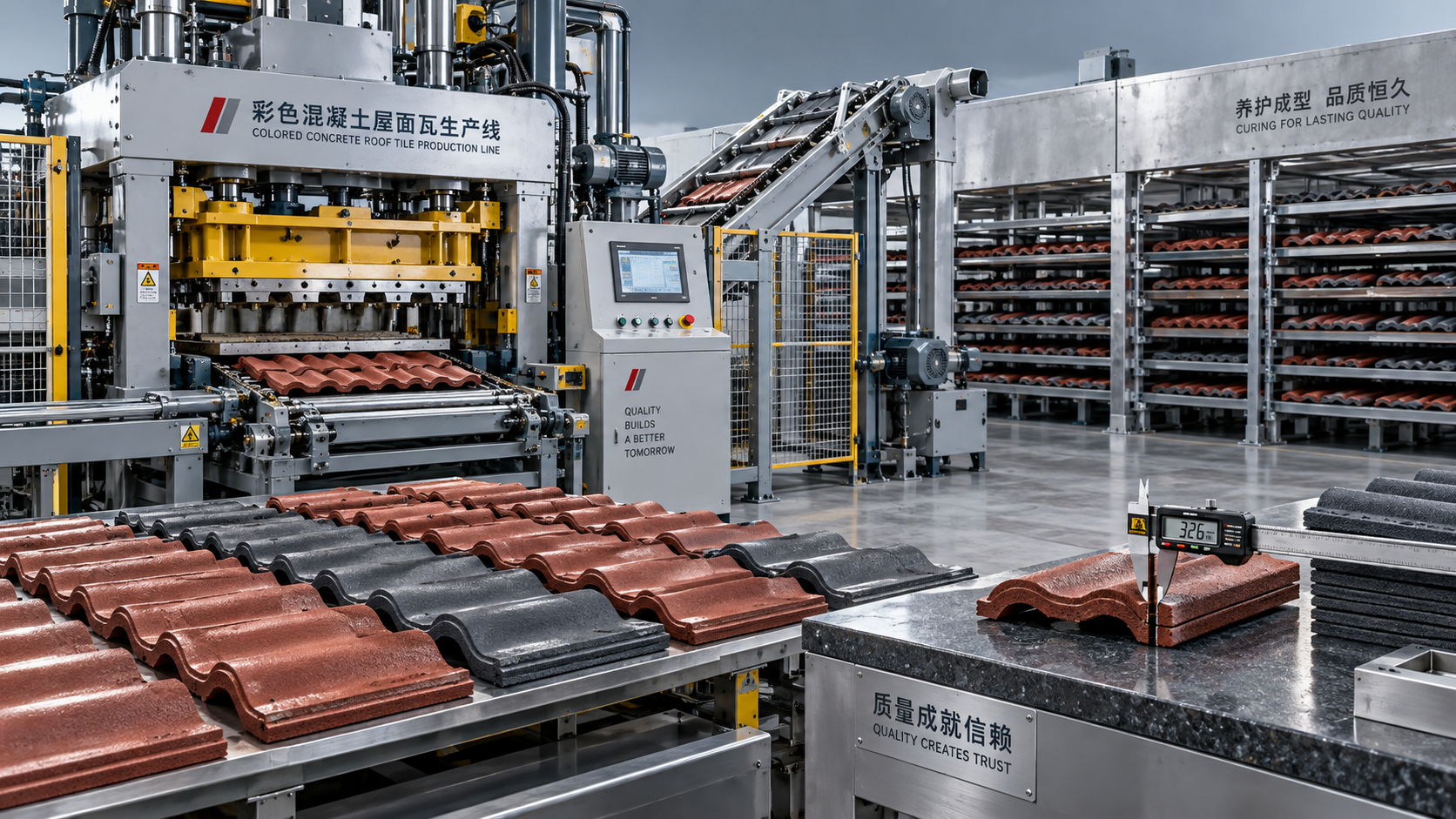
A freshly formed tile is an intermediate product. It may appear satisfactory at the press and later develop cracks, distortion, surface defects, or handling damage. Capacity verification therefore needs a quality record that follows trial tiles beyond forming.
Identify trial batches and keep them traceable through curing and inspection. Inspect tiles from different parts of the run, including after interruptions or adjustments. Selecting only the best early pieces can hide variation as the process settles or operating conditions change.
Agree the inspection criteria in advance. Relevant checks can include dimensions, profile consistency, visible cracks, edge condition, surface appearance, and fit between adjoining tiles. Strength and other performance requirements should be assessed using the applicable product specification and agreed test methods.
Separate immediate forming rejects from losses discovered later. This helps identify whether defects originate in feeding and pressing, early handling, curing, or finishing. It also prevents good-looking fresh tiles from being counted prematurely as saleable production.
Verified saleable output per hour = acceptable finished tiles traceable to the trial ÷ elapsed trial hours.
The denominator is the production period that generated those tiles. Curing duration affects inventory and space requirements; it is not added to the press trial’s operating time. Final acceptance of saleable output may nevertheless need to wait until the trial batch has completed the agreed curing and quality assessment.
For planning, machine speed, downtime, and reject allowances can be combined into an estimate. When a complete trial count is available, calculate directly from measured time and accepted tiles. Applying another general efficiency deduction would count some losses twice.
Check whether the rest of the line can sustain the result
The press’s verified capacity is only useful if the surrounding process can support it. Follow the material path from batching to storage and identify where supply or accumulation limits continuous operation.
Carrier requirements are especially easy to underestimate when tiles remain on boards or molds during part of the curing process. Base the required quantity on production rate and the complete return interval, including unloading, cleaning, and movement back to the machine.
Check labor during these activities as well. The operator count in the quotation should reflect the demonstrated arrangement. A test supported by additional workers gives a different operating cost and staffing requirement from the proposed production setup.
If several tile profiles will be produced, measure mold changes, cleaning, setup, and initial adjustment separately. A satisfactory continuous run with one profile can still translate into lower daily output when frequent product changes are required.
Turn the evidence into purchase acceptance terms
Before placing an order, convert the capacity claim into measurable contractual requirements. State the tile specification, approved mix conditions, mold configuration, supporting equipment, staffing, test duration, minimum acceptable output, and quality criteria. Define how routine stops, startup losses, and rejected tiles will be handled.
A factory acceptance test establishes performance in the supplier’s setup. A site acceptance test checks the installed system with local materials, utilities, operators, and handling arrangements. Record the configuration used for each so that any difference in results can be investigated.
For discussions with Shandong Hongfa Scientific Industrial & Trading Co., Ltd., or another construction machinery supplier, request evidence for the particular machine and line being quoted: the witnessed trial record, configuration details, operating settings, quality results, and commissioning scope. General manufacturing credentials provide background; these records provide the basis for assessing output.
Include a defined procedure if the agreed result is missed, covering diagnosis, corrective work, and retesting. The purchase decision should rest on a clear link between the offered equipment, the observed production rate, and the quality of the finished tiles. That gives both parties an objective standard for delivery and commissioning.
Next:No more content
Recommend
 Oct 22, 2026
How Can Buyers Verify a Hydraulic Roof Tile Machine's Output Capacity?
Verify hydraulic roof tile machine production capacity with witnessed trials, downtime logs, and cured-tile quality checks. Learn how to confirm reliable output before you buy.
- Oct 22, 2026
How Do You Assess a Color Roof Tile Machine for Export Markets?
Assess a color tile making machine for export market success. Discover key checks for tile quality, compliance, costs, and supplier support to make a smarter investment.
- Oct 21, 2026
How Do AAC Plant Installation Requirements Differ by Country?
Compare AAC plant installation requirements different countries impose, from pressure-vessel approvals to site permits. Discover key checks to avoid costly delays and plan with confidence.