



‹
›
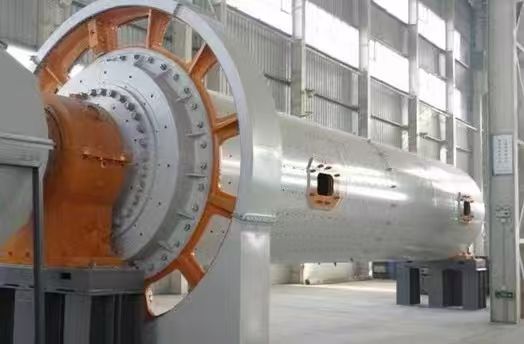
Ball Mill
The Ball Mill is a widely used industrial grinding machine designed for the efficient size reduction of raw materials and mineral products. It uses a rotating cylindrical shell partially filled with grinding media such as steel balls. As the shell rotates, the grinding media is lifted and then falls or cascades through the material, generating impact and friction that gradually reduce the feed material into fine powder.
With its robust structure, reliable operation, and suitability for both dry and wet grinding, the ball mill is an important piece of equipment in mineral processing, cement production, chemical manufacturing, and other powder-processing industries.
All PRODUCTS
Stay Connected
If you have any questions, please contact us and we will contact you as soon as possible.
Prduct Introdution
Ball Mill
1. Working Principle
The ball mill operates through a combination of impact and friction grinding.
Raw materials enter the rotating cylindrical chamber together with a controlled quantity of grinding media. As the cylinder rotates, the steel balls are carried upward along the inner wall before falling back through the material.
This repeated movement produces:
Impact forces
Friction forces
Attrition between particles
Through continuous grinding, large particles are progressively reduced to the required size for downstream processing.
The basic process is:
Raw Material Feeding → Grinding → Particle Size Reduction → Fine Powder Discharge → Subsequent Processing
2. Main Features
Efficient Grinding Performance
The controlled movement of grinding media provides continuous impact and friction, enabling efficient grinding of a wide range of materials.
The final particle size can be influenced by factors such as grinding time, media size, rotation speed, material characteristics, and operating conditions.
Strong and Durable Structure
The ball mill is manufactured with a robust cylindrical shell and supporting components designed for continuous industrial operation.
Its durable construction helps withstand repeated mechanical loads and demanding grinding conditions.
Dry and Wet Grinding
Depending on the material and process requirements, ball mills can be configured for:
Dry Grinding:
Suitable for producing dry powders where moisture must be minimized.
Wet Grinding:
Suitable for processes where water or another liquid medium is added during grinding to create a slurry.
This flexibility makes the ball mill adaptable to different production processes.
Continuous Operation
Ball mills can be integrated into continuous production systems, allowing material to be fed, ground, and discharged consistently.
This makes them suitable for large-scale industrial applications where stable throughput is required.
3. Grinding Media
The grinding media inside the mill typically consists of steel balls, although other suitable media can be selected according to the material and grinding requirements.
The size and loading of the grinding media influence:
Grinding efficiency
Impact intensity
Product particle size
Energy consumption
Grinding capacity
Proper media selection is therefore important for optimizing the performance of the grinding system.
4. Applications
Ball mills are widely used in industries such as:
Mining and mineral processing
Cement production
Building material manufacturing
Chemical processing
Ceramics
Metallurgy
Industrial powder production
They can be used for grinding various materials, including ores, clinker, minerals, and other raw materials suitable for ball milling.
5. Ball Mill in Cement and Building Material Production
In cement and building material production, ball mills are commonly used for fine grinding operations.
They can be applied to materials such as:
Cement clinker
Limestone
Gypsum
Slag
Mineral materials
Other suitable additives
The resulting fine powder can then be used in subsequent mixing, classification, calcination, or production processes.
6. Grinding Efficiency
Grinding performance depends on multiple operating factors, including:
Feed particle size
Material hardness
Grinding media size
Grinding media loading
Mill rotation speed
Grinding time
Dry or wet grinding conditions
Desired final particle size
By optimizing these parameters, manufacturers can improve grinding efficiency and achieve the required product fineness.
7. Advantages
Reliable Grinding
The combination of impact and friction provides stable and effective particle size reduction.
Flexible Process
Suitable for both dry and wet continuous grinding applications.
Wide Material Compatibility
Can process many mineral, cement, ceramic, and chemical raw materials.
Continuous Production
Can be incorporated into continuous industrial production lines for stable throughput.
Durable Construction
The robust cylindrical structure is designed for long-term industrial service.
Adjustable Grinding Performance
Grinding conditions can be optimized according to material characteristics and required product fineness.
8. Integration with Production Lines
The ball mill can be integrated with equipment such as:
Feeders
Conveyors
Separators or classifiers
Dust collection systems
Storage silos
Powder weighing systems
Packaging equipment
A typical grinding system can be arranged as:
Raw Material Storage → Feeding → Ball Mill → Classification → Finished Powder Collection → Storage / Packaging
This allows the grinding process to operate as part of a complete automated material processing system.
9. Maintenance Considerations
Regular maintenance is important for maintaining grinding efficiency and extending equipment service life.
Routine inspection typically includes:
Grinding media condition
Mill shell and liner condition
Bearings and lubrication
Drive system
Sealing components
Feed and discharge systems
Vibration and operating temperature
Proper maintenance helps minimize unplanned downtime and maintain stable production performance.
10. Product Summary
The Ball Mill is a reliable and versatile industrial grinding solution designed for reducing raw materials into fine powder through impact and friction between grinding media and material.
Its robust construction, dry and wet grinding capabilities, continuous operation, and wide material compatibility make it suitable for mining, cement, chemical, ceramic, and building material industries.
By providing stable particle size reduction and flexible grinding performance, the ball mill serves as a key processing unit for manufacturers requiring efficient and reliable fine grinding.
Previous page: Concrete Silo
Next page: Static Curing Room
Inquiry
HOT Products
")
HZS75 Concrete Mixing Plant (75 m³/h)
")
HZS100 Concrete Mixing Plant (100 m³/h)
")
HZS120 Concrete Mixing Plant (120 m³/h)
")
HZS25 Concrete Mixing Plant (25 m³/h)
")
HZS35 Concrete Mixing Plant (30 m³/h)
")
HZS60 Concrete Mixing Plant (60 m³/h)

Ball Mill

Concrete Silo

PLD1200 sand batching machine,batching plant,three hopper batching machine