



How much does an aerated concrete block production line cost per cubic meter?
If you are evaluating an aerated concrete block production line investment cost per cubic meter, the real answer depends on capacity, automation level, raw material configuration, and local installation conditions. For manufacturers and investors, understanding these cost drivers is essential to control budgets and improve long-term returns. As a leading building materials machinery producer with decades of experience, Hongfa provides reliable aerated concrete block production solutions designed for stable performance, efficient output, and stronger investment value.
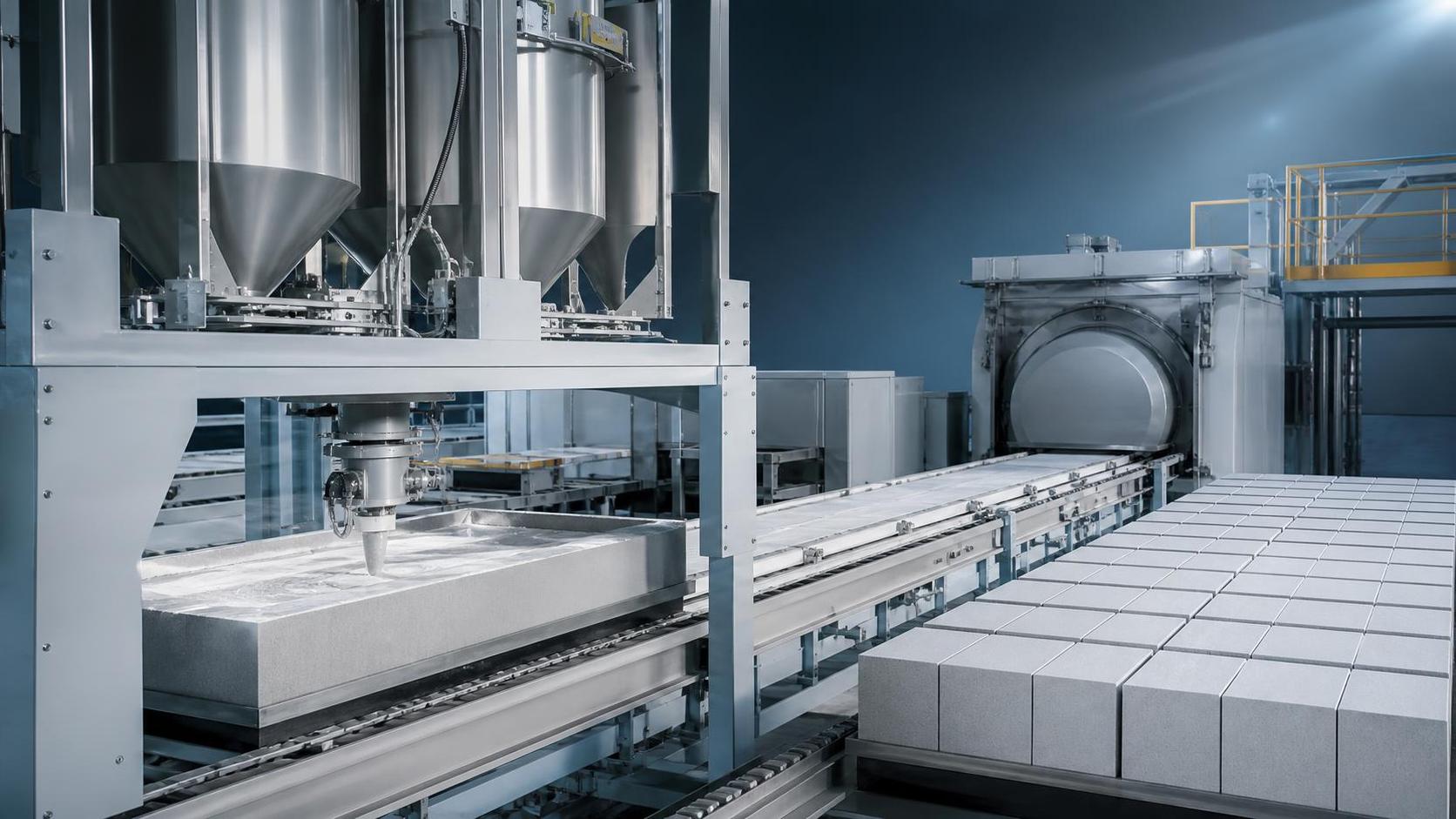
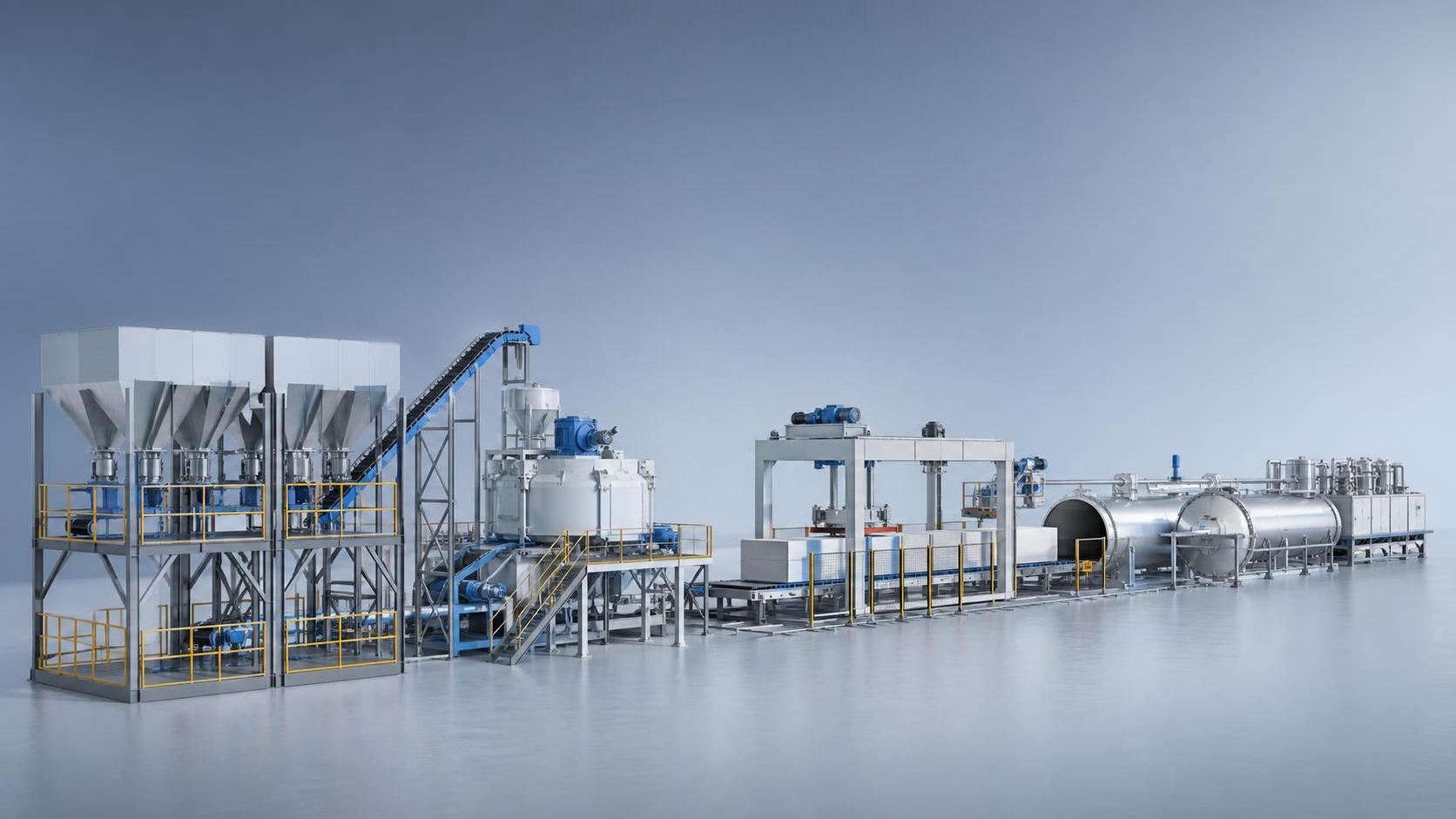
There is no single universal figure for how much an aerated concrete block production line costs per cubic meter. The cost is usually discussed in terms of installed line capacity, annual output, and the amount of equipment included in the scope. A line with basic mixing, cutting, curing, and handling functions will sit in a different cost range from a highly automated configuration that includes advanced batching, precise slurry control, centralized steam curing management, and fully synchronized material transfer. The quotation can also change when the project includes auxiliary equipment such as crushers, ball mills, slurry tanks, mold systems, steam boiler interfaces, or pallet circulation devices.
The most common mistake is to compare only the headline equipment price. That number rarely reflects the true aerated concrete block production line investment cost per cubic meter. The actual investment normally includes foundation work, power distribution, piping, steam or thermal systems, water supply, installation labor, commissioning, trial production loss, and spare parts. In some projects, the civil work and utility connection can be a major part of the budget, especially when the site is remote or the existing factory infrastructure is limited.
What drives the cost per cubic meter
Capacity is the first variable. A smaller line usually has a higher cost per unit of annual output because fixed equipment, control cabinets, and basic utilities are spread across fewer cubic meters. As capacity rises, some unit costs fall, but the plant needs stronger material handling, better process coordination, and more robust energy systems. That can offset part of the scale advantage. The relationship is not linear, so two projects with the same nominal output may still have different unit costs if their process layouts are not comparable.
Automation level is another major factor. Manual or semi-automatic lines rely more on labor for mold movement, cutting transfer, and stack handling. That can reduce the initial equipment outlay, but it may increase variability in product quality and create more dependence on operator skill. Fully automatic or integrated lines usually cost more at the start because of servo controls, sensors, conveyors, and interlocked process stations. In return, they often provide steadier dimensional control, lower handling damage, and more consistent output. For an aerated concrete block production line investment cost per cubic meter, automation changes both capital expense and operating behavior, so it should be evaluated across the full life of the line.
Raw material configuration affects the design and therefore the price. Fly ash, sand, lime, cement, gypsum, aluminum powder, and water do not behave the same way in every plant. If the mix relies on sand, the line may need stronger grinding and slurry preparation equipment. If the raw material is fine ash with stable activity, that part of the system may be simpler. Moisture variation, particle size, and local material quality all influence equipment selection, wear rate, and process stability. When input materials are inconsistent, the line may need tighter batching and better control logic, which increases investment and maintenance demands.
Steam curing and thermal supply are often underestimated. Aerated concrete products need controlled curing conditions, and the thermal system can shape both product quality and energy cost. Some projects connect to an existing boiler system, while others require a dedicated steam source or additional heat recovery arrangement. The cost impact depends on fuel type, boiler capacity, plant layout, insulation design, and how far the curing area sits from the main production building. If the curing room is badly insulated or the piping run is long, operating cost may rise even if the initial line price looks moderate.
Equipment scope changes the budget
In industrial equipment and parts procurement, scope definition matters as much as machine selection. A line that only includes core forming equipment is not comparable with a line delivered as a more complete process package. The cutting section, mold section, tilting and transfer system, batching plant interface, crusher, mill, slurry preparation tanks, control system, and stacking equipment may be quoted separately or combined. That difference changes the apparent cost per cubic meter and can cause serious misunderstanding during comparison.
Transportation and site conditions also matter. Large equipment sections may need special loading, inland freight, crane handling, and on-site positioning. If the site has restricted access or limited floor bearing capacity, additional lifting gear, concrete strengthening, or layout revision may be needed. A project near port logistics and industrial infrastructure will usually be easier to install than one in a remote inland location. These factors do not always appear in the equipment brochure, but they affect the final investment no less than the line itself.
Installation and commissioning are part of the real cost picture. A production line for aerated concrete blocks depends on alignment, calibration, electrical integration, slurry consistency, and cutting precision. If commissioning is rushed, the plant may start with unstable density, poor corner integrity, or uneven curing results. That can lead to rework, scrap, and delayed ramp-up. For that reason, the investment estimate should include enough time and budget for trial runs and process adjustment, not just mechanical delivery.
Cost per cubic meter is tied to operating efficiency
The lowest purchase price does not always produce the lowest cost per cubic meter over time. Energy use, labor intensity, material utilization, and downtime all affect the economics of the line. If the mixer is undersized, batching becomes unstable. If cutting precision is weak, block edges deteriorate and waste rises. If material transfer is slow, the curing cycle loses balance and throughput falls. The line then produces fewer qualified cubic meters than expected, which makes the original investment appear more expensive in practice.
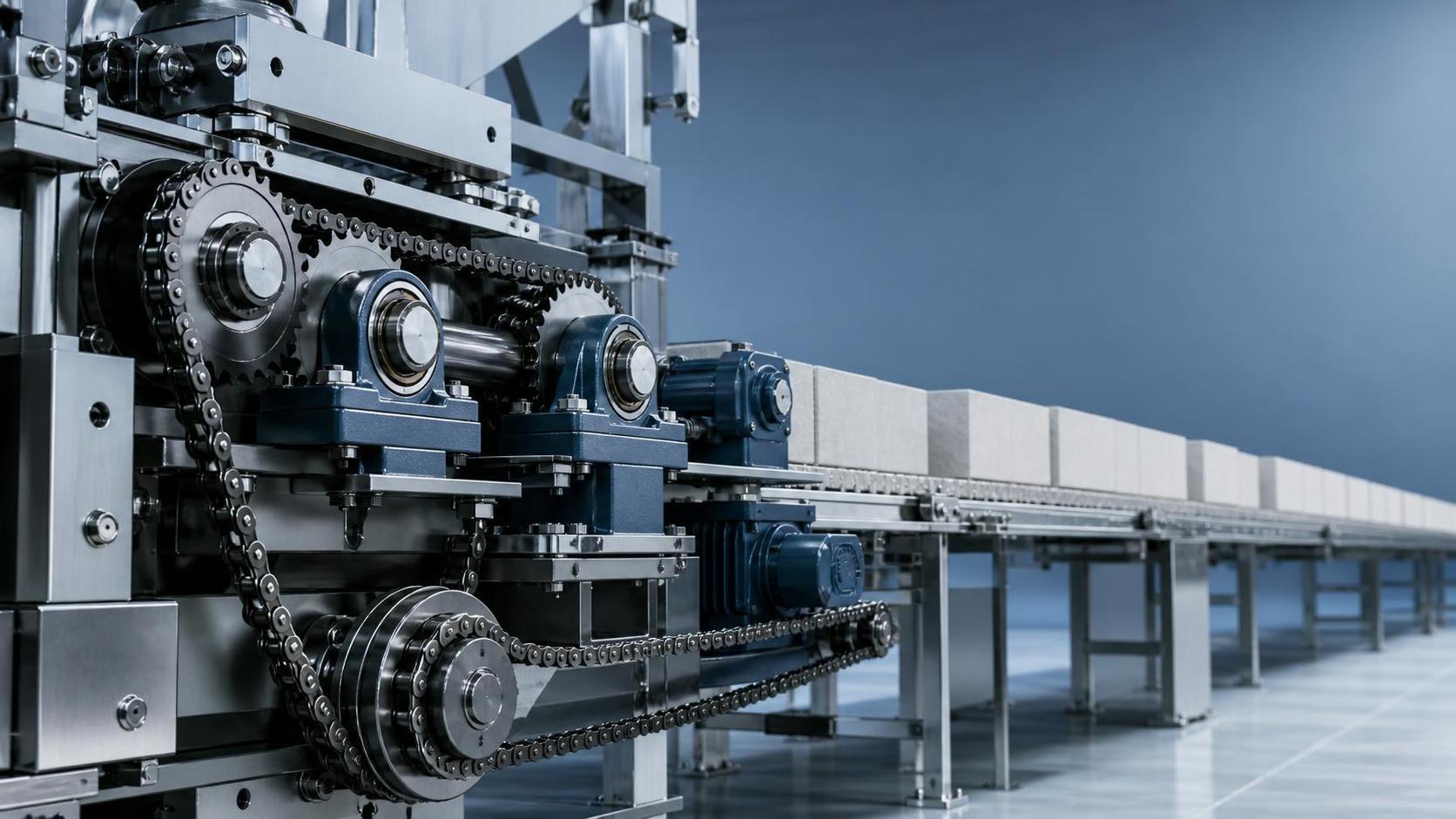
Maintenance should be considered from the beginning. Wear parts such as cutting wires, bearings, pumps, seals, conveyor components, and control devices need regular inspection. In aerated concrete production, the abrasive nature of some raw materials and the wet process environment can shorten service life if the system is not designed for easy access. A line that is simple to maintain may cost slightly more up front, but it can reduce stoppages and spare-part urgency later. This is especially relevant in industrial equipment and parts operations where a short delay in one station can disturb the whole production rhythm.
Product specification also changes the economics. Standard blocks and panels do not require the same forming size, mold design, or handling setup. If the plant must support different block dimensions, the line may need additional mold sets or more flexible cutting arrangements. That flexibility has a cost. So does the need for tighter dimensional tolerance, cleaner surface finish, or higher green strength before cutting and transfer.
Typical comparison points before budgeting
When comparing quotations, the useful question is not only how much the line costs, but what is included in the cubic-meter calculation. A practical comparison usually needs to separate equipment supply, civil construction, installation, utility connection, and commissioning. It also helps to compare the expected production conditions rather than the sales brochure alone.
- Check whether the line price covers only core machines or a full process layout, because the difference can be substantial.
- Review raw material assumptions carefully; a sand-based system and an ash-based system may need different preparation equipment.
- Confirm curing and energy requirements early, since steam supply and insulation influence both investment and operating cost.
- Look at spare parts access and wear-part replacement intervals, not just the first delivery date.
- Examine site layout, lifting access, and utility readiness, because these items can change installation expense quickly.
For an aerated concrete block production line investment cost per cubic meter, the most reliable estimate comes from matching the equipment configuration to the actual raw material source, target output, and site conditions. A compact line with modest automation can be economical on paper, but if it suffers from low yield or unstable curing, the real cost per cubic meter rises. A more integrated line may require a higher initial budget yet deliver steadier production and better resource use when the plant is running continuously.
In practice, the right comparison is between stable output and total installed cost, not between two machine prices pulled out of context. Once the process route, material characteristics, and installation scope are defined clearly, the cost per cubic meter becomes much easier to judge in concrete terms.
Recommend
 Sep 23, 2026
How automatic AAC production line stability affects block quality
Automatic AAC production line stability directly shapes block strength, density, and dimensions. Learn how tighter process control reduces defects, waste, and safety risks.
- Sep 23, 2026
What to check before buying autoclaved aerated concrete equipment
Autoclaved aerated concrete equipment buying guide: learn what to check on line balance, raw materials, energy use, maintenance, and support before choosing a reliable AAC solution.
- Sep 24, 2026
How to reduce downtime caused by worn AAC plant machinery
AAC plant machinery downtime can be cut by spotting wear early, prioritizing critical parts, and using smarter maintenance strategies to keep production stable and costs under control.