Is Automatic Packaging Worth the Cost for an AAC Block Plant?
Automatic packaging can be worth the cost for an AAC block plant when it removes a genuine dispatch bottleneck, reduces avoidable handling losses, or lowers recurring labor requirements enough to justify the investment. It is less compelling when production volumes are low, packaging requirements change frequently, or the real constraint lies elsewhere in the line.
Consider a plant where finished blocks accumulate after autoclaving because packs cannot be prepared as quickly as they are released. Adding wrapping or strapping equipment may help, but only if the upstream transfer, pack formation, storage space, and outbound handling can support the same flow. The decision starts with measuring the current operation, not with comparing machine prices alone.
Identify the work that actually needs automation
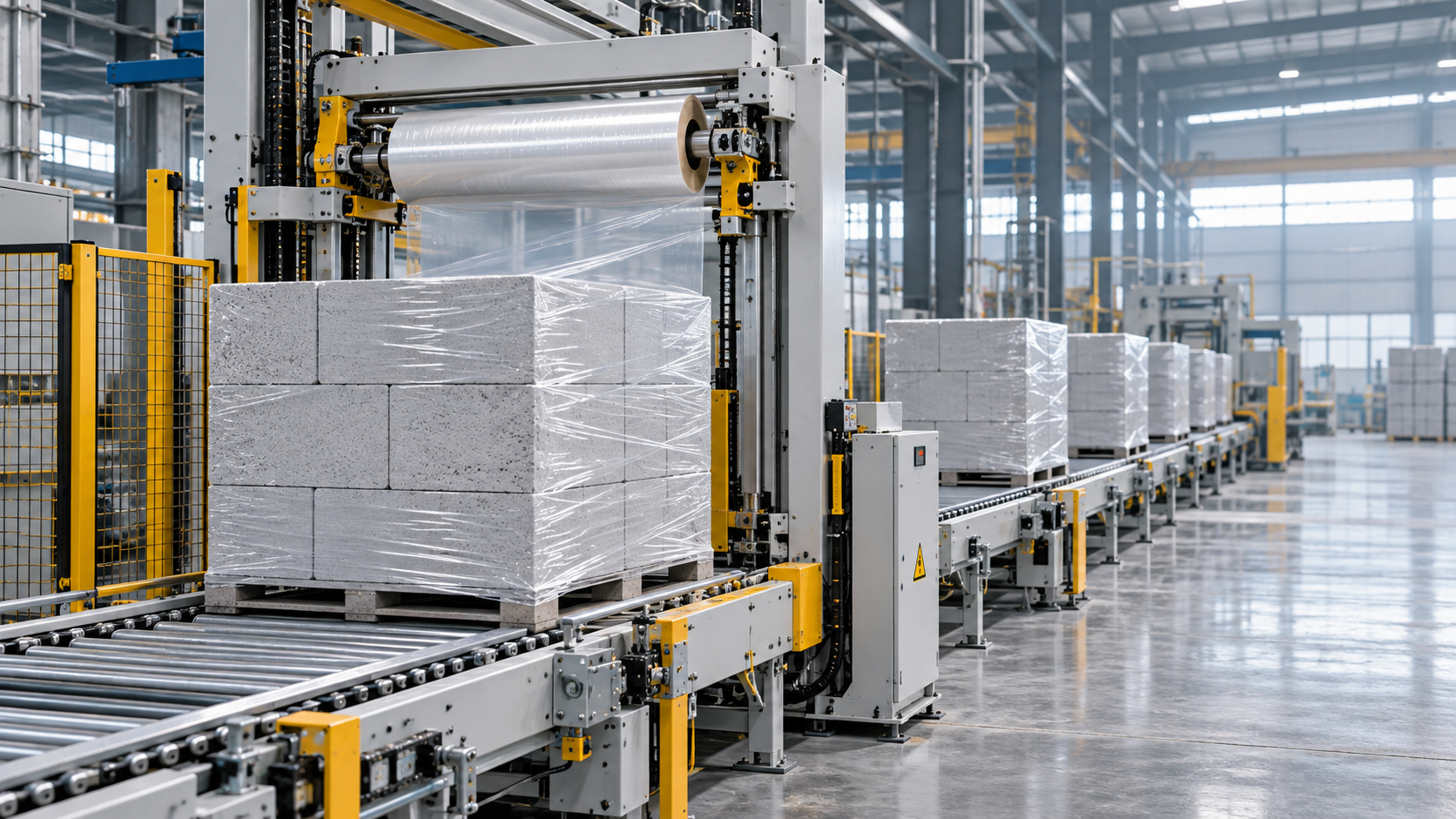
“Automatic packaging” can describe several different arrangements. One plant may need a machine to apply film to already formed packs; another may need automatic grouping, strapping, pallet handling, and discharge as well. The scope determines both the investment and the labor that remains after installation.
Map the path from finished AAC blocks to a dispatch-ready load. Record where blocks are separated or grouped, where pallets or other supports are introduced, how packs are secured, and how finished loads move to storage. Include waiting and rehandling, not just the time spent applying packaging materials. AAC blocks can be damaged by impacts, poor support, or excessive clamping, so an improvement that speeds up wrapping but increases breakage is not necessarily an improvement.
For each operation, distinguish between work that can be eliminated and work that merely moves elsewhere. An automatic wrapper may reduce manual film application, for example, while someone still supplies film, removes rejected packs, checks load stability, and handles forklift traffic. Labor savings should reflect the staffing plan that would actually be possible, including breaks, supervision, and maintenance coverage.
Match packaging capacity to the way the plant runs
Start with the number of saleable packs that must leave the packaging area during a normal shift and during the busiest release periods. AAC production and autoclave unloading can create uneven arrivals, so a machine sized only against a daily average may struggle when several loads reach the downstream area close together.
Use a common unit when comparing equipment: packs per hour at a stated pack size and operating condition. Convert block output into packs using the actual number of blocks in each pack, then compare the required rate with the supplier’s capacity under the proposed configuration. Ask whether the stated rate includes pallet handling, film application, strapping, indexing, and discharge, or refers only to one machine cycle.
Rated speed is not the same as sustained output. Film changes, strap replenishment, alignment faults, product changeovers, and planned cleaning all consume time. A practical assessment should account for these interruptions and for the time needed to restart safely after a stoppage. An accumulation area may help absorb short fluctuations, but it needs enough floor space and a controlled way to prevent packs from colliding.
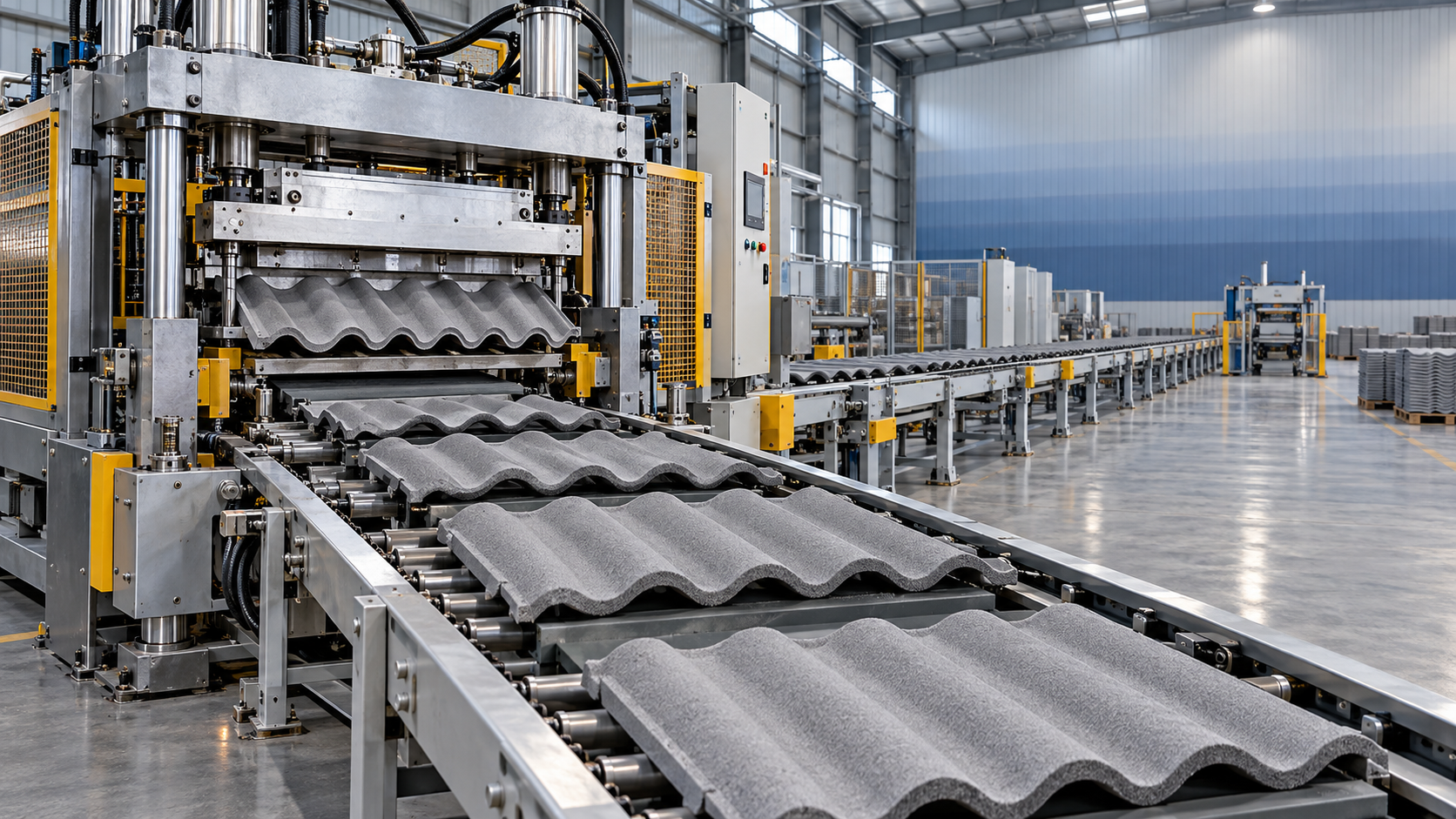
The same distinction matters when comparing output questions across building materials. “How many concrete roof tiles can a machine produce per day?” cannot be answered reliably from a machine name alone; cycle rate, product configuration, operating hours, and downtime all matter. AAC packaging capacity likewise has to be assessed in terms of finished packs and the plant’s actual operating pattern, not an unrelated production figure.
Calculate the investment on a like-for-like basis
The purchase quotation is only part of the cost. Compare the current and proposed systems over the same period, using figures from your plant and a clearly defined equipment scope. Include costs that may sit outside the packaging supplier’s quotation:
- Equipment, installation, commissioning, freight, and any required site modifications.
- Conveyors, pack positioning, guarding, electrical work, and connections to existing controls.
- Packaging materials, pallets or supports, electricity, compressed air where needed, and waste disposal.
- Spare parts, preventive maintenance, operator training, and expected production interruptions during changeover.
- Residual labor for supplying consumables, clearing faults, quality checks, and moving finished packs.
Then estimate annual benefits using only costs that would change. These may include lower packaging labor expenditure, reduced film or strapping consumption, fewer damaged saleable blocks, less rehandling, or additional contribution from output that the plant can actually sell and dispatch. Do not count higher theoretical machine capacity as revenue if the upstream process, storage yard, or market demand cannot support it.
Simple payback can be expressed as total installed investment divided by annual net benefit. Annual net benefit is the avoided cost and any substantiated additional contribution, less the new annual operating and maintenance costs. For a fuller financial comparison, include financing, taxes, asset life, and the time value of money according to the plant’s accounting method. Simple payback is useful for screening, but it does not describe the full return over the equipment’s life.
Test the assumptions that could change the answer
Run the calculation with more than one operating scenario. Use the expected production volume, then test a lower volume and a slower ramp-up. Repeat the calculation with more conservative labor savings or higher consumable use. If the investment only appears attractive when every assumption is favorable, the project carries more risk than a single payback figure suggests.
Be careful with damage savings. Record the number and type of damaged blocks, where the damage was detected, and whether the cause can reasonably be linked to packaging or subsequent movement. Breakage caused upstream should not be credited to a new wrapper. Likewise, stronger packaging may lower transit losses while increasing film or strap consumption; both sides belong in the comparison.
Choose the level of automation that fits the constraint
A semi-automatic arrangement may be sufficient when pack volumes are moderate, product formats vary, or workers have other duties that cannot be removed. It can reduce a physically repetitive task without requiring the plant to automate every transfer. Its limitation is that output and consistency may still depend heavily on operator availability.
More extensive automation becomes easier to justify when the packaging area operates for long periods, pack formats are reasonably consistent, and downstream handling repeatedly restricts output. Automatic pack positioning, securing, and discharge can reduce manual intervention, but the equipment needs dependable infeed and a clear route for completed packs. A fully automated station placed between unreliable conveyors and a congested yard can simply relocate the queue.
There is also a staged option: prepare the layout and controls for later expansion while automating the most restrictive operation first. Before committing to that route, establish which components can be reused, what interfaces the later equipment will need, and whether a future upgrade would interrupt production or require the first installation to be rebuilt.
Protect the blocks without overpackaging them
The correct packaging method depends on block dimensions, pack geometry, storage conditions, handling equipment, transport distance, and customer requirements. Film, straps, corner protection, and pallets or other supports each perform different functions. A wrapped pack is not automatically stable enough for every lifting or transport method, and excessive strap tension or poorly positioned contact points can damage the product.
Review whether the proposed system can accommodate the full range of block sizes and pack heights. Check how recipes are selected, how guides or clamps are adjusted, and whether an operator can verify the settings before a new format enters the machine. Frequent manual adjustments may erase part of the expected productivity gain, particularly when orders involve small batches.
Agree on the required finished-pack condition before selecting equipment. A useful acceptance sample should define pack dimensions, stability, strap or film placement, identification, and visible product damage. Where weather protection is required, specify the intended storage and exposure conditions rather than assuming any film configuration will provide complete protection.
Check integration before approving the project
Layout drawings should show more than the machine footprint. Allow for infeed and discharge conveyors, access to film or strap reels, maintenance openings, safe walkways, forklift movements, and the space required to remove a damaged pack. Verify floor loading and utility requirements against site conditions. Any buffer must be accessible without placing workers in the path of moving equipment.
Controls integration deserves the same attention. Establish what happens when the wrapper stops: whether the upstream conveyor stops automatically, where accumulated packs wait, and how the line restarts. Define the signals exchanged with existing equipment and who is responsible for resolving interface faults. Confirm that guarding, interlocks, emergency stops, and safe access arrangements are appropriate for the complete installation, not just the individual machine.
Ask suppliers to state their proposed performance against your own product and operating requirements. The acceptance criteria can cover pack rate under specified conditions, acceptable damage, consumable application, changeover procedure, and the handling of faults. State which blocks, supports, film, straps, operators, and utilities will be available for testing; otherwise, two parties may interpret a successful demonstration differently.
When postponing the purchase makes sense
Delay a major packaging investment if production records do not yet show a packaging constraint or if the plant frequently stops upstream. Fixing transfer jams, improving pack presentation, or reorganizing the dispatch area may deliver more immediate value. Similarly, a planned change in block dimensions or pack format could make it sensible to confirm the future specification before ordering fixed equipment.
When packaging is demonstrably limiting shipments, build the decision around the smallest scope that resolves that limitation and a financial case that remains acceptable under conservative assumptions. The strongest proposal is not necessarily the fastest machine; it is the one that can produce stable, saleable packs at the required rate while fitting the plant’s real labor, maintenance, and dispatch conditions.
Recommend
 Nov 12, 2026
How Much Does AAC Sand Grinding Equipment Cost?
Is automatic packaging worth the cost for an AAC block plant? Explore payback, compare AAC sand grinding equipment costs, and plan a smarter investment.
- Nov 12, 2026
Is Automatic Packaging Worth the Cost for an AAC Block Plant?
How many concrete roof tiles can a machine produce per day? Explore how real operating rates and payback analysis guide AAC packaging investment.
- Nov 11, 2026
How Many Concrete Roof Tiles Can a Machine Produce per Day?
Can one cutting machine handle different AAC panel sizes? Explore the answer and learn how to calculate realistic daily concrete roof tile output.