Is a Fully Automated Block Plant Worth the Extra Investment?
Is a Fully Automated Block Plant Worth the Extra Investment?
Is a fully automated block plant worth the extra investment? For manufacturers weighing higher upfront costs against long-term production efficiency, the answer depends on output targets, labor costs, product quality requirements, and local market demand. Automation can reduce manual handling and improve process consistency, but its financial value varies by operation. The decision becomes clearer when the entire production route—not just the block machine—is included in the calculation.
What does “fully automated” actually include?
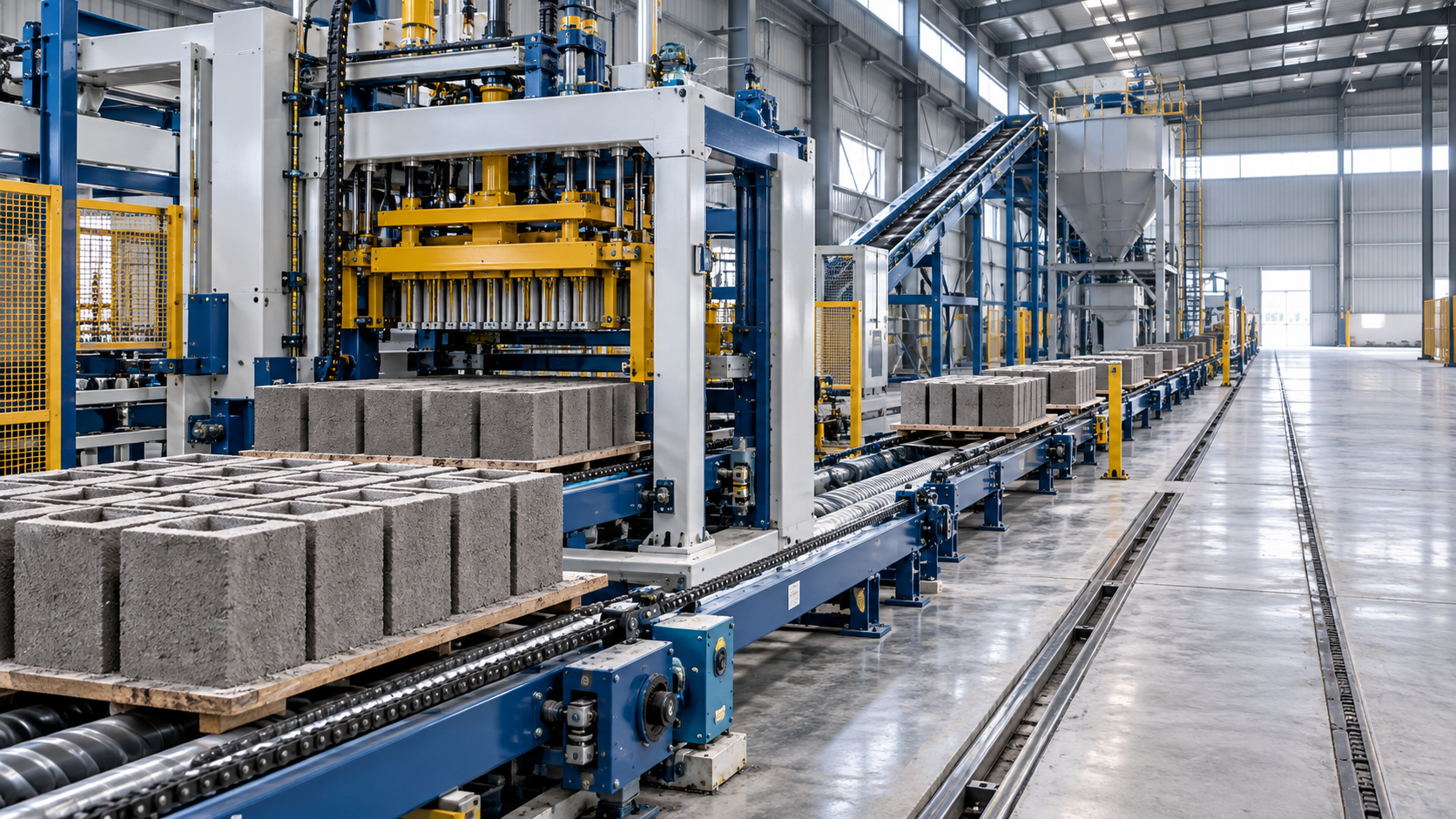
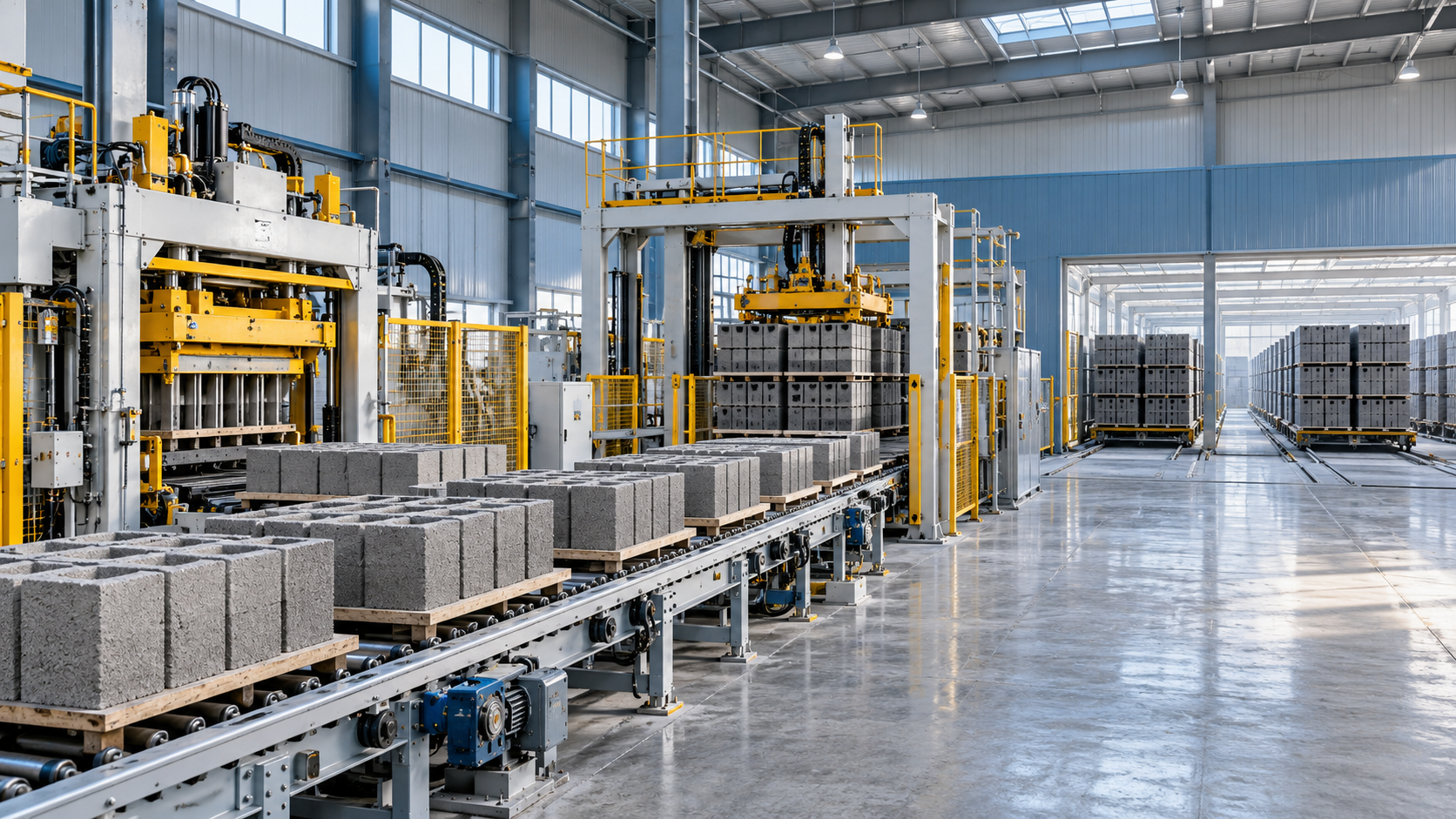
In a concrete block plant, automation can cover aggregate dosing, mixing, feeding, molding, pallet handling, movement to and from curing, cubing, and packaging. The exact boundary differs between proposals. One supplier may describe a line as fully automatic because the forming and pallet-transfer cycle runs without manual intervention; another may include automatic curing-chamber handling and finished-product stacking.
That distinction affects both price and staffing. A machine that forms blocks automatically may still need forklifts, operators at the curing area, or people to stack and strap finished products. Even a highly automated line needs personnel for raw-material supply, quality checks, cleaning, maintenance, and fault response.
Ask each supplier to mark the automated and manual steps on a process-flow drawing. Include material movement between buildings or yards. A short manual transfer between two machines can become a bottleneck when the line is running continuously.
Where does automation usually pay off?
The strongest case is a plant with dependable demand for a limited range of products, enough operating hours to use the equipment, and a costly or difficult-to-staff handling process. Automatic pallet transport and cubing, for example, can reduce repetitive movement around the curing and packaging areas. That may matter more than increasing the rated speed of the block press.
Consistency is another potential benefit. Controlled batching, repeatable forming cycles, and less handling of fresh blocks can help reduce variation and damage. But automation does not correct poor aggregate grading, fluctuating moisture, an unsuitable mix, worn molds, or inadequate curing. If those inputs are unstable, a faster line can simply produce inconsistent blocks faster.
It is also important to distinguish available capacity from saleable output. Blocks that are chipped during transfer, fail quality checks, or sit unsold do not repay equipment finance. Compare proposals using expected good units delivered to customers, not only the maximum number of blocks formed per hour.
When is a semi-automatic line the better choice?
A semi-automatic plant can be the more sensible investment when orders are irregular, production runs are short, or the business needs to preserve cash for land, working capital, and distribution. It may also be easier to justify where manual handling is economical and dependable.
Product mix matters. A plant switching frequently between block sizes, pavers, and special shapes must account for mold changes, settings, cleaning, and storage. Automation can still help, but its advertised cycle rate becomes less meaningful if the line spends a substantial part of the shift changing over.
There is a middle ground: automate the operation that constrains output or causes the most damage, rather than purchasing every available option at once. Before choosing a staged approach, however, check whether the layout, controls, foundations, and electrical capacity will allow later additions without costly rework.
How should you calculate the payback?
Compare the fully automated proposal with a realistic alternative, not with a plant that could never meet your required output. Start with the incremental investment: the difference in installed cost between the two options. Include freight, duties where applicable, foundations, utilities, commissioning, training, spare parts, and any additional curing or handling equipment needed to make the line work as intended.
Then estimate the annual difference in operating cash flow. Potential gains may include lower handling labor, less product damage, and additional sales when extra output can actually be sold. Deduct the additional costs of power, maintenance, consumables, software support, and any specialist staffing. If higher output requires more raw materials, pallets, yard space, or delivery capacity, include those costs too.
Simple payback = incremental installed investment ÷ annual incremental net cash benefit. For illustration only, if the extra installed investment is 400,000 and the credible annual net benefit is 100,000 in the same currency, simple payback is four years. That is not a forecast: it excludes financing costs, taxes, the time value of money, and differences in residual value. If the annual benefit is uncertain or negative, the payback calculation alone cannot justify the purchase.
Run the calculation with conservative utilization as well as your target schedule. A plant designed around two shifts but routinely operating one will spread its fixed costs over fewer saleable blocks. Likewise, do not count every theoretical labor saving if operators will be reassigned rather than removed from payroll.
Which bottlenecks can undermine the investment?
The forming machine is only one part of the system. If the mixer cannot supply material at the required pace, the press waits. If curing racks, pallets, or chamber capacity are insufficient, fresh products have nowhere to go. If finished-block removal is slow, the line may stop even though the press is capable of a faster cycle.
Check capacity at each stage using the same product, shift pattern, and operating assumptions. A supplier’s cycle time may be useful for comparing forming equipment, but it is not the same as daily output after startup, cleaning, stoppages, mold changes, and rejects. Ask what is included in the stated production figure and what conditions must be met.
Site conditions also matter. Unreliable power, limited water supply, constrained vehicle access, or a yard that becomes difficult to use in wet weather can limit the benefit of sophisticated controls. Resolve those practical issues before assuming that more automation will deliver more output.
Does automation reduce maintenance costs?
Not necessarily. Automation can reduce some manual wear and handling damage, but it adds sensors, drives, control components, conveyors, and safety devices that need inspection and troubleshooting. A minor sensor fault can interrupt an otherwise healthy production line if the team cannot diagnose it or obtain a replacement.
Before placing an order, request a recommended spare-parts list, maintenance schedule, electrical drawings, and a clear explanation of remote and on-site support. Confirm who supplies programmable-controller backups, how replacement components are identified, and whether the maintenance team will receive training in a language they can use.
Also ask which components are standard purchases and which are supplier-specific. A lower equipment price may be less attractive if critical parts have long lead times or require specialist intervention for routine replacement.
Will a fully automated plant improve block quality?
It can improve repeatability, especially where manual handling causes fresh-block damage or inconsistent transfers. Automated dosing and controlled cycles may also make process adjustments easier to reproduce. The outcome still depends on the quality of the raw materials, mix design, mold condition, compaction, and curing practice.
Specify the products and acceptance criteria before comparing equipment. Required dimensions, strength, appearance, and permitted tolerances depend on the intended use and applicable local requirements. Ask how the proposed plant will control the variables that affect those criteria, and how samples will be checked during commissioning. A machine demonstration with a different mix or product is helpful, but it is not proof of performance under your site conditions.
What should be clarified before comparing quotations?
A useful quotation describes more than a machine model and hourly capacity. It should identify the equipment included from material storage through finished-product handling, along with the assumptions behind the output figure. Compare the number and type of molds, pallets, curing arrangements, installation scope, training, warranty terms, and items excluded from the price.
Interface responsibility deserves particular attention. If the batching plant, block machine, curing system, and packaging equipment come from different suppliers, establish who will coordinate controls, resolve transfer-height differences, and test the complete line. Gaps between supply packages often become the buyer’s problem during installation.
Shandong Hongfa Scientific Industrial & Trading Co., Ltd., established in 1990, produces construction machinery including block production lines and concrete batching plants. For a project involving such equipment, a discussion with a manufacturer should cover how the batching, forming, handling, and curing stages will work together. Request project-specific drawings and performance assumptions rather than relying on general descriptions of automation.
What is the practical next step?
Build two comparable production plans: one semi-automatic and one more fully automated. Use the same product mix, realistic sales volume, quality requirements, shift schedule, and site constraints. Ask suppliers to identify staffing at each station and to explain what happens when one section stops.
If the automated option still makes financial sense at conservative sales and uptime assumptions—and your team can maintain it—the extra investment may be justified. If the result depends on selling every block at the line’s maximum rated capacity, resolve the demand and bottleneck risks before committing capital.
Recommend
 Nov 06, 2026
How to Choose AAC Plant Capacity for Your Market
How do I choose the right AAC plant capacity for my market? Explore demand, production bottlenecks and costs to make a confident investment decision.
- Nov 06, 2026
Is a Fully Automated Block Plant Worth the Extra Investment?
Is a fully automated block plant worth the extra investment? Compare payback, labor savings, production capacity, and maintenance costs before you decide.
- Nov 05, 2026
How Much Labor Can an Automated Block Production Line Save?
How much labor can an automated block production line save? Explore practical staffing examples, calculate savings and make a more confident investment decision.