How Much Labor Can an Automated Block Production Line Save?
An automated block production line can save several workers per shift when it replaces manual material handling, pallet movement and stacking as well as block forming. Where a plant already uses mechanical handling, the reduction may be smaller. The result depends on the starting workforce, the equipment included in the line and the amount of production being compared.
The most useful measure is not the number of people standing beside the block machine. It is the total labor needed to produce the same quantity of acceptable blocks, from batching through curing and final handling. A line that runs with fewer operators but requires additional forklift drivers, maintenance technicians or rework may save less labor than its control panel suggests.
How much labor can automation save in practice?
There is no single staffing reduction that applies to every block plant. A manually intensive operation may have people feeding materials, moving pallets, transferring fresh blocks to curing areas and stacking finished products. Automating those transfers can remove multiple repetitive assignments from a shift. By contrast, replacing a semi-automatic machine in a plant that already has conveyors and mechanical stacking may change the staffing requirement only modestly.
Consider an illustrative comparison. A plant uses 12 people per shift across batching, molding, handling and stacking. A proposed automated arrangement requires 7 people for the same scope and produces the same number of acceptable blocks over the same working time. The direct reduction is 5 people per shift, or about 42% of the original shift staffing. This is an arithmetic example, not a prediction for a particular line.
That comparison holds only if the seven-person figure includes all work previously performed by the twelve-person team. If an additional forklift operator is needed at the curing area, or if maintenance support increases, those hours must be added. Break coverage, cleaning and changeovers also belong in the calculation when they differ between the two arrangements.
Headcount alone can be misleading when output changes. Suppose the automated line needs seven people but produces fewer acceptable blocks because of stoppages or a slower downstream process. The plant may still use less labor per shift, while labor hours per saleable block improve by less than expected. Compare both staffing and output before assigning a value to the saving.
Which jobs can the line actually replace?
Automation removes tasks more reliably than it removes entire jobs. One operator may divide a shift among several duties, some of which remain necessary after installation. Mapping the work by process makes the estimate more realistic.
Batching and material feeding
Automated weighing, dosing and conveying can reduce manual feeding and repeated measurement. The saving is greatest where workers currently move or measure materials throughout the shift. Someone may still need to replenish hoppers, monitor material supply, inspect moisture-related changes and respond to inconsistent mixes.
Batching automation also depends on what is included upstream. A dosing system cannot eliminate the work of unloading and supplying aggregates if that work remains manual. Ask where the automated process begins and how materials reach it.
Forming and pallet movement
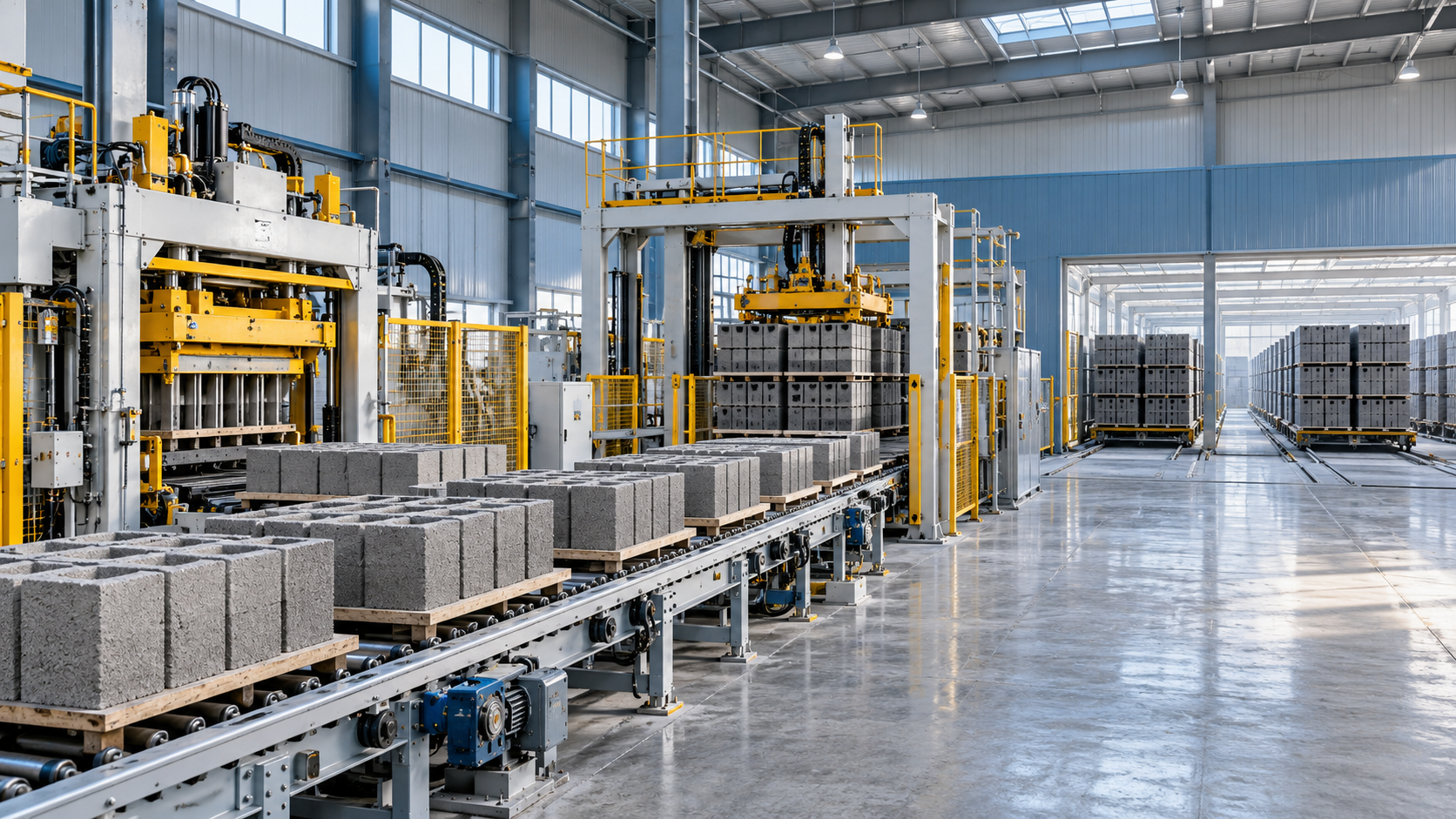
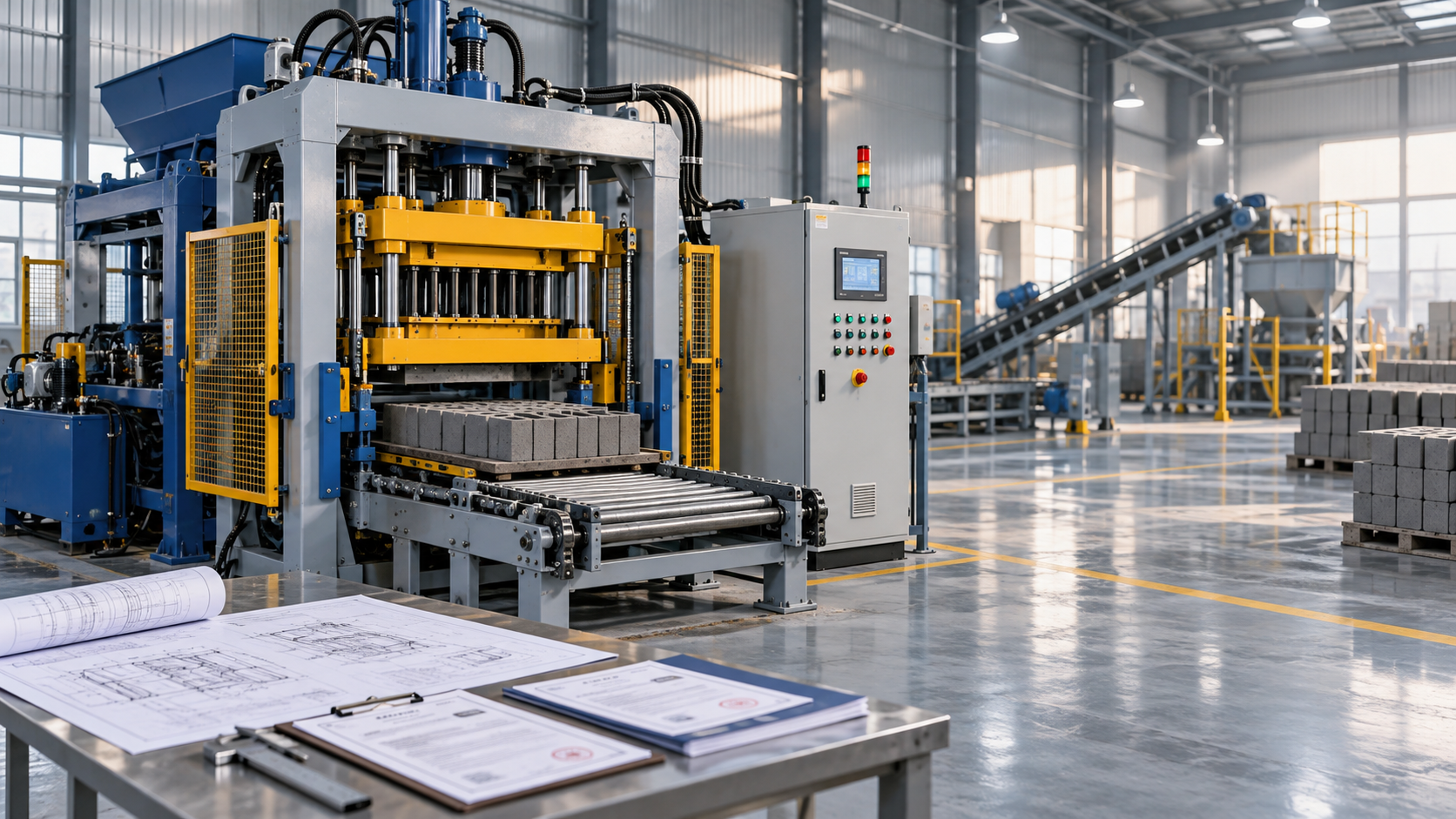
An automatic block machine can carry out a programmed forming cycle and transfer pallets between connected stations. It may reduce the number of people needed to operate and feed the machine, particularly where pallets are currently moved by hand.
An operator is still needed to monitor the process, check product appearance and respond to jams. Mold changes, cleaning and adjustments may require more than one person for short periods. Those intermittent jobs matter when a plant runs several block types or changes production frequently.
Curing, stacking and dispatch preparation
Handling around the curing area often determines whether the projected saving reaches the whole plant. Fresh blocks must be moved without damage, curing positions must be loaded and unloaded, and finished blocks must be stacked or otherwise prepared for storage.
If these transfers are automated and connected to the forming line, labor savings can extend beyond the machine operator. If they remain manual, a plant can have an automated forming machine while retaining a substantial handling crew. Forklift travel, pallet collection and finished-product movement should be counted even when those workers are supervised by a different department.
How should a plant calculate its own saving?
Start with a representative period of production, including normal stoppages and the product mix the plant intends to run. Record paid hours by task rather than relying only on job titles. Include operators, helpers, material handling, cleaning, supervision and maintenance support to the extent that each is part of the process being compared.
Then calculate:
- Labor hours per acceptable block: total relevant labor hours divided by the number of blocks that meet the plant’s saleable quality requirements.
- Labor hours saved per period: baseline labor hours minus projected labor hours, adjusted to the same volume of acceptable blocks.
- Labor cost saved: hours saved multiplied by the applicable fully loaded labor cost, including employment costs that genuinely change with staffing.
For example, if a plant uses 96 relevant labor hours to make 8,000 acceptable blocks, its baseline is 0.012 labor hours per block. If the proposed line needs 64 hours for the same acceptable output, the reduction is 32 hours, or one-third of the baseline. Both the volume and hours here are illustrative; a plant should substitute its own operating figures.
Separate hours that disappear from hours that move elsewhere. A worker reassigned from stacking to material supply may improve flow, but the reassignment is not a labor-hour saving unless the remaining work is covered without replacing those hours. Equally, a vacant position that no longer needs to be filled can represent a saving even if no current employee leaves.
Use a baseline that reflects the intended operating schedule. Comparing a fully staffed manual shift with an automated line operating for fewer hours, or comparing peak output with an average shift, can distort the result. Where demand varies, calculate at more than one production volume: some operators must be present even when the line is running below capacity.
Why can projected savings fall short?
Automation stops at the edge of the supplied equipment. A quotation may describe automatic stacking while leaving the movement of stacks to storage outside the package. A machine may transfer pallets to a curing system without including the equipment needed to load and unload the curing area. Each interface can create a manual task.
Nominal capacity is not the same as saleable output. Breakdowns, mix adjustments, mold changes and product defects consume time. A higher machine cycle rate helps only if batching, curing, handling and storage can support it. A bottleneck elsewhere may leave the line waiting while its operators remain on shift.
Maintenance and changeovers require planning. Sensors, drives, conveyors and control systems reduce repetitive handling but introduce maintenance and troubleshooting work. Some of that work may be absorbed by an existing team; some may require additional hours or outside support. Include the difference between the old and new arrangements, not just the maintenance budget for the new line.
Quality checks do not disappear. Operators still need to monitor dimensions, appearance and other requirements relevant to the product. Blocks damaged during transfer or rejected after curing consume material and labor without contributing to saleable output. A forecast based only on gross production can overstate the benefit.
The production schedule affects utilization. A highly automated line may offer strong labor productivity during long, stable runs, but the advantage can narrow when orders are small, changeovers are frequent or demand leaves the equipment idle. A plant should test its staffing estimate against its expected operating pattern, not only a continuous full-capacity scenario.
When does the labor saving justify the investment?
Labor savings are more compelling when repetitive handling consumes a large share of current hours, production volumes are sustained and the proposed equipment covers the transfers that create those hours. The case is weaker when the existing line is already mechanized, production is intermittent or downstream handling remains manual.
A basic payback calculation can provide a first screen: divide the total installed investment by the expected annual net benefit. For a labor-focused estimate, annual labor savings should be reduced by any additional operating and maintenance costs attributable to the new arrangement. Installation, site modifications, training and other costs needed to put the line into service belong in the investment figure.
Do not count theoretical capacity as a benefit unless there is a credible plan to use it. Additional output can improve the business case, but it should be evaluated separately from labor savings and should account for the costs of producing and selling that output. A simple payback calculation also leaves out financing costs and the timing of cash flows, so it is a starting point for an investment decision rather than a complete financial appraisal.
What should be checked before accepting a staffing estimate?
Ask for a process layout showing where materials, pallets and blocks enter and leave each automated section. For every transfer, identify whether it is performed by the supplied equipment, existing equipment or a person. Then build a shift roster around that layout, including the work required during startup, product changes, cleaning and routine interruptions.
Agree on the conditions behind the proposed staffing level: block type, operating hours, expected production rate, acceptable quality and the responsibilities assigned to each operator. The estimate should also state what support is assumed from maintenance, material supply and forklift personnel.
A useful final check is to walk through a full shift on paper. If the roster accounts for every necessary task and the output matches the plant’s actual demand, the projected labor saving becomes a workable planning figure. If a task has no owner, the missing hours belong in the calculation before the investment is approved.
Next:No more content
Recommend
 Nov 05, 2026
How Much Labor Can an Automated Block Production Line Save?
How much labor can an automated block production line save? Explore practical staffing examples, calculate savings and make a more confident investment decision.
- Nov 05, 2026
Which Certifications Are Required to Import Building Machinery?
Which certifications are required to import building machinery into my country? Explore safety, electrical, emissions and customs requirements before you buy.
- Nov 04, 2026
How to Check Imported Machinery for Local Electrical Compliance
How can I check whether imported machinery meets local electrical requirements? Explore a practical checklist to reduce safety risks, costly modifications, and delays.