



What Are the Risks of Buying an AAC Line Overseas Without Local Support?
It usually starts with a spreadsheet and a simple question: should you buy the AAC line from the overseas supplier with the lower quoted price, or pay more for a source that can offer local support? On paper, the imported option may look efficient. The machine list seems complete, the promised capacity is attractive, and the initial budget appears easier to approve. But once the discussion moves from quotation to factory floor reality, the decision becomes less about the purchase price and more about everything that happens after the equipment lands.
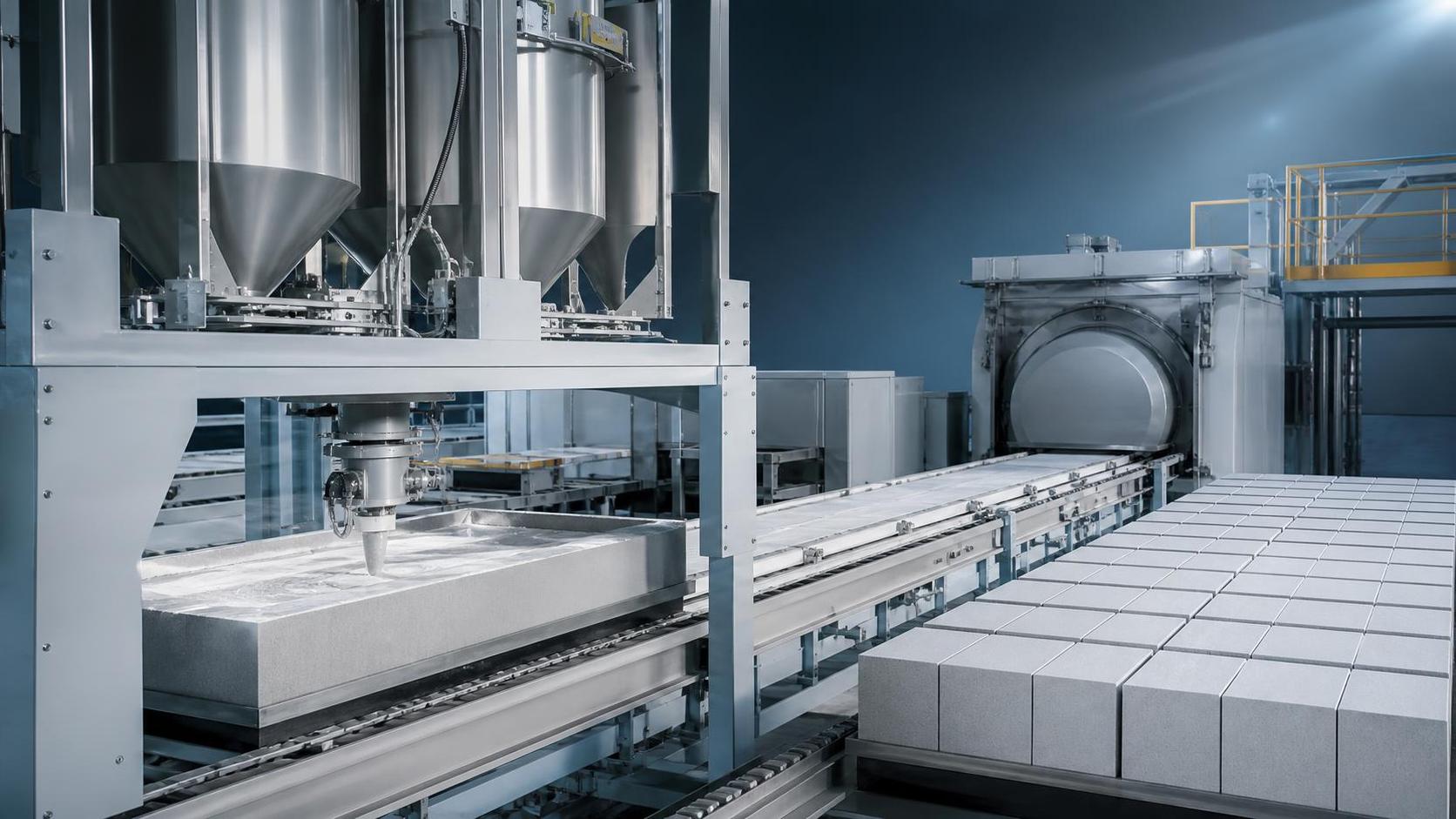
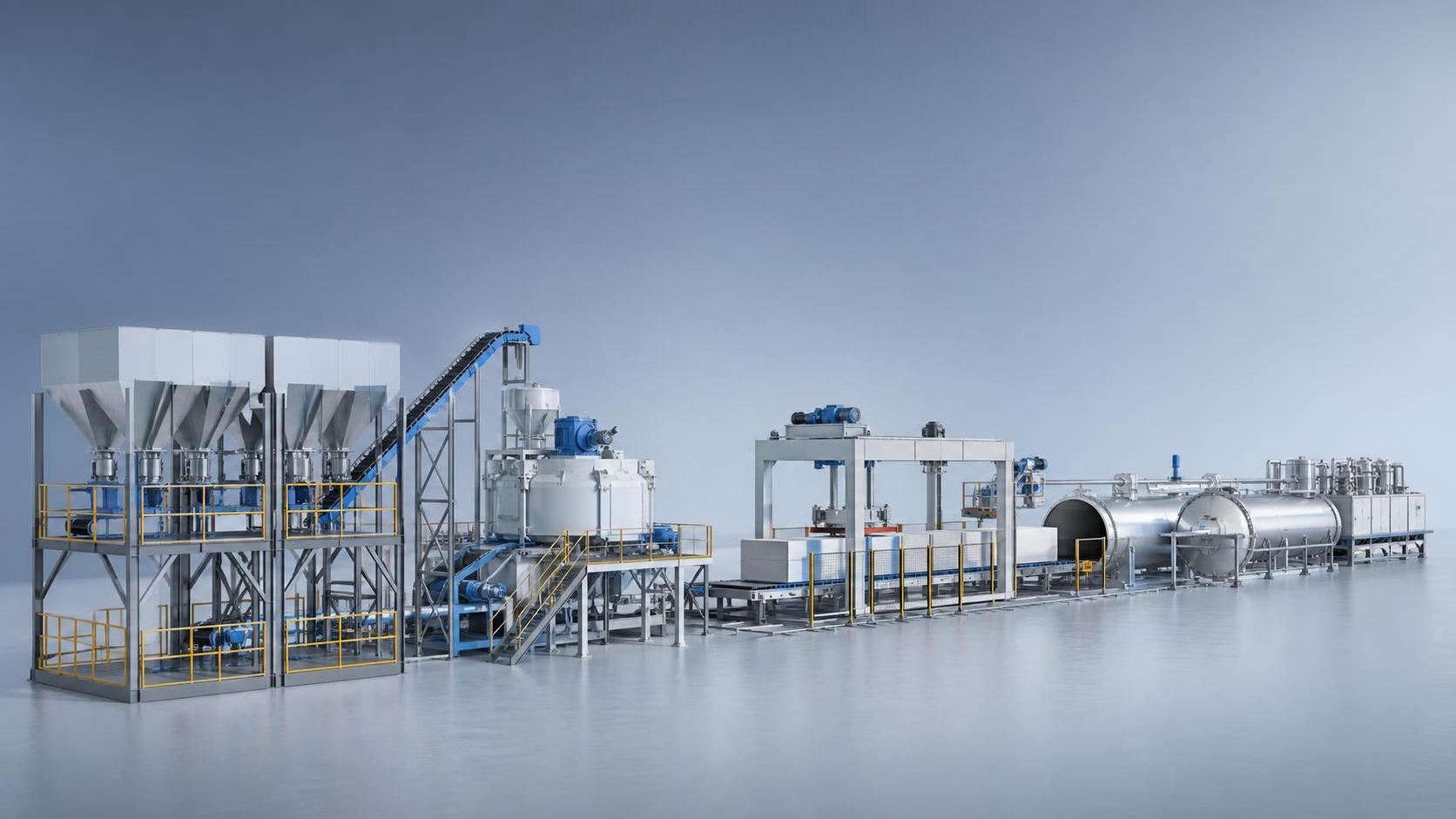
Many buyers only feel the full weight of this question when the project enters installation, trial production, or early operation. A delayed commissioning schedule can push back building plans, labor arrangements, utility preparation, and customer commitments. If the line is an automatic AAC production line, the risk is even more visible because the system is not a single machine. It is a linked process involving batching, mixing, pouring, pre-curing, cutting, autoclaving, handling, and control coordination. If one part is misunderstood or unsupported, the whole line can slow down.
Where the hidden risk usually begins
A common misunderstanding is to compare AAC lines the same way people compare stand-alone equipment. With a simple machine, the concern may be whether it runs, whether the power supply matches, and whether spare parts can be sourced later. With an AAC line, the concern is broader. The line must fit your raw materials, your plant layout, your steam conditions, your staffing level, and your production rhythm. That is why the question “What are the risks of buying automatic AAC production line from overseas without local support” is really a question about system fit, not just supplier location.
Local support matters because AAC production problems rarely stay inside one department. A cutting issue may actually be tied to slurry consistency. A curing problem may come from timing, mold handling, or steam control. A control fault may stop material movement and leave upstream sections waiting. If the supplier is far away and there is no local team to visit, inspect, or coordinate quickly, small technical issues can become long interruptions.
The comparison buyers often make too late
At the quotation stage, buyers usually compare machine configuration, automation level, delivery time, and total price. Those are reasonable factors, but they are incomplete. The more useful comparison is this: what support is available before shipment, during installation, during commissioning, and after handover?
Without local support, the burden of coordination shifts back to the buyer. That means your own team may need to bridge language gaps, interpret drawings, reconcile utility interfaces, verify civil preparation, arrange installation sequencing, and troubleshoot startup issues with remote guidance only. For some plants, that is manageable. For many, it becomes a source of delay because the internal team is already busy with permits, construction, recruitment, and raw material preparation.
The overseas supplier may still be technically capable, but the absence of nearby service changes the risk profile. You are no longer buying only engineering; you are also accepting more responsibility for execution.
Practical risks that do not show clearly in the contract
Installation delays caused by interpretation gaps
Even when documents are provided, site teams often need clarification. Foundation details, embedded parts, cable routing, pipe interfaces, and equipment positioning can all create uncertainty. Remote support can help, but if there is no local engineering presence, site decisions may be made slowly or incorrectly. Rework in heavy equipment installation is expensive not only because of labor, but because it can affect alignment and later operation.
Commissioning takes longer than expected
It is one thing to assemble a line and another to make the line run steadily. AAC production requires process tuning. Raw material moisture, slurry ratio, foaming performance, mold turnover, cutting timing, and autoclave scheduling all influence the result. If on-site technical guidance is limited, the plant may spend more time getting from mechanical completion to stable production. This is one of the most overlooked parts of the answer to “What are the risks of buying automatic AAC production line from overseas without local support.”
Spare parts become a downtime issue, not a purchasing issue
Before startup, spare parts seem like a logistics topic. After startup, they become a production continuity topic. If wear parts, sensors, valves, control components, or special mechanical items are not stocked locally, a single failure can leave critical sections waiting. A buyer may think, “We can order parts internationally when needed,” but that approach assumes lead times, customs processing, and compatibility checks will all go smoothly. In real operation, they often do not.
Remote troubleshooting has limits
Photos, video calls, and messaging are useful, but they cannot always replace a technician standing next to the machine, checking tolerances, listening to movement, or tracing signals in sequence. In integrated lines, several small abnormalities may appear together. Remote diagnosis can become slow when the local team has to gather information step by step, especially if they are not deeply familiar with the original design logic.
Training remains shallow
Operator training done only through documents or brief online sessions often covers normal operation better than abnormal conditions. Yet the early months of AAC production usually involve abnormal conditions: inconsistent raw materials, timing errors, stoppages, and parameter adjustments. If maintenance staff and operators do not fully understand the process relationship between equipment sections, they may solve one symptom while creating another.
Responsibility becomes blurred
When there is no nearby support structure, every issue can turn into a debate over scope. Is the problem caused by site preparation, utilities, materials, operation, or machine design? If the supplier is overseas and not physically involved, clarifying responsibility may take time. Meanwhile, the line is still waiting.
When buying overseas can still make sense
Buying from an overseas manufacturer is not automatically a bad decision. It can make sense if your team already has strong AAC project experience, if you have local engineering contractors who understand the process, and if the supplier provides thorough technical documents, startup planning, and accessible after-sales coordination. Some buyers are well prepared for this and can manage the extra complexity.
The problem appears when buyers assume all AAC lines are similar and that local support is optional. It is only optional when your own resources can replace it.
A more useful way to evaluate suppliers
Instead of asking only whether a supplier can deliver the line, ask how the line will be supported across the project cycle. This changes the conversation in a practical way.
Start with pre-installation questions. Who reviews the plant layout against the actual site? Who confirms utility conditions and interface points? Who helps verify whether the civil work matches the equipment arrangement? If those answers are vague, expect more pressure during installation.
Then move to commissioning. Ask who will guide process parameter setup, test-run sequencing, and coordination between mechanical, electrical, and process teams. A complete AAC line is usually easier to sell than to tune. The value of support becomes visible exactly at this stage.
After that, ask about normal operation support. Where will you get wear parts? Which components are standard and which are proprietary? How quickly can technical questions be escalated? Is there service personnel familiar with the line structure and process, not just general machine maintenance?
What to do before signing anything
If you are in the decision stage, the safest move is not to reject overseas sourcing outright, but to remove assumptions from the purchase.
First, map the project responsibilities in writing. Separate equipment supply, design confirmation, installation guidance, commissioning support, training, spare parts planning, and after-sales response. If a point is important to your schedule, do not leave it as an informal promise.
Second, look closely at the line as a full process. AAC equipment should not be reviewed section by section only. Make sure the batching system, mold circulation, cutting system, autoclave handling, and control logic are discussed as one connected flow. Problems often occur at the handoff between systems, not inside a single machine.
Third, review your internal capability honestly. Do you have engineers who understand AAC process coordination? Do you have maintenance staff ready for electrical and mechanical troubleshooting? Can your team manage a startup phase where issues are frequent and decisions must be quick? If not, local support is no longer a convenience; it becomes part of risk control.
Fourth, plan parts support before the line arrives. This does not mean buying everything in advance, but it does mean identifying critical items that could stop production if unavailable. Bearings, blades, control components, seals, sensors, and custom fabricated parts should not be treated the same way.
What a lower-risk purchase usually looks like
A lower-risk AAC purchase usually has three features. The first is technical alignment between the line and the plant’s real operating conditions. The second is clear support responsibility across installation and startup. The third is a realistic after-sales path for parts and troubleshooting. Buyers sometimes focus so heavily on machine configuration that they miss these less visible points, even though these are the points that shape day-to-day operating stability.
For manufacturers evaluating established AAC line suppliers, it helps to look for companies that are not limited to selling a machine list but have a broader engineering and production background in building materials equipment. A supplier with long-term manufacturing experience, multiple production bases, and dedicated engineering teams may be in a better position to support process-related coordination, not just equipment fabrication. That does not remove the need for buyer due diligence, but it can reduce the chance that support stops at shipment.
It is also useful to ask whether the supplier’s capabilities extend beyond one isolated product. In building materials machinery, experience across batching, block equipment, and related production systems can sometimes reflect stronger integration thinking. For an AAC project, that systems perspective matters because the production line behaves as a chain.
The decision is really about exposure
When people ask, “What are the risks of buying automatic AAC production line from overseas without local support,” they are often trying to decide whether the price advantage is worth it. A better way to frame it is this: how much operational exposure are you willing to carry yourself?
If your project team is experienced, technically strong, and prepared to manage installation and startup complexity, overseas purchasing without local support may still be workable. If your team needs faster troubleshooting, in-person coordination, and accessible parts and service, then the lower quote can become the more expensive choice once delays and downtime enter the picture.
In other words, the real comparison is not overseas versus local in abstract terms. It is unsupported complexity versus supported execution. And for an AAC line, that difference is rarely minor.
Recommend
 Sep 23, 2026
How automatic AAC production line stability affects block quality
Automatic AAC production line stability directly shapes block strength, density, and dimensions. Learn how tighter process control reduces defects, waste, and safety risks.
- Sep 23, 2026
What to check before buying autoclaved aerated concrete equipment
Autoclaved aerated concrete equipment buying guide: learn what to check on line balance, raw materials, energy use, maintenance, and support before choosing a reliable AAC solution.
- Sep 24, 2026
How to reduce downtime caused by worn AAC plant machinery
AAC plant machinery downtime can be cut by spotting wear early, prioritizing critical parts, and using smarter maintenance strategies to keep production stable and costs under control.