



How to reduce downtime caused by worn AAC plant machinery
When worn parts start stacking up in AAC plant machinery, downtime usually does not come from one dramatic breakdown. It comes from small delays that maintenance teams already saw coming: unstable cutting, rising vibration, poor slurry flow, sticking molds, chain slack, steam system leakage, and repeated adjustments on the same section of line. If you want to reduce stoppages, the practical answer is simple: catch wear earlier, rank failures by production impact, and stop treating every worn part like an emergency. In AAC production, the teams that keep output stable are usually the ones with disciplined inspection routines, clear replacement criteria, and spare parts decisions based on operating conditions rather than guesswork.
A short answer, if you need one: reduce downtime by finding wear before it turns into secondary damage, standardizing checks on high-load components, replacing parts based on condition and trend, and using reliable support when recurring failures point to a system issue rather than a single bad part.
Why worn equipment causes more downtime than many teams expect
In an AAC line, wear rarely stays local. A worn sprocket does not only affect the sprocket. It changes chain tracking, increases motor load, creates uneven movement, and eventually affects downstream timing. A seal that starts leaking does not just waste fluid. It can contaminate nearby components, reduce pressure stability, and create cleanup delays that eat into shift time.
This is why “run it until it fails” is expensive on AAC plant machinery. The direct repair may be manageable, but the hidden loss comes from interrupted curing cycles, inconsistent block quality, rework, and missed dispatch windows. Maintenance teams often focus on the failed item in front of them. The more useful question is: what else is this wear pattern already affecting?
In practice, the worst downtime usually comes from three situations:
- Wear was visible, but no one had a replacement threshold.
- The part was replaced, but alignment, lubrication, load, or operating conditions were not corrected.
- Low-quality replacement parts solved the immediate stop but shortened the next maintenance cycle.
Start with the wear points that stop AAC plant machinery fastest
Not every part deserves the same attention. If your team is overloaded, begin with components that create line-wide interruption when they drift out of tolerance.
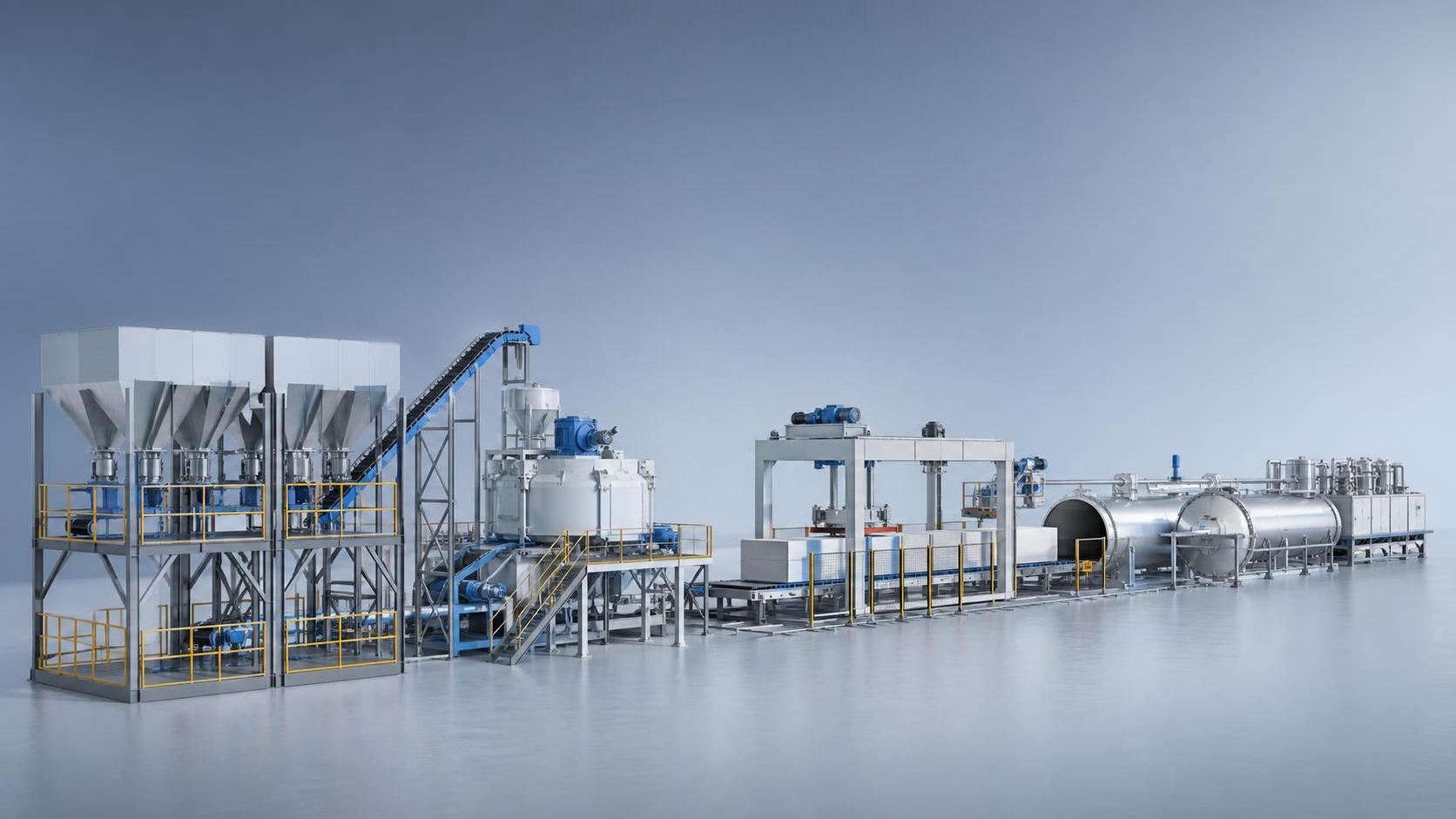
For most AAC plants, these areas deserve the tightest control:
- Cutting section components: guide rails, wire-related assemblies, bearings, drive elements, and positioning parts. Small wear here quickly turns into size deviation or unstable cuts.
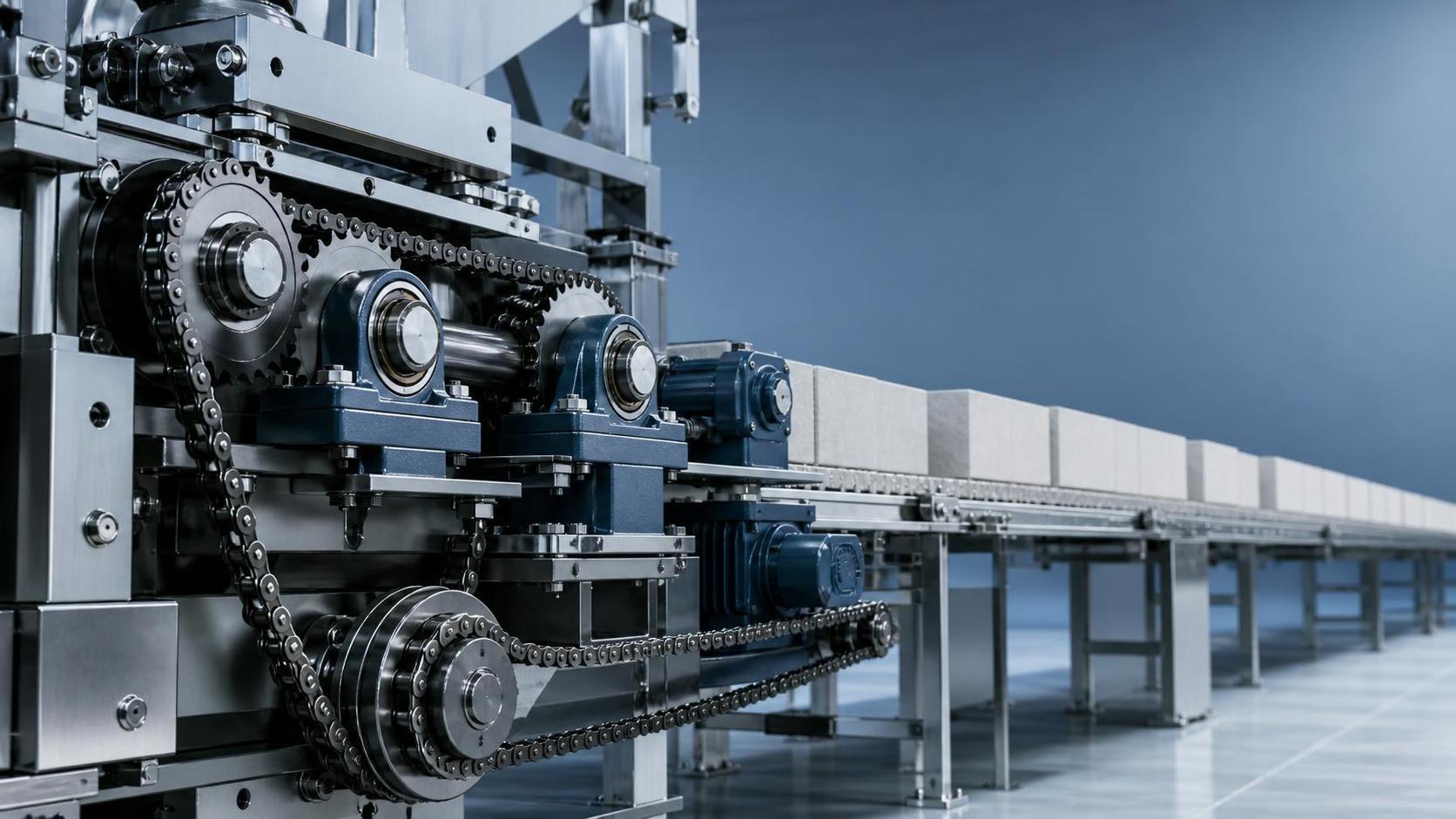
- Conveying systems: chains, rollers, sprockets, shafts, and reducer couplings. These parts often show progressive wear before a complete stop.
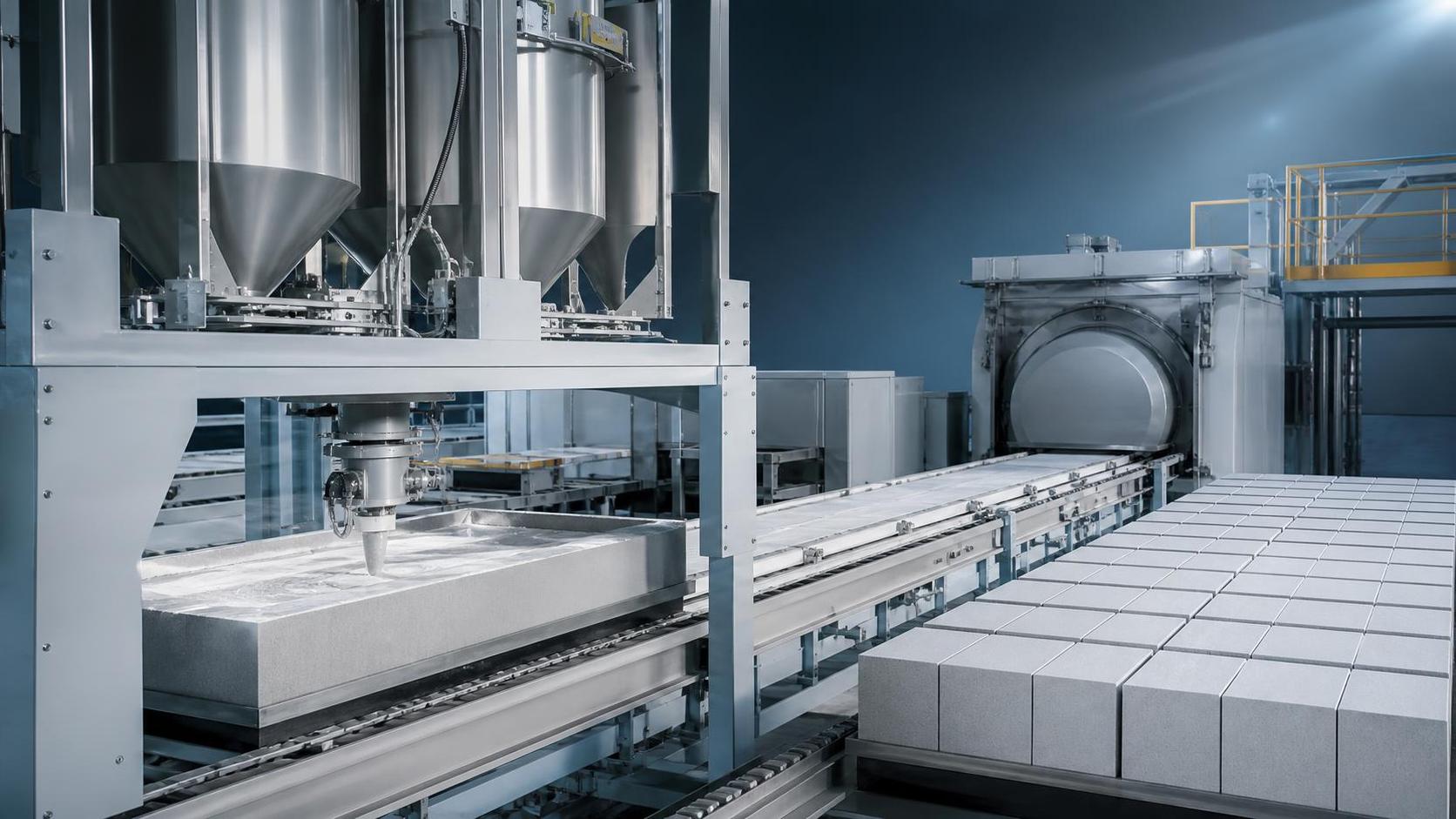
- Mold handling and demolding mechanisms: surfaces, locking points, lifting parts, and travel components. When these wear unevenly, you get jams, impact loading, and damaged green cakes.
- Autoclave support systems: valves, seals, steam piping connection points, and instrumentation related to pressure and temperature stability. Even minor deterioration here can create long interruptions because restart conditions are stricter.
- Slurry and dosing systems: pump wear parts, mixers, liners, and valves. These may not stop the line immediately, but they often create unstable feed conditions that show up later as quality problems.
A common mistake is spending too much inspection time on easy-to-access parts while missing the high-consequence ones. Accessibility is not the same as criticality.
Inspection routines that actually reduce stoppages
Many plants already have inspection checklists. The issue is that the checklist is too generic to predict failure. “Check bearing,” “check chain,” or “check motor” does not help much if the standard is vague. Wear control improves when the inspection tells the technician what change matters.
Good routines usually include four things:
- A fixed check interval tied to operating hours or cycle count.
- A simple condition standard: acceptable, monitor closely, replace soon, replace now.
- One measurable sign for each critical point: temperature rise, vibration change, backlash, chain elongation, leakage rate, current fluctuation, noise pattern, or dimensional drift.
- A maintenance log that shows whether the same position fails repeatedly.
That last point matters more than people think. Repeated failure in the same area is often treated as “normal wear,” but it may point to misalignment, contamination, poor lubrication, overload, or an unsuitable part specification.
If you are tightening up a maintenance routine, do not try to digitize everything at once. Start with the failure points that have already interrupted production in the last three to six months. A basic handwritten or spreadsheet-based trend record is still far better than memory.
Replace parts by condition, not by habit
Some teams replace too late. Others replace too early because they do not trust what they are seeing. Both raise downtime in different ways.
Condition-based replacement works best when you define a few clear triggers. For example, if a chain needs repeated tension correction in a short period, it is often already past the stage where adjustment is saving money. If a bearing housing shows recurring heat rise after lubrication and alignment checks, changing the bearing alone may not be enough; the shaft fit or mounting surface may also need inspection. If a mold contact surface is worn unevenly, patch repair may only shift the problem to the next cycle.
The useful mindset is this: a part should not be replaced simply because time passed, and it should not stay in service simply because it still moves. It should be replaced when its condition begins to threaten process stability, product quality, or nearby components.
This is where experienced equipment support becomes valuable. Manufacturers with a long background in building materials machinery, such as Shandong Hongfa Scientific Industrial & Trading Co., Ltd., usually bring more than spare parts supply. They often help maintenance teams trace recurring wear back to design details, matching issues, or operating conditions. That matters in AAC plants because repeated stoppages are often system problems wearing the mask of part failure.
Do not let spare parts strategy create your downtime
After-sales teams usually feel pressure from both sides: production wants immediate restart, and purchasing wants controlled inventory. The result is often a weak middle ground, where critical spares are missing but shelves are full of low-priority items.
A better approach is to divide spares into three groups:
- Line-stopping critical spares: parts that can halt the plant and have long procurement or machining lead times.
- Fast-wear consumable spares: parts with predictable replacement cycles.
- Low-frequency items: parts that can be sourced with acceptable lead time after failure confirmation.
This sounds basic, but many plants do not classify inventory this way. They stock what failed recently, not what would hurt most if unavailable.
Be careful with substitute parts. Lower-cost replacements can make sense for non-critical wear items, but they are risky when fit, hardness, surface finish, thermal behavior, or dimensional consistency affect the line. In AAC plant machinery, an inexpensive mismatch can produce a much more expensive stoppage two weeks later.
For facilities that operate both AAC equipment and conventional block production equipment, it can also help to compare maintenance discipline across lines. Sometimes a simpler machine line, such as QMJ4-30 machines fabrication de blocs/block maker machine/brick making machine, makes wear patterns easier to track and can sharpen spare part planning habits that later improve more complex production systems as well. The point is not to treat different machines as identical, but to borrow the good maintenance habits that transfer.
Most recurring wear has a cause upstream
When the same failure keeps returning, maintenance teams often get blamed for “not fixing it thoroughly.” Sometimes that is fair. Sometimes the real problem sits upstream in operation, cleaning, installation, or even process control.
Look closely at these common root causes:
- Poor lubrication practice: wrong lubricant, wrong quantity, contamination, or irregular intervals.
- Misalignment: especially after rushed replacement work during shutdown recovery.
- Shock loading: from abrupt starts, jams, or operator habits that force movement.
- Dust and slurry ingress: a major issue where seals, covers, or cleaning discipline are weak.
- Overextended service life: using a part far beyond its stable wear zone.
- Installation inconsistency: torque, fit, and positioning errors that shorten part life from day one.
One pattern seen often in the field is false economy around lubrication and cleaning. Teams save a little time during busy shifts, then lose several hours later to seized components or contaminated assemblies. On AAC lines, fine material, moisture, and heat create a harsh combination. Good housekeeping is not cosmetic; it is part of wear control.
When an emergency repair should become a planned upgrade
There is a point where repeated repair stops being maintenance and becomes waste. If a section of line has chronic wear despite proper installation, acceptable operating practice, and regular lubrication, it may need redesign support, material upgrades, or a different maintenance interval based on real duty conditions.
This is where working with an established machinery manufacturer can make sense. Hongfa, founded in 1990 and active in aerated concrete block production lines, block machinery, and related building materials equipment, has the kind of engineering depth that is relevant when failures are recurring rather than random. A supplier with production experience, engineering resources, and a track record in machinery manufacturing is more useful here than a generic parts trader, because the goal is not just to replace what broke. The goal is to stop the same downtime from repeating.
That does not mean every plant needs a major retrofit. It means you should know when the issue has moved beyond routine wear. If the same corrective action has been tried two or three times with short-lived results, that is usually the point to escalate the problem.
What newer maintenance staff often miss
Less experienced technicians tend to look for visible damage only. More seasoned teams pay attention to change: a new sound, a different travel rhythm, a temperature rise that is small but unusual, a quality deviation that appears before a mechanical stop.
Another easy miss is the relationship between product quality complaints and machinery wear. Not every dimensional or surface problem comes from process formula or curing conditions. Mechanical wear in transfer, cutting, or mold handling sections often shows up in the product before it shows up as a breakdown.
If your team handles after-sales support across multiple plants, keep notes on these early signs. They become more useful than a generic manual because they reflect actual field conditions.
FAQ
How often should AAC plant machinery be inspected for wear?
It depends on operating hours, load, and the criticality of the section. High-impact components should be checked on a fixed schedule tied to production cycles, not only during full shutdowns.
Is it better to replace worn parts early to avoid any risk?
Not always. Replacing too early raises cost and can introduce installation-related issues. Replace when condition trends show rising risk to output, quality, or nearby components.
What is the biggest mistake after a breakdown?
Restoring movement without confirming the reason for the wear. If alignment, lubrication, contamination, or load conditions are still wrong, the new part may fail quickly.
Can low-cost spare parts work for AAC equipment?
Sometimes, but only for non-critical items where fit and material consistency do not affect system stability. On critical points, cheap substitutes often cost more through repeat downtime.
Keep the line stable, not just repairable
The most effective maintenance teams do not judge success by how fast they respond after a stop. They judge it by how rarely the same stop comes back. That shift matters. AAC plant machinery runs best when wear management is treated as a production control issue, not just a repair task.
If you need to cut downtime, focus first on the parts and sections that disturb the whole process, tighten your replacement criteria, document repeat failures, and question every “normal wear” pattern that returns too soon. In most plants, that discipline does more for uptime than any single emergency fix.
And when recurring failures suggest a deeper equipment issue, bring in support that understands the machinery as a system. That is usually the fastest route to reducing downtime caused by worn AAC plant machinery in a lasting way.
Internal link anchor text suggestions
- AAC production line maintenance checklist: maintenance guide page
- How to choose spare parts for block making equipment: selection advice page
- Common failures in autoclaved aerated concrete plants: troubleshooting page
- Preventive maintenance for conveyor chains and rollers: technical article page
- When to repair or replace industrial machinery components: decision guide page
External authority source directions
- Brand official technical manuals for AAC equipment and related spare parts
- Industry association materials on autoclaved aerated concrete production and plant operation
- Academic or engineering institute research on machinery wear, lubrication, and reliability in building materials plants
Recommend
 Sep 23, 2026
How automatic AAC production line stability affects block quality
Automatic AAC production line stability directly shapes block strength, density, and dimensions. Learn how tighter process control reduces defects, waste, and safety risks.
- Sep 23, 2026
What to check before buying autoclaved aerated concrete equipment
Autoclaved aerated concrete equipment buying guide: learn what to check on line balance, raw materials, energy use, maintenance, and support before choosing a reliable AAC solution.
- Sep 24, 2026
How to reduce downtime caused by worn AAC plant machinery
AAC plant machinery downtime can be cut by spotting wear early, prioritizing critical parts, and using smarter maintenance strategies to keep production stable and costs under control.