



What CE certification requirements apply to AAC equipment?
Understanding the autoclaved aerated concrete equipment CE certification requirements is one of those topics that often looks simpler than it really is. For manufacturers planning to sell AAC production lines into Europe, CE marking is not just a logo on a machine plate. It reflects whether the equipment has been assessed against the relevant safety, electrical, mechanical, and documentation rules that apply in the EU market.
For buyers, the issue is just as practical. A production line may look well built and run smoothly during inspection, but if the technical file is incomplete or the declared standards do not match the actual equipment, customs clearance, installation approval, or long-term operation can become difficult. That is why the real question is not simply “Does this AAC equipment have CE?” but “Which CE requirements apply, and how should they be proven?”
CE marking for AAC equipment is not one single test
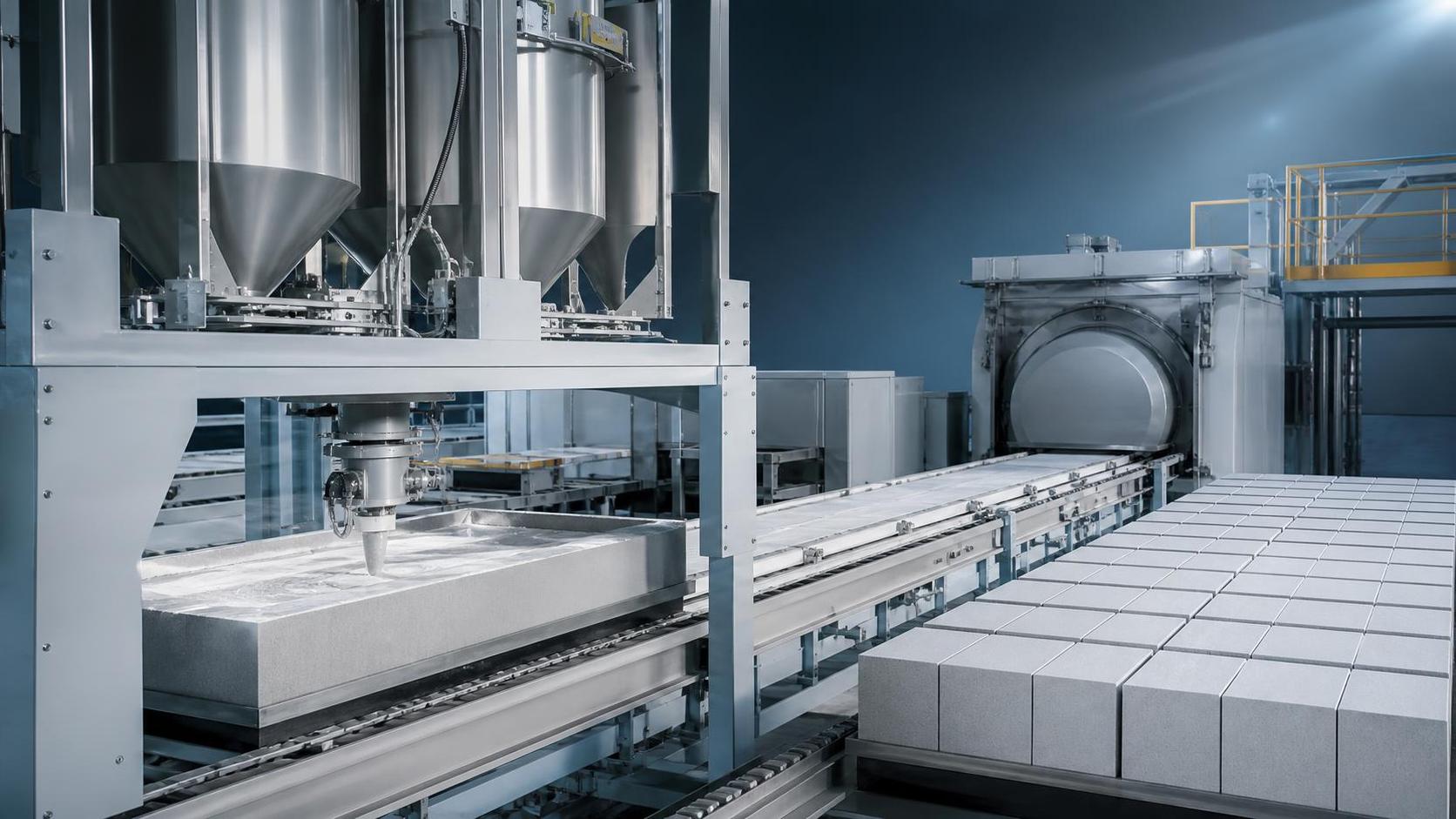
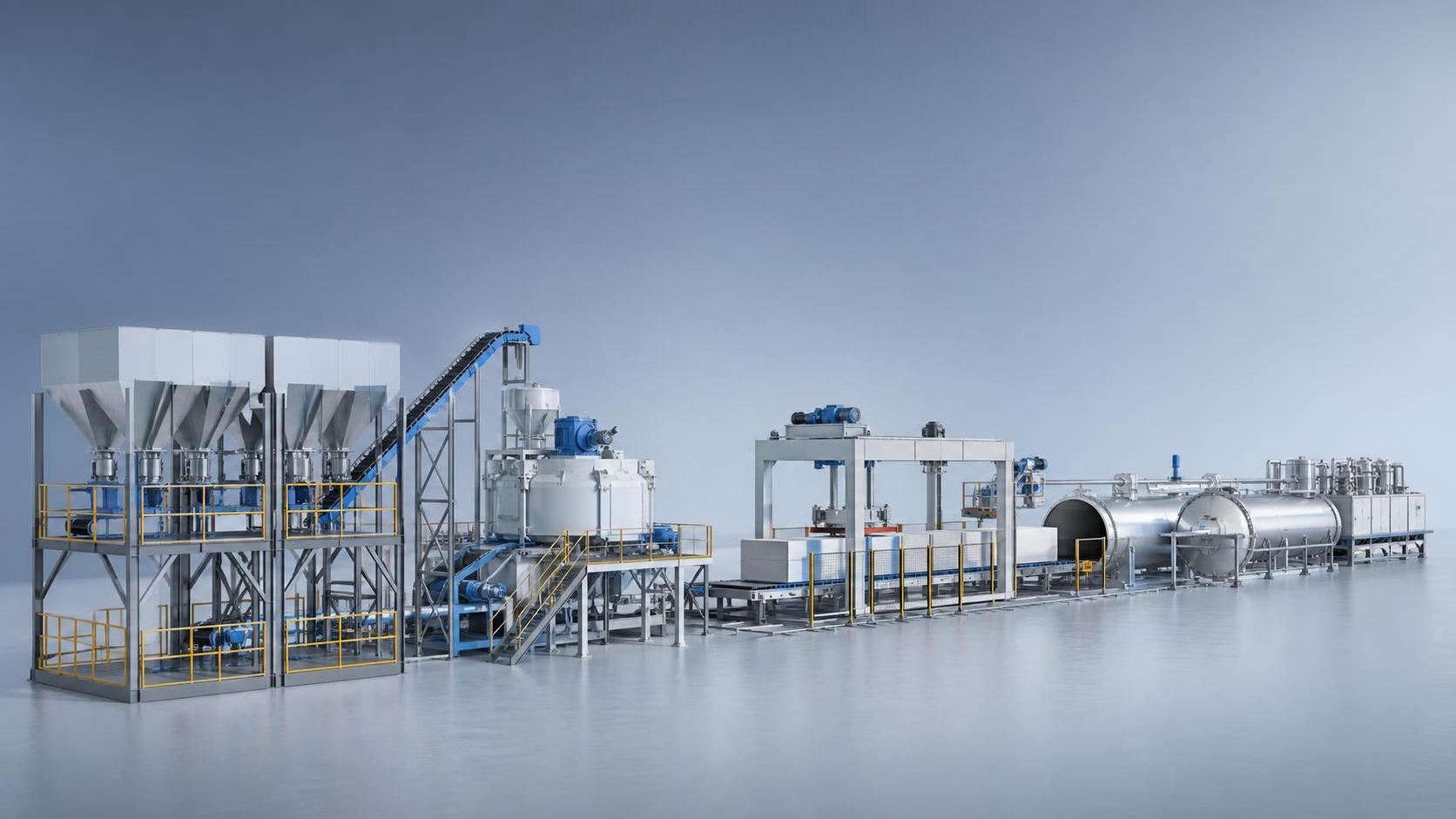
AAC equipment usually includes mixers, dosing systems, moulding units, cutting machines, autoclaves, conveyors, electrical control cabinets, hydraulic systems, and auxiliary devices. Because of this mix, the CE compliance path is usually based on several EU directives or regulations rather than a single rulebook.
The most common framework includes the Machinery Directive or the newer Machinery Regulation transition path, low-voltage and electromagnetic compatibility requirements for electrical parts, and pressure-related rules for equipment such as autoclaves. In other words, the CE certification requirements for autoclaved aerated concrete equipment depend on what the line contains, how it is powered, and what risks it creates during operation.
The main requirements manufacturers usually need to address
1. Machinery safety assessment
Most AAC production equipment falls under machinery safety requirements. This means the manufacturer must identify hazards such as crushing, cutting, entanglement, falling loads, hot surfaces, and unsafe access points. The machine design should include protective measures like guarding, emergency stops, safe control logic, and clear operating instructions.
For a complete production line, the safety assessment is usually more demanding than for a single machine, because the line integrates multiple units and each transfer point can create a different risk.
2. Electrical safety and control systems
AAC equipment often depends on complex control panels, sensors, motors, and automation systems. Electrical parts must be designed and assembled according to applicable EU safety rules, with proper insulation, grounding, overload protection, and clear circuit identification.
Control logic is also important. If a machine stops unexpectedly or restarts in an unsafe condition, compliance may be questioned. For this reason, many buyers pay close attention to the quality of the electrical design, not just the mechanical build.
3. EMC compliance
Because AAC lines contain inverters, PLCs, motors, and other electronic devices, electromagnetic compatibility matters. The equipment should not generate excessive interference, and it should remain stable when exposed to normal electromagnetic disturbances in a factory environment. This is especially relevant for automated plants where one unstable panel can affect the whole line.
4. Pressure equipment considerations
Autoclaves are a special point. Since they operate under pressure and high temperature, they may fall under separate pressure equipment requirements. Buyers often assume the whole AAC line is treated the same way, but in practice the autoclave may require its own conformity route, documentation, and technical checks.
This is where many export projects become more sensitive. If the autoclave is not assessed properly, the line may be delayed even if the rest of the machinery is well prepared.
5. Technical documentation
CE compliance is not only about design; it is also about proof. A proper technical file usually includes drawings, circuit diagrams, risk assessment results, BOMs, test reports, manuals, and declarations of conformity. These documents should be consistent with the delivered machine, because any mismatch can create problems later.
For international buyers, documentation quality is often a good indicator of how seriously the manufacturer handles compliance overall.
What buyers should compare before accepting CE claims
When two suppliers both say “CE available,” the difference is often in the depth of compliance. One may provide a basic declaration, while another can show a full technical file with traceable standards and clear responsibility assignment. That distinction matters.
Here are a few comparison points that are worth checking:
- Does the CE declaration cover the exact model and configuration being supplied?
- Are the major components and control systems listed clearly?
- Does the manual include installation, operation, maintenance, and emergency procedures?
- Has the supplier identified which parts of the line are covered by machinery rules and which may fall under pressure equipment requirements?
- Are there risk warnings in a language suitable for the destination market?
These questions may seem technical, but they save time later. A line that looks compliant on paper can still create installation issues if the scope is vague.
Why AAC equipment often needs a tailored compliance strategy
Unlike a standard standalone machine, an AAC production line is a system. It includes handling, mixing, forming, cutting, steaming, and conveying stages, often with different operating environments and load conditions. That complexity means CE certification requirements must be evaluated by function, not by product name alone.
For example, the safety strategy for a cutting machine is not the same as the strategy for a control cabinet or autoclave. A single compliance checklist may miss those differences. A better approach is to review the line from the standpoint of installation, operation, maintenance, cleaning, and emergency intervention. This is also the logic many experienced industrial equipment manufacturers use when designing export-ready systems.
For companies with broad engineering resources and long production experience, compliance tends to be integrated into the design stage rather than added at the end. That is a practical advantage, because retrofitting safety features after production is usually more costly and less elegant.
Common mistakes that create export risk
One common mistake is assuming that CE marking means the whole project is automatically approved for Europe. It does not. CE is a conformity framework, not a market entry shortcut. Another mistake is treating the declaration as a formality while the actual machine configuration changes during production.
There is also the problem of partial documentation. Some suppliers can provide a declaration, but not a complete risk assessment or updated electrical drawings. Others may use generic manuals that do not match the delivered equipment. These gaps may not be obvious during purchase, yet they can become expensive during customs review, site inspection, or future servicing.
A third issue is overlooking the autoclave. Because it is such a critical unit, pressure-related compliance should be confirmed early, not after the rest of the line is already packed and shipped.
What a reliable supplier should be ready to explain
A serious manufacturer should be able to explain how the CE route applies to each major part of the AAC line, what standards were considered, which risks were identified, and how the machine instructions guide safe use. If the answer is vague, the documentation may be incomplete even if the equipment itself is solid.
This is where supplier capability matters. A company with strong engineering depth, testing discipline, and export experience can usually support the compliance process more confidently. In the industrial equipment field, that often makes the difference between a smooth delivery and months of avoidable clarification.
For buyers comparing AAC equipment, CE compliance should therefore be read as part of the machine quality story, not as a separate paperwork issue. The best suppliers do not treat it as an afterthought; they build it into the design, manufacturing, and final acceptance process.
A practical way to think about CE readiness
If you are evaluating autoclaved aerated concrete equipment CE certification requirements, a useful approach is to ask three questions: Is the machinery designed safely? Is the documentation complete and specific? And do the pressure, electrical, and control elements match the applicable EU rules?
When those three points are clear, CE marking becomes much more than a label. It becomes evidence that the line has been engineered for predictable use, safer operation, and smoother access to the European market. For AAC equipment buyers and manufacturers alike, that is the real value of compliance.
Recommend
 Sep 23, 2026
How automatic AAC production line stability affects block quality
Automatic AAC production line stability directly shapes block strength, density, and dimensions. Learn how tighter process control reduces defects, waste, and safety risks.
- Sep 23, 2026
What to check before buying autoclaved aerated concrete equipment
Autoclaved aerated concrete equipment buying guide: learn what to check on line balance, raw materials, energy use, maintenance, and support before choosing a reliable AAC solution.
- Sep 24, 2026
How to reduce downtime caused by worn AAC plant machinery
AAC plant machinery downtime can be cut by spotting wear early, prioritizing critical parts, and using smarter maintenance strategies to keep production stable and costs under control.