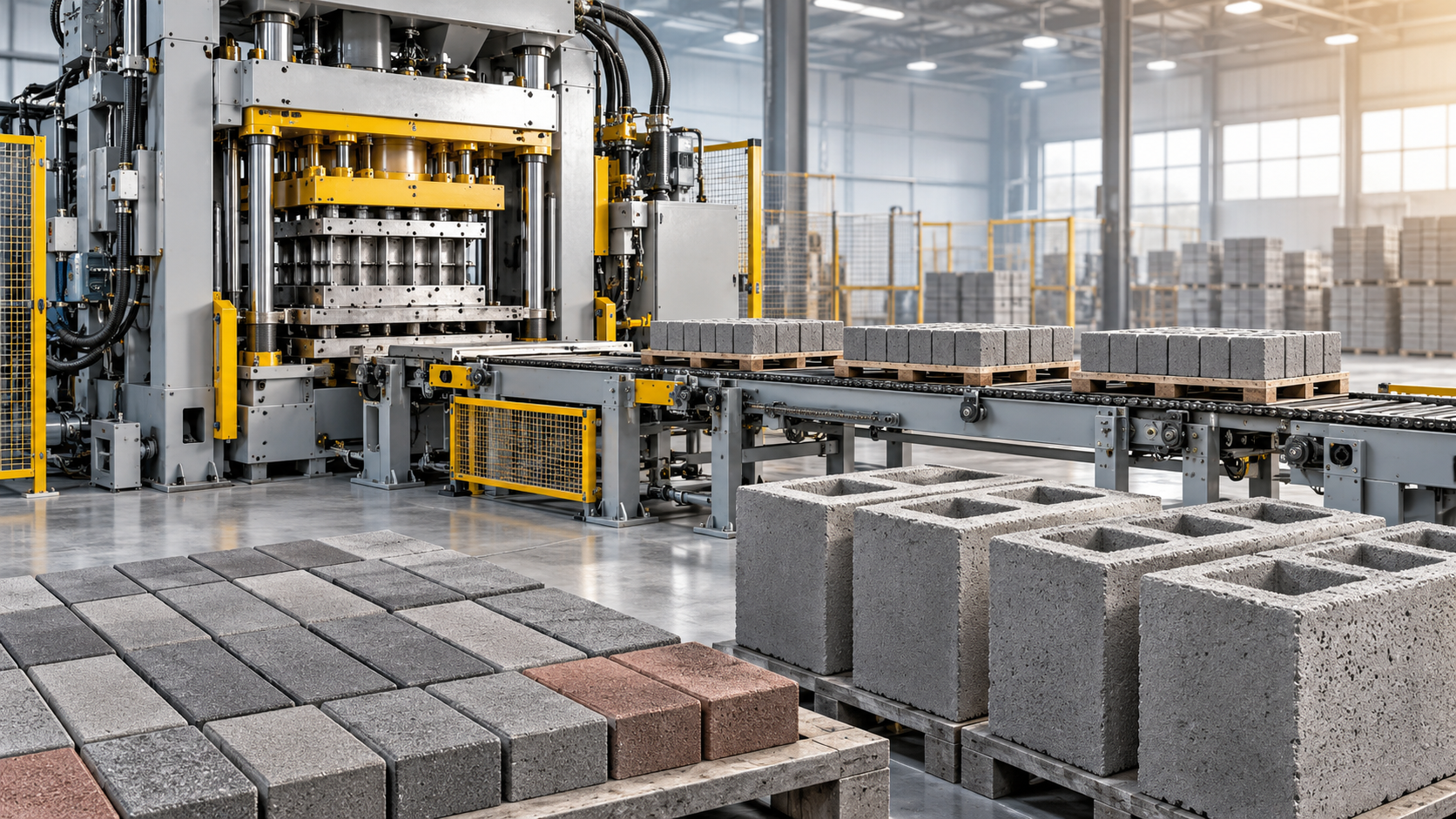




What buyers should compare first when sourcing construction machinery abroad
Price is usually the first number on the table, yet it is rarely the first comparison that protects cost. When construction machinery is sourced across borders, the earliest decisions should focus on whether the machine can hold output under local working conditions, whether the supplier can document what is actually being built, and whether the installation and spare parts path is realistic after delivery. A lower quotation can be overtaken quickly by slow commissioning, unstable cycle times, incompatible power requirements, or repeated stoppages caused by wear parts that are difficult to replace locally.
The first useful comparison is supplier credibility at the factory level, not just at the sales document level. A polished quotation says very little about fabrication discipline, process control, or assembly consistency. What matters is whether the supplier can show clear production records, component sourcing logic, inspection points, and the actual configuration included in the offer. For industrial equipment, especially block machines, batching systems, and other heavy-duty production units, hidden variation often sits in the steel structure thickness, welding quality, hydraulic component grade, motor brand, control cabinet layout, and mold material. Two machines may share a similar external appearance while having very different service life and stability.
Factory verification should therefore start with basic but concrete questions. Is the frame fabricated from plate or lighter formed sections? Are key stress points reinforced, or only covered cosmetically? Are hydraulic lines protected from vibration and dust ingress? Can the supplier identify the origin and specification of motors, valves, reducers, and electrical devices without hesitation? If those answers are vague, later conversations about performance usually remain vague as well.
Compare working performance before comparing output claims
Declared capacity is one of the most misunderstood numbers in construction machinery sourcing. Output figures may be based on ideal raw materials, short test runs, or product dimensions that differ from the intended application. The useful comparison is not the highest theoretical production figure; it is the machine’s repeatable performance under the exact product mix, material moisture, ambient temperature, and shift rhythm expected at site.
For equipment used in concrete products or related building materials, cycle time should be read together with compaction method, mold change duration, pallet handling, and curing flow. A machine that runs fast in a demonstration can still create bottlenecks if mold replacement is slow, if vibration consistency drops when raw material grading changes, or if the downstream stacking section cannot keep pace. The same logic applies to batching plants, aerated block lines, and stone-processing equipment: one fast section does not create a fast line if feeding, transfer, or discharge is unstable.
This is where technical comparison needs operating detail. Look at vibration force, hydraulic pressure range, installed power, control logic, pallet size, allowable aggregate size, and mold compatibility. Ask whether the output figure assumes one product shape only. Ask whether the machine keeps tolerance when raw materials fluctuate slightly. In many projects, dimensional consistency and reject rate matter more than headline capacity because they affect cement consumption, handling losses, and whether finished products can be sold without rework.
Certification matters, but only when it matches the machine actually shipped
Certificates are useful only when they are tied to traceable manufacturing practice and to the equipment configuration in the quotation. A document attached to an email does not automatically confirm that the electrical system, safety arrangement, or quality process of the shipped machine matches the file. The comparison should focus on whether certification scope is relevant, current, and supported by serial-number level records, inspection reports, or component lists.
It is also worth separating management system certification from product-level conformity. A factory may hold a quality system certificate, but the machine still needs a clear bill of materials, acceptable wiring standards, and proper protection for motors, sensors, and moving parts. Imported construction machinery often encounters problems not because the core machine cannot run, but because practical details were overlooked: cable markings are unclear, local voltage differs from the standard factory build, emergency stops are poorly placed, or manuals do not reflect the delivered configuration.
Technical files should therefore be compared early. These include foundation drawings, electrical diagrams, hydraulic schematics, wear-parts lists, packing lists, and commissioning requirements. If those documents are unavailable before deposit, later changes become expensive and difficult to dispute.
Total landed cost starts with boundaries, not with unit price
Unit price comparisons become misleading when the offer boundaries are not aligned. One quotation may include molds, spare seals, commissioning support, and control cabinet cooling, while another excludes them. One may be based on FOB terms with limited packaging protection; another may include export packing, inland transport to port, or loading fixtures. In heavy machinery, a missing line in the quotation can become a significant site cost later, especially when the omitted item is structurally necessary.
Several cost drivers deserve early attention. Foundation works may change if machine weight or vibration load is higher than expected. Container loading plans matter because some machines require partial disassembly, which increases reassembly time and risk of alignment error. Customs classification can affect import handling if the machine consists of multiple linked sections shipped under separate descriptions. Voltage conversion, frequency differences, air compressor sizing, and local safety additions also change the actual budget.
A practical comparison sheet should therefore include at least these cost boundaries in narrative form rather than as a superficial total: supply scope, excluded scope, wearing parts included at startup, installation tools required on site, technician travel assumptions, packaging method, and expected utility consumption. Without that, a cheap machine can become an expensive project the moment it reaches the port.
Service support should be examined as a logistics system
After-sales support is often discussed too abstractly. The real question is whether faults can be diagnosed and resolved fast enough to protect production. That depends on parts standardization, response process, documentation quality, remote troubleshooting capability, and whether the machine uses proprietary components that are difficult to source outside the origin country.
For example, a block production line may operate with ordinary motors and bearings but rely on a custom controller, unusual proximity sensor, or nonstandard valve set. If the supplier cannot provide a spare parts matrix with manufacturer names, model numbers, and substitution guidance, future downtime risk is hard to estimate. The same applies to molds. Mold availability, lead time, hardening method, and maintenance requirements directly affect operating economics, especially where product dimensions change from project to project.
In one typical comparison, a line centered on QT6-15B Block Making Machine should be evaluated not just by the machine body, but by the surrounding support logic: pallet compatibility, mold replacement procedure, hydraulic seal availability, and the clarity of the electrical troubleshooting guide. Those details often determine whether a site can restore production in hours or wait for overseas parts while labor and material schedules slip.
Raw materials and local operating conditions change the result more than many quotations admit
Construction machinery rarely performs in isolation from site conditions. Cement type, aggregate grading, sand cleanliness, moisture control, and admixture behavior can all influence output stability, product strength, and mold wear. A machine that performs well with carefully screened raw materials may behave very differently where fines content is inconsistent or moisture swings sharply between batches.
Because of that, technical comparison should include material adaptability. Can the machine tolerate moderate variation in raw feed without losing compaction quality? Does the vibration system remain stable with heavier mix designs? Is the mixer sized for the actual batch consistency, or only for nominal volume? Equipment that appears efficient on paper may become difficult to run if the local material profile sits outside its comfortable operating window.
Climate matters too. Dust load influences electrical cabinet design and filter maintenance. High ambient temperatures can shorten hydraulic oil life if cooling capacity is weak. Coastal environments may justify different corrosion protection for exposed steel, fasteners, and enclosures. Cold climates can affect curing, startup viscosity, and the reliability of pneumatic or hydraulic systems. These are not secondary details; they influence maintenance intervals and the probability of unplanned shutdown.
Delivery reliability is a technical issue as much as a scheduling issue
Lead time should not be treated as a standalone promise. It should be compared against manufacturing depth, outsourced component dependency, and the number of approval steps required before shipment. A machine assembled mainly from standard stocked parts is different from one that depends on custom molds, nonstandard motors, or control components with uncertain availability. Delays often start when the commercial team confirms delivery before engineering drawings, electrical layout, and mold details are fully frozen.
Packaging and shipment method also deserve attention. Heavy frames, vibrating assemblies, and control cabinets can suffer during long transport if bracing is poor or moisture protection is weak. Ask how hydraulic ports are sealed, how electrical cabinets are protected, and whether alignment-sensitive components are locked for shipping. Damage discovered after arrival often creates disputes because the root cause sits somewhere between factory packing, port handling, and site unpacking.
Another comparison point is whether pre-shipment inspection can be done against an agreed checklist of actual running items, not just visual completion. Trial operation conditions should be described clearly: what materials were used, what product was made, how long the run lasted, and which readings were recorded. Without that level of clarity, “tested before shipment” can mean almost anything.
Compatibility with the existing plant can outweigh headline machine quality
Imported machinery is frequently installed into a plant that already has pallets, forklifts, compressors, cement silos, molds, or conveyors from other sources. A strong machine can still create friction if it does not match those interfaces. Mechanical dimensions, control communication, discharge height, pallet transfer orientation, and utility connections should be compared before order placement.
This issue becomes more serious when adding one section to an existing line rather than building a greenfield plant. If a new machine requires different pallet tolerances, larger air consumption, or a different curing rhythm, the surrounding system may need modification. That can turn a straightforward equipment purchase into a broader retrofit project. The better comparison is therefore line compatibility, not isolated machine quality.
- Review whether product dimensions, pallet size, and mold mounting match existing downstream handling.
- Clarify utility demand in plain terms: voltage, frequency, peak power, hydraulic oil grade if specified, compressed air pressure, and water supply needs where applicable.
- Confirm installation boundaries early, including anchor positions, lifting requirements, and whether alignment tools or grout specifications are expected on site.
One more point is often overlooked during early sourcing: communication quality during technical clarification usually predicts communication quality during commissioning. When questions about wiring, wear parts, or foundation loads receive precise answers with updated drawings, the project tends to remain controllable. When answers stay generic, later site issues become harder to close because the same uncertainty follows the machine into installation.
The first comparison, then, is not a race to the lowest quote. It is a disciplined look at whether the machine, the documents, the shipment, and the support system all fit the intended operation. In construction machinery, cost control begins there, well before the order is placed.
Price is usually the first number on the table, yet it is rarely the first comparison that protects cost. When construction machinery is sourced across borders, the earliest decisions should focus on whether the machine can hold output under local working conditions, whether the supplier can document what is actually being built, and whether the installation and spare parts path is realistic after delivery. A lower quotation can be overtaken quickly by slow commissioning, unstable cycle times, incompatible power requirements, or repeated stoppages caused by wear parts that are difficult to replace locally.
The first useful comparison is supplier credibility at the factory level, not just at the sales document level. A polished quotation says very little about fabrication discipline, process control, or assembly consistency. What matters is whether the supplier can show clear production records, component sourcing logic, inspection points, and the actual configuration included in the offer. For industrial equipment, especially block machines, batching systems, and other heavy-duty production units, hidden variation often sits in the steel structure thickness, welding quality, hydraulic component grade, motor brand, control cabinet layout, and mold material. Two machines may share a similar external appearance while having very different service life and stability.
Factory verification should therefore start with basic but concrete questions. Is the frame fabricated from plate or lighter formed sections? Are key stress points reinforced, or only covered cosmetically? Are hydraulic lines protected from vibration and dust ingress? Can the supplier identify the origin and specification of motors, valves, reducers, and electrical devices without hesitation? If those answers are vague, later conversations about performance usually remain vague as well.
Compare working performance before comparing output claims
Declared capacity is one of the most misunderstood numbers in construction machinery sourcing. Output figures may be based on ideal raw materials, short test runs, or product dimensions that differ from the intended application. The useful comparison is not the highest theoretical production figure; it is the machine’s repeatable performance under the exact product mix, material moisture, ambient temperature, and shift rhythm expected at site.
For equipment used in concrete products or related building materials, cycle time should be read together with compaction method, mold change duration, pallet handling, and curing flow. A machine that runs fast in a demonstration can still create bottlenecks if mold replacement is slow, if vibration consistency drops when raw material grading changes, or if the downstream stacking section cannot keep pace. The same logic applies to batching plants, aerated block lines, and stone-processing equipment: one fast section does not create a fast line if feeding, transfer, or discharge is unstable.
This is where technical comparison needs operating detail. Look at vibration force, hydraulic pressure range, installed power, control logic, pallet size, allowable aggregate size, and mold compatibility. Ask whether the output figure assumes one product shape only. Ask whether the machine keeps tolerance when raw materials fluctuate slightly. In many projects, dimensional consistency and reject rate matter more than headline capacity because they affect cement consumption, handling losses, and whether finished products can be sold without rework.
Certification matters, but only when it matches the machine actually shipped
Certificates are useful only when they are tied to traceable manufacturing practice and to the equipment configuration in the quotation. A document attached to an email does not automatically confirm that the electrical system, safety arrangement, or quality process of the shipped machine matches the file. The comparison should focus on whether certification scope is relevant, current, and supported by serial-number level records, inspection reports, or component lists.
It is also worth separating management system certification from product-level conformity. A factory may hold a quality system certificate, but the machine still needs a clear bill of materials, acceptable wiring standards, and proper protection for motors, sensors, and moving parts. Imported construction machinery often encounters problems not because the core machine cannot run, but because practical details were overlooked: cable markings are unclear, local voltage differs from the standard factory build, emergency stops are poorly placed, or manuals do not reflect the delivered configuration.
Technical files should therefore be compared early. These include foundation drawings, electrical diagrams, hydraulic schematics, wear-parts lists, packing lists, and commissioning requirements. If those documents are unavailable before deposit, later changes become expensive and difficult to dispute.
Total landed cost starts with boundaries, not with unit price
Unit price comparisons become misleading when the offer boundaries are not aligned. One quotation may include molds, spare seals, commissioning support, and control cabinet cooling, while another excludes them. One may be based on FOB terms with limited packaging protection; another may include export packing, inland transport to port, or loading fixtures. In heavy machinery, a missing line in the quotation can become a significant site cost later, especially when the omitted item is structurally necessary.
Several cost drivers deserve early attention. Foundation works may change if machine weight or vibration load is higher than expected. Container loading plans matter because some machines require partial disassembly, which increases reassembly time and risk of alignment error. Customs classification can affect import handling if the machine consists of multiple linked sections shipped under separate descriptions. Voltage conversion, frequency differences, air compressor sizing, and local safety additions also change the actual budget.
A practical comparison sheet should therefore include at least these cost boundaries in narrative form rather than as a superficial total: supply scope, excluded scope, wearing parts included at startup, installation tools required on site, technician travel assumptions, packaging method, and expected utility consumption. Without that, a cheap machine can become an expensive project the moment it reaches the port.
Service support should be examined as a logistics system
After-sales support is often discussed too abstractly. The real question is whether faults can be diagnosed and resolved fast enough to protect production. That depends on parts standardization, response process, documentation quality, remote troubleshooting capability, and whether the machine uses proprietary components that are difficult to source outside the origin country.
For example, a block production line may operate with ordinary motors and bearings but rely on a custom controller, unusual proximity sensor, or nonstandard valve set. If the supplier cannot provide a spare parts matrix with manufacturer names, model numbers, and substitution guidance, future downtime risk is hard to estimate. The same applies to molds. Mold availability, lead time, hardening method, and maintenance requirements directly affect operating economics, especially where product dimensions change from project to project.
In one typical comparison, a line centered on QT6-15B Block Making Machine should be evaluated not just by the machine body, but by the surrounding support logic: pallet compatibility, mold replacement procedure, hydraulic seal availability, and the clarity of the electrical troubleshooting guide. Those details often determine whether a site can restore production in hours or wait for overseas parts while labor and material schedules slip.
Raw materials and local operating conditions change the result more than many quotations admit
Construction machinery rarely performs in isolation from site conditions. Cement type, aggregate grading, sand cleanliness, moisture control, and admixture behavior can all influence output stability, product strength, and mold wear. A machine that performs well with carefully screened raw materials may behave very differently where fines content is inconsistent or moisture swings sharply between batches.
Because of that, technical comparison should include material adaptability. Can the machine tolerate moderate variation in raw feed without losing compaction quality? Does the vibration system remain stable with heavier mix designs? Is the mixer sized for the actual batch consistency, or only for nominal volume? Equipment that appears efficient on paper may become difficult to run if the local material profile sits outside its comfortable operating window.
Climate matters too. Dust load influences electrical cabinet design and filter maintenance. High ambient temperatures can shorten hydraulic oil life if cooling capacity is weak. Coastal environments may justify different corrosion protection for exposed steel, fasteners, and enclosures. Cold climates can affect curing, startup viscosity, and the reliability of pneumatic or hydraulic systems. These are not secondary details; they influence maintenance intervals and the probability of unplanned shutdown.
Delivery reliability is a technical issue as much as a scheduling issue
Lead time should not be treated as a standalone promise. It should be compared against manufacturing depth, outsourced component dependency, and the number of approval steps required before shipment. A machine assembled mainly from standard stocked parts is different from one that depends on custom molds, nonstandard motors, or control components with uncertain availability. Delays often start when the commercial team confirms delivery before engineering drawings, electrical layout, and mold details are fully frozen.
Packaging and shipment method also deserve attention. Heavy frames, vibrating assemblies, and control cabinets can suffer during long transport if bracing is poor or moisture protection is weak. Ask how hydraulic ports are sealed, how electrical cabinets are protected, and whether alignment-sensitive components are locked for shipping. Damage discovered after arrival often creates disputes because the root cause sits somewhere between factory packing, port handling, and site unpacking.
Another comparison point is whether pre-shipment inspection can be done against an agreed checklist of actual running items, not just visual completion. Trial operation conditions should be described clearly: what materials were used, what product was made, how long the run lasted, and which readings were recorded. Without that level of clarity, “tested before shipment” can mean almost anything.
Compatibility with the existing plant can outweigh headline machine quality
Imported machinery is frequently installed into a plant that already has pallets, forklifts, compressors, cement silos, molds, or conveyors from other sources. A strong machine can still create friction if it does not match those interfaces. Mechanical dimensions, control communication, discharge height, pallet transfer orientation, and utility connections should be compared before order placement.
This issue becomes more serious when adding one section to an existing line rather than building a greenfield plant. If a new machine requires different pallet tolerances, larger air consumption, or a different curing rhythm, the surrounding system may need modification. That can turn a straightforward equipment purchase into a broader retrofit project. The better comparison is therefore line compatibility, not isolated machine quality.
- Review whether product dimensions, pallet size, and mold mounting match existing downstream handling.
- Clarify utility demand in plain terms: voltage, frequency, peak power, hydraulic oil grade if specified, compressed air pressure, and water supply needs where applicable.
- Confirm installation boundaries early, including anchor positions, lifting requirements, and whether alignment tools or grout specifications are expected on site.
One more point is often overlooked during early sourcing: communication quality during technical clarification usually predicts communication quality during commissioning. When questions about wiring, wear parts, or foundation loads receive precise answers with updated drawings, the project tends to remain controllable. When answers stay generic, later site issues become harder to close because the same uncertainty follows the machine into installation.
The first comparison, then, is not a race to the lowest quote. It is a disciplined look at whether the machine, the documents, the shipment, and the support system all fit the intended operation. In construction machinery, cost control begins there, well before the order is placed.
Recommend
 Oct 14, 2026
What Is the Difference Between a Concrete Brick Machine and a Block Machine?
What is the difference between concrete brick machine and block machine? Compare products, molds, output, and find the right solution for your plant.
- Oct 13, 2026
How to Choose a Wall Panel Production Machine for Export Quality?
How to choose a wall panel production machine for export quality? Explore essential factors for consistent output, curing, automation, quality control, and supplier support.
- Oct 12, 2026
Is ISO Certification Mandatory for AAC Block Manufacturing Equipment?
Are AAC block manufacturing equipment ISO certified mandatory? Discover legal requirements, supplier risks, and smart compliance checks before investing.