

When an automatic AAC production line makes sense for greenfield projects
When an automatic AAC production line is the right call for a greenfield plant
A greenfield AAC project gives investors one advantage that brownfield upgrades rarely do: you are not forced to design around yesterday’s bottlenecks. That freedom is valuable, but it also makes early equipment decisions more consequential. In practice, the question is rarely whether automation is “good” in general. The real question is whether an automatic AAC production line matches the project’s product mix, labor conditions, utility stability, operating discipline, and growth plan from day one.
For many decision-makers, full automation looks attractive because it promises stable output, lower labor dependence, and tighter process control. Those benefits are real, but they are not universal. In AAC manufacturing, the wrong level of automation can lock a new plant into unnecessary capital cost, hard-to-maintain control architecture, or a line speed that downstream logistics cannot support. The right answer usually comes from process fit, not from brochure language.
That is why greenfield planning needs to start with operating reality: what products will be made, how many shifts will run, how experienced the local workforce is, what level of density and dimensional consistency the market expects, and how much production variability the business can tolerate in its first two years.
Where automation makes the strongest business case
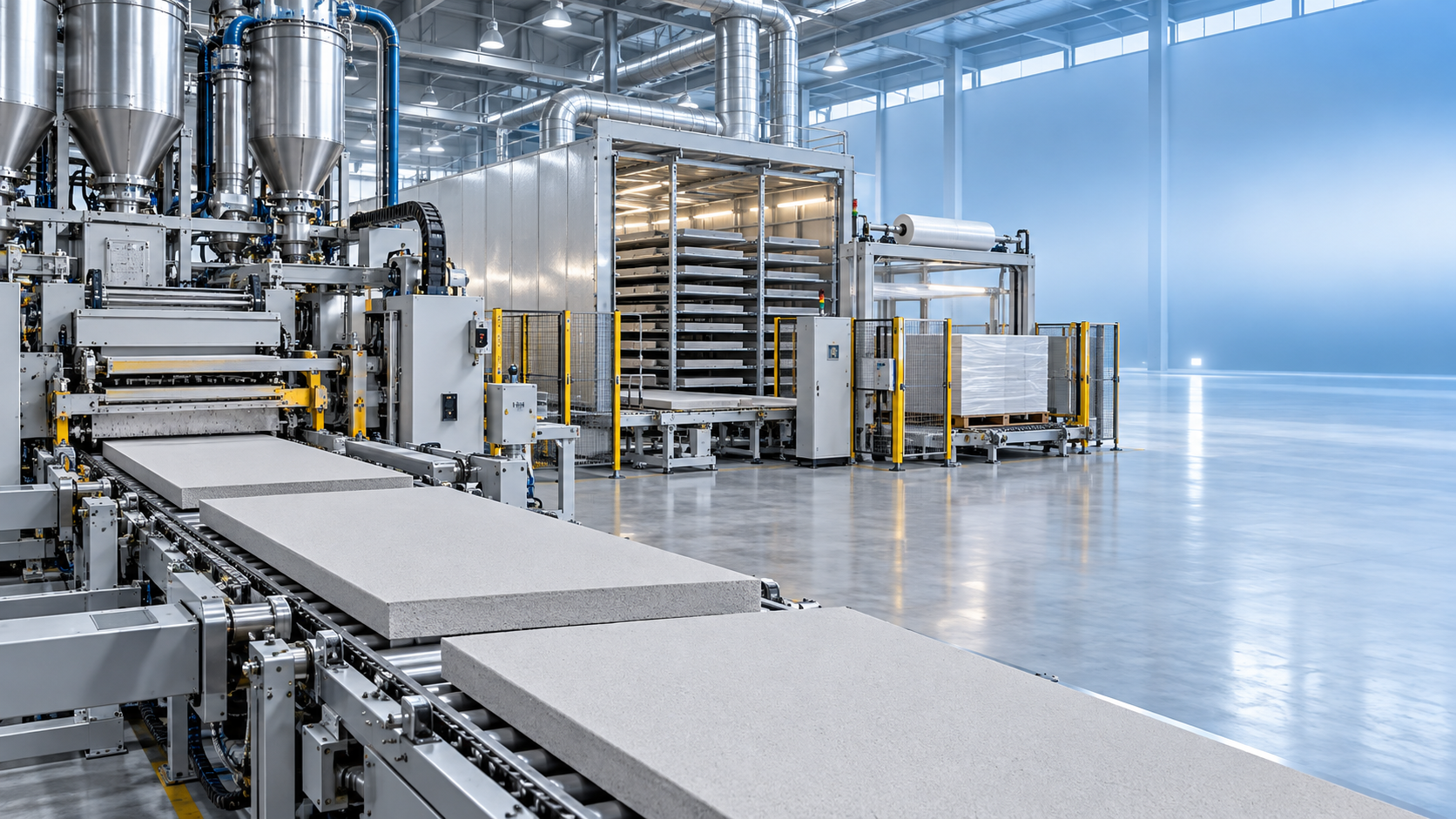
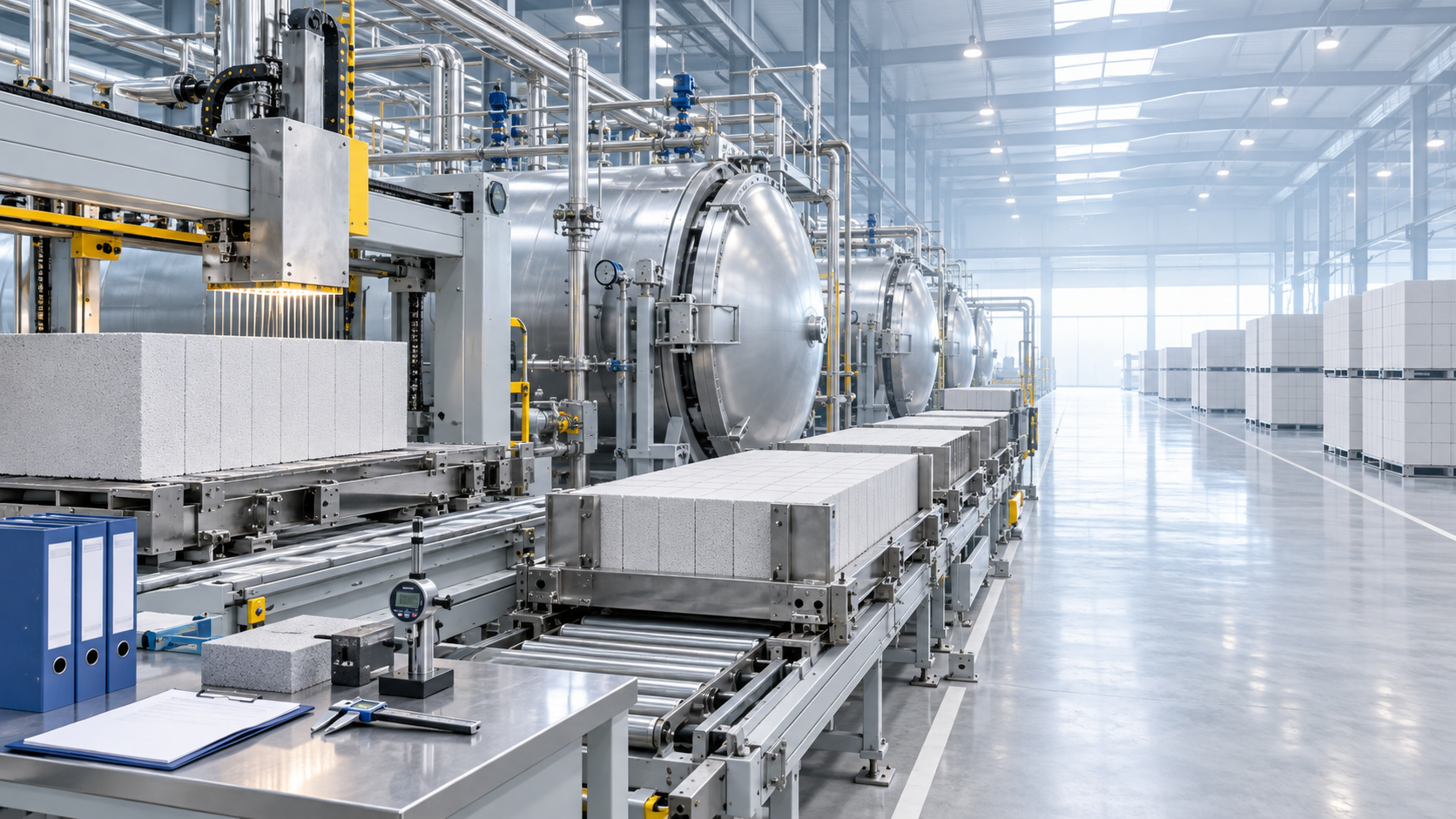
An automatic AAC production line makes the most sense when the plant is expected to run at a meaningful commercial scale and cannot afford frequent manual correction. AAC is not just a batching business. It is a timing business. Raw material proportioning, slurry preparation, mold handling, pre-curing, cutting, autoclaving, and finished product movement all depend on sequence discipline. Small deviations upstream often show up later as cracking, dimension drift, uneven pore structure, or handling losses.
This matters even more in greenfield projects because startup periods are already exposed to enough uncertainty: operator learning curves, raw material adaptation, local steam system behavior, and market ramp-up. If the project is in a region where skilled labor is limited or labor turnover is high, automation is often less about headcount reduction and more about reducing process variation while the organization is still maturing.
It also becomes easier to justify automation when the sales strategy depends on consistent block dimensions, predictable dry density, and reliable delivery schedules. Contractors and distributors may forgive occasional delays in a small local operation. They are much less forgiving when the supplier positions itself as a serious industrial producer. In that setting, repeatability is not a technical preference; it is part of market credibility.
Greenfield projects that usually benefit most
There are a few situations where automation tends to make practical sense sooner rather than later.
- The project is planned for sustained multi-shift operation rather than limited daytime production.
- The investor wants room for future output expansion without rebuilding the entire material flow.
- The target market requires stable quality across large batch volumes.
- Labor cost is rising, or dependable skilled operators are difficult to retain.
- Management wants traceable process control rather than operator-by-operator judgment.
That last point is underrated. In many AAC plants, losses do not come from one dramatic failure. They come from repeated small inconsistencies: inaccurate dosing, poorly timed transfer, uneven cutting conditions, rough handling between stations, or unplanned stoppages that interrupt curing rhythm. A well-designed automatic line helps standardize these transitions. Even something as ordinary as transfer equipment and conveying layout can affect line stability over time, which is why components such as CONVEYOR BELT 8M are not minor details in a plant-wide reliability discussion.
When full automation may be too much, too early
Not every greenfield project needs the highest automation level available. That is especially true when the business model is still being tested. If the local market for AAC is immature, product specifications are still uncertain, or expected demand is modest in the first phase, a fully automatic line can create financial pressure before operating discipline is strong enough to support it.
The same caution applies where utilities are unstable. AAC production relies on more than machinery. Power quality, steam availability, water control, and maintenance readiness all influence whether automation delivers value or simply exposes every weakness faster. A plant with unreliable upstream conditions may end up paying for a highly automated system but operating it below its intended rhythm.
Another common mistake is assuming automation automatically simplifies management. In reality, it changes the management burden. You may need fewer manual interventions on the line, but you will need stronger control over spare parts, electrical troubleshooting, instrumentation calibration, and preventive maintenance. If the organization is not prepared for that shift, the investment can underperform.
The financial logic is broader than labor savings
Many investment discussions start with labor reduction, but for AAC that is only one part of the picture. Decision-makers should look at automation through four cost lenses: product consistency, waste reduction, uptime stability, and expansion readiness.
Consistency affects how much rework, sorting, or customer complaint handling a plant absorbs. Waste shows up in broken green cake handling, cutting errors, or damaged finished blocks. Uptime matters because AAC production stages are interdependent; when one section stops unpredictably, the effect is not isolated. Expansion readiness becomes important if the business expects to add capacity later. A line designed with coherent automation architecture is usually easier to scale than a patchwork of manual and semi-automatic sections assembled under schedule pressure.
This is one reason experienced manufacturers with a long footprint in building materials machinery often matter in project evaluation. Shandong Hongfa Scientific Industrial & Trading Co., Ltd., established in 1990, has worked across multiple product categories including aerated concrete block production lines, block machinery, and concrete batching plants. That kind of manufacturing background does not remove the need for project-specific engineering, but it does suggest familiarity with how material handling, process coordination, and equipment robustness affect day-to-day plant operation. Hongfa’s scale, multiple production bases, engineering team, ISO9001-2008 quality system certification, and patent portfolio are relevant less as marketing points than as indicators that the supplier side of the conversation should go beyond machine price alone.
What to test before committing to an automatic AAC production line
A serious greenfield decision should answer a few uncomfortable questions early.
- How stable are the intended raw materials, especially sand or fly ash, lime, cement, gypsum, and aluminum paste quality?
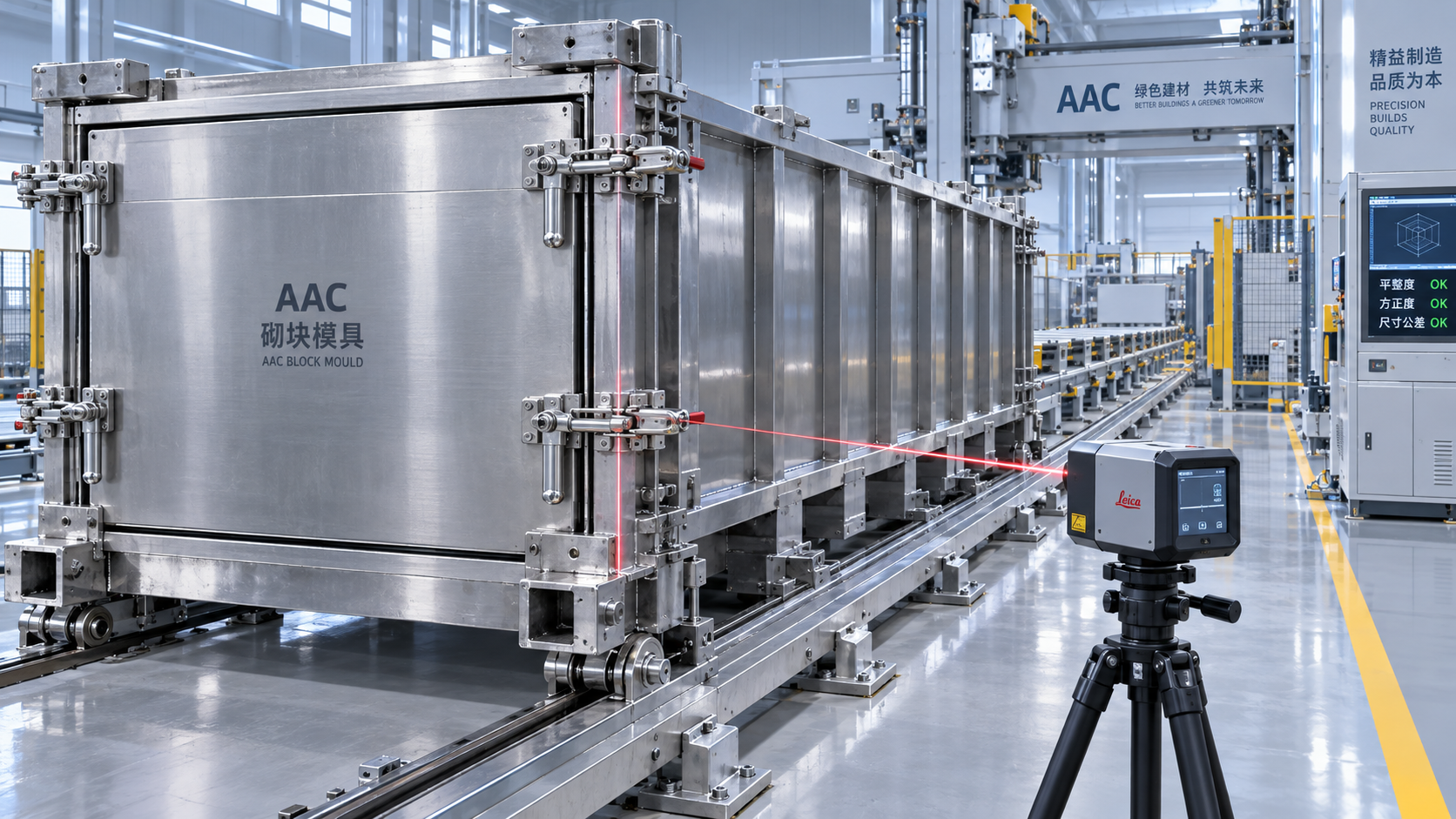
- What product range is planned at launch, and how often will mold size or cutting settings need adjustment?
- Can the local team maintain sensors, drives, PLC-related systems, and automated transfer mechanisms without waiting too long for outside service?
- Is the site layout designed for efficient autoclave loading, finished goods movement, and maintenance access?
- What level of process data will management actually use, rather than simply collect?
Those questions often expose whether the project really needs full automation or a more staged approach. In some cases, it is wiser to automate the critical process points first, such as batching accuracy, mold circulation, cutting, and autoclave handling, while leaving certain secondary logistics more flexible. In other cases, especially when the plant is being built as a flagship facility, partial automation only postpones the inevitable and creates integration headaches later.
A note on equipment selection beyond the core machines
Greenfield teams sometimes focus heavily on mixers, cutting units, and autoclaves, then treat supporting transport systems as standard accessories. That is usually a mistake. In AAC production, plant rhythm depends on whether each transfer step is synchronized and reliable. Conveying, turning, stacking, and return paths all influence stoppage frequency and maintenance workload. A component such as CONVEYOR BELT 8M may look secondary on a quotation list, but over years of production, these choices affect cleaning effort, wear behavior, and line continuity.
This is also where supplier engineering depth matters. A vendor that understands only the machine islands may underspecify the interfaces between them. A vendor that understands the whole line will usually spend more time on transitions, access, timing logic, and maintenance practicality. For a greenfield project, that difference is often visible only after commissioning, when changes become expensive.
The strategic view: build for the plant you intend to run
The best time to choose an automatic AAC production line is when the business has clarity about its operating model, not just optimism about market demand. If the plant is expected to be a long-term industrial asset with disciplined production planning, quality-sensitive customers, and a need for scalable output, automation usually earns its place. If the project still carries uncertainty around product acceptance, utility support, workforce depth, or cash-flow tolerance during ramp-up, a more selective approach may be safer.
In other words, automation makes sense when it solves real operating risk, not when it merely makes a new plant look advanced on paper. For greenfield AAC projects, that distinction is where many good investments separate themselves from expensive ones.
Before signing off on the line configuration, it is worth insisting on a practical review of material flow, maintenance capability, utility assumptions, and expansion logic. If those pieces are coherent, an automatic AAC production line can be a strong foundation from day one. If they are not, the wiser decision may be to simplify the line now and automate further once the plant has earned its own operating data.
Recommend
 Oct 13, 2026
How to Choose a Wall Panel Production Machine for Export Quality?
How to choose a wall panel production machine for export quality? Explore essential factors for consistent output, curing, automation, quality control, and supplier support.
- Oct 12, 2026
Is ISO Certification Mandatory for AAC Block Manufacturing Equipment?
Are AAC block manufacturing equipment ISO certified mandatory? Discover legal requirements, supplier risks, and smart compliance checks before investing.
- Oct 11, 2026
How Often Should AAC Molds Be Inspected and Replaced?
How often should AAC molds be inspected and replaced? Discover practical inspection schedules, warning signs, and maintenance tips to reduce defects and downtime.