

How Much Does a Semi-Automatic AAC Plant Cost?
A semi-automatic AAC plant has no single reliable price: the investment depends on production capacity, the equipment included, the level of manual handling, and the cost of installing and operating the line at its destination. An equipment quotation alone is not the full plant cost. Buildings, utilities, freight, civil works, commissioning, and working capital can materially change the amount a buyer needs to fund.
For a business comparing proposals, the immediate problem is that two quotations may describe different scopes under the same “semi-automatic” label. One may include autoclaves and a boiler, while another covers only the forming and cutting line. Without matching those boundaries, the lower figure may conceal substantial purchases still to come. A dependable budget therefore starts with a defined plant scope and written quotations rather than an assumed universal price.
Separate the equipment price from the total investment
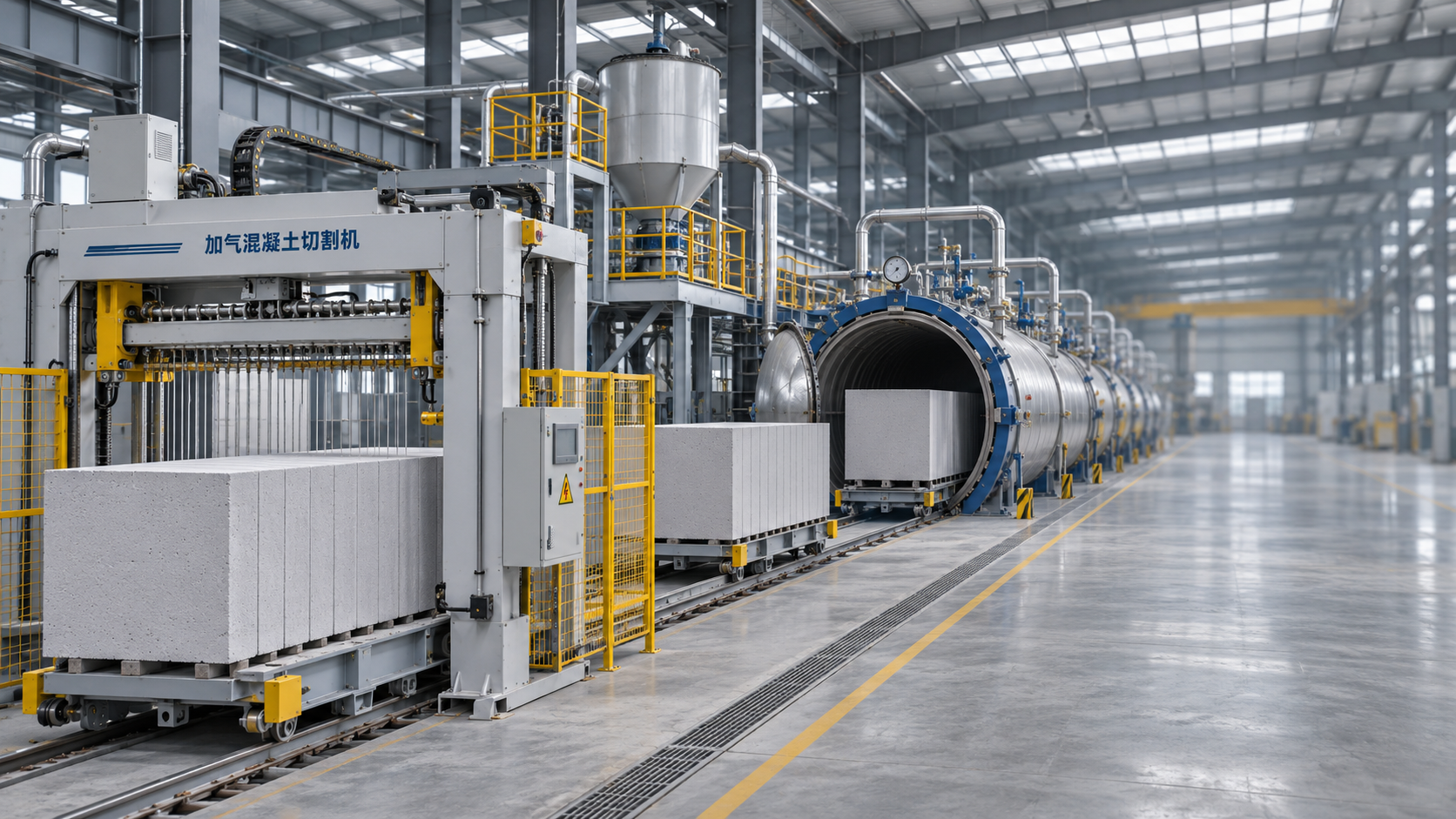
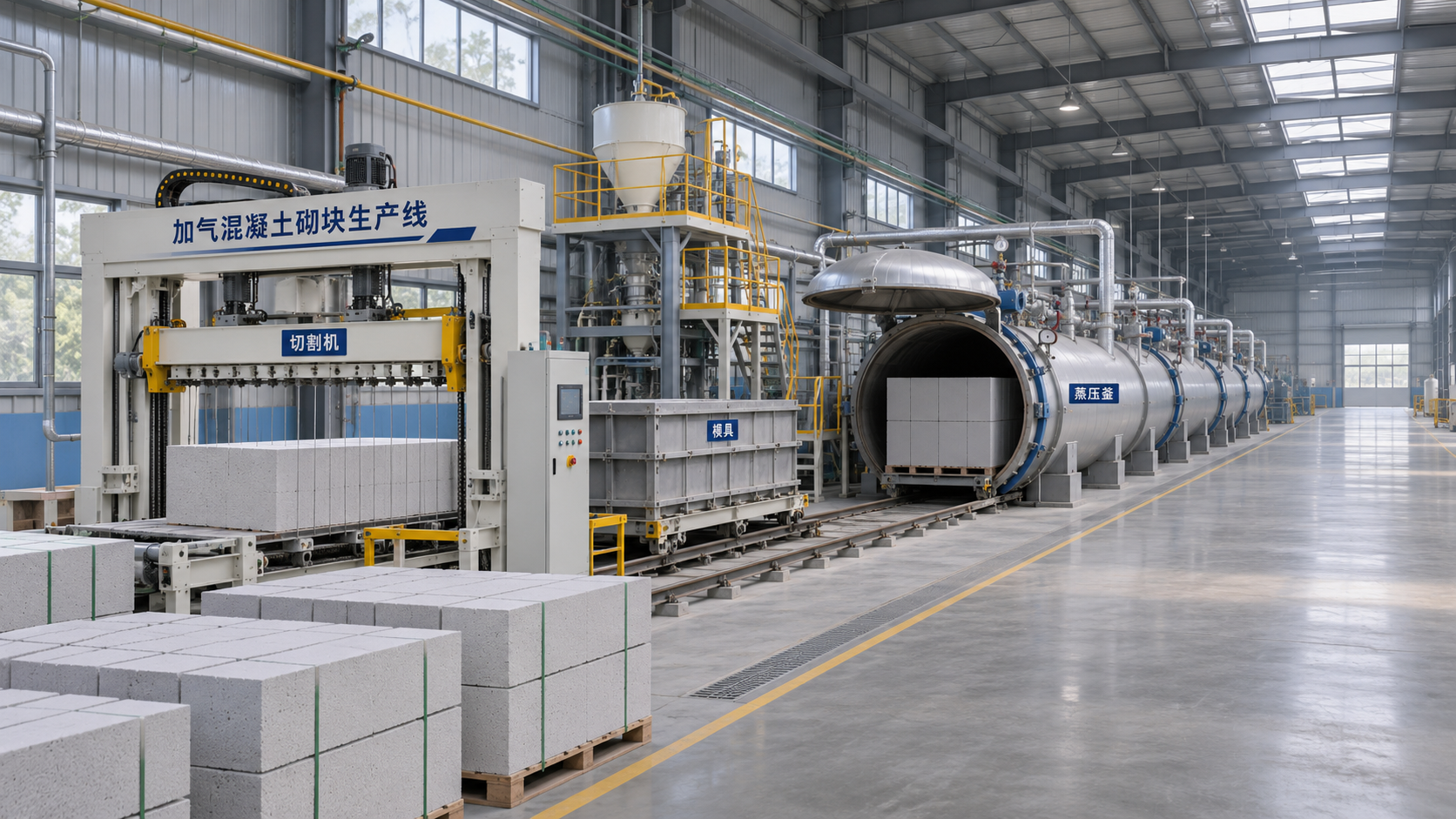
Autoclaved aerated concrete, or AAC, production involves raw material preparation, mixing and casting, pre-curing, cutting, autoclaving, and handling the finished blocks. A semi-automatic line uses machinery for production while relying on operators for selected movements, controls, or handling tasks. Exactly which tasks remain manual varies by design.
When reviewing a proposal, divide spending into three groups. The first is the equipment package: production machines and whatever supporting systems are explicitly included. The second is the cost of making the site operational, including buildings, foundations, utility connections, installation, and commissioning. The third is the cash needed to operate before sales receipts cover expenses, including materials, wages, energy, maintenance supplies, and inventory.
A practical estimate can be expressed as:
Total funding requirement = equipment and delivered-to-site costs + site preparation and installation + commissioning and start-up costs + initial working capital + contingency.
Count each item only once. For example, freight may already be included in a delivered quotation, but unloading or inland transport may not be. Record the quotation currency, validity period, payment schedule, and exchange-rate exposure so that the estimate remains usable when comparing offers.
Capacity changes more than the size of the main machines
Plant capacity is often expressed as finished AAC volume over a specified period. Before using that number in a budget, ask whether it is based on theoretical equipment performance or expected saleable output. Confirm the assumed block dimensions, product density, operating hours, shifts, and allowances for maintenance or production interruptions. A nominal figure without those assumptions is not a dependable basis for revenue or unit-cost calculations.
Increasing the target output can affect the entire line. Mixing capacity, mould circulation, cutting throughput, autoclave loading, steam supply, and finished-product handling must work together. A larger mixer, for example, does not increase saleable output if curing or cutting remains the limiting step. Similarly, adding autoclave capacity may require more space, pipework, steam generation, and handling equipment.
Buyers planning a phased expansion should ask which components are sized for the initial output and which can accommodate a later increase. Leaving floor space for additional equipment is useful only if utility capacity, material flow, and the proposed layout also permit the change. Obtain the expansion scope in writing rather than assuming that every semi-automatic line can be enlarged easily.
What does “semi-automatic” include?
There is no universal division between manual and automated tasks. One line may automate batching and cutting but require manual movement of moulds or finished products. Another may include more powered handling while leaving certain controls or packaging operations to operators. These differences affect the purchase price, staffing plan, throughput, and exposure to handling damage.
Ask each supplier to describe the operating sequence from raw material feeding through packing. The most useful answer identifies the equipment involved and the operator action at each stage. Pay particular attention to:
- Material feeding and dosing: whether weighing, conveying, and recipe control are included, and which materials require manual loading.
- Mould and cake movement: which transfers use powered equipment and where cranes, trolleys, or operator intervention are required.
- Cutting and separation: the supplied cutting equipment, achievable product formats, and handling required before and after cutting.
- Autoclave loading: the rails, transfer equipment, and loading arrangements included in the offer.
- Finished-block handling: whether unloading, palletizing, wrapping, and storage equipment are supplied or remain the buyer’s responsibility.
Lower initial spending can be appropriate where labour is available and planned output is modest. It is not automatically cheaper over the life of the plant. Extra handling may require more people or slow the line, while a higher level of automation can introduce additional controls, maintenance requirements, and spare-parts needs. Compare the proposed staffing and production assumptions alongside the equipment price.
Equipment scope: where quotations commonly diverge
The main production line is only one part of an AAC plant. Depending on the raw materials and the supplier’s scope, a complete project may also need storage, grinding or slurry preparation, batching, moulds, a cutting system, autoclaves, steam generation, internal transport, and electrical controls. Do not assume that a named production line includes every supporting item.
Ask for an itemized equipment list with quantities and technical specifications, not just a total price. A difference in the number of moulds or in the provision of a steam system can explain a significant gap between offers. The proposal should also identify equipment that must be sourced locally, because its availability and compatibility can affect both budget and schedule.
Site costs can change the preferred quotation
A plant designed for an existing industrial building may face a different cost profile from one planned on an undeveloped site. Assess the proposed layout against building height, floor loading, access for delivery and maintenance, material storage, and the movement of moulds and finished blocks. Foundations must suit the actual equipment loads and site conditions; an equipment outline drawing is not a substitute for a site-specific civil design.
Utilities deserve early attention. AAC production requires a dependable supply of electricity and water, as well as steam for autoclaving. The cost of providing these services depends on the site and on the proposed process. Request connected loads, expected utility consumption assumptions, steam requirements, and connection points from the equipment supplier, then obtain local estimates for supplying them.
Freight terms also need careful reading. A quotation delivered to a port is not the same as one delivered to the installation site. Customs duties, taxes, insurance, inland transport, lifting equipment, and unloading may sit outside the equipment price. Check applicable charges with the relevant local parties; they depend on the destination and transaction terms.
Estimate operating cost before deciding on automation
The equipment price is paid against a production business that must continue to buy inputs and sell blocks. Build an operating model using local quotations or documented assumptions for each major expense. At a minimum, include raw materials, energy and water, production labour, maintenance, packaging, internal handling, and waste or rejected product. Financing, insurance, administration, and distribution should also be considered when evaluating the business as a whole.
Raw material suitability affects both equipment selection and ongoing cost. The proposed recipe and preparation process depend on the materials available at the site and the required finished product. Ask what material properties the equipment design assumes, what testing is needed, and whether the quoted preparation system can handle the intended feedstock. A cheaper input is not necessarily economical if it needs additional processing or creates a production constraint.
For comparison, calculate an estimated operating cost per unit of saleable output, not merely per unit of nominal capacity. Use the same production period and accounting assumptions for every option. Then vary the uncertain inputs, such as energy cost, labour requirements, utilization, and selling price, to see whether the proposed line remains viable under less favourable conditions. Keep depreciation and financing treatment consistent when comparing alternatives.
Turn supplier quotations into comparable project budgets
Before requesting prices, prepare a short technical brief covering the intended product sizes and density, planned output and operating schedule, available raw materials, site location, utilities, and desired automation. Identify any existing buildings or equipment that the new line must use. Providing the same brief to each supplier reduces the risk of receiving prices for fundamentally different plants.
When contacting Shandong Hongfa Scientific Industrial & Trading Co. or another supplier, ask for a proposal that states its assumptions and exclusions. The following sequence helps convert a quotation into a decision-ready budget:
- Define the required output and product specifications, including the operating schedule behind the capacity figure.
- Map the proposed production sequence and identify every manual operation, supplied machine, and required utility.
- Add separately priced items, local construction, delivery-related charges, installation, and start-up expenses.
- Estimate operating costs and initial working capital using local input prices and a realistic utilization assumption.
- Compare payment terms, delivery obligations, warranty scope, spare parts, training, and acceptance criteria alongside the adjusted total.
For acceptance, specify how the line’s performance will be assessed, including the product specification, test conditions, operating responsibilities, and treatment of interruptions. A stated capacity is more useful when both parties understand how it will be measured and what materials and utilities must be available during the test.
Finally, maintain a contingency for unresolved costs rather than treating an incomplete quotation as a fixed project budget. The amount is a project-specific decision: it should reflect the maturity of the site design, the certainty of local prices, and the number of open technical or commercial items. The most useful quoted price is the one whose scope and assumptions can be traced through to a credible installed and operating cost.
Recommend
 Nov 16, 2026
How Much Does a Hongfa AAC Plant Cost?
Discover what drives the Shandong Hongfa Co., Ltd. AAC plant price, from capacity and automation to installation costs, and learn how to request a reliable quote.
- Nov 16, 2026
How Much Does a Semi-Automatic AAC Plant Cost?
Shandong Hongfa Scientific Industrial & Trading Co. helps you explore semi-automatic AAC plant costs, compare equipment scopes, and plan a realistic investment.
- Nov 15, 2026
How Much Does a Concrete Roof Tile Machine Cost?
Compare concrete roof tile machine costs, automation, tooling and operating expenses. Learn what to ask suppliers, including about Ltd. AAC spare parts.