How Much Does a Semi-Automatic AAC Plant Cost?
A semi-automatic AAC plant does not have a dependable single price: the investment depends on its production capacity, equipment scope, local construction costs, utilities and installation requirements. A machinery quotation alone is not the plant cost. Without a defined project and a supplier quotation, a numerical estimate would be unreliable.
This distinction matters when two proposals appear far apart in price. One may cover only the production machinery, while another includes autoclaves, installation supervision or auxiliary systems. Before deciding which is cheaper, compare the cost of reaching the same operating condition: a plant that can produce and dispatch saleable autoclaved aerated concrete blocks.
Start with the cost of a working plant, not just the equipment
A semi-automatic line uses machinery for major processing steps but still relies on operators for selected handling, controls or material transfers. There is no universal equipment list implied by the term. A quotation should identify both the machines supplied and the work that remains manual.
The total investment normally falls into several groups:
- Production equipment: raw-material preparation, batching, mixing, moulds, cutting, handling and curing equipment included in the proposed process.
- Site and construction: land, buildings, foundations, drainage, storage areas and access for vehicles.
- Utilities: electrical supply and distribution, water systems, steam generation and any treatment or recovery equipment required by the design.
- Delivery and commissioning: freight, unloading, installation, testing, operator training and travel expenses where applicable.
- Startup funds: initial materials, consumables, labour, spare parts and operating cash while production reaches a stable level.
Whether an item is included is a contractual question, not something to infer from a package name. Ask each supplier for a priced scope and a separate list of exclusions. Then obtain local estimates for the excluded work before comparing the proposals.
Capacity changes more than the machine price
Plant capacity should be expressed in the same unit and under the same operating assumptions across quotations. A figure in cubic metres per year is difficult to compare unless the supplier also states working days, shifts, product dimensions and the production conditions behind it. Nameplate output is not necessarily saleable output: startup losses, maintenance and product rejection can reduce the volume available for sale.
Higher planned output can require more moulds, handling equipment, curing capacity, raw-material storage and utility capacity. It can also increase the space needed for finished blocks and vehicle movements. Conversely, a smaller line may cost less initially but have a higher cost per saleable cubic metre if labour and fixed expenses are spread over less production.
When assessing a proposed capacity, work backwards from expected sales and delivery requirements. Check whether the capacity is limited by mixing, cutting, autoclave cycles or another stage. A fast mixer adds little practical output if curing or handling cannot keep pace. Ask the supplier to identify the limiting stage and explain the assumptions used in the capacity calculation.
Where equipment quotations commonly differ
Raw-material preparation and batching
AAC formulations can use sand or other suitable siliceous materials, together with binders, water and an expanding agent. The preparation system depends on the materials available and their condition. Sand that requires grinding, for example, calls for different equipment and utility provision from material supplied in a usable form.
Confirm which silos, feeders, mills, slurry tanks, scales and dust-control components are included. Material testing and mix design may also be separate from the equipment price. An inexpensive quotation that assumes prepared raw materials can become costly if the site must add preparation equipment later.
Moulds, cutting and product handling
The number and size of moulds affect how material moves through casting, pre-curing and cutting. A quote should state the mould quantity, compatible product dimensions and the handling equipment provided. Ask whether mould cleaning, oiling and assembly are manual or mechanised, and whether the quoted labour assumption reflects those tasks.
Cutting accuracy and product range matter as well. Establish which block sizes the line can produce, what adjustments are required and whether cutting wires or other wear parts are included. Handling equipment should cover the intended route through the plant, including movement to and from curing and the area where finished products are packed or stored.
Autoclaves and steam supply
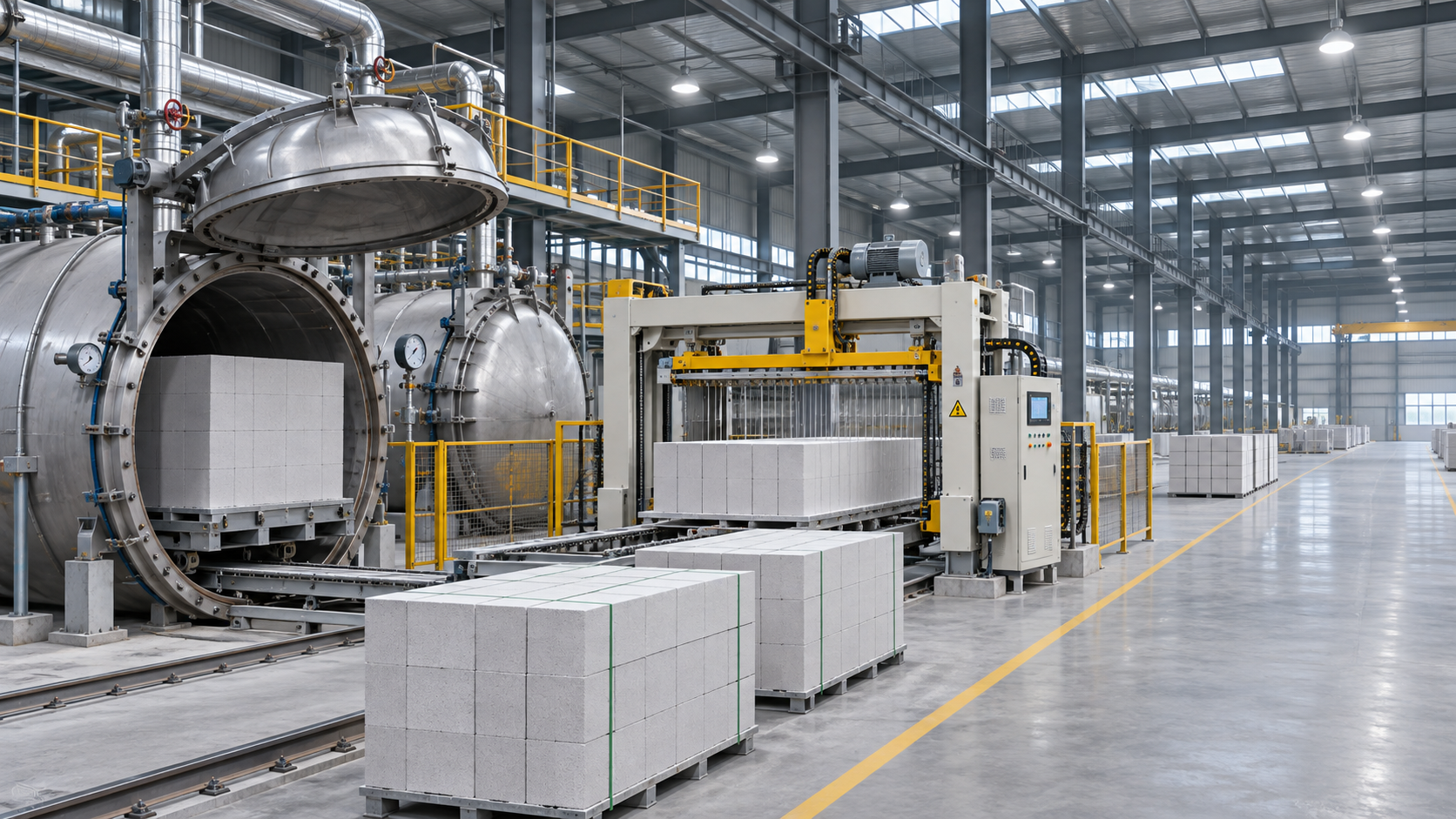
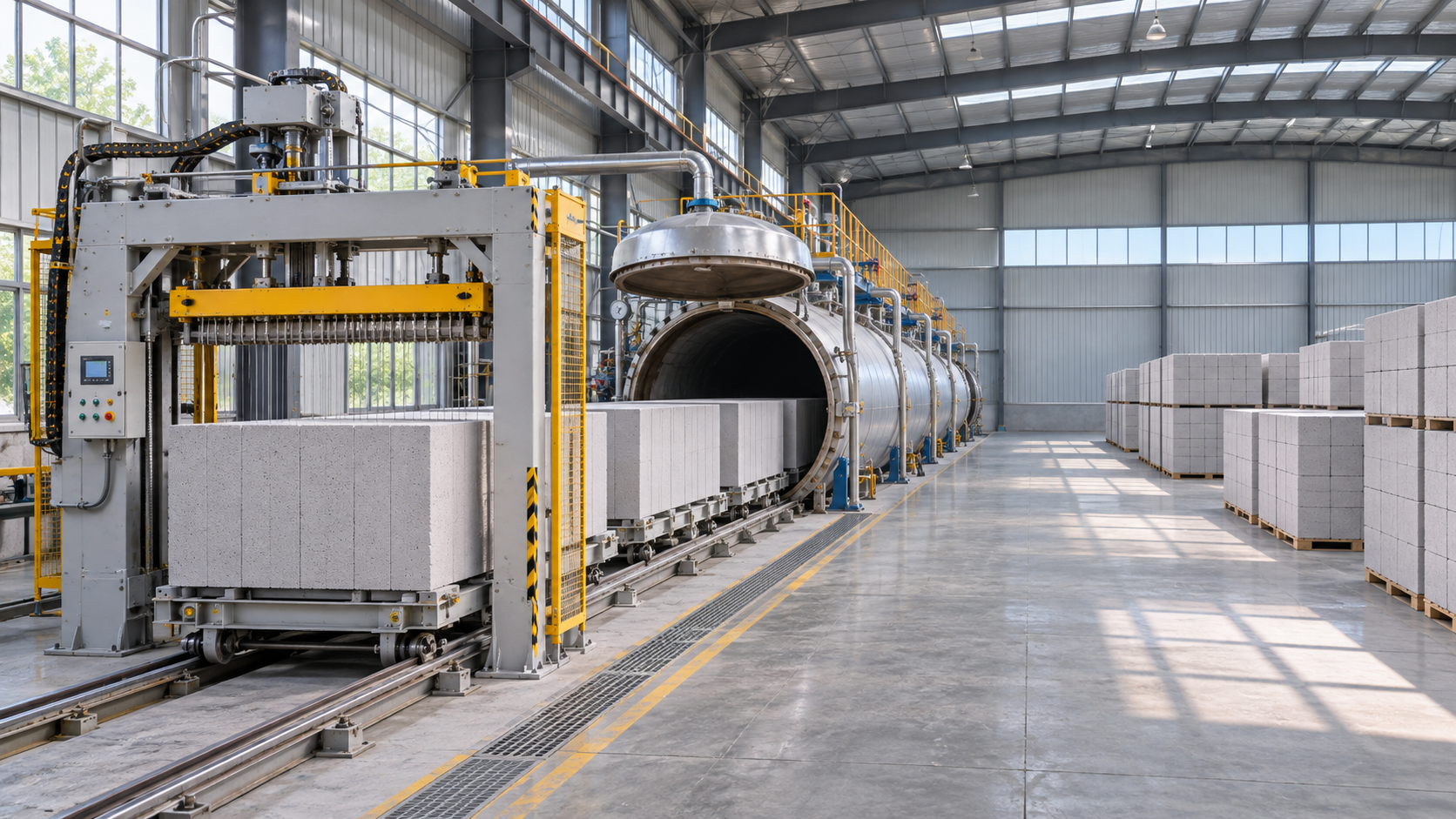
Autoclaving is central to AAC production. Check the number and dimensions of autoclaves, their usable loading arrangement, the stated cycle assumptions and whether doors, rails, controls and safety-related components are in scope. The equipment supplier should explain how the proposed curing capacity supports the quoted plant output.
Do not assume that the boiler or other steam source is included with the autoclaves. Fuel storage, water treatment, condensate handling, piping, insulation and installation may be quoted separately. These items affect both the initial budget and the ongoing cost of curing.
Semi-automatic does not mean low operating cost
A semi-automatic configuration can reduce initial expenditure compared with a more automated arrangement, but the saving may be offset by recurring labour and handling costs. The practical question is which tasks operators must perform on every shift and whether those tasks fit the local labour market and production target.
Request a staffing plan by operation rather than a single headcount. It should distinguish production operators from maintenance, quality control, boiler operation and material handling where those functions are needed. Also ask how production is affected when one operator is absent or when a manual transfer takes longer than planned.
Automation can be worth considering at a bottleneck rather than across the entire line. For example, a handling operation that repeatedly delays mould circulation may deserve closer attention than a process step with spare capacity. The supplier should identify the equipment and layout changes needed for a later upgrade; an upgrade that requires extensive rebuilding is not equivalent to one already accommodated in the design.
Build the site budget around the actual layout
Equipment dimensions alone do not define the building. Allow for maintenance access, lifting equipment, raw-material deliveries, curing movements, finished-product storage and safe separation of vehicle and pedestrian routes. Foundation requirements must account for equipment loads and local ground conditions. A preliminary layout is useful for budgeting, but construction details need to be confirmed against the final equipment drawings.
Utility availability can change the project cost substantially. An existing electrical connection may not support the proposed motors and startup loads; water supply or drainage may need modification. Fuel availability and the chosen steam system also affect the site design. Ask for connected electrical load, estimated operating demand, water requirements and steam demand, with the production assumptions behind each figure.
Local permitting, inspections and pressure-equipment requirements may affect the schedule and specifications. Confirm the applicable requirements for the project location before ordering autoclaves, boilers or related piping. The cost of changes made after equipment has been manufactured can exceed the apparent saving from accepting an incomplete specification.
Turn quotations into a comparable investment estimate
Use one project brief for every supplier. State the intended products and dimensions, target saleable output, operating schedule, available raw materials, site location, utility conditions and desired division of work between supplier and buyer. Request a process flow, equipment list, layout, utility requirements and capacity assumptions with each offer.
Then prepare a comparison using the following sequence:
- Align the technical basis. Adjust for differences in capacity, product size, raw-material preparation, mould quantity and curing arrangement.
- Identify delivery terms. Establish the named delivery point, who arranges transport and insurance, and who pays import charges, unloading and inland freight.
- Price missing scope. Add local estimates for buildings, foundations, utilities, installation and any excluded machinery.
- Separate one-time and recurring costs. Keep equipment and construction apart from labour, energy, materials, maintenance and consumables.
- Record unresolved assumptions. Mark items that still need a site survey, material test or written supplier confirmation rather than treating them as free.
Shandong Hongfa Scientific Industrial & Trading Co., Ltd. block machine export experience is relevant to discussions about machinery supply, but an export quotation still needs a clearly defined delivery and installation boundary. Confirm who supplies drawings, who supervises assembly, which languages are used for documentation and training, and who provides tools or local labour.
Estimate the cost per saleable cubic metre
Purchase price answers only part of the question. For an operating estimate, divide expected costs for a defined period by the expected volume of saleable blocks in that same period. Use consistent assumptions for production days, selling volume and losses. The calculation can be expressed as:
Estimated cost per saleable cubic metre = relevant costs for the period ÷ saleable cubic metres for the period.
Include raw materials, fuel and electricity, water, production labour, maintenance, wear parts, packaging and internal handling where applicable. Add fixed expenses appropriate to the decision, such as site overheads and equipment depreciation or financing costs. Keep loan repayments, interest and depreciation clearly labelled so that the same capital cost is not counted twice.
Run the estimate at the planned output and at a lower utilisation level. Some expenses rise with production, while others continue even when the line is idle. This comparison shows whether a low-priced plant is still affordable if sales or startup output are below the original plan. It also helps evaluate a larger line whose extra capacity may remain unused for some time.
Before accepting the final price
Ask for a payment schedule tied to identifiable deliverables and clarify which currency, taxes and exchange-rate assumptions apply. Confirm the duration of the quotation and the treatment of changes requested after order placement. Installation supervision should specify its duration, travel and accommodation responsibilities, and charges for additional visits or delays outside the supplier’s control.
Commissioning and acceptance terms deserve the same attention as the equipment list. Agree on the materials, utilities, operators and instruments needed for testing; identify who supplies each one; and define how output and product requirements will be assessed. A production figure is useful only when the test conditions and measurement method are stated.
Finally, request a recommended startup spare-parts and consumables list with individual prices and lead times. Distinguish ordinary wear items from critical components whose failure could stop the line. The resulting budget should show the quoted machinery price, the cost of everything excluded, and a separate allowance for unresolved site and startup costs. That is the figure to use when judging whether the proposed plant is financially workable.
Recommend
 Nov 22, 2026
How Much Does a Hongfa AAC Plant Cost?
Shandong Hongfa Scientific Industrial & Trading Co. AAC plant costs depend on capacity, automation and site needs. Explore pricing factors before requesting a quote.
- Nov 21, 2026
How Much Does a Concrete Roof Tile Machine Cost?
Searching for Ltd. AAC spare parts or concrete roof tile machine costs? Learn why compatibility matters and compare quotes, tooling, and startup expenses.
- Nov 21, 2026
How Much Does a Semi-Automatic AAC Plant Cost?
Explore Ltd. block machine export experience and learn how to compare semi-automatic AAC plant costs, equipment scope and startup expenses.