




Sand or fly ash: which is better for AAC production when balancing raw material costs, block quality, and long-term plant efficiency? Neither wins universally.
Sand often suits plants prioritizing predictable mineral composition and dependable supply. Fly ash can offer attractive economics when its quality, availability, and delivered cost remain favorable.
For autoclaved aerated concrete manufacturers, the right choice depends on usable silica, material consistency, processing requirements, and saleable output, rather than purchase price alone.
This guide helps plant investors, production managers, and purchasing teams compare both options, identify hidden costs, and match their AAC equipment investment to operating conditions.
Which Material Makes More Business Sense for Your Plant?
Choose sand when local deposits provide suitable quartz content, manageable impurities, and consistent deliveries, particularly if nearby fly ash sources have uncertain quality or availability.
Choose fly ash when a dependable supplier offers suitable chemistry and fineness, and production trials demonstrate competitive processing costs without compromising your required product specifications.
Both materials can support commercially successful AAC production. Neither automatically guarantees stronger blocks, lower energy consumption, or a more profitable production line in practice.
Your decision should therefore start with three questions: can the material meet specifications, can the supplier maintain consistency, and what does each saleable cubic meter cost?
A low purchase price loses its advantage if variable feedstock causes unstable rising, cutting damage, rejected blocks, or frequent production adjustments that reduce plant utilization.
For a new factory, compare complete production systems around each available material. For an existing plant, include conversion costs and commissioning losses before changing feedstocks.
How Sand and Fly Ash Behave Differently in AAC
AAC combines a silica-bearing material with lime, cement, water, and a gas-forming agent, usually aluminum. Gypsum or anhydrite may also be included in the formulation.
During autoclaving, silica reacts with calcium compounds under saturated steam to form binding phases, including tobermorite, that contribute to the strength of the finished product.
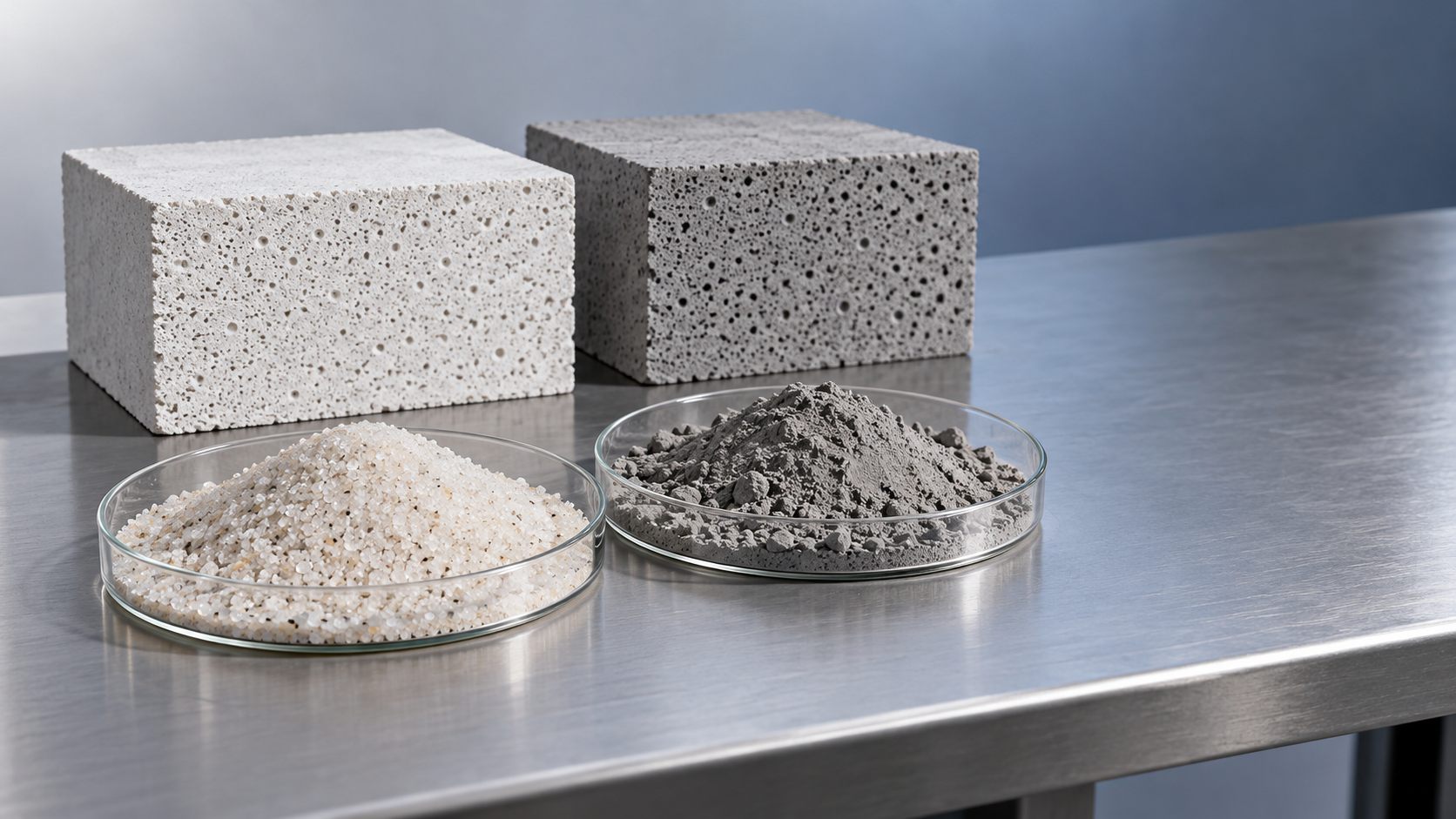
Suitable sand supplies silica mainly as crystalline quartz. Grinding increases its available surface area, helping it react sufficiently within the selected mix and autoclaving cycle.
Fly ash contains varying proportions of glassy particles, crystalline minerals, residual carbon, and other constituents. Its behavior depends on the coal source and combustion conditions.
Some fly ashes arrive sufficiently fine for the intended process, potentially reducing grinding requirements. Others need classification, grinding, blending, or rejection after laboratory evaluation.
Total silica content alone cannot predict performance. Mineralogy, particle size distribution, reactive fractions, calcium content, and interactions with other ingredients all influence practical production behavior.
Compare the Operating Tradeoffs Before Comparing Prices
The following comparison highlights common operating tendencies. Use it to structure supplier discussions, then confirm each assumption through representative testing and a plant-specific cost model.
These differences indicate where to investigate, rather than establishing a universal winner. Actual results depend on your deposit, ash source, equipment, operating discipline, and market.
Will Either Material Produce Stronger or More Consistent Blocks?
Both sand and suitable fly ash can produce AAC meeting relevant product standards. Compare strength at equivalent dry density and under comparable test conditions.
A higher strength result means little if the block also contains more solid material. Buyers should evaluate the specified density class alongside compressive strength requirements.
For either route, inconsistent feedstock can disturb slurry viscosity, gas generation, rising behavior, and setting time. These disturbances can create pore defects or cutting problems.
Fly ash deserves particular attention to residual carbon and variable chemistry. Loss on ignition provides a useful screening indicator, but does not fully characterize suitability.
Sand requires checks for clay, organic matter, salts, and unsuitable mineral fractions. High quartz content cannot compensate for contaminants that interfere with reliable processing.
Also compare drying shrinkage, thermal conductivity, dimensional accuracy, and handling damage. Where certification requires additional durability testing, include those results in the material qualification process.
Which Option Has the Lower Cost per Saleable Cubic Meter?
Build the comparison around cost per saleable cubic meter of AAC, using the same product specification and realistic production capacity assumptions for both material routes.
Include delivered raw materials, binders, aluminum, electricity, steam, water, labor, maintenance, waste handling, and rejection losses. Evaluate capital investment and financing alongside operating costs.
For sand, assess grinding power, mill wear, slurry preparation, and any washing requirements. Moisture and particle characteristics affect handling and the amount of usable solids.
For fly ash, include transport, storage, dust collection, testing, conditioning, and potential blending. Purchased ash may also carry substantial costs where other industries compete for supply.
Normalize supplier quotations to dry usable material. Comparing wet fly ash against dry sand by delivered tonne can substantially distort the apparent raw material saving.
For example, an illustrative saving of $3 per cubic meter disappears if additional processing, binder use, and rejection losses together add $4 per cubic meter.
Calculate annual benefit using realistic saleable production, then stress-test freight, electricity, binder prices, and rejection rates. Small operating differences can outweigh an attractive feedstock quotation.
How Does the Choice Affect AAC Production Line Equipment?
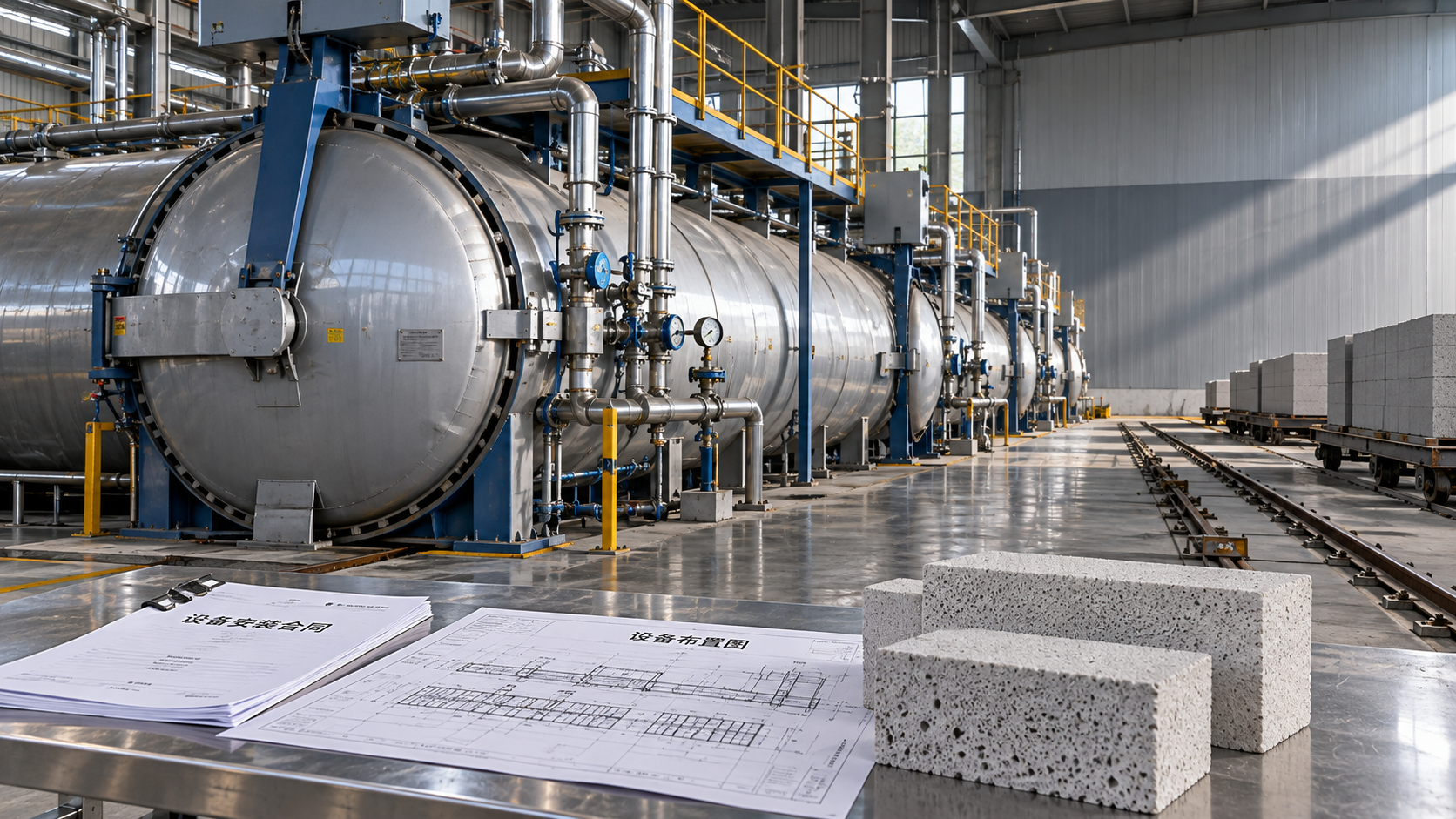
A sand-based AAC line typically requires receiving and proportioning systems, grinding equipment, slurry storage, and agitation. The exact arrangement depends on the delivered material condition.
A dry fly ash route may use silos, pneumatic transfer, dust collection, and controlled dosing. Wet or ponded ash requires a different receiving and preparation arrangement.
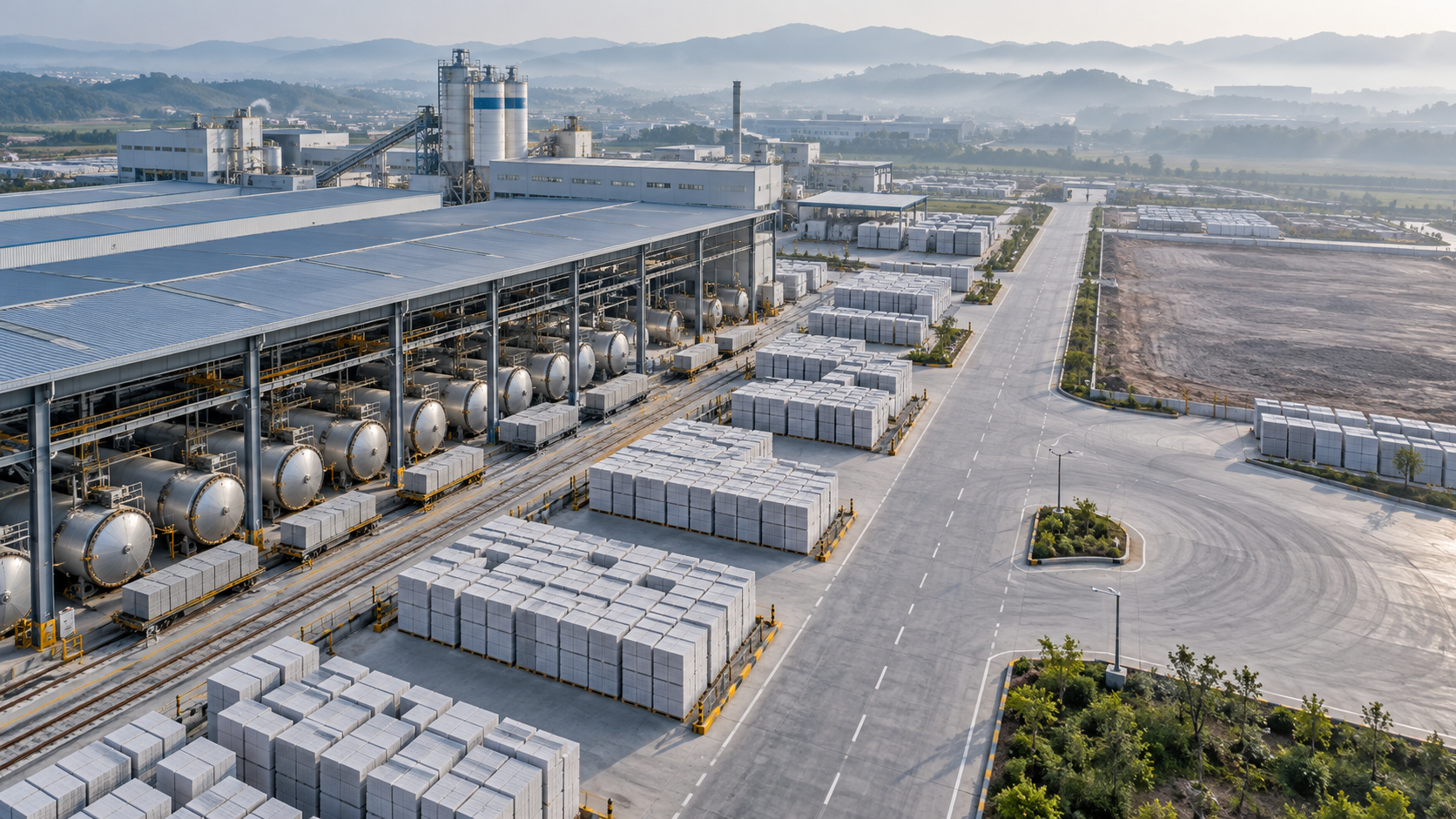
Both routes need reliable batching, mixing, casting, precuring, cutting, autoclaving, and finished-product handling. Material choice changes design requirements without eliminating the need for process control.
Size equipment from demonstrated throughput and material properties. A mill or slurry system that performs well with one feedstock may become a bottleneck with another.
Autoclaving settings must match the formulation and product requirements. Do not assume fly ash automatically permits shorter cycles or that sand always requires higher steam consumption.
If future flexibility matters, assess separate storage, dosing capacity, grinding capability, and control recipes during design. Later conversion can require significant modifications and production downtime.
What Testing Should You Complete Before Committing?
Start with representative samples from each candidate source, collected across different deliveries or operating periods. One unusually favorable sample cannot establish dependable long-term production performance.
Analyze chemical composition, moisture, particle size distribution, and relevant impurities. Examine mineralogy or reactivity where needed, especially when chemistry alone leaves performance questions unresolved.
For fly ash, investigate loss on ignition, calcium content, sulfate, and source variability. For sand, examine quartz content, clay contamination, and practical grindability carefully.
Next, conduct laboratory mixes and pilot trials using the intended lime, cement, aluminum, and process water. Ingredient interactions can change results obtained from isolated material tests.
Record slurry behavior, rising stability, precuring time, cutting performance, autoclave response, and finished block properties. Include energy use and rejected output when evaluating trial economics.
Before final acceptance, agree on incoming material limits and sampling procedures. Supplier specifications should connect directly to demonstrated production performance and applicable finished-product requirements.
Can Your Supply Source Support the Plant for Years?
A technically suitable material becomes a business risk when deliveries are unreliable. Evaluate supply security over the investment horizon, including seasonal and regulatory constraints.
For sand, investigate permitted extraction, available reserves, environmental restrictions, and transport access. A nearby deposit is valuable only if its quality and lawful availability endure.
For fly ash, examine the generating station’s operating outlook, collection system, fuel changes, and competing customers. Changes in electricity generation can affect future ash availability.
Storage capacity should reflect supply interruptions, moisture sensitivity, and handling requirements. Additional inventory protects production but ties up cash and may require more infrastructure.
Qualify backup sources before an interruption occurs. Introducing replacement material without trials can destabilize production precisely when the factory is already under delivery pressure.
Fly ash can reduce demand for virgin mineral resources, but environmental comparisons should also consider transport, processing energy, binder consumption, and verified local material characteristics.
Should You Use a Blend of Sand and Fly Ash?
A blended formulation may help manage supply fluctuations or balance material properties. Its value depends on repeatable performance and the total cost of handling two feedstocks.
Blending introduces additional storage, dosing, and quality-control requirements. It should solve a demonstrated production or supply problem rather than simply add theoretical flexibility to the line.
Do not adopt a universal substitution percentage from another factory. Different ash sources, sand fineness, binders, and autoclaving conditions can produce substantially different results.
Establish an approved operating range through trials, then define how operators adjust recipes when incoming properties change. Confirm that equipment can maintain accurate material proportions.
Making the Final Choice for Your AAC Investment
Sand is often the stronger choice when dependable mineral quality and supply justify preparation costs. Fly ash becomes attractive when verified savings survive processing and variability.
If both options meet product requirements, choose the route offering the best combination of saleable output, operating margin, supply resilience, and manageable capital investment.
When discussing an AAC production line with Shandong Hongfa, provide local material analyses, target density and strength, planned capacity, utility costs, and available supplier information.
Ask for a configuration and cost comparison supported by material trials and clearly stated assumptions. That evidence provides a practical answer to your investment decision.