



When does an automated building material production line pay off?
An automated building material production line pays off when it solves a production constraint that is already costing the business money. That constraint may be limited daily output, inconsistent product quality, labor shortages, excessive material loss, slow changeovers, or an inability to meet delivery commitments. Automation is not automatically profitable because a line is faster or more modern. It becomes profitable when the plant can keep it sufficiently utilized and convert its technical capacity into sellable output.
For producers of concrete blocks, aerated concrete products, quartz stone slabs, and similar materials, the decision should begin with a practical question: what is currently preventing the factory from producing more profitable, specification-compliant material? If the bottleneck is weak demand, unreliable raw-material supply, poor curing discipline, or limited working capital, buying a highly automated line may increase financial pressure without fixing the underlying problem.
Automation pays off when output is constrained by the existing process
A manual or semi-automatic operation often has hidden capacity losses. Workers may wait for material handling, batching may vary between shifts, molds may sit idle between cycles, and finished products may be moved slowly or damaged before dispatch. Each isolated delay can look minor. Across a full shift, however, these interruptions reduce usable output and make delivery planning difficult.
An automated building material production line has the strongest business case when those losses occur regularly and demand exists for the additional production. Typical signs include:
- Orders are delayed because production cannot maintain a stable schedule.
- Overtime, temporary labor, or extra shifts are becoming a routine way to meet demand.
- Product dimensions, density, surface finish, or strength consistency vary too much between batches.
- Material waste, breakage, rework, and rejected products are materially affecting margins.
- Production depends on a small number of experienced operators whose absence disrupts the plant.
- Customers are asking for larger volumes, tighter tolerances, or more dependable delivery dates.
These conditions point to a process problem that automation can address. A line with controlled batching, repeatable forming, coordinated conveying, and integrated handling can reduce variation between steps. The value is not simply fewer people around the machine. It is a more predictable flow from raw materials to finished goods.
By contrast, a plant with large amounts of unused production capacity should be cautious. Increasing theoretical output does not recover the investment unless sales, logistics, and cash collection can support higher actual production.
Calculate the return from the full operating model, not labor savings alone
Labor reduction is easy to see and therefore easy to overvalue. In building materials production, the larger financial gains may come from lower rejection rates, steadier material consumption, better machine utilization, reduced handling damage, and the ability to accept higher-value orders. These gains need to be considered alongside the costs that automation introduces.
A useful evaluation compares the annual change in operating performance with the total cost of ownership. The calculation does not require a complicated financial model at the beginning, but it does require realistic inputs.
The core comparison is straightforward: estimate the additional annual contribution from higher-quality, sellable production; add verifiable savings from labor, waste, and process stability; then subtract the added annual costs of maintenance, energy, supervision, and finance. Compare that result with the installed investment, including the cost of preparing the site and keeping operations running during the transition.
Use conservative assumptions. Do not base the case on maximum rated capacity, perfect uptime, immediate operator proficiency, or an optimistic sales forecast. A better model assumes a ramp-up period, planned maintenance, normal production variation, and realistic order patterns. A line that still produces an acceptable payback under those conditions is much less likely to disappoint after installation.
Capacity utilization is the dividing line
The most common purchasing error is selecting equipment for peak future demand while running it far below its practical operating level for years. Automation is capital-intensive. When fixed ownership costs are spread across too little output, unit costs can rise even though the equipment is technically more efficient.
Capacity utilization should be reviewed in terms of the production schedule, not just annual market forecasts. Consider how many shifts the line will operate, seasonal demand swings, maintenance windows, product changeovers, and the minimum economical batch size. A block line serving steady local construction demand may run predictably. A quartz stone operation with frequent color, pattern, or specification changes may need to place more value on flexibility and controlled changeovers than on pure volume.
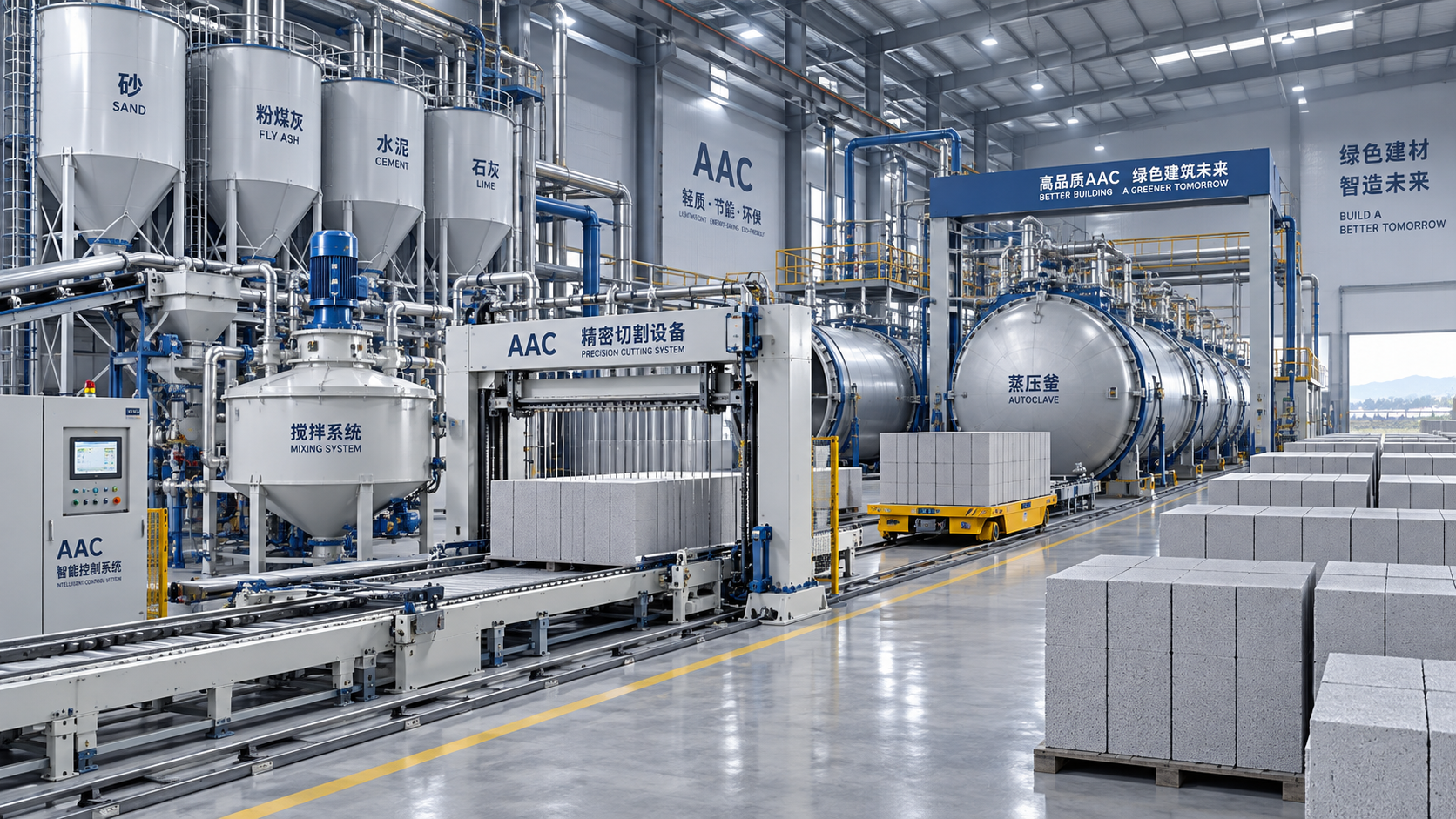
There is also a difference between a line that can make a product and a line that can make it at a competitive cost. Aerated concrete production, for example, depends on coordinated preparation, forming, cutting, curing, and handling. Bottlenecks downstream can limit the benefit of automating upstream mixing or dosing. In quartz stone production, material formulation, slab quality, finishing requirements, and handling discipline all influence whether higher throughput turns into acceptable finished inventory.
Before approving a purchase, map the full production route and identify the slowest or least reliable stage. Automating only the most visible machine may shift the bottleneck to feeding, curing, packing, inspection, or yard handling. A balanced line usually delivers better returns than one high-speed section connected to manual bottlenecks.
Quality consistency can justify automation even before labor costs do
Some plants automate because customers have become less tolerant of variation. This is often the right reason. In building materials, inconsistent dimensions, uneven surfaces, unstable density, poor edge quality, or unpredictable curing results create costs beyond the rejected piece itself. They consume inspection time, complicate installation for buyers, increase complaints, and weaken confidence in future orders.
Automation is useful when it gives the plant repeatable control over the variables that affect product quality. Depending on the process, that may include material dosing, water addition, mixing time, pressing or vibration sequence, molding, cutting, conveying, curing coordination, and finished-product handling. The equipment must still be operated correctly, but a controlled process is easier to manage than one dependent on individual judgment at every stage.
Quality benefits should be tested against the product range. A producer focused on a limited set of high-volume standard sizes may benefit greatly from dedicated automation. A plant producing many small custom runs may need adaptable molds, recipes, software settings, and changeover procedures. A rigid high-output configuration can become expensive if it creates excessive downtime whenever specifications change.
Do not confuse automation with unattended production
An automated line still needs competent people. The roles change from repeated manual handling toward process monitoring, preventive maintenance, quality control, recipe management, electrical troubleshooting, and production scheduling. A purchase decision should include the availability of these skills, as well as the supplier's commissioning and training support.
This matters particularly when a factory has relied on experienced operators to correct process variation informally. Once production is integrated, a mistake in raw-material preparation, recipe settings, sensor calibration, mold condition, or maintenance practice can affect a larger quantity of product before it is detected. Automation improves repeatability only when the process itself is defined and controlled.
For this reason, the best time to automate is often after the business has standardized its product specifications, raw-material acceptance criteria, maintenance routines, and quality checkpoints. Trying to automate an unstable process usually makes its weaknesses more visible and more costly.
Include the costs outside the equipment quotation
Purchase price is an incomplete comparison point. The required foundations, building changes, electrical capacity, compressed air, water systems, dust collection, material storage, internal transport, mold tooling, curing infrastructure, and commissioning work can materially alter the project budget. So can the cost of holding enough spare parts for components that would stop the entire line.
Integration costs deserve special attention when expanding an existing plant. New automation must match the layout, material flow, utility availability, existing molds, curing systems, loading arrangements, and dispatch space. It is often cheaper to buy a smaller line that fits the plant and its order profile than to install a larger system that requires constant workarounds.
Downtime during installation also has a cost. If the new line replaces a current production route, plan how committed orders will be supplied while civil work, installation, testing, and operator training take place. A phased upgrade can be commercially safer than a full replacement when customer delivery commitments cannot tolerate a long interruption.
Choose the automation level that matches the business
Full automation is not the only sensible option. The right answer may be a modular upgrade: automated batching and mixing first, then molding or pressing, then conveying, stacking, packing, or digital process control. This approach is useful when the current bottleneck is clear but future demand remains uncertain.
A more integrated line becomes attractive when demand is stable, product specifications are relatively repeatable, labor dependency is persistent, and the factory can support planned maintenance and process control. The value of integration rises when one coordinated system reduces delays between formerly separate steps.
Equipment suppliers should therefore be assessed on more than quoted output. Ask how the proposed configuration handles your actual raw materials, product mix, planned shifts, mold changes, maintenance access, and local service needs. Request a clear scope showing what is included in material handling, controls, safety systems, installation support, training, spare parts, and handover. Ambiguity at this stage commonly becomes an unplanned cost later.
For projects involving block machinery, aerated concrete lines, concrete batching systems, or quartz stone production equipment, a manufacturer with a broad process portfolio can be useful because line balance matters across the whole route. Shandong Hongfa Scientific Industrial & Trading Co., Ltd. produces equipment across these building-material categories, including block, aerated concrete, batching, and quartz stone machinery. Its long operating history, engineering resources, and stated focus on quality tracking make it relevant to evaluate where a project requires coordinated equipment rather than a stand-alone machine. The practical question remains whether the proposed line configuration fits the plant's material flow and commercial demand.
Questions to answer before approving the project
- What is the current bottleneck, and what evidence shows that it is limiting profitable output?
- How much additional production can realistically be sold at an acceptable contribution margin?
- Which quality losses, labor dependencies, material losses, or delays will the new system remove?
- What capacity will be used during normal months, not only during the busiest period?
- Which downstream stages could become the next bottleneck after the upgrade?
- What site, utility, staffing, tooling, and commissioning costs sit outside the base equipment price?
- How quickly can operators and maintenance personnel restore production after a fault?
An automated building material production line is a sound investment when it supports a dependable sales plan, resolves a documented production constraint, and reduces total cost per sellable unit over its operating life. It is not a substitute for demand, process discipline, or maintenance capability. The strongest projects begin with a realistic production-and-margin model, then select the level of automation that the factory can use consistently rather than the largest capacity it can afford to purchase.
Next:No more content
Recommend
 Sep 30, 2026
When does an automated building material production line pay off?
Automated building material production line ROI explained: assess capacity, quality, labor, waste, and total costs to make a profitable investment.
- Sep 30, 2026
Is AAC Block Production Profitable in Developing Countries?
Is AAC block production profitable in developing countries? Explore how materials, demand, energy, capacity, and logistics determine real returns.
- Sep 30, 2026
How to Estimate the Cost of an Automated AAC Block Production Line
Automated AAC block production line cost estimate: learn how capacity, raw materials, autoclaves, automation, utilities, and layout shape total investment. Compare quotes with confidence.