Which Concrete Brick Machine Is Suitable for a Small Factory?
Which Concrete Brick Machine Is Suitable for a Small Factory?
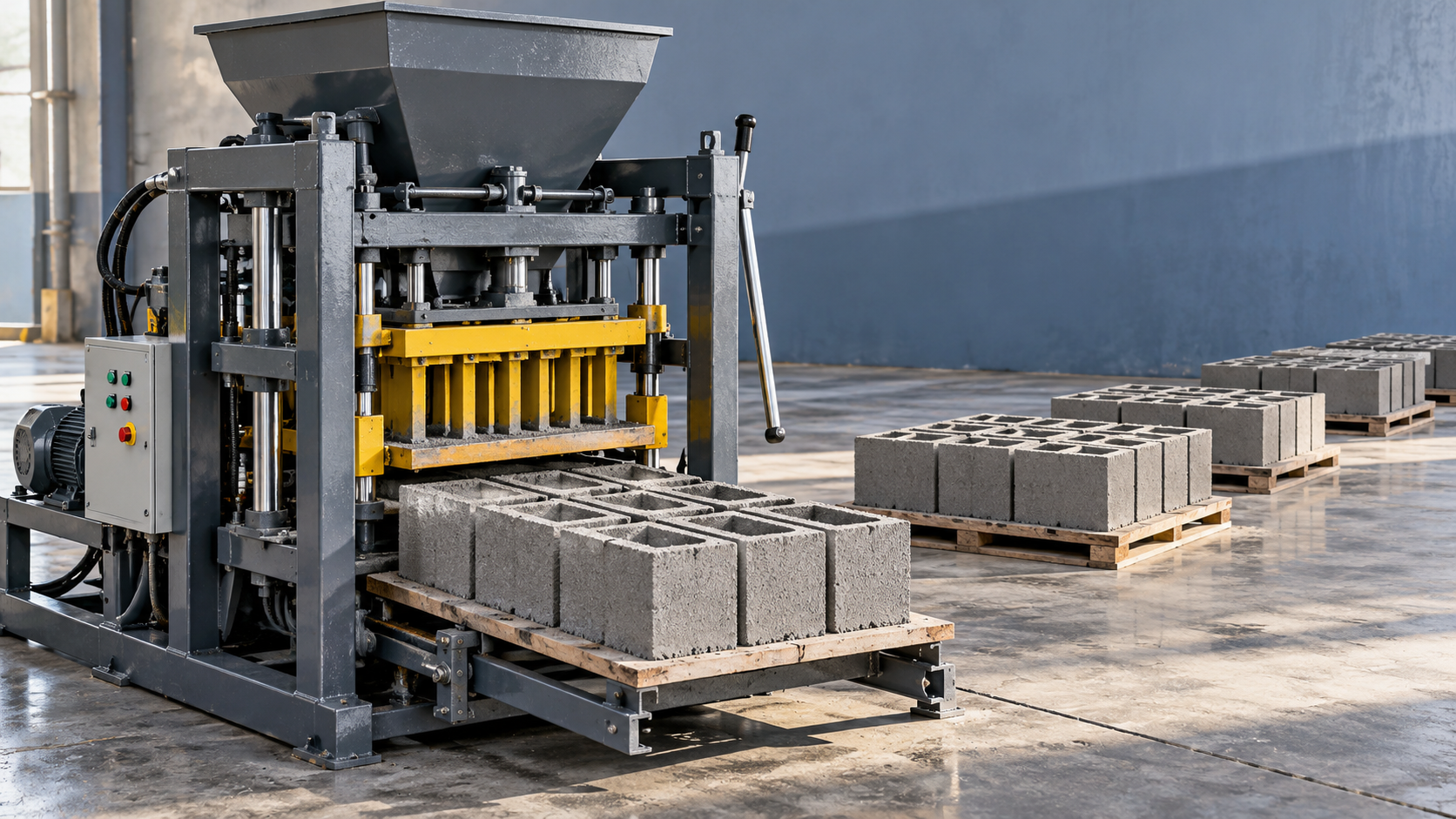
For many small factories, a compact semi-automatic concrete brick machine is a sensible starting point. It limits the initial investment while leaving room to learn the local market and refine production. A small automatic line becomes more attractive when orders are consistent, labor is difficult to organize, or manual handling is already restricting output.
The right choice depends on daily production targets, available space, labor costs, and budget—not simply the lowest purchase price. Drawing on the equipment-selection considerations relevant to Hongfa’s construction machinery business, established in 1990, this guide examines what a small factory should check before committing to a machine or production line.
Start with the products you can sell
“Concrete brick machine” can describe equipment producing solid bricks, hollow blocks, paving units, or other molded concrete products. These products have different dimensions, material requirements, handling needs, and acceptance criteria. A machine’s output figure is not meaningful until the exact product is specified.
Start with a short product list based on actual buyer requirements. Record dimensions, intended use, appearance expectations, and the applicable local product standard. Distinguish load-bearing masonry from non-load-bearing products; suitability must be established through the required testing, not inferred from the machine’s pressing force.
For a new operation, concentrating on a few products can simplify mold investment, raw-material control, and inventory. Broad product flexibility is useful, but buying several molds before demand is established can leave cash tied up in equipment that rarely runs.
Match automation to your factory’s real constraints
Automation labels are not standardized across suppliers. One “automatic” package may control only the forming cycle, while another includes batching, mixing, pallet feeding, conveying, and stacking. Compare the included operations rather than the label on the quotation.
Semi-automatic equipment is often a practical middle ground because it can mechanize forming without requiring a fully integrated plant. However, it is not automatically the lowest-cost choice. Where wages are high or manual transfer causes frequent stoppages, selective automation may be worth more than a cheaper machine.
Conversely, an automatic line does not eliminate labor. Materials still need receiving, finished products need moving, and someone must handle quality checks, cleaning, adjustments, and maintenance.
Treat advertised capacity as a starting point
A short molding cycle looks impressive in a brochure, but daily saleable output depends on the entire process. Mixing delays, inconsistent feeding, pallet shortages, cleaning, mold changes, and rejected products all affect production.
A useful planning relationship is: saleable output = units per cycle × completed cycles during actual operating time × accepted-product proportion.
Ask suppliers to state the assumptions behind their capacity figures: product dimensions, units per mold, material recipe, shift length, handling arrangement, and equipment included. Compare quotations using the same product and operating conditions. A capacity claim for a small solid brick cannot be directly compared with one for a larger hollow block.
The slowest process sets the practical limit. A fast press paired with an undersized mixer or slow pallet removal will spend time waiting. Before paying for more forming capacity, check whether better batching or product transfer would solve the actual bottleneck.
The machine footprint is not the factory footprint
Small factories can underestimate the area needed outside the forming station. Aggregate storage, cement handling, mixing, fresh-product movement, curing, finished-stock storage, and vehicle access all compete for space.
Request a layout showing the complete workflow, not just equipment dimensions. It should identify maintenance access, safe operator positions, forklift routes where applicable, and room for electrical and hydraulic servicing. Site foundations, drainage, dust control, and guarding also need project-specific assessment.
Curing deserves particular attention. Newly formed products need suitable handling and controlled curing conditions to develop their required properties. If curing and storage capacity cannot absorb the planned production, a higher-output machine simply moves the bottleneck downstream. Avoid treating a successful demolding demonstration as proof that the finished product meets requirements.
Check materials, molds, and utilities together
Your local materials affect the result
Aggregate grading, moisture, cement characteristics, and any proposed supplementary materials influence filling, compaction, surface finish, and strength development. A machine demonstrated with the supplier’s preferred mix may behave differently with your local materials.
Where practical, arrange trials using representative materials. Evaluate dimensional consistency, visible defects, handling behavior, and tested properties after appropriate curing. Surface appearance alone is not an adequate acceptance criterion. The required tests and sampling should follow the relevant product standard and project specification.
Mold flexibility has practical limits
Changing molds may allow one machine to produce several products, but compatibility needs confirmation. Check usable forming area, product-height range, pallet dimensions, feeding arrangement, and any additional equipment required. Decorative or face-mix products may need more than a different mold.
Also ask how the mold is lifted, aligned, secured, and adjusted. Changeover time, trial pieces, and cleaning affect whether short production runs are economical. Replacement-mold availability and wear-part costs matter just as much as the initial mold price.
Verify the complete electrical requirement
Do not size the electrical supply around the main machine motor alone. Include mixers, conveyors, hydraulic equipment, compressors where required, and other auxiliaries. Confirm voltage, frequency, phase, connected load, starting requirements, and protection arrangements with the supplier and a qualified local electrical professional.
Water availability, storage, and dosing also need checking. Where supply interruptions are common, discuss safe shutdown and restart procedures before installation rather than after production begins.
Compare the cost of running a factory, not buying a press
The machine price is only part of the investment. A workable budget includes supporting equipment, molds, pallets or production boards, freight, applicable import charges, foundations, electrical installation, commissioning, initial spares, and working capital.
Operating comparisons should account for materials, labor, energy, maintenance, rejected products, and handling damage. Use cost per saleable unit rather than cost per molded unit. A low purchase price loses its advantage if unreliable operation or inconsistent products consume the saving.
Keep expansion plans specific. Ask which parts of a proposed semi-automatic setup could remain in service if conveying or stacking is added later. “Upgradeable” should mean identified interfaces, compatible controls, and a workable layout—not simply that more equipment can be purchased.
Make supplier support part of the technical comparison
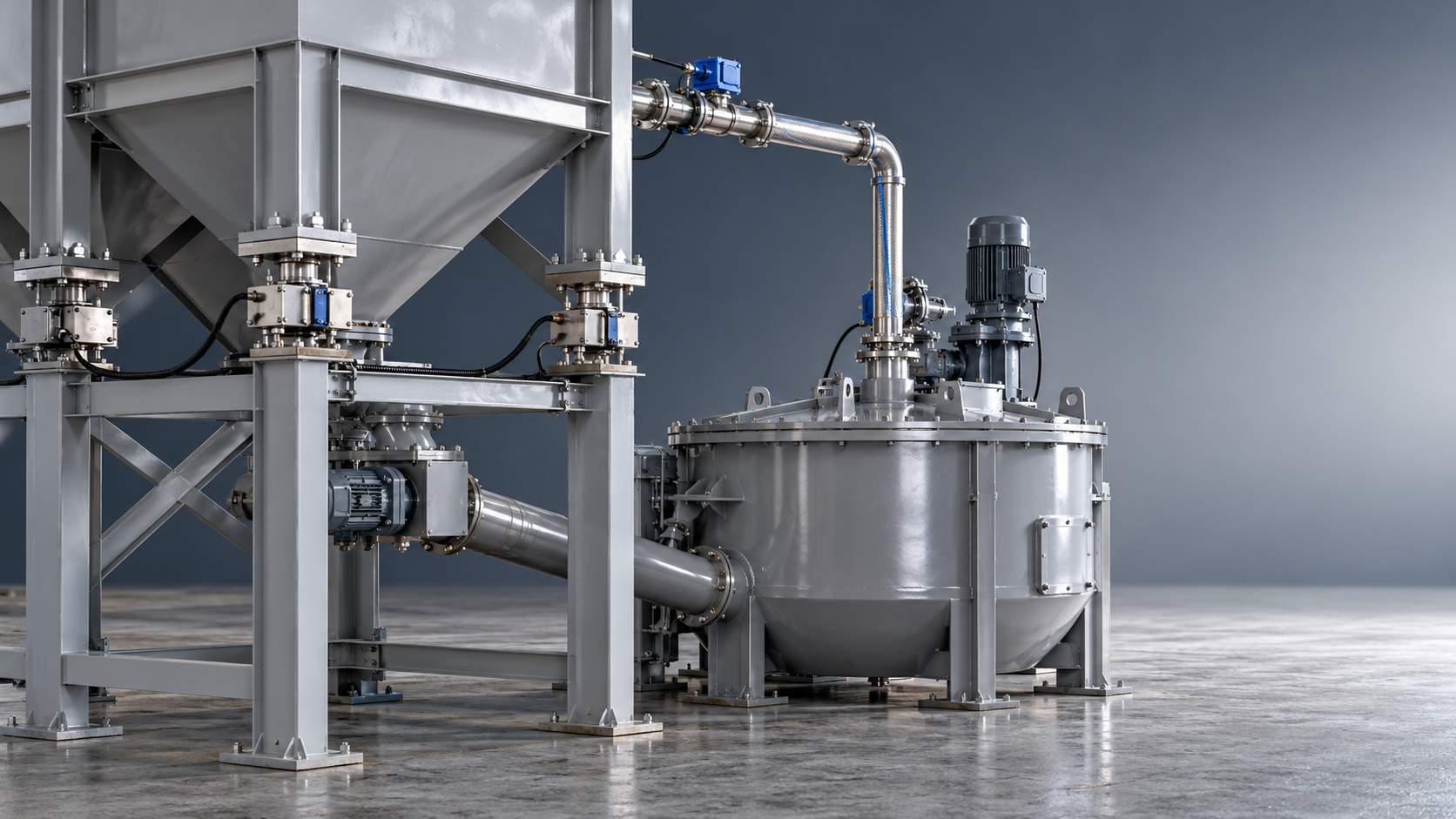
Shandong Hongfa Scientific Industrial & Trading Co., Ltd. has manufactured construction machinery since 1990, with a product portfolio that includes block machines, concrete batching plants, and aerated concrete block production lines. That breadth is relevant when a buyer needs to assess how batching, mixing, forming, and handling fit together.
Even so, company history should not replace project-level verification. Whether evaluating Hongfa or another supplier, request a configuration matched to your products, site, utilities, and staffing plan. Confirm installation responsibilities, training scope, documentation language, warranty exclusions, and how remote or on-site technical assistance is arranged.
- Obtain a priced list of recommended start-up spares and routine wear parts.
- Check availability and lead times for molds, hydraulic seals, sensors, and control components.
- Request electrical drawings, maintenance instructions, and troubleshooting documentation.
- Agree on acceptance conditions, including the test product, materials, supporting equipment, and inspection method.
Certifications should also be checked for their current validity and scope where relevant. A quality-management certificate does not, by itself, establish that a particular machine configuration meets local installation requirements or that its products comply with a masonry standard.
A practical choice for a small factory
Choose a compact semi-automatic concrete block machine when demand is still developing, labor is available, and manual handling can support the planned output. Favor a small automatic line when repeat orders justify it and the site, utilities, maintenance capability, and downstream handling are ready.
Before requesting a final proposal, prepare a brief covering product drawings, daily sales targets, raw materials, site dimensions, electrical supply, staffing, and budget. Ask suppliers to explain the limiting process in their proposed configuration. That answer is often more useful than the largest capacity number on the quotation.
Recommend
 Oct 26, 2026
Hollow Block Making Machine: Fixing Cracks During Demolding
Hollow block making machine cracks during demolding? Discover how to check mix moisture, compaction, mold friction, and pallet support to reduce waste and improve block quality.
 Oct 26, 2026
How Accurate Does an AAC Batching System Need to Be?
Choosing sand or fly ash? Discover how to specify AAC batching accuracy, control slurry solids and aluminum dosing, and verify performance for consistent block quality.
- Oct 26, 2026
Which Concrete Brick Machine Is Suitable for a Small Factory?
Which concrete brick machine is suitable for a small factory? Compare semi-automatic and automatic options, costs, space, and output to find the right fit for your budget.