

Automatic AAC Production Line for High-Volume Blocks: What Should Buyers Compare?
It often starts with a simple comparison request: two or three suppliers, similar brochures, similar capacity claims, and a deadline to move the project forward. On paper, every automatic AAC production line seems to promise stable output, lower labor input, and consistent block quality. The trouble begins when the comparison is reduced to one line on a spreadsheet: price per line.
Many people run into this problem when the production target is high-volume blocks rather than small-batch or trial output. At that scale, small differences in process control, curing coordination, cutting accuracy, maintenance access, and raw material adaptability stop being minor details. They become the reasons a plant feels easy to manage or constantly difficult. If you are trying to compare an automatic AAC production line for a serious purchasing decision, the safer approach is to look at how the line behaves in daily production, not just how it is described in a sales document.
Where comparisons usually go wrong
A common mistake is assuming “automatic” means the same thing across all suppliers. In reality, one line may automate batching, mold circulation, cutting, autoclave transfer, and central control in a coordinated way, while another automates only parts of the process and still depends heavily on manual judgment between stages. Both can be presented as automatic, but they do not create the same staffing pattern, operating rhythm, or risk profile.
Another issue is comparing nameplate capacity without asking under what conditions that capacity is realistic. AAC output depends on more than one machine. It depends on the whole chain: raw material preparation, slurry consistency, mold handling, pre-curing timing, cutting system stability, autoclave scheduling, and finished product discharge. A line can look strong in one segment and still become inefficient because one transfer section or one curing bottleneck slows the rest of the plant.
That is why buyers who focus only on the front-end quotation often end up spending more time later on coordination questions: Which part requires the most operator intervention? Which section is hardest to service? Which subsystem is sensitive to raw material fluctuation? Those questions should be part of the comparison before signing, not after installation.
The better way to compare an automatic AAC production line
When the target is high-volume blocks, it helps to compare suppliers around production continuity. Instead of asking only “How much can it produce?”, ask “How consistently can it keep producing when materials, shifts, and ambient conditions are not perfect?” That changes the evaluation completely.
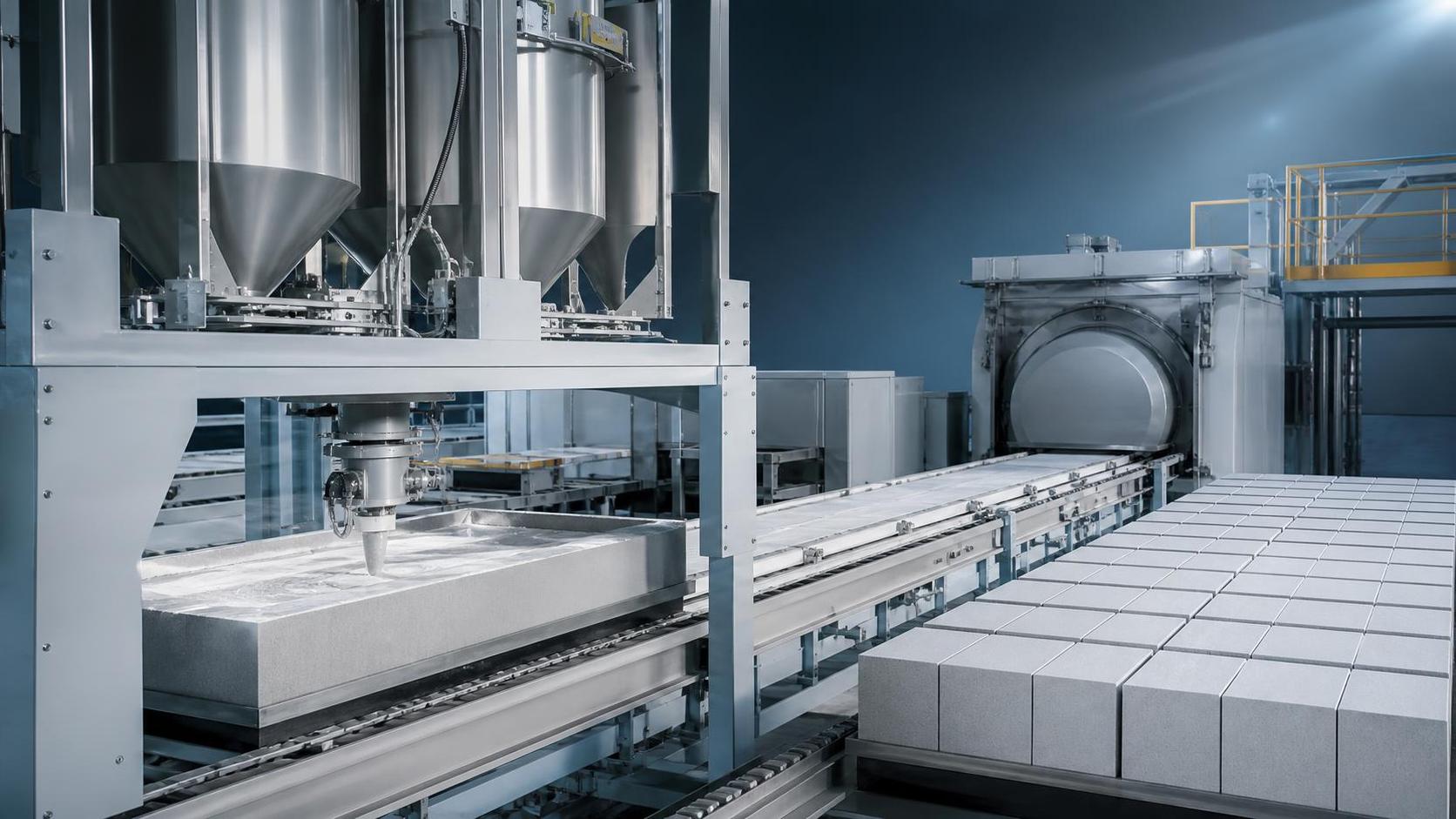
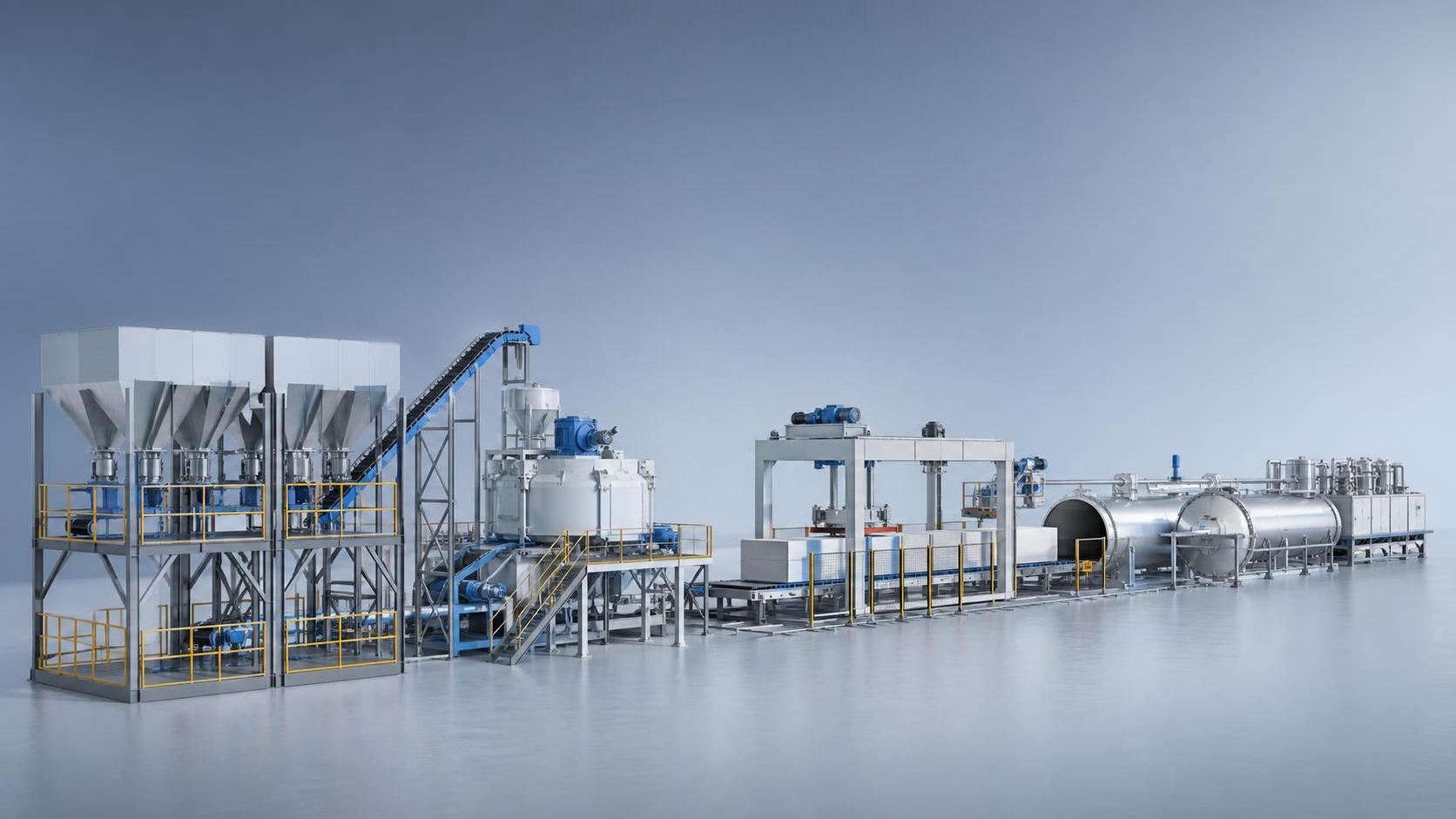
Start with process integration. AAC production is not a single machine purchase. It is a coordinated manufacturing process. If the batching system, pouring section, cutting unit, and autoclave handling are designed with different logic or disconnected controls, operators spend more time correcting mismatches. A stronger line is one where the transitions between stages are clearly engineered, not improvised during commissioning.
Then examine automation depth. Ask which actions are fully automated, which are semi-automatic, and which still rely on operator timing. This matters because a line may look efficient during a demonstration but become labor-dependent in routine operation. For high-volume blocks, labor variation can directly affect consistency.
Also compare tolerance control. In AAC, dimensional consistency is not just a quality issue for the finished block. It affects downstream stacking, packaging, transport, and end-use acceptance. The cutting section deserves extra attention because even a strong upstream process can lose value if the cutting result is unstable or difficult to calibrate.
Look at the line as a plant, not a list of machines
One practical way to avoid misleading comparisons is to map the full production path and ask where delays are most likely. For example:
- How are raw materials stored, conveyed, and metered?
- How much operator adjustment is needed during mixing and pouring?
- How repeatable is the pre-curing stage before cutting?
- What happens if one section stops unexpectedly?
- How easily can molds, trolleys, and blocks move without creating internal congestion?
These are not technical trivia. They reveal whether the line is designed for smooth industrial use or only for acceptable presentation. High-volume block production punishes weak coordination quickly.
Comparison points that affect long-term cost more than initial price
Initial investment matters, but long-term operating cost usually shapes the real decision. In an automatic AAC production line, there are several areas where buyers should compare carefully.
Energy use across the full process. It is easy to ask for a general statement on energy efficiency, but a better question is where the major energy loads sit and how the line manages them. Steam use, motor efficiency, insulation quality, material handling frequency, and control logic all influence operating cost. A lower purchase price can lose its advantage if the line consumes more utilities or creates more off-spec output.
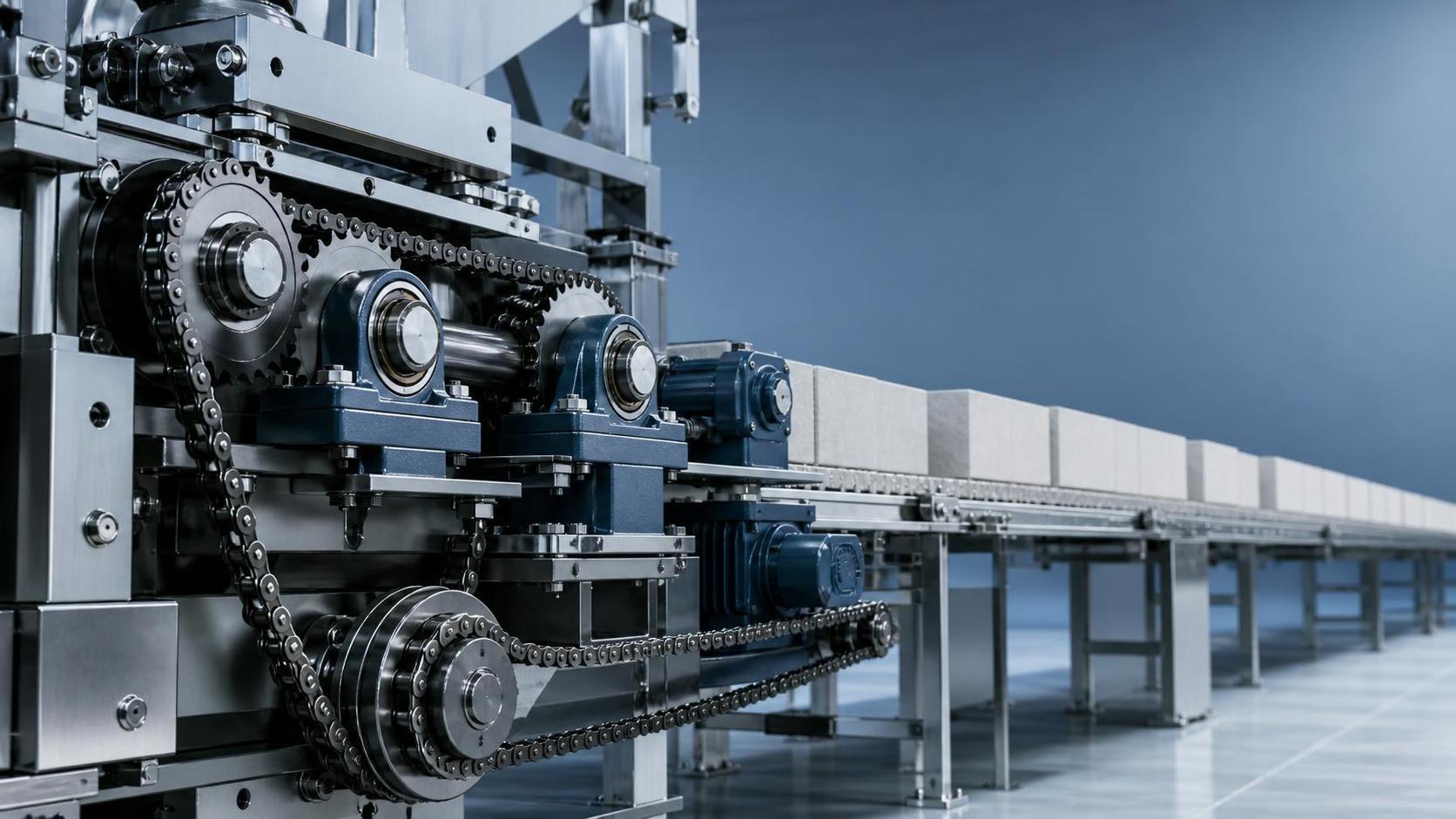
Wear parts and service intervals. Cutting components, conveyors, valves, pumps, and handling systems all have maintenance implications. Buyers should ask not only what parts wear, but how accessible they are, how often replacement is expected under normal conditions, and whether the design allows maintenance without prolonged stoppage.
Raw material adaptability. One of the more overlooked comparison points is how sensitive the line is to variation in raw materials. AAC production rarely happens under perfectly identical input conditions forever. If a line can tolerate normal variation in sand, fly ash, lime, cement, or aluminum paste handling without constant manual correction, that stability has real value.
Control system usability. A sophisticated interface is not automatically a practical one. Operators need clear alarms, understandable process displays, and sensible parameter management. If the control system is difficult to interpret, errors increase during shift changes, troubleshooting takes longer, and automation loses much of its advantage.
Questions worth asking during supplier evaluation
When discussions become too general, it helps to bring the conversation back to concrete operating questions.
Ask how the supplier defines achievable capacity in daily production rather than under ideal conditions. Ask where the main stoppage risks usually appear in the line layout. Ask how calibration is handled for cutting accuracy and whether that work requires highly specialized intervention. Ask what kind of training is normally needed for operators, maintenance staff, and shift supervisors to run the plant steadily.
It is also useful to ask how the line is supported after delivery. Technical support should not be viewed as a vague promise. Buyers should compare the practical side: documentation clarity, commissioning scope, response path for troubleshooting, and availability of replacement parts. The line may be automatic, but stable operation still depends on how quickly people can solve problems when settings drift or a component fails.
Some teams also find it helpful to compare the logic used in related plant equipment. Even if your current project is centered on AAC, seeing how a manufacturer handles process equipment in adjacent systems can reveal its engineering approach. For instance, if you are also reviewing upstream or supporting material preparation arrangements, a reference point such as HZS120 Concrete Mixing Plant (120 m³/h) can help you think in terms of batching stability, control coordination, and maintenance accessibility across the wider production environment. That does not replace AAC-specific evaluation, but it can sharpen the comparison.
When two lines look similar, compare the operating burden
There are many situations where two proposals appear close enough in specification that the decision feels arbitrary. This is usually the moment to compare operating burden rather than brochure features.
Operating burden shows up in small but expensive ways: how often operators have to intervene, how difficult it is to clean certain sections, whether sensor errors are easy to diagnose, whether maintenance requires awkward shutdown windows, and how much internal transport depends on precise manual timing. These details rarely dominate quotations, but they strongly influence plant discipline over time.
A good comparison exercise is to imagine the line after several months of routine use. Which design is easier to keep aligned? Which one allows faster fault isolation? Which one is more forgiving when shift skill levels are uneven? Which one makes preventive maintenance realistic instead of theoretical? For high-volume blocks, the better choice is often the line that reduces daily friction, even if its sales presentation is less dramatic.
Do not ignore layout and access
Plant layout is sometimes treated as a civil issue rather than an equipment issue, but in practice it affects line performance. Narrow maintenance access, inconvenient routing, and poorly thought-out transfer paths increase downtime and complicate housekeeping. During comparison, look at whether key sections can be inspected and serviced safely and without excessive disassembly.
This is especially relevant in automatic systems because the more linked the process becomes, the more a small interruption can ripple through the line. Good layout does not eliminate failures, but it reduces the time and effort needed to recover from them.
How to separate useful automation from decorative automation
Some automation features make a real difference; others look impressive but contribute little to stable production. The useful kind reduces variability, improves repeatability, shortens adjustment time, and gives operators clearer process visibility. Decorative automation tends to add screens, labels, or isolated functions without improving overall control.
To tell the difference, focus on whether the system helps maintain process consistency from batching to curing to final handling. Ask if process parameters are linked logically. Ask whether alarms point to causes or just indicate that something is wrong. Ask whether recipe and process management are practical for everyday use. A high-volume plant benefits from automation that simplifies decisions, not automation that creates more layers to interpret.
If you are reviewing multiple industrial equipment categories at the same time, the same principle applies elsewhere. Even in equipment outside the AAC line itself, such as HZS120 Concrete Mixing Plant (120 m³/h), the more valuable comparison is not how advanced the interface looks, but how reliably the control design supports repeatable production and manageable maintenance.
A more grounded decision path
If you are stuck between several options, try organizing the decision in this order: first, process fit for your intended block volume and product consistency; second, automation depth and how much manual intervention remains; third, maintenance practicality and parts support; fourth, energy and operating burden; only then compare the final price difference in context.
This order works because an automatic AAC production line is rarely a successful purchase just because it is cheaper or because it lists more features. The line has to fit the reality of continuous production. It has to be maintainable by the people who will run it. It has to tolerate ordinary variation without becoming fragile.
Buyers do not need to chase perfection, but they should avoid comparisons that flatten major operational differences into one number. The more closely you compare coordination, control logic, serviceability, and daily production stability, the easier it becomes to identify which line is likely to remain manageable over the long term. That is usually the difference between buying equipment and buying a production system that can actually support the volume you planned for.
Recommend
 Sep 23, 2026
How automatic AAC production line stability affects block quality
Automatic AAC production line stability directly shapes block strength, density, and dimensions. Learn how tighter process control reduces defects, waste, and safety risks.
- Sep 23, 2026
What to check before buying autoclaved aerated concrete equipment
Autoclaved aerated concrete equipment buying guide: learn what to check on line balance, raw materials, energy use, maintenance, and support before choosing a reliable AAC solution.
- Sep 24, 2026
How to reduce downtime caused by worn AAC plant machinery
AAC plant machinery downtime can be cut by spotting wear early, prioritizing critical parts, and using smarter maintenance strategies to keep production stable and costs under control.