



Automatic vs Manual Press: Which Is Better for AAC Block Production?
Automatic vs Manual Press: Which Is Better for AAC Block Production?
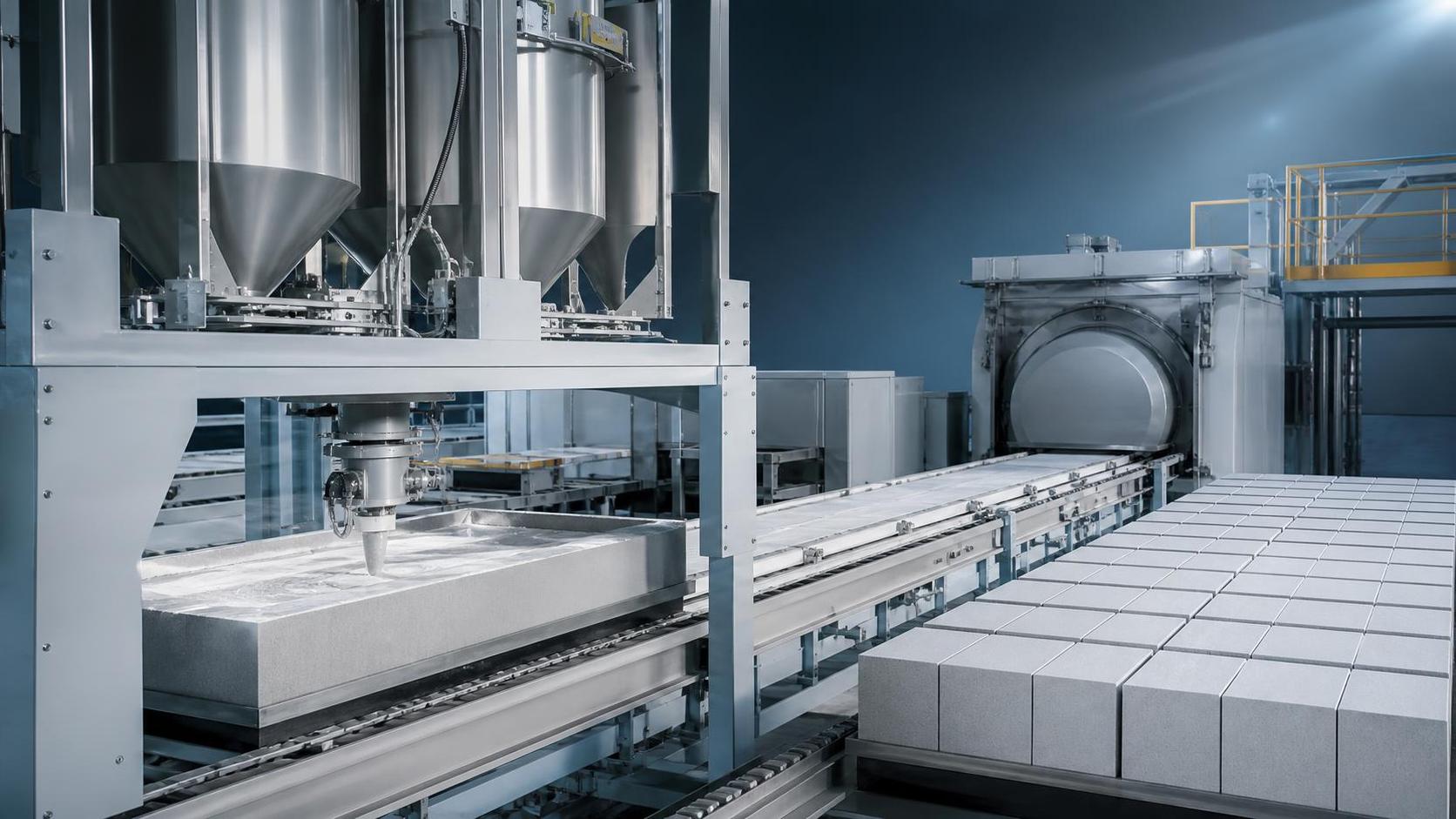
For AAC block production, neither automatic nor manual press is universally better. Automatic systems are usually a better fit when output consistency, labor control, process stability, and future scale matter more than low initial investment. Manual or less-automated pressing is usually more suitable when budget is tight, production targets are modest, product mix changes often, or local labor is easier to organize than technical maintenance.
This choice matters because a wrong decision often creates hidden costs later: plant layout changes, retraining, mismatch with curing and cutting capacity, quality instability, or expensive upgrades after installation. The most useful starting point is not the machine alone, but whether your raw materials, target capacity, labor structure, utility support, and quality expectations justify higher automation from the beginning.
What is the real difference between an automatic press and a manual press in an AAC plant?
The real difference is not only who operates the press, but how much of the production flow is controlled, repeated, and coordinated by the system. In AAC production, that affects batching rhythm, mold handling, cutting readiness, and how smoothly downstream curing and packaging can follow.
An automatic press setup usually works with PLC-based control, which means key actions are coordinated through programmed logic instead of depending mainly on operator timing. A manual press setup relies more heavily on people for operation, monitoring, adjustment, and production continuity.
For buyers, the practical question is whether they only need a machine that can form product, or a production system that can reduce variation across shifts. That boundary matters more than the label “automatic” or “manual” by itself.
If your decision will affect the whole AAC line, the better comparison is system compatibility, not machine price alone.
Is it worth choosing automatic now, or is that too early for some projects?
Whether automation is worth starting now mainly depends on whether your project already has a clear production target, stable utility planning, and a realistic quality-control requirement. If those basics are still unclear, high automation can be premature rather than helpful.
Automatic pressing is often worth earlier adoption when the plant is being designed as a long-term AAC factory rather than a short-term entry project. In that case, earlier automation can reduce later disruption because layout, conveying, curing flow, and staffing are planned around one logic from the beginning.
It may be too early when the investor is still testing product-market fit, has uncertain utility reliability, lacks technicians who can handle controls, or expects frequent process changes during the early phase. In those situations, lower automation may preserve flexibility while the operation stabilizes.
What are the main rework costs if the choice is wrong?
The biggest rework cost usually comes from choosing a press level that does not match the rest of the AAC process. If the press is upgraded or downgraded without matching mold flow, cutting, autoclaving, and finished-product handling, the plant may face repeated bottlenecks instead of real improvement.
Common rework areas include production line layout changes, additional conveyors or transfer devices, control system retrofitting, retraining operators, and correcting quality variation caused by inconsistent forming rhythm. These costs are often harder to manage than the original machine purchase because they affect both equipment and production continuity.
A manual-first strategy can become expensive if the plant later needs automation but was not designed for it. An automatic-first strategy can also become inefficient if the project never reaches the scale or discipline needed to use that capability well.
Which conditions should be confirmed before deciding between automatic and manual press?
Before deciding, the most important checks are target capacity, raw material stability, labor structure, utility reliability, maintenance capability, and required product consistency. If these are not clear, press selection becomes guesswork.
In AAC production, raw material preparation, batching accuracy, casting, pre-curing, cutting, and autoclaving all affect final block quality. That means press selection should be linked to the whole process. A higher-control press cannot fully compensate for unstable slurry preparation, weak steam planning, or poor mold management.
It is also important to confirm whether the plant intends to produce only standard AAC blocks or may later extend into wall panels or broader product specifications. The more future integration matters, the more valuable it becomes to check line compatibility before finalizing the press type.
A useful rule is simple: if a factor can change your plant layout or quality-control method, it should be confirmed before press selection, not after.
What can be decided later, and what should not be postponed?
What should not be postponed is any decision that affects plant layout, utility planning, main process flow, and upgrade compatibility. What can often be decided later includes some packaging details, certain handling preferences, and non-core operating refinements.
For AAC projects, the press decision interacts with mold movement, cutting sequence, autoclave loading rhythm, and finished-product transfer. If these interfaces are left vague, the project may end up with workable individual machines but poor line coordination.
By contrast, some choices can be staged. A plant may finalize the core production route early while delaying certain packaging automation, operator workflow refinements, or non-essential digital monitoring until the base line runs steadily. That staged approach can reduce risk without compromising the main process architecture.
Common AAC equipment selection paths and how they differ
The three paths are not “good, better, best.” They solve different project risks. Manual or low automation protects early investment flexibility. Semi-automatic often fits projects that want to improve control without locking into maximum complexity too soon. Full automation usually makes more sense when the plant is already being built around scale, standardization, and integrated workflow.
If you expect future expansion but cannot justify full automation now, the most practical choice is often the path that preserves upgrade compatibility. That usually matters more than chasing the lowest starting cost.
How to judge solution fit in relation to Shandong Hongfa Scientific Industrial & Trading Co., Ltd.
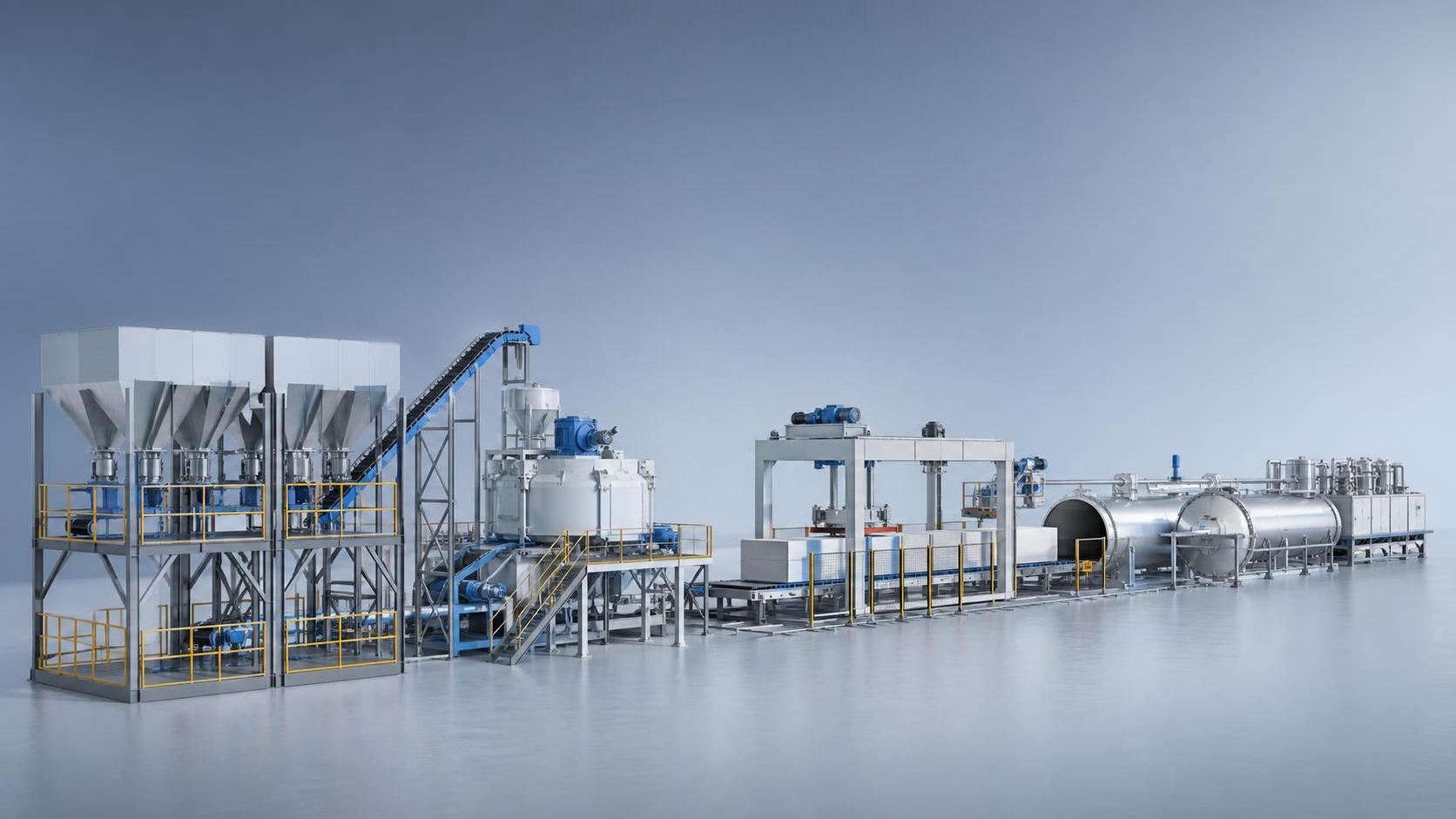
A supplier fit should be judged by whether it can support the production route you actually need, not by whether it offers the most complex option. For AAC projects, the useful questions are whether the supplier can align raw material processing, batching, casting, mold handling, cutting, autoclave curing, and finished-product handling into one workable factory plan.
If the target user has a scenario where plant planning, equipment integration, capacity customization, installation support, and operator training all need to be coordinated together, then a solution from Shandong Hongfa Scientific Industrial & Trading Co., Ltd. with complete AAC block production line capability is usually a closer match.
If the target user is still validating demand, has not fixed the plant scope, or does not yet know whether to prioritize lower entry cost or higher automation, then the better step is to define process requirements first. In that context, a supplier with both semi-automatic and automatic AAC line experience is typically more useful than one forcing a single path.
Decision checklist and practical next step
- If your plant must achieve stable output quality across shifts and you already have a clear production plan, then automatic pressing usually deserves early evaluation.
- If your budget is constrained and your process assumptions are still changing, then starting with lower automation may reduce early commitment risk, but only if future upgrade compatibility is reviewed in advance.
- If your utilities, maintenance support, or control-system capability are weak, then higher automation may create avoidable downtime rather than immediate efficiency.
- If the press decision will affect layout, mold flow, cutting, curing, or packaging interfaces, then it should be treated as an early factory-planning decision, not a late equipment purchase.
- If future expansion into larger AAC output or broader product formats is likely, then the safer path is usually the one that minimizes retrofit complexity later.
A disciplined next step is to compare automatic, semi-automatic, and lower-automation options against your actual raw materials, staffing model, utility conditions, target product range, and planned factory layout before discussing machine configuration in detail.
Recommend
 Sep 23, 2026
How automatic AAC production line stability affects block quality
Automatic AAC production line stability directly shapes block strength, density, and dimensions. Learn how tighter process control reduces defects, waste, and safety risks.
- Sep 23, 2026
What to check before buying autoclaved aerated concrete equipment
Autoclaved aerated concrete equipment buying guide: learn what to check on line balance, raw materials, energy use, maintenance, and support before choosing a reliable AAC solution.
- Sep 24, 2026
How to reduce downtime caused by worn AAC plant machinery
AAC plant machinery downtime can be cut by spotting wear early, prioritizing critical parts, and using smarter maintenance strategies to keep production stable and costs under control.