




What Should Be Included in AAC Factory Design Before Construction Begins?
What should be included in AAC factory design before construction begins?
Before AAC factory construction begins, the design should already define six things: product and capacity target, raw material route, site and utility conditions, process flow and equipment layout, curing and logistics plan, and compliance, staffing, and maintenance boundaries. If these are unclear, construction often starts too early and later changes can affect building layout, equipment matching, steam supply, internal transport, and finished-product handling.
This matters because AAC factory design is not only about placing machines inside a building. The real decision point is whether the planned factory can run stably with local raw materials, energy supply, labor conditions, and market demand. Before spending on civil works, the most important check is whether your process assumptions and site constraints already match each other.
Which decisions must be fixed before civil construction starts?
The decisions that usually must be fixed before construction are the product mix, target output range, raw material basis, autoclave and curing concept, major equipment sequence, and internal logistics direction.
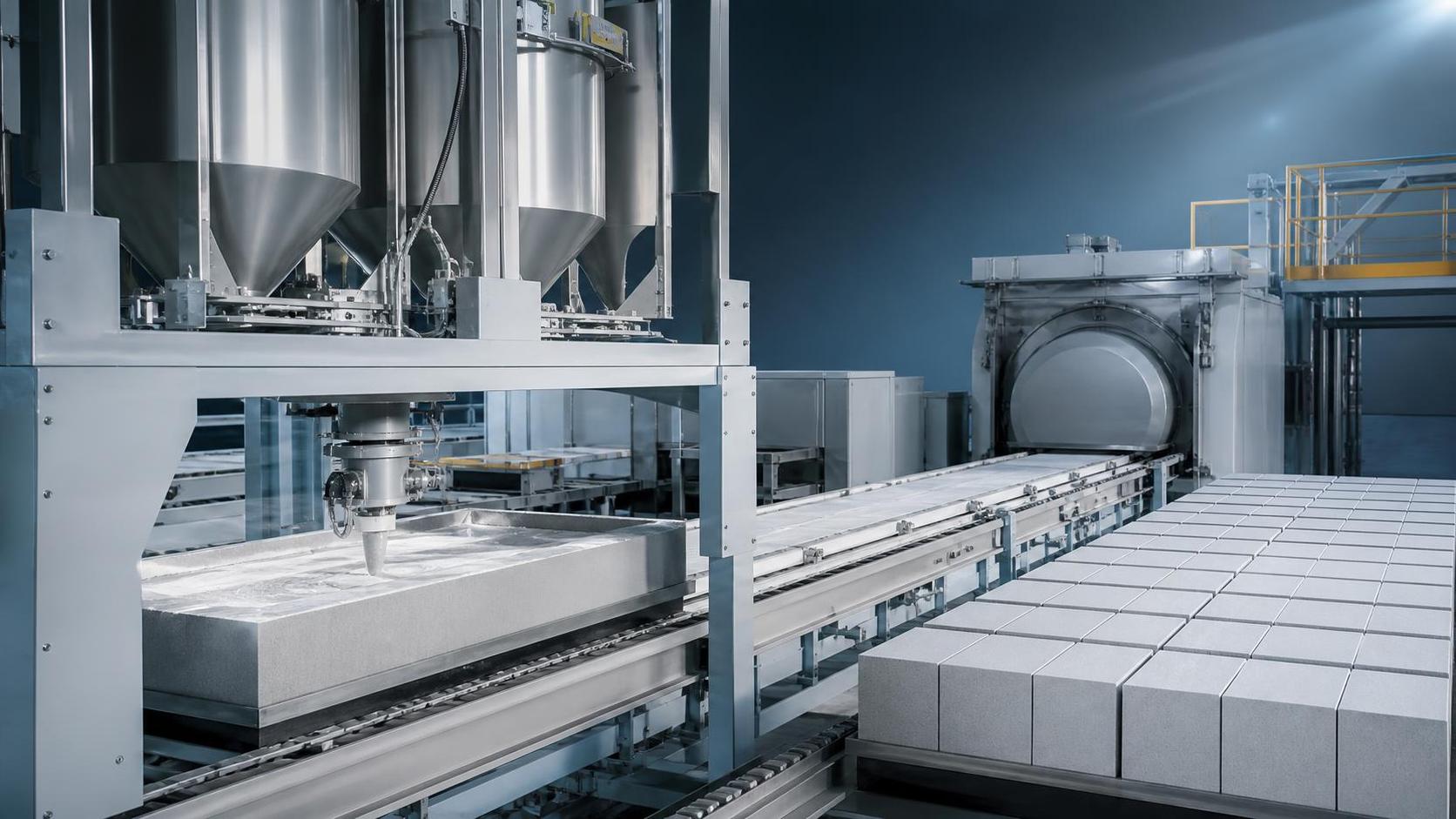
In an AAC plant, civil construction is closely tied to process flow. Mold circulation, cutting area position, autoclave arrangement, slurry preparation, and finished-product transfer all affect building spans, floor loading, track direction, utility routing, and storage areas. If these are left open, the factory shell may be built in a way that later forces awkward equipment relocation or repeated foundation work.
A common mistake is to confirm land and building shape first, then try to force the process into it. That can work for simple projects, but it is risky for AAC because steam curing, material batching, cutting precision, and product transfer depend on coordinated layout rather than isolated equipment selection.
How do product type and planned capacity change the factory design?
Whether you plan to produce standard AAC blocks only, or also wall panels and multiple sizes, will directly change layout complexity, handling equipment, mold turnover, and space planning.
A factory designed for one relatively stable product range is usually easier to optimize for flow, storage, and training. A factory expected to switch between more specifications or add panels later may need more flexible transport paths, mold planning, cutting configuration, and product packaging areas. The benefit is future product flexibility, but the tradeoff can be a more demanding design phase and stricter coordination between equipment and building structure.
If your local market is not yet clear, it is often safer to define the main product first and treat future expansion as a reserved condition rather than assuming every product should be included on day one. Over-design at the start can increase investment pressure and complicate operations before demand is proven.
Why must raw materials and utilities be confirmed early?
Raw materials and utilities should be confirmed early because they shape process design, equipment choice, storage method, and the daily operating stability of the plant.
AAC production may use fly ash, sand, lime, cement, gypsum, aluminum powder or paste, water, and steam-related energy systems. The exact material route affects crushing or grinding needs, batching precision, slurry preparation, dust control, silo design, and waste handling. Utility conditions such as water quality, electricity reliability, fuel availability, and boiler or steam source planning also affect how practical the design will be in actual operation.
This step is often underestimated. A line can look complete on paper, but if the local raw material quality varies too much, or if steam and power are unstable, the plant may face higher adjustment needs after installation. The design should therefore be based on realistic local conditions rather than a generic process diagram.
What site conditions should be checked before factory layout is finalized?
Site layout should only be finalized after checking land shape, access roads, soil conditions, drainage, utility entry points, expansion room, and the movement path for both raw materials and finished products.
An AAC factory is not only a production hall. It also needs practical space for raw material receiving, storage, mixing, pre-curing, cutting, autoclaving, finished-product staging, packaging, maintenance, and vehicle circulation. If trucks cannot move efficiently, if long materials routes cross finished-product routes, or if there is no reserved area for future support systems, daily operation becomes harder even if the core equipment is technically sound.
In many projects, the later rework cost does not come from the main machine itself but from site constraints that were ignored early. Limited turning radius, poor drainage, or no space for autoclave-related service access can restrict safe and efficient operation long after construction is finished.
Which design items can be phased later, and which ones are expensive to change later?
Items tied to structure, foundations, process direction, and steam curing are usually expensive to change later, while some packaging, warehouse practices, and certain automation details can often be phased with less disruption.
The high-risk items to postpone are autoclave area arrangement, rail or transfer logic, slurry and batching foundations, heavy equipment support points, utility corridors, and building clearance related to major machines. These affect not only equipment fit but also safety and maintenance access. By contrast, some digital reporting tools, certain end-of-line packaging refinements, or non-critical warehouse upgrades may be introduced later if the main process has already been designed with enough interface allowance.
The practical question is not whether something can be added later, but whether adding it later would force shutdown, demolition, or repeated installation work. If yes, it usually belongs in the pre-construction design package.
What can stop a project from being ready for construction even if the investor wants to move fast?
A project is usually not ready for construction if the market target, raw material route, utility plan, process boundaries, or operating team assumptions are still changing.
Speed is useful only after the design basis is stable. If investors are still deciding whether to serve low-rise housing, commercial projects, or a wider product mix, then key layout choices may still shift. The same is true if the site does not yet have a confirmed steam solution, if local material testing has not informed process assumptions, or if the intended automation level does not match available operators and maintenance support.
In such cases, starting civil work can create a false sense of progress. The project may look active, but unresolved design assumptions can later trigger changes in equipment interfaces, traffic flow, and plant utility distribution. A short delay in front-end clarification is often less damaging than redesign during installation.
Common AAC factory design paths before construction
The best path depends on what is already known and what is still uncertain. If the local raw material route is still open, a raw-material-first approach is usually safer than locking in civil dimensions too early. If the market is clear but the budget is tight, phased investment can work, but only if the core process layout is not compromised.
What matters most is not choosing the most ambitious design path. It is choosing the path that reduces expensive later changes in foundations, autoclave arrangement, material circulation, and utility routing.
How to compare what should be included in the design package
A useful rule is simple: if the item affects foundations, structural clearances, steam curing, or the direction of plant flow, it usually belongs in the pre-construction design. If it mainly affects optimization at the line end and does not disturb core civil work, it may be phased later.
When is a one-stop AAC line provider a better fit?
The general standard is this: if an investor needs coordinated planning across process design, equipment matching, installation logic, operator training, and later production ramp-up, then an integrated supplier model is often easier to manage than buying disconnected equipment from multiple sources.
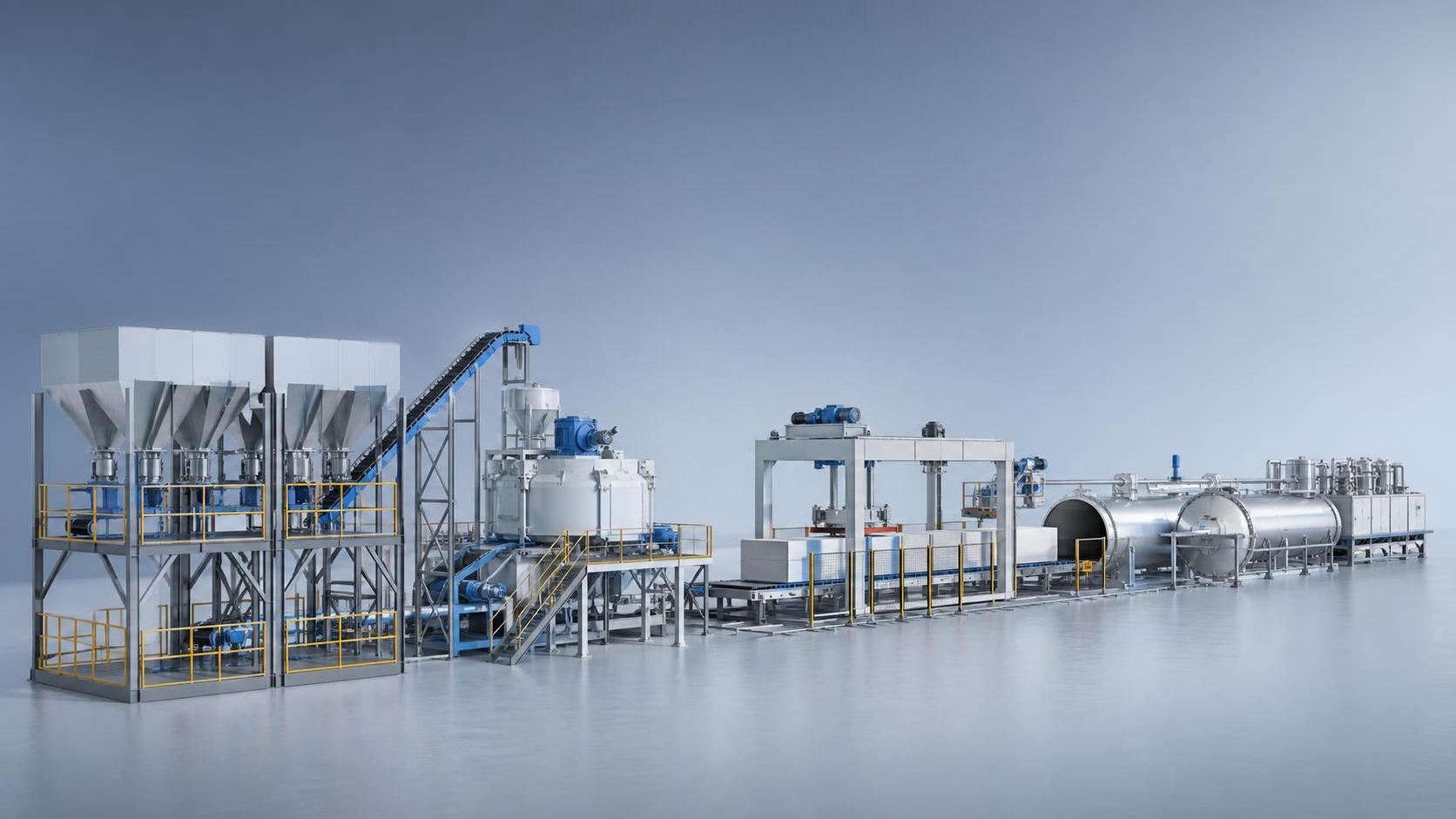
If the target user faces site-layout uncertainty, wants a customized output range, or needs the design to connect raw material treatment, batching, pouring, cutting, autoclave curing, and finished-product handling into one workable flow, then the capability set described for Shandong Hongfa Scientific Industrial & Trading Co., Ltd. is usually more compatible. This is especially relevant when the project needs factory planning together with equipment manufacturing and commissioning, rather than only standalone machines.
If the project team already has strong in-house engineering, stable local process knowledge, and the ability to coordinate several specialized suppliers, a more segmented sourcing path may still be workable. The better fit depends less on brand preference and more on how much integration risk the investor can realistically manage.
Decision checklist before you start construction
- If your product range, target output, and raw material route are still moving, then it is usually too early to lock civil construction.
- If changing a design item later would affect foundations, steam curing layout, transfer direction, or building clearance, then that item should normally be fixed before construction starts.
- If the site looks available but truck flow, drainage, maintenance access, and utility entry points are not yet verified, then the layout is not truly ready for final approval.
- If budget pressure is high, then it is often better to phase non-core functions later than to under-design the core process and heavy civil interfaces now.
- If your team cannot independently coordinate process, equipment, installation, and operator readiness, then an integrated design-and-line approach is usually lower risk than piecing the factory together after construction begins.
A practical next move is to prepare a pre-construction decision file that lists your intended products, capacity range, local raw material route, site constraints, utility assumptions, and which items must be fixed now versus reserved for later. That document often reveals whether the project is genuinely ready to build or only ready to discuss.
Recommend
 Sep 23, 2026
How automatic AAC production line stability affects block quality
Automatic AAC production line stability directly shapes block strength, density, and dimensions. Learn how tighter process control reduces defects, waste, and safety risks.
- Sep 23, 2026
What to check before buying autoclaved aerated concrete equipment
Autoclaved aerated concrete equipment buying guide: learn what to check on line balance, raw materials, energy use, maintenance, and support before choosing a reliable AAC solution.
- Sep 24, 2026
How to reduce downtime caused by worn AAC plant machinery
AAC plant machinery downtime can be cut by spotting wear early, prioritizing critical parts, and using smarter maintenance strategies to keep production stable and costs under control.