



Common Failures in Autoclaved Aerated Concrete Equipment and How to Reduce Downtime
Common Failures in Autoclaved Aerated Concrete Equipment and How to Reduce Downtime
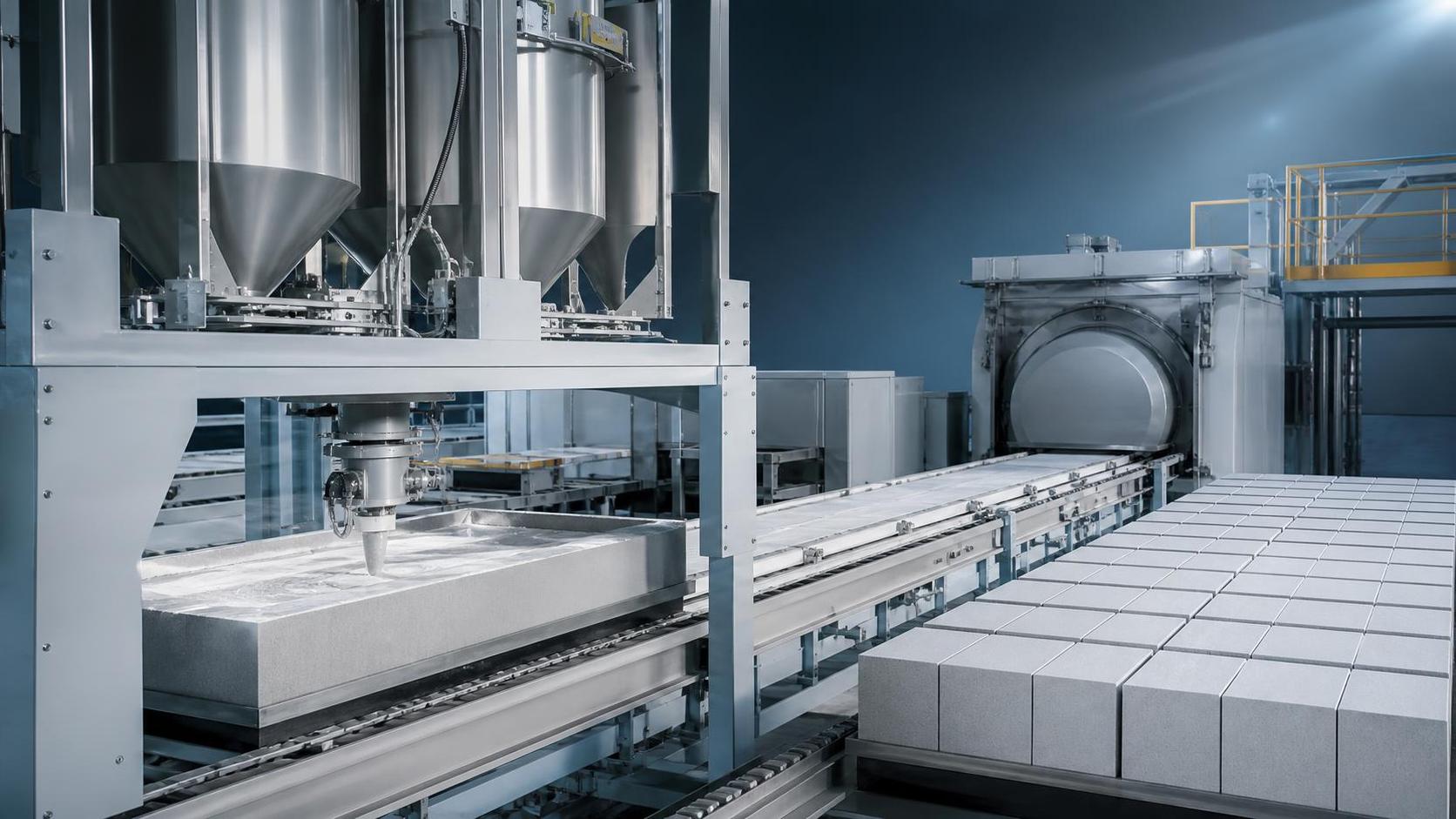
In an AAC plant, downtime rarely starts with a dramatic breakdown. More often, it begins with a small drift: a mixer that takes a little longer to discharge, a cutting line that leaves slightly rough edges, a conveyor that sounds “different” after a shift change. By the time the line stops, the real problem has usually been building for days. For after-sales maintenance teams working on autoclaved aerated concrete equipment, the practical goal is not just to repair fast, but to spot the failure mode early enough that production never gets derailed in the first place.
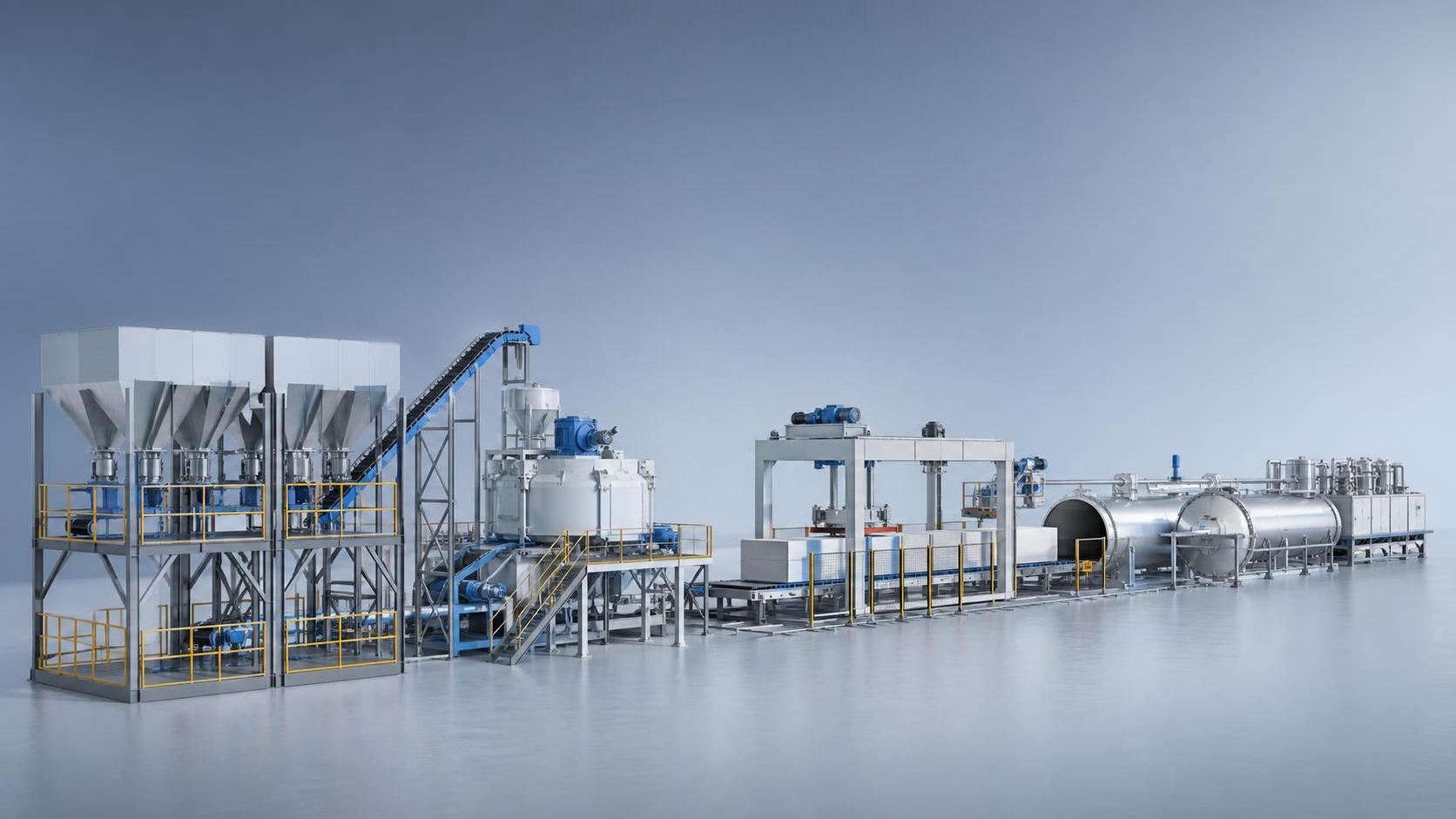
That is especially true in plants running multiple processes in sequence—mixing, pre-curing, cutting, tilting, steaming, conveying, and autoclaving. A weak point in one section can create a bottleneck across the whole line. The best maintenance teams tend to think in terms of process flow, not isolated parts.
Where most stoppages really begin
The mixing system is a common place to start looking. In AAC production, consistency matters more than speed. If slurry density fluctuates, or if batching accuracy drifts, downstream problems usually show up later in cutting quality, block strength, or autoclave performance. Maintenance crews often focus on the mixer itself, but the real issue may be wear in weighing components, unstable water delivery, or residue buildup that changes the effective batch ratio. When the material looks “slightly off,” it is worth checking the complete dosing chain before replacing major parts.
Cutting equipment is another frequent source of unplanned stoppage. Wire breakage, poor tension control, guide wear, and frame misalignment can all produce the same symptom: poor surface quality or dimensional error. The temptation is to blame wire quality alone, but in practice the wire is often reacting to a deeper problem—unstable slab firmness, vibration in the table, or a cutting cycle that no longer matches the actual curing condition. If the cut face starts tearing instead of slicing cleanly, that is usually a signal to inspect the whole mechanical setup, not just the wire package.
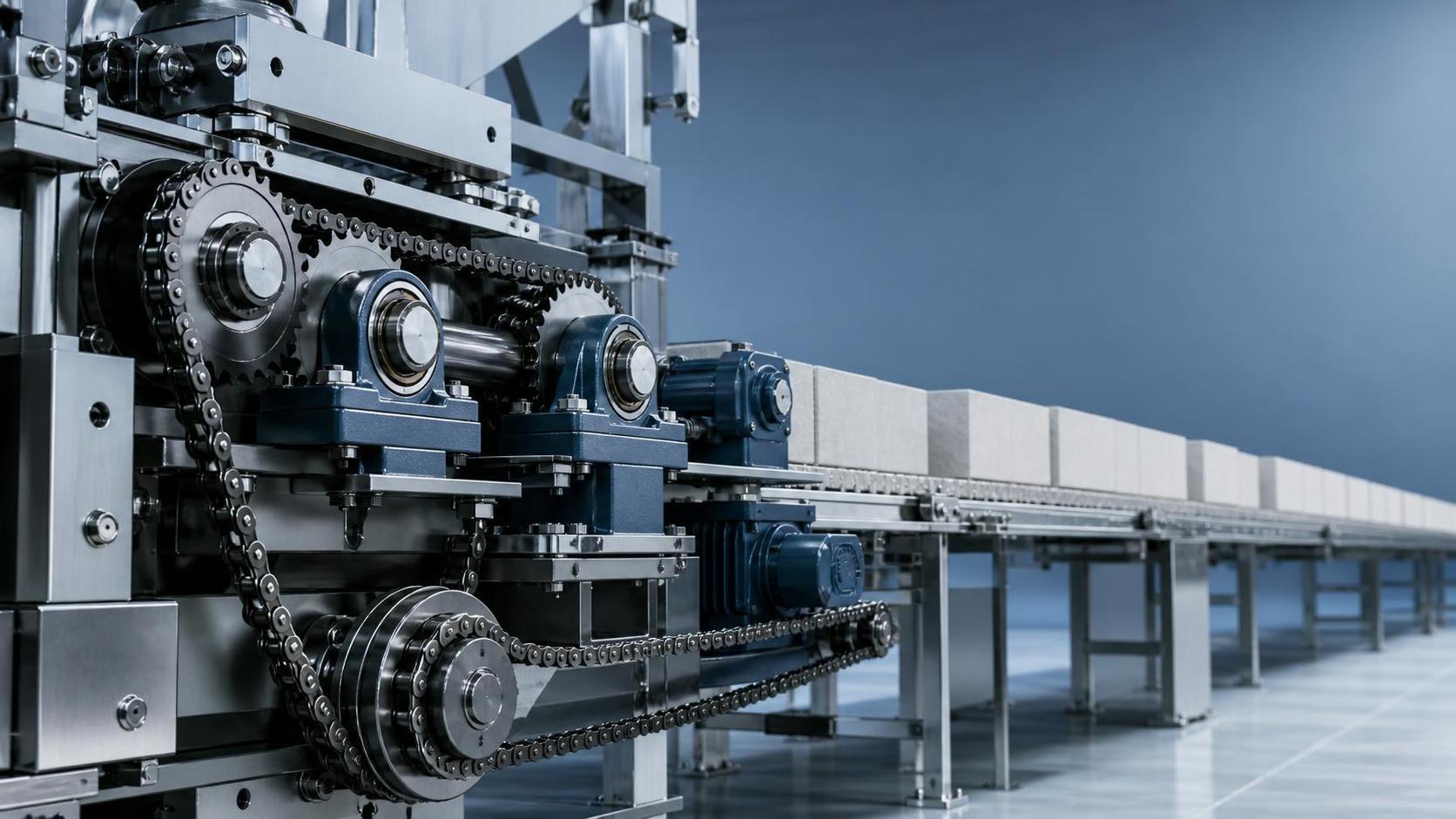
Conveying systems tend to fail in a quieter way. They may not stop the line immediately, but they create delays, jam risk, and safety concerns. Rollers, chains, bearings, and drive units wear under repetitive load, and dust contamination makes the problem worse. In many plants, these failures are not due to a single bad component but to poor housekeeping and lubrication discipline. That sounds basic, but on a busy site it is often the difference between predictable operation and repeated midnight calls.
Autoclaving itself is less forgiving. Steam leakage, valve sticking, pressure instability, and seal degradation can force a shutdown quickly because the system depends on controlled cycles. If pressure rise or temperature holding becomes irregular, the immediate temptation is to adjust the control settings. Sometimes that helps. Sometimes it only hides a mechanical issue such as fouled valves, worn seals, or poor instrument response. Maintenance teams should treat repeated cycle instability as a diagnostic clue, not just a control-room nuisance.
The failures that cost the most are often the ones people normalize
A plant can live with small losses for a long time before they become visible in the output report. A cutter that needs “a little extra adjustment” every week, a conveyor drive that runs warmer than the others, or a valve that sticks only when the line is under pressure—these are exactly the conditions that tend to precede a larger stop. The hardest part is that experienced operators often adapt to them. They slow a cycle, retighten a connection, or change a sequence and keep moving. That keeps production running, but it can also postpone the real fix.
This is where good after-sales support matters. Shandong Hongfa Scientific Industrial & Trading Co., Ltd., which has spent decades in construction machinery and building materials equipment, has seen the same pattern across different plants: the root cause is rarely one dramatic fault. It is more often a chain of small mechanical, electrical, and process deviations that were not tracked closely enough. That is why point-based quality tracking and structured fault history are useful in the field. They help teams move from “repairing what failed” to “identifying what keeps failing.”
What reduces downtime in practice
The most effective maintenance plans are usually unglamorous. They rely on early inspection, clean lubrication records, stable spare-part inventory, and a technician who knows which symptoms matter. On AAC lines, that means checking critical points before they become urgent: mixer blades and seals, dosing accuracy, cutting wire tension, guide alignment, conveyor drive temperature, autoclave door sealing, and instrument calibration.
It also helps to separate symptoms from causes. If output drops, ask whether the limitation is mechanical wear, inconsistent material preparation, or a control issue. If the cut quality worsens, check slab condition and frame stability before assuming the wire is defective. If the autoclave cycle becomes irregular, confirm steam supply and valve response before changing the recipe. This kind of discipline saves time because it narrows the search fast.
A spare-part strategy matters more than many plants expect. Keeping every part on the shelf is unrealistic, and overstocking ties up capital. But a plant should know which items actually stop production when they fail. For most AAC operations, those are not the cheapest parts; they are the ones with long lead times or those that need shutdown access to replace. That list should be reviewed against real failure history, not copied from a generic checklist.
Training is another lever, especially for after-sales teams that move between sites. A technician who understands process behavior will troubleshoot differently from one who only follows a repair manual. For example, if a customer is running a line that includes a QT12-15F fly ash bricks making machine automatic block making machine alongside AAC-related equipment, the team still needs to distinguish between issues caused by block-making pressure systems and those caused by AAC curing or cutting conditions. Similar equipment families can share maintenance habits, but they do not fail in exactly the same way. Mixing them up leads to wasted hours.
A practical maintenance rhythm beats emergency repairs
For plants that want stable output, the best rhythm is usually simple: inspect daily, trend weekly, and audit monthly. Daily checks catch noise, temperature rise, leakage, and abnormal vibration. Weekly reviews identify repeat faults and parts that are wearing faster than expected. Monthly audits are where you compare actual operation against maintenance records and see whether the same issue keeps returning under a different name.
That approach is particularly useful in autoclaved aerated concrete equipment because the line is process-sensitive. A small problem left unresolved in one section often shows up elsewhere as a quality complaint, not a machine complaint. By the time the customer reports inconsistent product size or slower throughput, the original fault may already have moved through two or three stages of the line.
For that reason, downtime reduction is less about heroic repairs and more about building a habit of disciplined observation. The teams that do this well tend to share one trait: they don’t wait for a machine to fail before taking it seriously. They listen for changes, record them, and act while the line is still running. In AAC production, that usually makes the difference between a short service stop and a full-day loss.
If a plant keeps seeing the same stoppage at the same station, the next step should not be another quick fix. It should be a structured review of the failure path, the operating condition, and the replacement history. That is where downtime starts to come down for real.
Recommend
 Sep 23, 2026
How automatic AAC production line stability affects block quality
Automatic AAC production line stability directly shapes block strength, density, and dimensions. Learn how tighter process control reduces defects, waste, and safety risks.
- Sep 23, 2026
What to check before buying autoclaved aerated concrete equipment
Autoclaved aerated concrete equipment buying guide: learn what to check on line balance, raw materials, energy use, maintenance, and support before choosing a reliable AAC solution.
- Sep 24, 2026
How to reduce downtime caused by worn AAC plant machinery
AAC plant machinery downtime can be cut by spotting wear early, prioritizing critical parts, and using smarter maintenance strategies to keep production stable and costs under control.