



How Much Does an AAC Block Line Cost per Cubic Meter?
Understanding the aerated concrete block production line investment cost per cubic meter is essential for manufacturers planning a competitive AAC project. From raw material preparation and automation level to plant capacity and energy efficiency, several factors directly affect overall cost and long-term returns. This article explains the key cost drivers and how experienced suppliers like Hongfa help optimize investment value.
What Buyers Really Want to Know About AAC Block Line Cost
When buyers search for the aerated concrete block production line investment cost per cubic meter, they usually do not want a simple machine price list.
They want to know how much capital is needed to produce one cubic meter of AAC blocks profitably under real factory conditions.
For most investors, the central question is not only equipment price, but also total project economics, production efficiency, and long-term operating stability.
They need to compare different plant capacities, automation levels, and supplier capabilities before making a capital-intensive decision with long payback implications.
That is why the best answer combines equipment scope, plant design, output assumptions, and operating cost structure into one practical framework.
How Much Does an AAC Block Line Cost per Cubic Meter in Practice?
In practice, there is no universal fixed number for AAC block line cost per cubic meter because project conditions differ significantly from one market to another.
A more useful way to evaluate cost is to separate initial investment per annual cubic meter capacity from actual manufacturing cost per produced cubic meter.
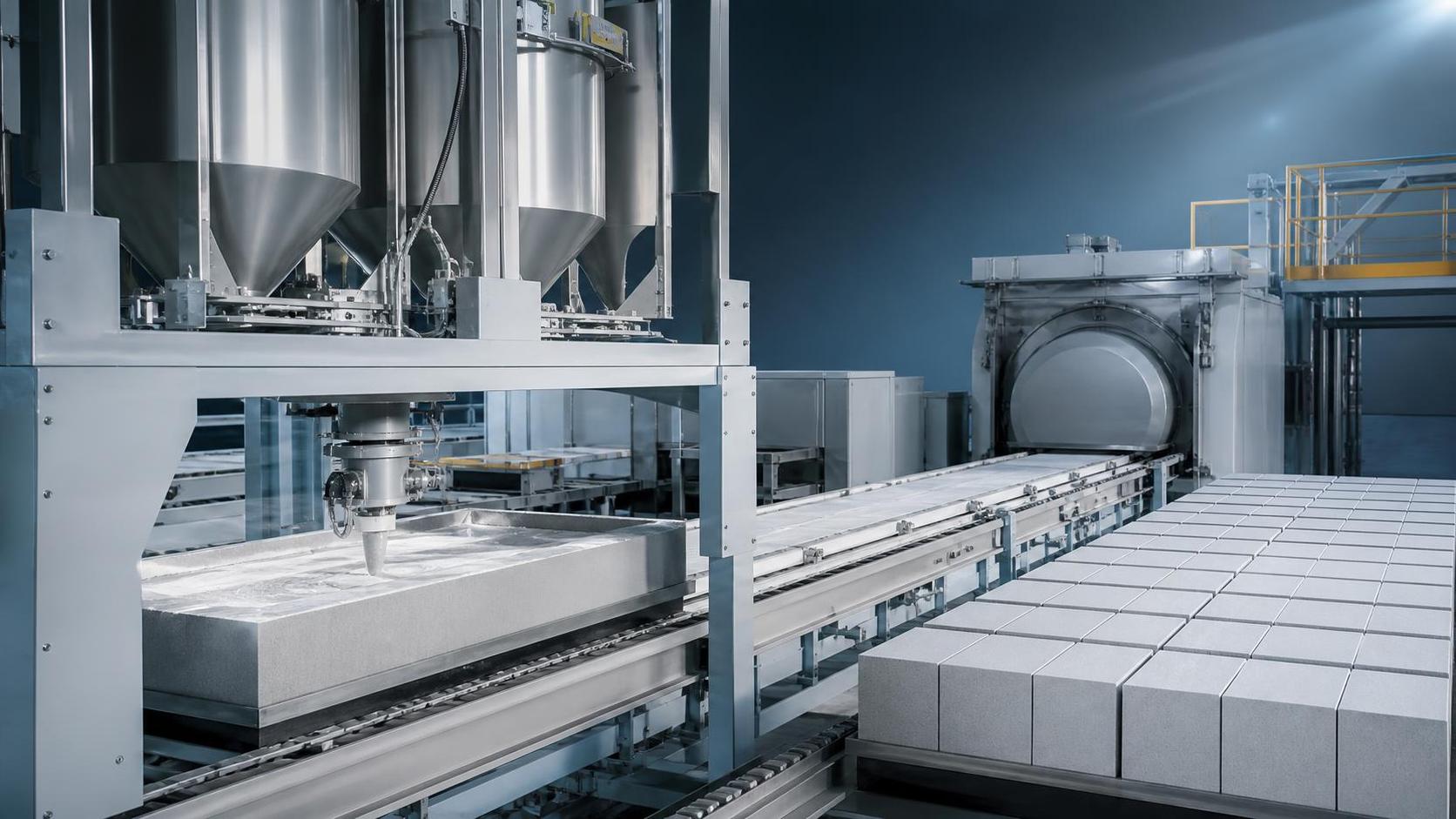
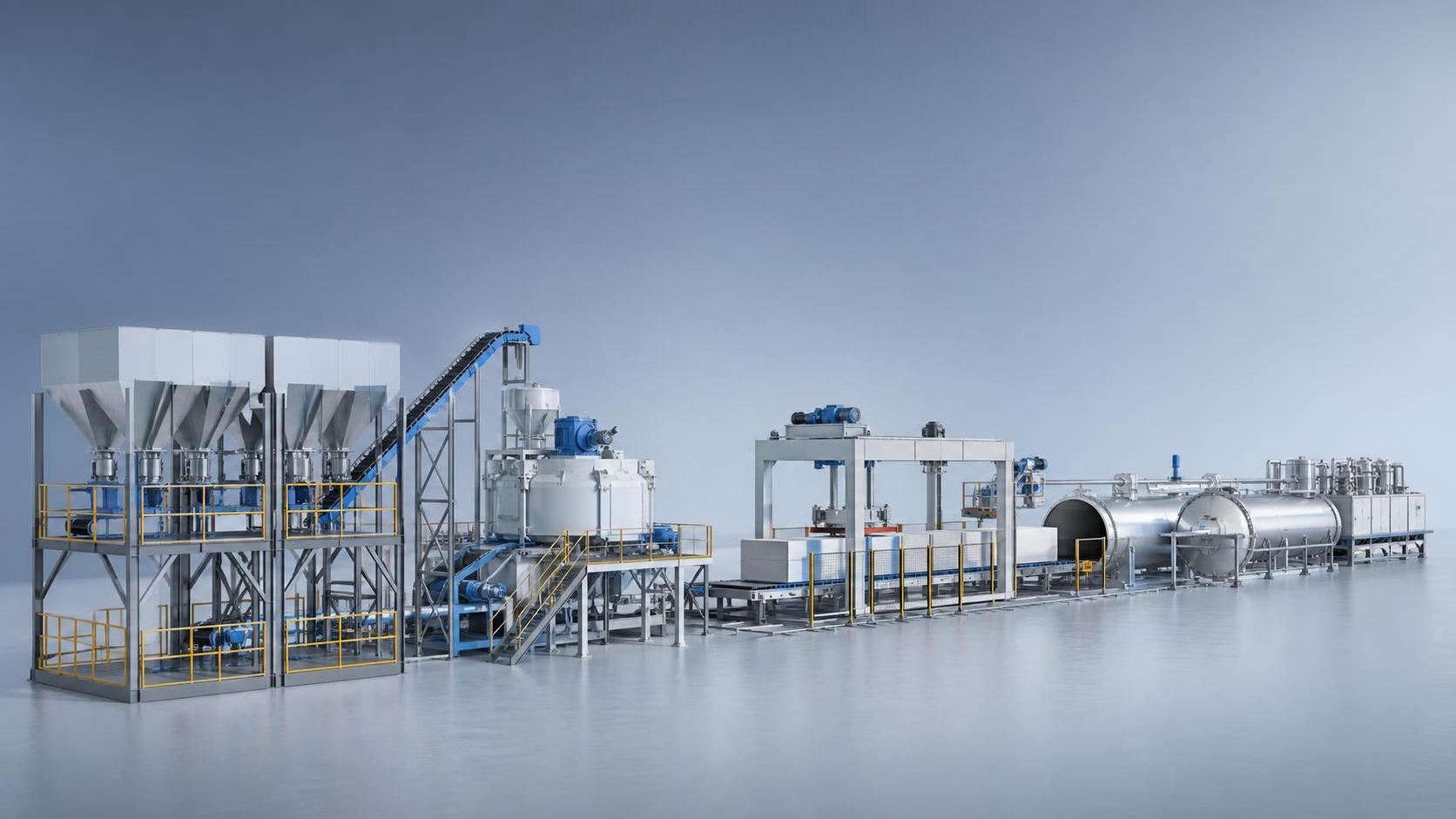
Initial investment includes equipment, installation, factory layout, autoclaves, cutting systems, batching, curing support, and electrical control infrastructure.
Operating cost per cubic meter includes raw materials, steam, power, labor, maintenance, spare parts, packaging, and plant utilization efficiency.
For serious investors, the meaningful benchmark is total lifecycle cost per cubic meter rather than the lowest upfront quotation from a supplier.
A cheaper line may appear attractive at first, yet poor automation, unstable output, or high energy use can increase unit cost over time.
That is why experienced buyers ask for cost analysis under target capacity, local energy price, raw material source, and labor conditions.
Which Cost Factors Have the Biggest Impact on Investment per Cubic Meter?
The strongest cost driver is plant capacity because larger AAC lines usually reduce fixed investment and overhead allocation per cubic meter produced.
A small plant may require lower total capital, but its unit investment can be higher because major systems still remain necessary.
Automation level is another major variable that directly affects labor dependence, product consistency, downtime risk, and long-term efficiency.
Highly automated lines generally require more initial capital, but they often lower labor cost and improve throughput predictability over years.
Raw material preparation also matters because sand processing, lime handling, cement dosing, and aluminum paste control influence both cost and quality.
If raw materials need additional crushing, grinding, or moisture adjustment, the production line investment cost per cubic meter will increase.
Autoclave configuration is equally important because steam curing equipment represents a major share of AAC capital spending and energy demand.
Plant layout, workshop size, local civil construction cost, and utility connection conditions also affect the final investment profile.
Why Capacity Planning Matters More Than Buyers Expect
Many first-time investors focus too heavily on equipment purchase price and not enough on matching capacity with actual market demand.
If the selected capacity is too small, the plant may struggle to meet orders during peak construction seasons and lose customers.
If the capacity is too large, capital pressure increases and the payback period may stretch because utilization stays below expectation.
That is why capacity planning should begin with regional demand, competitor supply, logistics radius, and product mix assumptions.
AAC block plants serving urban housing, industrial construction, and infrastructure projects may need different production and stocking strategies.
When the right capacity is selected, the aerated concrete block production line investment cost per cubic meter becomes more competitive and predictable.
What Should Be Included in a Real Investment Calculation?
Many quotations only cover core machinery, which can create confusion when investors later discover additional project costs outside the proposal.
A realistic investment evaluation should include raw material storage, mixers, molds, cutting units, autoclaves, cranes, boilers, and control systems.
It should also include installation, commissioning, operator training, spare parts planning, and technical support during the startup phase.
Beyond machinery, buyers should budget for factory buildings, foundations, steam piping, electrical distribution, water systems, and environmental measures.
Working capital must also be considered because raw materials, payroll, utilities, and inventory require funding before stable sales cash flow begins.
Without these elements, the advertised line price may look competitive, but the real project cost per cubic meter can be underestimated.
How Operating Efficiency Changes the True Cost per Cubic Meter
Two AAC plants with similar installed capacity can have very different actual production costs because efficiency determines how well assets are used.
Stable batching accuracy reduces material waste, while precise cutting improves dimensional consistency and lowers reject rates.
Reliable steam curing shortens process interruptions and helps maintain compressive strength, density control, and customer acceptance in the market.
When breakdowns are frequent, output declines and fixed costs are spread across fewer saleable cubic meters, raising actual unit cost quickly.
Energy efficiency is especially important because steam and power consumption remain major operating expense categories in AAC production.
For this reason, experienced investors should examine not only rated capacity, but also uptime, maintenance access, and thermal efficiency performance.
What Risks Increase the Unit Cost After the Plant Starts Running?
The biggest hidden risk is selecting a supplier that can sell equipment but cannot support process optimization after installation.
AAC production depends on coordinated control of raw material ratio, slurry behavior, pre-curing, cutting timing, and autoclave conditions.
If those parameters are not tuned correctly, the plant may face cracks, dimensional deviation, unstable density, or weak product strength.
These problems raise waste, customer complaints, and energy consumption, all of which push cost per cubic meter above the planned level.
Another risk is weak spare parts availability because delayed maintenance can halt output and damage project profitability.
Insufficient operator training is also costly because small process mistakes become large material and energy losses in continuous production environments.
How to Judge Whether a Supplier Can Help Control Investment Value
Buyers should first evaluate whether the supplier has real manufacturing depth rather than acting only as a trading intermediary.
Production bases, engineering teams, patent strength, and long-term industry experience usually indicate stronger project delivery capability.
It is also important to review whether the supplier can provide integrated support covering design, manufacturing, installation, and commissioning.
This matters because AAC lines are system projects, and poor coordination between sub-equipment often creates delays and extra costs.
Technical credibility should be tested through reference projects, process consultation, customization ability, and after-sales responsiveness.
The supplier should be able to discuss output targets, material conditions, steam balance, labor structure, and expected cost per cubic meter.
If a supplier only offers a headline price without these project-level discussions, the quotation is likely incomplete or unreliable.
How Hongfa Supports Better Cost Control for AAC Line Investors
For buyers seeking long-term value, Hongfa offers advantages that go beyond equipment supply alone and directly affect project economics.
Founded in 1990, Hongfa has built deep experience in construction machinery and large-scale manufacturing for building materials equipment.
Its product range includes aerated concrete block production lines along with related machinery systems used across modern building material plants.
With four production bases in Shandong and Guangxi, Hongfa combines manufacturing scale with engineering resources for system-level project support.
The company has strong technical capacity, including senior engineers, large technician teams, research capability, and multiple patented technologies.
That background matters because AAC investors need a supplier that can optimize line configuration, not simply deliver standard machines.
Hongfa’s focus on quality control, process improvement, and technical research helps customers pursue reliable output and lower long-term unit cost.
For investors comparing aerated concrete block production line investment cost per cubic meter, this kind of engineering support is commercially meaningful.
Questions Buyers Should Ask Before Comparing Quotations
Before selecting a proposal, buyers should ask what daily and annual output assumptions the quotation is based on.
They should also ask which equipment is included, what level of automation is offered, and what utility conditions are assumed.
Another key question is how the supplier estimates steam, power, labor, and maintenance cost under the buyer’s local conditions.
It is equally useful to ask about product specifications, block size flexibility, and future expansion options if market demand grows.
Commissioning scope, operator training, spare parts service, and warranty response should also be clarified before contract signing.
These questions help investors compare quotations on a true cost basis instead of relying on incomplete headline pricing.
How to Make a Smarter Investment Decision
The smartest buyers treat AAC line procurement as a production economics decision rather than a one-time equipment purchase.
They compare suppliers based on lifecycle value, process stability, technical support, and achievable unit manufacturing cost.
They also align plant size with realistic market demand and ensure the proposed line matches local raw materials and energy conditions.
When these factors are evaluated together, the investment cost per cubic meter becomes a practical management metric instead of a vague sales number.
This leads to better budgeting, stronger financing discussions, and a clearer expectation of project payback and business competitiveness.
Conclusion
The answer to how much an AAC block line costs per cubic meter depends on more than machine price alone.
Capacity, automation, raw material handling, energy efficiency, plant utilization, and supplier capability all shape the final result.
For investors, the right approach is to calculate both initial investment structure and long-term operating cost under real production assumptions.
That is the only reliable way to judge the aerated concrete block production line investment cost per cubic meter with confidence.
With experienced manufacturers such as Hongfa, buyers can evaluate not just what the line costs to buy, but what it costs to run well.
That distinction is what ultimately determines whether an AAC project becomes merely operational or truly profitable.
Recommend
 Sep 23, 2026
How automatic AAC production line stability affects block quality
Automatic AAC production line stability directly shapes block strength, density, and dimensions. Learn how tighter process control reduces defects, waste, and safety risks.
- Sep 23, 2026
What to check before buying autoclaved aerated concrete equipment
Autoclaved aerated concrete equipment buying guide: learn what to check on line balance, raw materials, energy use, maintenance, and support before choosing a reliable AAC solution.
- Sep 24, 2026
How to reduce downtime caused by worn AAC plant machinery
AAC plant machinery downtime can be cut by spotting wear early, prioritizing critical parts, and using smarter maintenance strategies to keep production stable and costs under control.