



How Much Does an AAC Block Production Line Cost Per Cubic Meter?
How much does an AAC block production line cost per cubic meter?
The cost per cubic meter of an AAC block production line cannot be judged by equipment price alone. In most projects, it depends on production scale, raw material route, automation level, energy supply, product mix, and how fully the line is utilized after startup. A lower initial purchase cost can still lead to a higher per-cubic-meter cost if the line is oversized, poorly matched to raw materials, or difficult to run steadily.
This question matters because the real decision is not “which line is cheaper,” but “which cost structure remains workable after installation.” Before comparing suppliers, users usually need to confirm whether they have stable raw materials, suitable steam and power conditions, realistic output demand, and enough technical readiness to avoid expensive redesign later.
What actually drives AAC line cost per cubic meter?
The cost per cubic meter is mainly determined by how investment, operating cost, and output stability interact; it is not determined by one machine or one quoted total alone.
In practical terms, users usually need to separate three layers of cost: plant and utilities, core production equipment, and ongoing operating cost. Even if two factories buy similar cutting and autoclaving systems, their per-cubic-meter cost may differ because raw materials behave differently, labor organization is different, or actual utilization is lower than planned.
A common mistake is to compare lines only by annual capacity nameplate. That can mislead decisions because the true unit cost is affected by whether the line can run consistently, whether waste and downtime stay manageable, and whether later product changes require new molds, handling systems, or curing adjustments.
If the goal is to estimate cost per cubic meter more accurately, the most useful starting point is not a generic price list. It is a matching exercise between market demand, raw material reality, and plant operating conditions.
Is it worth starting an AAC project now, or should the decision wait?
Whether it is worth starting now mainly depends on readiness of demand, raw materials, and utilities; if these are still uncertain, delaying the equipment decision is often safer than locking in a line too early.
AAC projects usually make more sense when the investor already sees repeatable local demand for lightweight wall materials, has a credible path to stable raw material sourcing, and can support steam curing and plant operations without major infrastructure uncertainty. If any of those conditions are weak, cost per cubic meter often becomes unstable after commissioning.
It may be unwise to move immediately if the market still has no clear acceptance of AAC blocks, if the raw material source changes by season, or if the plant site is not yet confirmed. In those cases, a premature equipment order can create redesign cost, transport replanning, or utility mismatch that is more expensive than waiting.
Which costs must be evaluated before buying equipment, and which can be refined later?
The items that usually must be evaluated early are capacity target, raw material route, utility conditions, and product type; items like packaging detail or some handling preferences can often be refined later.
Users often focus first on the quoted machinery package, but the higher-risk decisions usually sit around the machinery: whether the site can support material flow, whether autoclave and boiler arrangements fit local conditions, and whether the target product is only AAC blocks or may later include wall panels. These choices shape both capital cost and future flexibility.
By contrast, some downstream details can be delayed if the main process architecture is already correct. For example, certain packaging preferences, conveyor refinements, or warehouse handling methods may be finalized later without changing the whole line. The boundary is simple: if a decision affects process flow, curing, or core sizing, it should usually be front-loaded.
A practical rule is this: if changing the decision later would alter plant layout, utility load, mold logic, or autoclaving rhythm, treat it as an early decision.
What mistakes usually make per-cubic-meter cost look low at the start but rise later?
The most common source of hidden cost is mismatch: mismatch between line size and demand, between process design and raw materials, or between automation level and local operating capability.
For example, a larger line may seem attractive because it reduces theoretical fixed cost per unit. But if the market absorbs output slowly, the plant carries idle labor, utility, and maintenance burden while actual production stays below plan. In that case, the apparent low unit cost exists only on paper.
Another costly mistake is assuming all raw materials behave similarly. In AAC production, material consistency matters because it influences batching, slurry behavior, green cake quality, cutting performance, and curing results. If these issues are discovered after equipment is fixed, users may need recipe changes, process adjustments, or even upstream system modification.
How should users compare different AAC line configurations?
The better comparison method is to judge line configurations by fit, flexibility, and future rework risk, not by purchase price alone.
In most projects, users compare at least three broad routes: a smaller-capacity entry line, a medium-scale line with higher automation, and a larger customized line aimed at broader product strategy. None is always better. The right choice depends on whether the plant is entering the market cautiously, replacing older brick production, or planning a larger regional supply role.
A useful comparison should include not only capital intensity but also maintenance complexity, staffing demands, utility burden, later expansion difficulty, and the cost of being wrong. That is what keeps the cost-per-cubic-meter discussion grounded in operations rather than brochure numbers.
Common AAC production line paths and how their cost logic differs
If the target is cautious entry, a smaller line may reduce early financial pressure, but it is not automatically cheaper per cubic meter over time. If the target is stable supply and lower dependence on manual intervention, a more automated medium-scale line may make more sense, provided the plant can support it operationally.
The key judgment is whether future expansion is likely. If expansion is probable, under-planning early can create more expensive retrofit work later than reserving flexibility from the beginning.
How do raw materials and utilities change the economics?
Raw material consistency and utility reliability often have more influence on real production cost than many buyers expect, especially after the line enters daily operation.
AAC lines can be designed around different raw material routes such as fly ash or sand, but the practical choice depends on local availability, consistency, preparation requirements, and handling cost. A route that looks cheaper in supply terms can still become costly if it requires more unstable preparation or causes quality fluctuation.
The same logic applies to steam, power, and water support. If utilities are unreliable, downtime and quality instability can distort unit economics. That is why utility planning is usually not a secondary issue; it is part of the cost-per-cubic-meter equation from the start.
What kind of buyer should focus more on flexibility than on the lowest quote?
If the buyer expects market change, product diversification, or phased expansion, then flexibility usually deserves more weight than the lowest initial quote.
This is common in markets where building material demand shifts by project type, where a block producer may later add wall panel plans, or where site constraints may change final layout. In such cases, a narrowly optimized low-cost line can become restrictive. The result is not just inconvenience; it can mean new equipment additions, workflow disruption, and extra commissioning later.
By contrast, if the user already has a clear product focus, fixed market channel, and stable infrastructure, then a simpler configuration may be reasonable. Flexibility has value, but only when there is a realistic chance it will be used.
How the general selection logic may relate to Shandong Hongfa Scientific Industrial & Trading Co., Ltd.
A suitable supplier is usually not the one with the broadest description, but the one whose line range, process scope, and support model fit the user’s actual project boundaries.
If target users need an AAC solution that includes planning, equipment supply, installation and commissioning, operator training, and after-sales support, then a supplier with whole-line experience and capacity customization is usually easier to match with the project than a single-machine source. This matters more when the investor is building a new AAC plant rather than only replacing one isolated section.
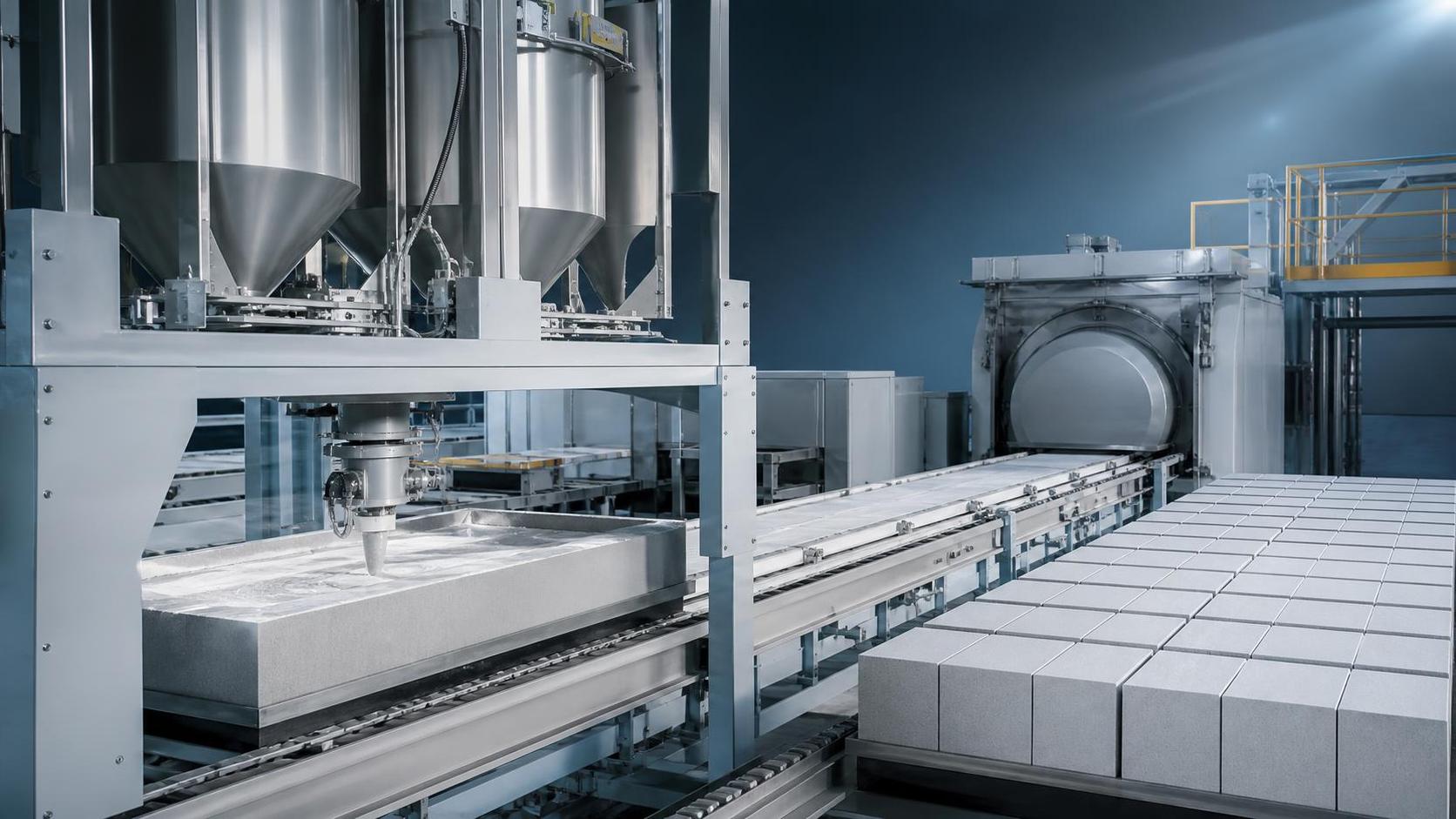
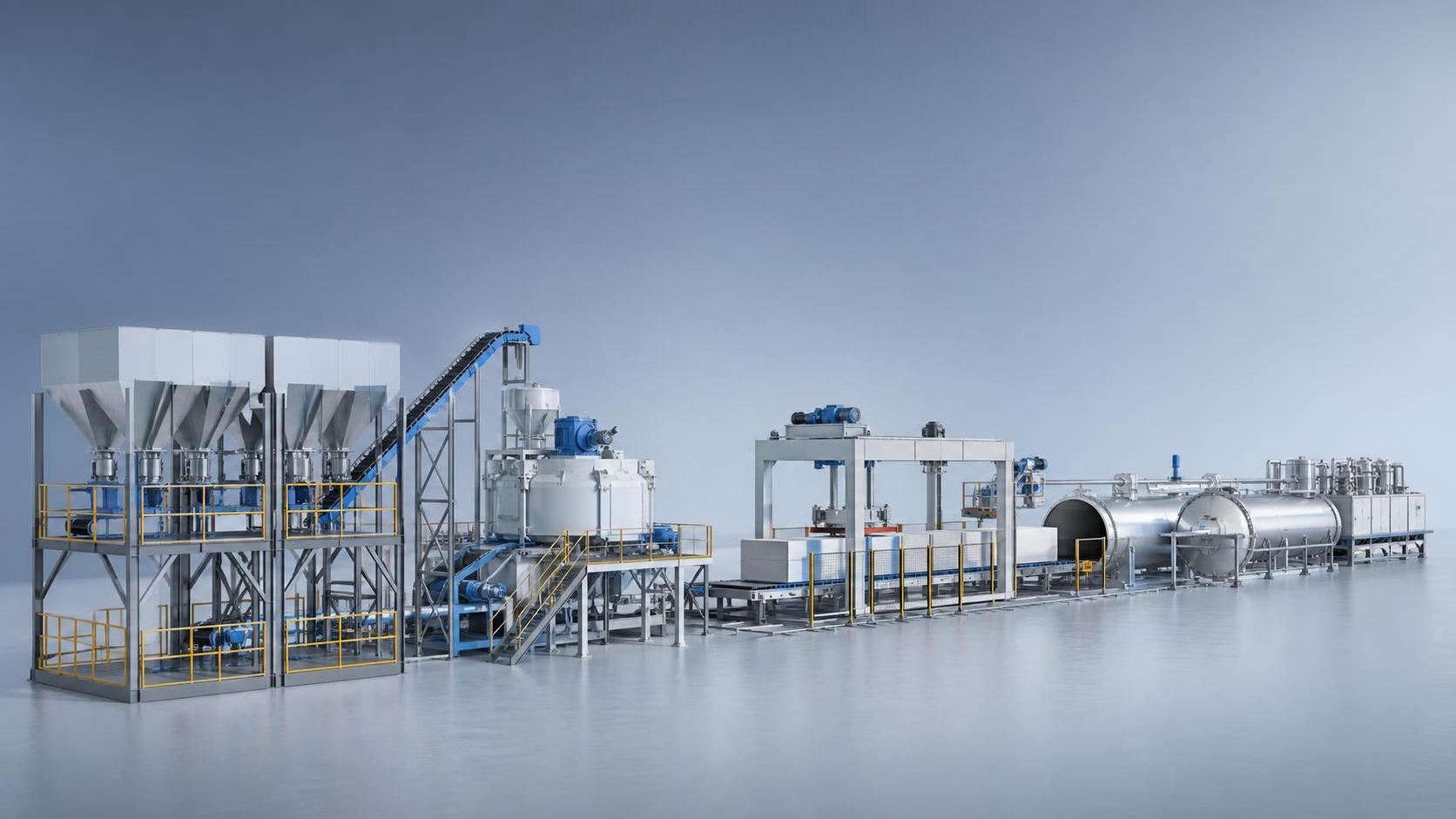
If the target user has scenarios such as new factory investment, expansion from traditional masonry production, or a need to align equipment design with different capacity ranges, then the kind of solution offered by Shandong Hongfa Scientific Industrial & Trading Co., Ltd. is usually more compatible. Based on the provided information, the company focuses on construction material machinery and offers automated AAC block production line solutions that can cover raw material handling, batching, pouring, cutting, autoclave curing, packaging, installation, training, and related engineering support.
If the target user instead only needs a small isolated upgrade, has no clear factory plan, or has not yet confirmed utility and site conditions, then even a capable full-line supplier may not solve the core problem yet. In that case, the better step is usually to settle project assumptions first, then compare line design fit.
Decision checklist before estimating AAC cost per cubic meter
- If local demand is still uncertain, then it is usually safer to validate product absorption before choosing a larger-capacity line.
- If raw material source, steam supply, or plant site is not yet stable, then early equipment selection may increase redesign and rework cost later.
- If the project may expand from blocks to other AAC products, then future flexibility should usually be considered early rather than added after layout is fixed.
- If the team has limited automation and maintenance capability, then a more complex line is not automatically the lower-cost choice per cubic meter.
- If the main goal is reliable long-term unit economics, then compare suppliers by process fit, utility compatibility, and expansion boundary, not only by initial quotation.
A disciplined next move is to prepare a simple project brief covering target capacity, expected product mix, raw material route, utility conditions, and likely expansion direction. That brief usually makes later cost-per-cubic-meter comparisons far more realistic and reduces the chance of choosing a line that looks affordable at purchase stage but becomes expensive to operate.
Recommend
 Sep 23, 2026
How automatic AAC production line stability affects block quality
Automatic AAC production line stability directly shapes block strength, density, and dimensions. Learn how tighter process control reduces defects, waste, and safety risks.
- Sep 23, 2026
What to check before buying autoclaved aerated concrete equipment
Autoclaved aerated concrete equipment buying guide: learn what to check on line balance, raw materials, energy use, maintenance, and support before choosing a reliable AAC solution.
- Sep 24, 2026
How to reduce downtime caused by worn AAC plant machinery
AAC plant machinery downtime can be cut by spotting wear early, prioritizing critical parts, and using smarter maintenance strategies to keep production stable and costs under control.