



What capacity options are available for AAC wall panel production lines?
When buyers ask about AAC wall panel production line capacity options, they are usually not looking for a textbook definition. They want to know how much output is enough, how much is too much, and what capacity choice will still make sense once the plant is running at full load, not just during the sales pitch. In AAC wall panel projects, capacity is not a single number. It reflects the plant’s daily output target, the size of the molds and cutting system, curing and autoclaving arrangement, material handling speed, labor model, and the market the factory is actually trying to serve.
That is why capacity selection deserves more attention than equipment lists. A line that looks economical on paper can become constrained by curing time, demolding rhythm, or panel handling. A larger line may deliver stronger unit economics, but only if the sales pipeline, logistics, and installation capability can absorb the output. For many buyers, the real decision is not “small or large” but which capacity band matches their project stage and risk tolerance.
Capacity is a system choice, not a catalog choice
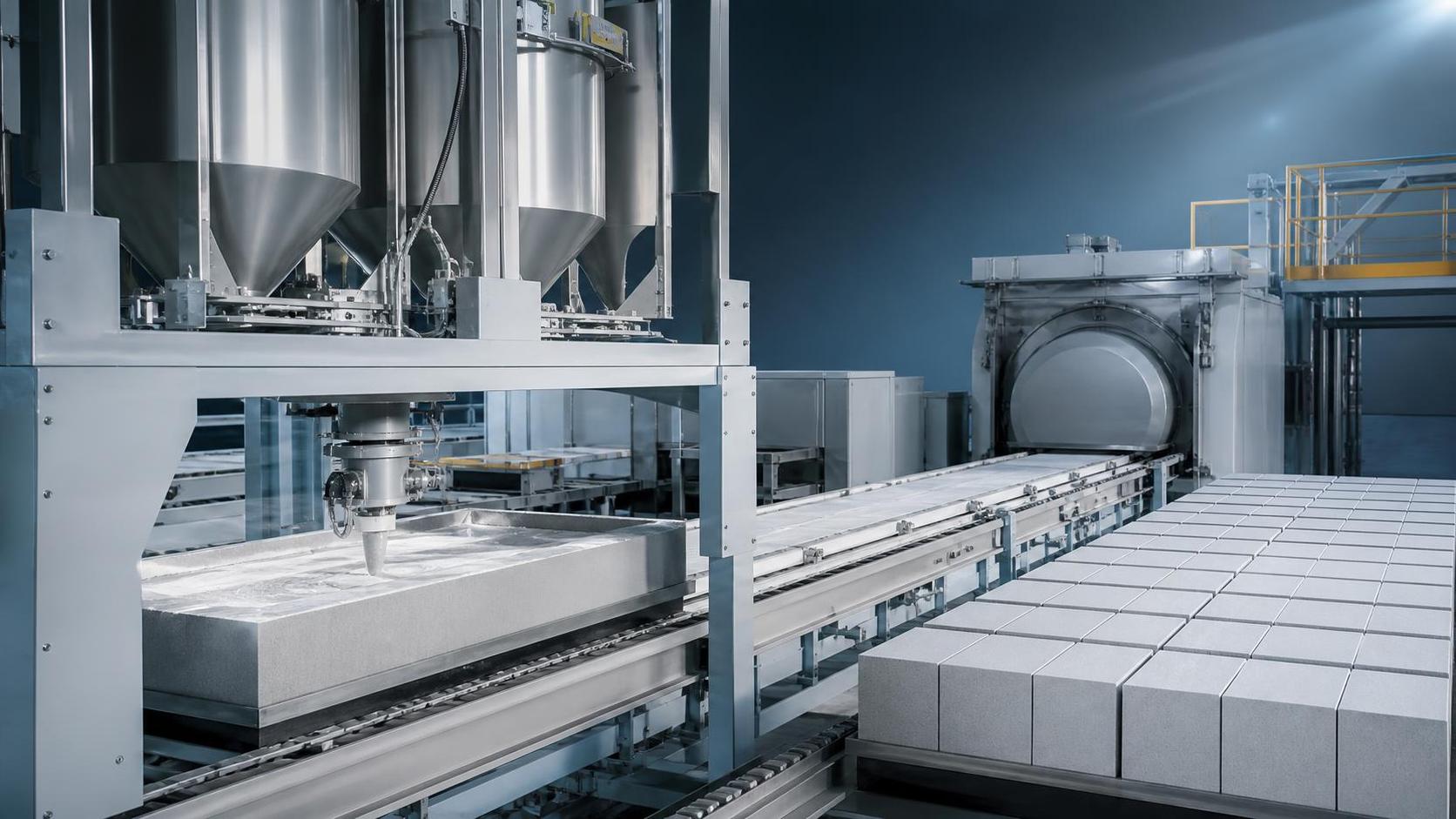
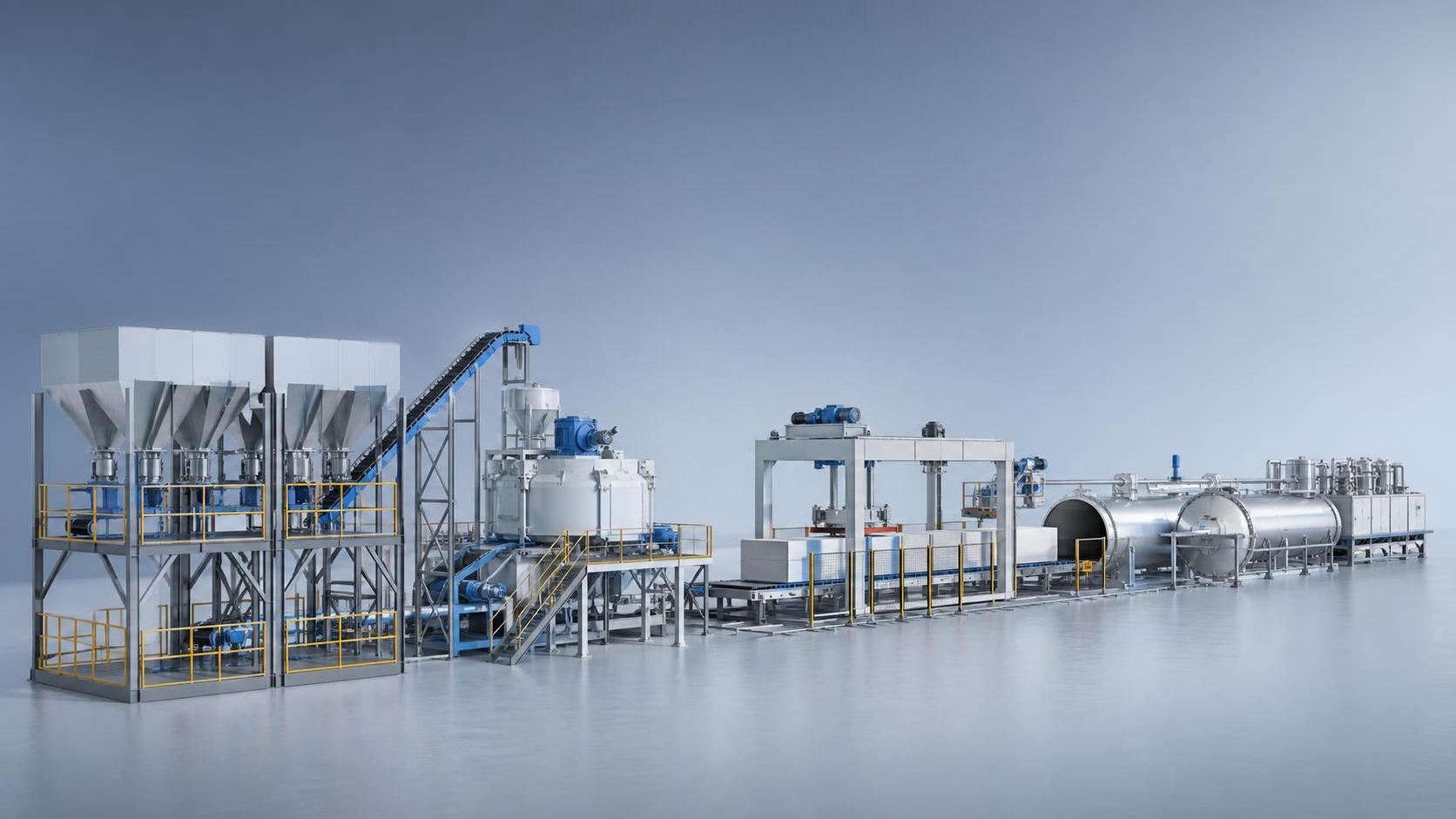
In AAC wall panel production, nominal capacity usually refers to the planned annual or daily output under a defined operating schedule. In practice, actual output depends on whether the line can keep every process balanced. Mixing, pouring, pre-curing, cutting, lifting, autoclaving, and stacking all have to move in rhythm. If one section is oversized and another is undersized, the whole line behaves like the slowest station.
This is especially important for wall panel products, which are generally larger and more handling-intensive than block products. Panels require tighter dimensional control, more careful reinforcement handling where applicable, and more disciplined logistics after autoclaving. A capacity plan that works for AAC blocks may not translate directly to wall panels.
The common capacity bands buyers compare
While manufacturers may define capacity in different ways, AAC wall panel production line capacity options usually fall into a few practical bands. The exact output numbers should always be verified against the proposed configuration, because mold size, cycle time, autoclave count, and automation level can shift the result significantly.
The table is only a decision aid. Real projects should be compared on a process basis, not just on headline tonnage. Two lines with similar declared capacity can perform very differently if one has a more efficient cutting cycle or better material recovery.
What compact capacity is good for
Compact AAC wall panel production line capacity options are often attractive when a company is entering the market, testing local demand, or building a plant in a region where transport costs make local supply more valuable than sheer scale. These lines can be easier to finance and faster to commission. They also place less pressure on workforce recruitment and can be more forgiving during the learning period.
The tradeoff is clear: compact capacity limits the ability to absorb fluctuations. If a project delays shipments or a key machine stops, there is less buffer. The plant may also have fewer opportunities to dilute fixed costs. For buyers, this means compact capacity is best when demand is visible, the sales radius is limited, and the business model values controlled exposure over aggressive scaling.
Why mid-scale lines often become the practical default
For many buyers, the mid-scale band is the most realistic starting point. It is large enough to support commercial output, but not so large that every delay becomes expensive. In a comparison of AAC wall panel production line capacity options, mid-scale systems often offer the best balance between investment, labor, and utilization.
This category works well when a plant intends to serve a stable regional market, supply both wall panels and related AAC products, or expand in phases. It gives the operator room to learn the process, optimize yield, and refine logistics before committing to a larger second phase. In procurement terms, this is often the capacity range where decision-makers should focus most heavily on automation level, spare parts support, and process consistency rather than only on price.
High-capacity lines are about discipline, not just size
High-capacity AAC wall panel production line capacity options are attractive because they promise lower unit costs, better equipment utilization, and stronger competitiveness in large-volume markets. But large scale only works when the downstream business is equally prepared. That means reliable raw material supply, enough autoclave capacity, stable energy infrastructure, warehouse space, handling equipment, and a sales channel capable of moving product quickly.
In a high-capacity project, the risk is not that the line cannot make product. The risk is that the plant can make more than the market can absorb, or that a single bottleneck becomes costly because the whole system is running near its limit. Buyers should scrutinize maintenance planning, backup strategy, and consumable supply as closely as they review the production curve.
What often gets overlooked in capacity comparisons
Capacity discussions can become misleading when only output numbers are compared. In real projects, several variables matter just as much:
- Autoclave configuration and cycle timing
- Cutting precision and scrap rate
- Handling method for green bodies and finished panels
- Labor intensity at pouring, demolding, and stacking stages
- Power, steam, and water stability
- Maintenance access and spare parts availability
- Local demand for panel sizes and performance grades
Any one of these can reduce effective output below the nameplate figure. This is why a good supplier will discuss plant layout and process balance, not just machine count.
How to choose the right capacity for your business
A practical way to evaluate AAC wall panel production line capacity options is to start with demand and work backward. Not projected market enthusiasm, but actual orders, probable distribution radius, and the product mix you expect to carry. Then test whether the plant can operate profitably at 60% to 70% utilization, because that is often where a new line spends its early life.
For buyers making a comparison, three questions usually matter most:
1. Can the line match my real sales cycle? If the line is too large for current demand, cash gets tied up in inventory and overhead.
2. Can it be expanded later? A phased design is often better than overbuying on day one.
3. Is the capacity figure based on a complete system or only the core machine? A capacity claim without autoclaves, material handling, and curing timing is not a meaningful comparison.
Why equipment quality matters as much as capacity
In AAC wall panel production, capacity without reliability is a false economy. A line that runs at a lower nominal capacity but holds stable dimensions, steady output, and predictable maintenance intervals can outperform a larger line that repeatedly stops for adjustments. This is where engineering depth matters. Companies with long experience in building materials machinery tend to focus not only on scale but on process control, energy efficiency, and practical maintainability.
Shandong Hongfa Scientific Industrial & Trading Co., Ltd. is one example of a manufacturer whose background in construction machinery and building materials equipment gives it a broad view of line planning, plant layout, and production stability. For capacity-sensitive projects, that kind of experience matters because the real challenge is not manufacturing a machine set, but helping the whole system operate as a plant.
The decision most buyers should make
The right AAC wall panel production line capacity options are the ones that fit the current market, leave room for operational learning, and do not force the business to depend on perfect utilization from day one. Small lines reduce exposure, mid-scale lines balance flexibility and output, and large lines reward disciplined planning at the cost of higher commitment.
For most investors, the best approach is to compare capacity bands against the actual project model: local demand, land and utility limits, labor capability, and the realistic pace of sales growth. Once those are clear, capacity becomes a strategic choice rather than a guess. That is the point where a production line starts to look like a business, not just a machine list.
Recommend
 Sep 23, 2026
How automatic AAC production line stability affects block quality
Automatic AAC production line stability directly shapes block strength, density, and dimensions. Learn how tighter process control reduces defects, waste, and safety risks.
- Sep 23, 2026
What to check before buying autoclaved aerated concrete equipment
Autoclaved aerated concrete equipment buying guide: learn what to check on line balance, raw materials, energy use, maintenance, and support before choosing a reliable AAC solution.
- Sep 24, 2026
How to reduce downtime caused by worn AAC plant machinery
AAC plant machinery downtime can be cut by spotting wear early, prioritizing critical parts, and using smarter maintenance strategies to keep production stable and costs under control.