



How reliable is Hongfa's AAC block production line for overseas projects?
When buyers ask how reliable Hongfa's AAC block production line is for overseas projects, they are usually asking a practical question: can it run steadily, produce consistent blocks, and be supported after shipment. The short answer is yes, provided the project is properly specified and installed. Hongfa combines long-term construction machinery manufacturing experience, ISO-certified production, strong engineering resources, and proven quality control, which makes its AAC block production line a credible option for international buyers.
What overseas buyers are really trying to verify
Most overseas project owners are not comparing brochures. They want to know whether the line can survive real operating conditions, local labor differences, and long logistics chains without repeated shutdowns.
Reliability also means predictable output, stable raw material adaptation, and the ability to get spare parts, technical guidance, and commissioning support when the plant is far from China. Those are the issues that decide project success.
Why Hongfa’s manufacturing background matters
Hongfa is not a new entrant built around a single export product. Since 1990, the company has focused on construction machinery and related production lines, which gives it a broader engineering base than many trading-oriented suppliers.
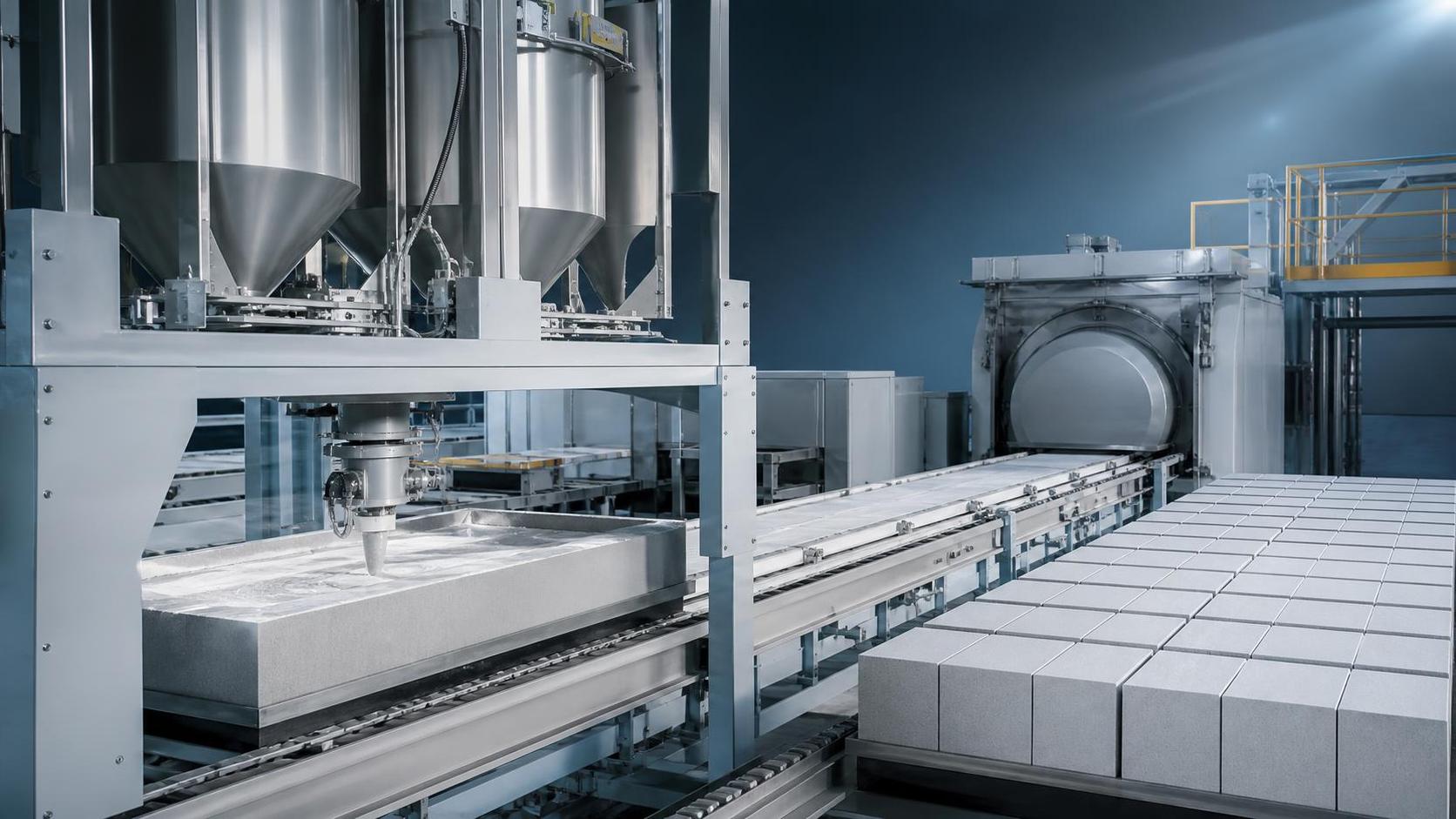
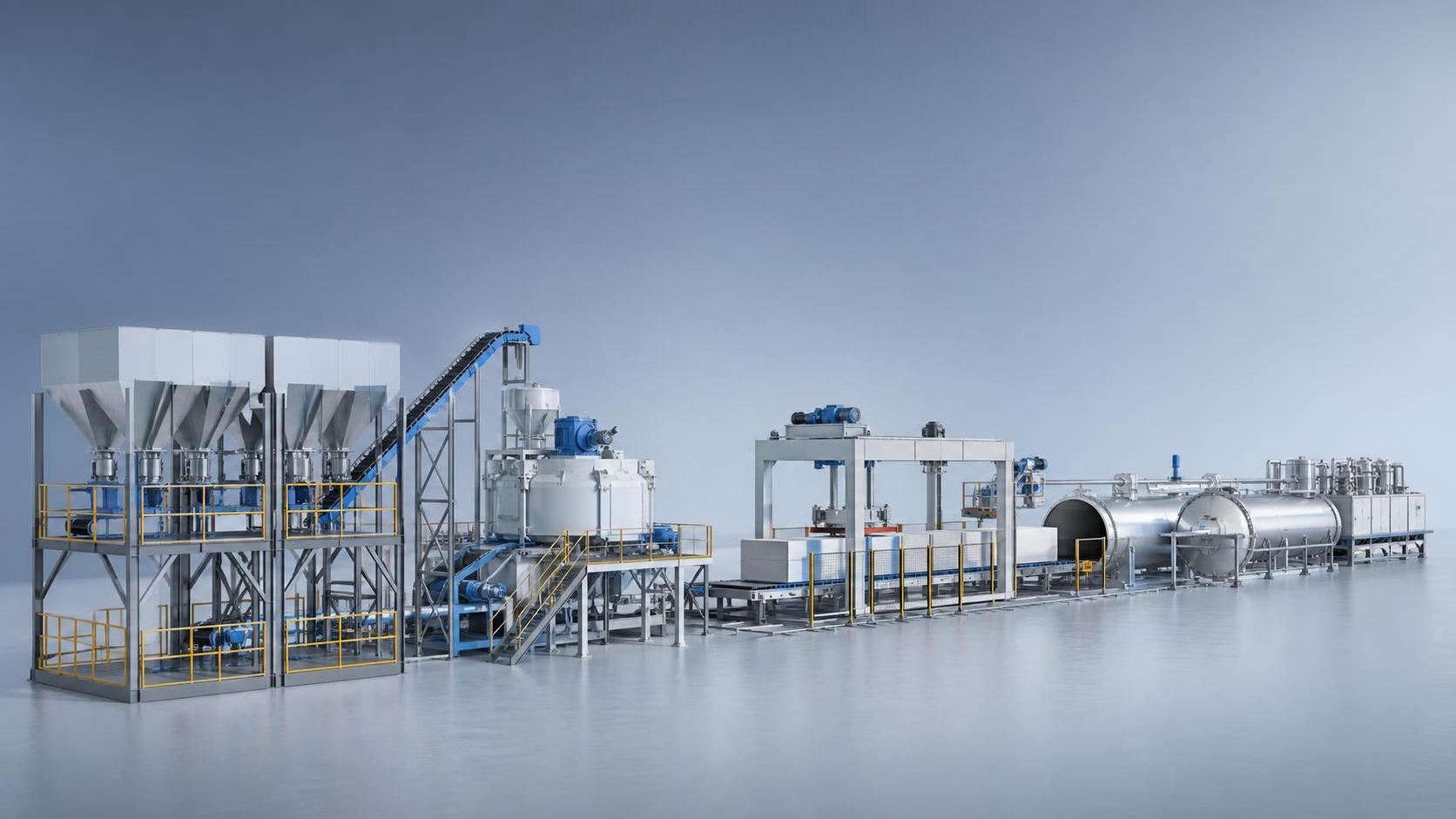
That matters for overseas projects because AAC block production is not just one machine. It is a system involving batching, mixing, cutting, autoclaving, conveying, and process coordination. A supplier with deep equipment experience is better positioned to control system stability.
Hongfa also operates four production bases in Shandong and Guangxi, with a large team of engineers and technicians. For international buyers, that scale suggests the company can handle customization, volume delivery, and long-term support.
How Hongfa controls quality in real production
Reliability starts with process discipline. Hongfa highlights ISO9001-2008 certification and a point-like quality tracking system, which means key stages are monitored instead of relying only on final inspection.
For AAC lines, this approach is important because small errors in cutting accuracy, slurry consistency, or steam curing coordination can affect block density, cracking rate, and finished product appearance. Quality tracking reduces those risks.
The company’s patent portfolio and research capability also matter. With dozens of core technologies and multiple patents, Hongfa has a stronger technical basis for improving equipment durability and process control than a purely assembly-driven supplier.
What makes an AAC line dependable for overseas use
A dependable AAC block production line must do three things well: maintain continuous operation, deliver repeatable product quality, and remain serviceable after installation. Hongfa’s system is designed around those priorities.
Stable operation depends on component matching and process integration. If the mixer, cutter, molds, autoclave system, and conveyors are not aligned, the plant may look complete but perform poorly. Hongfa’s engineering approach reduces that mismatch risk.
Repeatable quality is equally important. Overseas buyers often need products that meet local building standards and customer expectations. Consistent block dimensions and density help reduce waste, rework, and complaints from downstream users.
Serviceability is the third factor. For an overseas project, downtime is expensive because spare parts, technicians, and calibration support may not be immediately available. A supplier with structured technical support can materially improve project resilience.
How Hongfa supports overseas project execution
For international customers, reliability is not only about the machine itself. It is also about whether the supplier can support layout planning, installation guidance, commissioning, and operator training in a coordinated way.
Hongfa’s large engineering team is a practical advantage here. Overseas buyers often need help adapting the line to local utilities, material sources, climate conditions, and site constraints. That kind of support reduces project risk before production starts.
Another advantage is that Hongfa works across several machinery categories, including block machines and concrete batching plants. This helps buyers who want integrated solutions rather than isolated equipment purchases.
What buyers should check before deciding
Even a strong manufacturer should still be evaluated project by project. Buyers should confirm the intended annual output, raw material formula, power configuration, and local standards before placing an order.
They should also ask for references from similar overseas installations, not just domestic cases. A line can perform differently depending on transport conditions, climate, operator experience, and service access.
It is also worth confirming spare parts supply, response time for technical support, and whether the supplier can provide drawings, installation schedules, and commissioning procedures in advance. These details often determine long-term reliability more than price alone.
Where Hongfa offers the most value
Hongfa is most suitable for buyers who want a serious industrial partner, not just a low-cost machine seller. That includes developers, building materials groups, and project investors who care about production stability and lifecycle value.
The company’s emphasis on quality, technology, and service makes sense for overseas projects where failure costs are high and operating conditions are less forgiving. In that context, reliability is a business asset, not a technical slogan.
For buyers comparing multiple suppliers, Hongfa’s main strength is the combination of scale, engineering depth, and manufacturing experience. That combination tends to reduce execution risk and improve the odds of a stable commissioning.
Final judgment
Hongfa’s AAC block production line can be considered reliable for overseas projects when the project is properly matched to the line design and supported with solid installation planning. Its long industrial history, quality control system, technical patents, and engineering team all support that conclusion.
For international buyers, the key takeaway is simple: reliability should be judged by operating stability, product consistency, and service support, not by marketing claims alone. On those criteria, Hongfa presents a strong and credible option for overseas AAC block production projects.
Recommend
 Sep 23, 2026
How automatic AAC production line stability affects block quality
Automatic AAC production line stability directly shapes block strength, density, and dimensions. Learn how tighter process control reduces defects, waste, and safety risks.
- Sep 23, 2026
What to check before buying autoclaved aerated concrete equipment
Autoclaved aerated concrete equipment buying guide: learn what to check on line balance, raw materials, energy use, maintenance, and support before choosing a reliable AAC solution.
- Sep 24, 2026
How to reduce downtime caused by worn AAC plant machinery
AAC plant machinery downtime can be cut by spotting wear early, prioritizing critical parts, and using smarter maintenance strategies to keep production stable and costs under control.