




How to Compare an Automatic AAC Production Line by Capacity, Labor, and Energy Use
A common problem during equipment selection is that several suppliers may all claim strong output, stable automation, and reasonable operating cost, yet the production lines behind those claims can behave very differently in daily use. If you are comparing an automatic AAC production line for a new plant or an expansion project, the risk is not just choosing the wrong machine on paper. The bigger issue is ending up with a line that looks efficient in a proposal but creates labor pressure, uneven production rhythm, and higher energy bills once it is running.
This is why technical evaluation should move past headline capacity figures. Capacity, labor demand, and energy use are closely connected. A line with higher nominal output may still be a weaker choice if it requires too many manual interventions or if energy consumption rises because process coordination is poor. A more useful comparison method is to check how the line performs across the full production flow, where bottlenecks appear, and what level of operator involvement is actually needed.
Why comparing an automatic AAC production line often becomes confusing
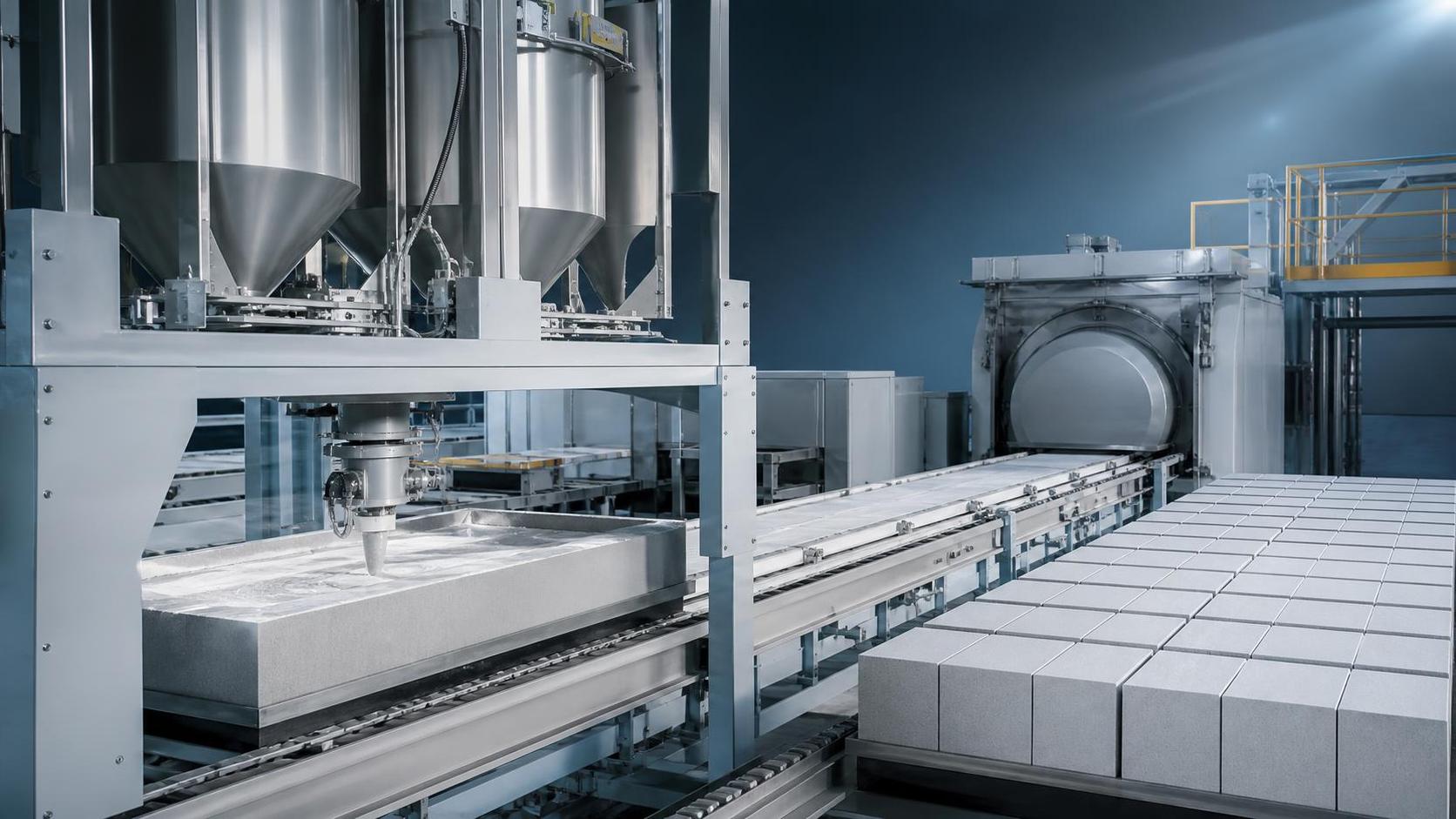
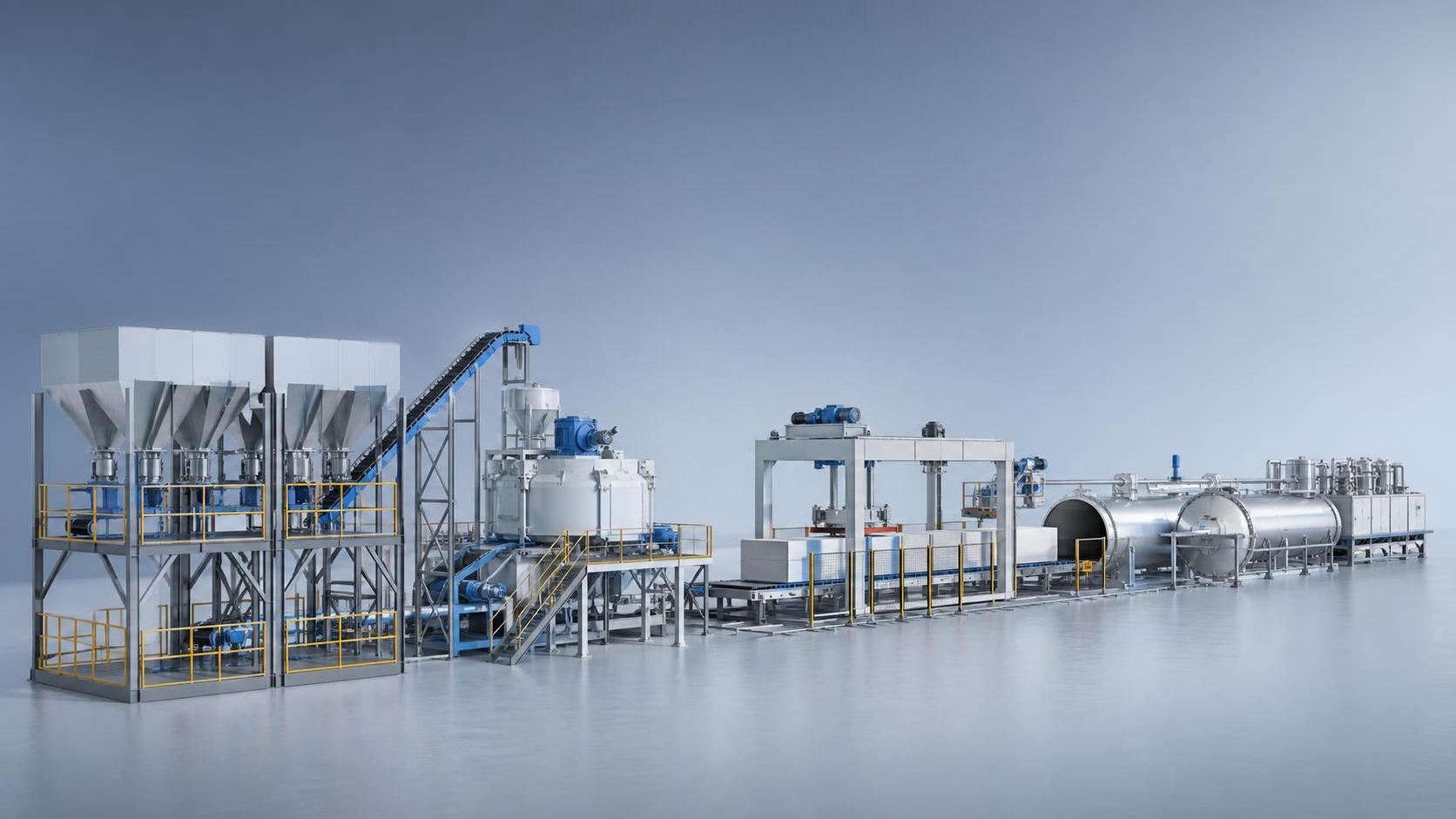
Many buyers start with a simple question: which line produces more blocks in less time? That sounds reasonable, but it often leads to incomplete comparisons. In AAC production, rated capacity is only one layer of the decision. Real performance depends on how the batching system, pouring section, pre-curing, cutting, autoclaving, and finished product handling work together as one continuous process.
Common confusion comes from comparing isolated numbers instead of the whole line. One supplier may emphasize mold circulation speed. Another may focus on autoclave quantity. Another may highlight automation level without clearly explaining which tasks still need people at key transfer points. When evaluators do not use the same standards for each line, the result is a decision based on mixed assumptions rather than a clear operating picture.
For industrial equipment selection, especially in building materials machinery, this matters because the long-term cost of mismatch is usually greater than the initial price difference. A line that is difficult to balance can affect product consistency, maintenance planning, shift organization, and utility consumption for years.
What usually goes wrong when capacity is treated as the only benchmark
The first mistake is to read capacity as a standalone number. In practice, output depends on whether upstream and downstream sections can keep pace with each other. If the cutting section is fast but green cake transfer is slower than expected, the rated figure becomes less meaningful. If autoclave scheduling cannot match molding frequency, production rhythm becomes uneven.
The second mistake is ignoring operating conditions. Some lines reach their best output only when raw material preparation is stable, mold turnover is smooth, and downtime remains low. That is not unusual, but it means you need to ask under what assumptions the stated capacity was derived. Without that context, comparison becomes superficial.
The third mistake is underestimating labor dependence in a supposedly automatic system. An automatic AAC production line can still rely heavily on manual supervision for material feeding checks, transfer coordination, fault handling, cleaning, and packaging support. If labor availability or labor cost is one of your constraints, this gap can change the investment logic significantly.
How to compare capacity in a way that reflects actual production
A practical evaluation starts by separating theoretical capacity from stable operating capacity. Theoretical capacity shows design potential. Stable operating capacity is closer to what the plant can maintain without constant interruption. The second figure is usually more useful for decision-making, even if suppliers present it less directly.
When reviewing an automatic AAC production line, it helps to examine capacity through these checkpoints:
- Raw material preparation rhythm: Check whether slurry preparation, dosing, and mixing can consistently support the molding cycle.
- Mold and trolley circulation: Confirm whether the number of molds, carts, and transfer systems is enough to avoid waiting time between sections.
- Pre-curing and cutting coordination: Review how the curing stage connects with cutting speed, because imbalance here often creates hidden delays.
- Autoclave throughput: Evaluate not only the number of autoclaves but also loading, unloading, and cycle organization.
- Finished product handling: Make sure downstream packaging or stacking will not reduce the effective output of the entire line.
In other words, the best comparison is not “Which line has the biggest number?” but “Which line keeps material, molds, and product moving with the least interruption?” That question usually produces a more reliable answer.
How to assess labor requirements without relying on vague automation claims
Labor evaluation is often where a purchase decision becomes more realistic. Two lines may both be described as automatic, but one may require much more operator attention during shift changes, troubleshooting, mold preparation, and product transfer. That difference does not always appear in promotional language.
A better approach is to map labor by function instead of by total headcount alone. Look at how many people are needed for raw material control, central operation, transfer monitoring, maintenance support, quality inspection, and finished product handling. Then ask which positions must remain continuously staffed and which tasks only need occasional intervention.
For many technical teams, the useful question is not “How many workers are on the line?” but “Where does human intervention remain necessary, and how often?” A line that reduces frequent manual adjustment usually performs better over time, especially when operator experience levels vary across shifts.
This is also where broader equipment experience can be relevant. Manufacturers with long involvement in building materials machinery, such as Shandong Hongfa Scientific Industrial & Trading Co., Ltd., typically cover multiple process types and understand that automation quality is not only about adding controls. It is also about making coordination between mechanical sections more predictable, which reduces unnecessary labor load in routine operation.
What to check when comparing energy use in an automatic AAC production line
Energy use is often discussed too generally, even though it has direct influence on long-term operating cost. In AAC production, the main point is not to ask for one simplified energy number and treat it as final. You need to understand which process sections consume the most energy and how efficiently the line organizes them.
Start by breaking energy use into categories: electrical demand for mixing, cutting, conveying, and control systems; steam-related consumption in autoclaving; and any supporting energy load tied to compressed air, pumps, or auxiliary handling equipment. Once these categories are visible, comparison becomes much clearer.
Several factors can make one line look efficient at first but perform less favorably in reality:
- Repeated start-stop operation caused by poor process balance.
- Unnecessary waiting time between curing, cutting, and autoclaving sections.
- Transfer design that increases idle running or empty return cycles.
- Control logic that requires manual correction instead of maintaining stable sequencing.
- Layout choices that add avoidable handling steps.
When comparing suppliers, ask how the line reduces waste during normal production, not just how it performs under ideal conditions. Stable flow usually supports better energy performance because equipment spends less time recovering from interruptions.
A practical comparison method for capacity, labor, and energy together
These three factors should be reviewed as one decision set. Capacity affects labor planning. Labor dependence affects consistency. Consistency affects energy efficiency. If you compare them separately, the final choice can become misleading.
A useful method is to prepare one evaluation table for each candidate automatic AAC production line and score it by process stage. For each stage, record four things: expected throughput, required operator involvement, major energy load, and likely bottleneck risk. This forces the discussion away from broad promises and toward operating logic.
- Define the target production scenario: Identify the product range, expected shift pattern, and desired level of automation before reviewing equipment options.
- Match the capacity chain: Check whether each section of the line supports the same production rhythm instead of overperforming in one area and underperforming in another.
- Map labor points: List where people are still needed for supervision, cleaning, loading, fault recovery, and packaging.
- Separate base energy demand from avoidable waste: This helps distinguish process necessity from inefficiency caused by layout or control issues.
- Review maintenance access and operating simplicity: A line that is harder to maintain often creates more downtime and hidden labor consumption later.
This approach usually gives a more grounded answer than comparing brochures side by side. It also makes internal discussion easier when production, engineering, and procurement teams are all involved in the same decision.
Where supporting equipment can influence the final decision
In some projects, decision-makers focus so strongly on the main AAC line that they overlook related equipment logic. That can be a mistake, because handling, palletizing, transfer, and supporting block production equipment often reveal how a manufacturer thinks about workflow and automation reliability more broadly.
For example, teams reviewing equipment portfolios may also look at products such as QT6-15B Block Making Machine to understand how the supplier approaches control systems, forming rhythm, and production organization across different building materials applications. This does not replace a line-specific AAC evaluation, but it can add context when assessing manufacturing experience and equipment integration style.
How to avoid a decision that looks efficient only on paper
One of the safest ways to avoid selection mistakes is to ask the same detailed questions to every supplier and keep the comparison format consistent. If one proposal provides only top-level output claims while another explains process balancing, labor distribution, and energy-sensitive sections more clearly, that difference is already meaningful.
It also helps to watch for language that sounds precise but is difficult to verify. Terms such as high automation, low energy consumption, and labor saving are useful only when linked to specific parts of the line. Ask where labor is reduced, how process timing is coordinated, and which design choices help control energy use. Clear answers usually indicate stronger engineering transparency.
Another important point is to evaluate the line against your own plant conditions. Utility structure, labor availability, maintenance skill, and product mix can all affect whether one configuration is more suitable than another. A technically advanced line is not automatically the right line if it exceeds the practical needs or operating capacity of the plant.
Frequently Asked Questions
Is the highest-capacity automatic AAC production line always the best choice?
No. A higher stated output is only useful if the full process can sustain it. If transfer, curing, or autoclaving sections create imbalance, the line may not deliver the expected practical result.
How can I tell whether labor demand is truly low?
Ask where operators are needed during normal production, shift changes, cleaning, fault handling, and finished product handling. Total headcount alone does not show the real level of manual dependence.
What part of the line usually matters most for energy evaluation?
Energy should be reviewed across the entire flow, but autoclaving, conveying rhythm, and repeated stop-start operation often have a major effect on overall efficiency.
Should I compare only AAC equipment, or also look at the supplier's other machinery?
Primary evaluation should stay focused on the AAC line, but reviewing other equipment categories can help you understand the supplier's manufacturing range and automation philosophy. A product such as the QT6-15B Block Making Machine can provide that broader context when you are assessing technical depth.
Conclusion
Comparing an automatic AAC production line becomes much easier once the discussion moves from headline output to operating logic. The strongest option is usually the one that keeps capacity balanced across the full process, limits unnecessary labor intervention, and controls energy use through stable coordination rather than isolated equipment performance.
For a selection decision, it is worth building a simple side-by-side review based on process flow, labor points, and energy-sensitive sections. That method gives technical teams a clearer basis for judgment and helps avoid choosing a line that appears attractive in specification sheets but proves difficult to run efficiently in daily production.