



What Training Is Needed Before Operating a Green Material Line?
Training before operating a green material line must establish control over both machinery and material behavior. A line producing concrete blocks, aerated concrete products, quartz stone slabs, or comparable building materials joins high-load mechanical equipment with powders, water, additives, heat, pressure, conveyors, and automated controls. A start button is only the visible end of a much larger process. Before production begins, the person at the controls needs to understand what each stage is intended to achieve, what normal conditions look like, and which deviations require the line to be slowed, stopped, or isolated.
The required training differs by line configuration, but it usually falls into several connected areas: site safety, equipment familiarization, process control, material handling, quality verification, energy management, routine care, and emergency action. These topics should be taught against the actual installed line rather than through generic machine instruction alone. Control layouts, interlocks, material routes, and maintenance access can vary substantially between otherwise similar systems.
Start with the hazards built into the process
Green building material production often involves dry cement, lime, silica sand, fly ash, recycled aggregates, pigments, resins, curing agents, or other fine and reactive materials. Training must identify the hazards attached to the specific recipe. Airborne dust, skin contact, unstable bulk storage, moving equipment, elevated curing temperatures, and stored hydraulic or pneumatic energy must be addressed before normal production training starts.
Lockout and isolation procedures deserve practical demonstration. It is not enough to recognize an emergency-stop button. A stopped conveyor may still contain material under load; a mixer may retain rotating energy; a hydraulic press may remain pressurized; and a pneumatic valve may move after a control signal is removed. Training should cover the approved sequence for shutting down, isolating electrical and fluid power, releasing stored energy where applicable, confirming a zero-energy state, and returning the equipment to service after work is complete.
Safe access routes also need attention. Aggregate transfer points, mixer platforms, mold-change areas, curing chambers, and slab handling stations can be affected by wet floors, dust buildup, forklift movement, suspended loads, and restricted sightlines. Training should explain designated walking paths, exclusion zones, communication signals, required protective equipment, and the conditions under which access is prohibited.
Equipment knowledge: individual machines versus the complete line
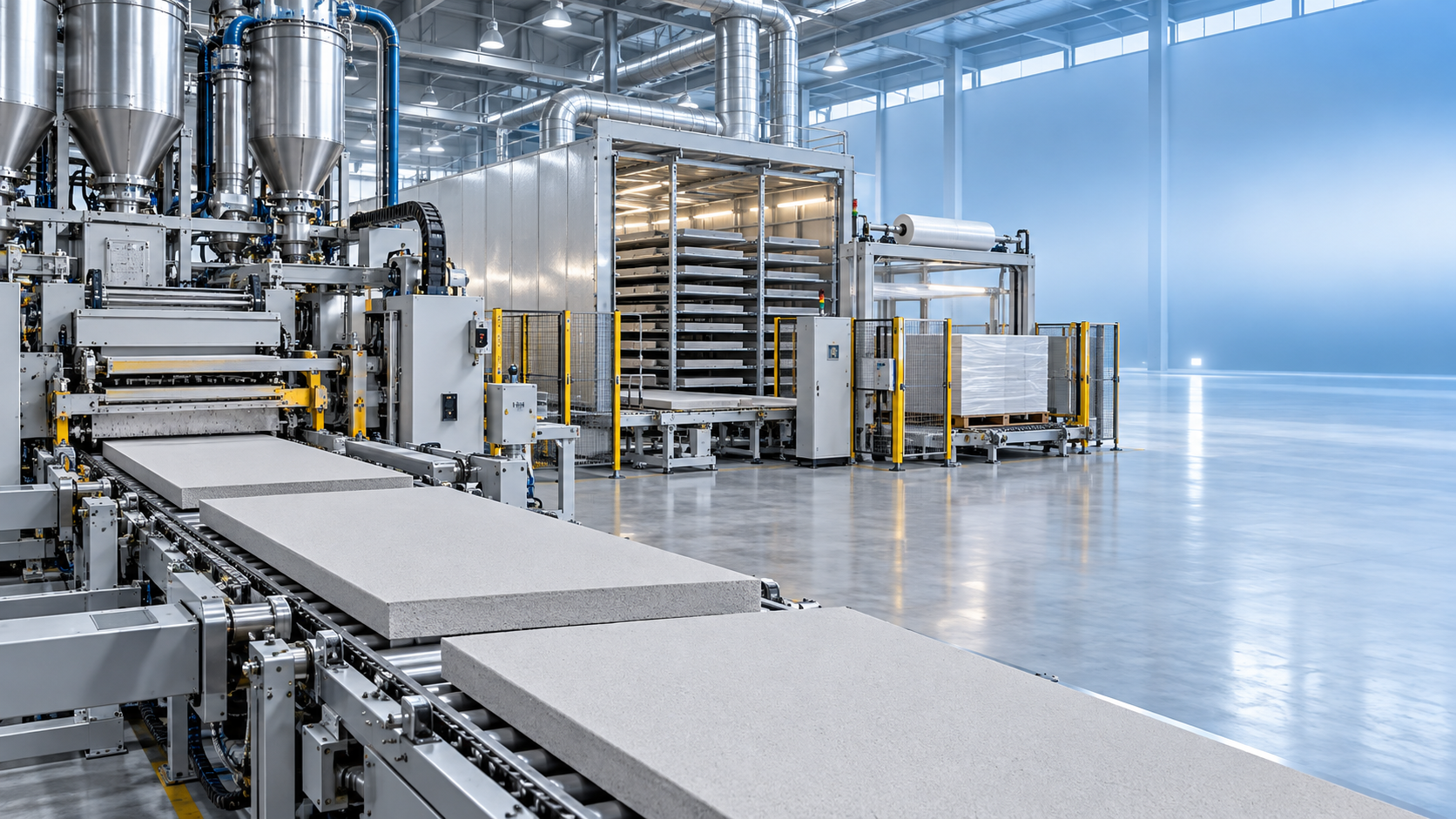
A green material line should be understood as a linked system, not as a group of separate machines. Training for a concrete block line, for example, must explain the relationship between aggregate batching, water dosing, mixing, material feed, vibration or compaction, mold filling, pallet transfer, curing, and product handling. A local adjustment can create a delayed effect farther downstream. Increasing water may improve short-term feed flow while reducing green strength, altering surface appearance, or creating handling problems after demolding.
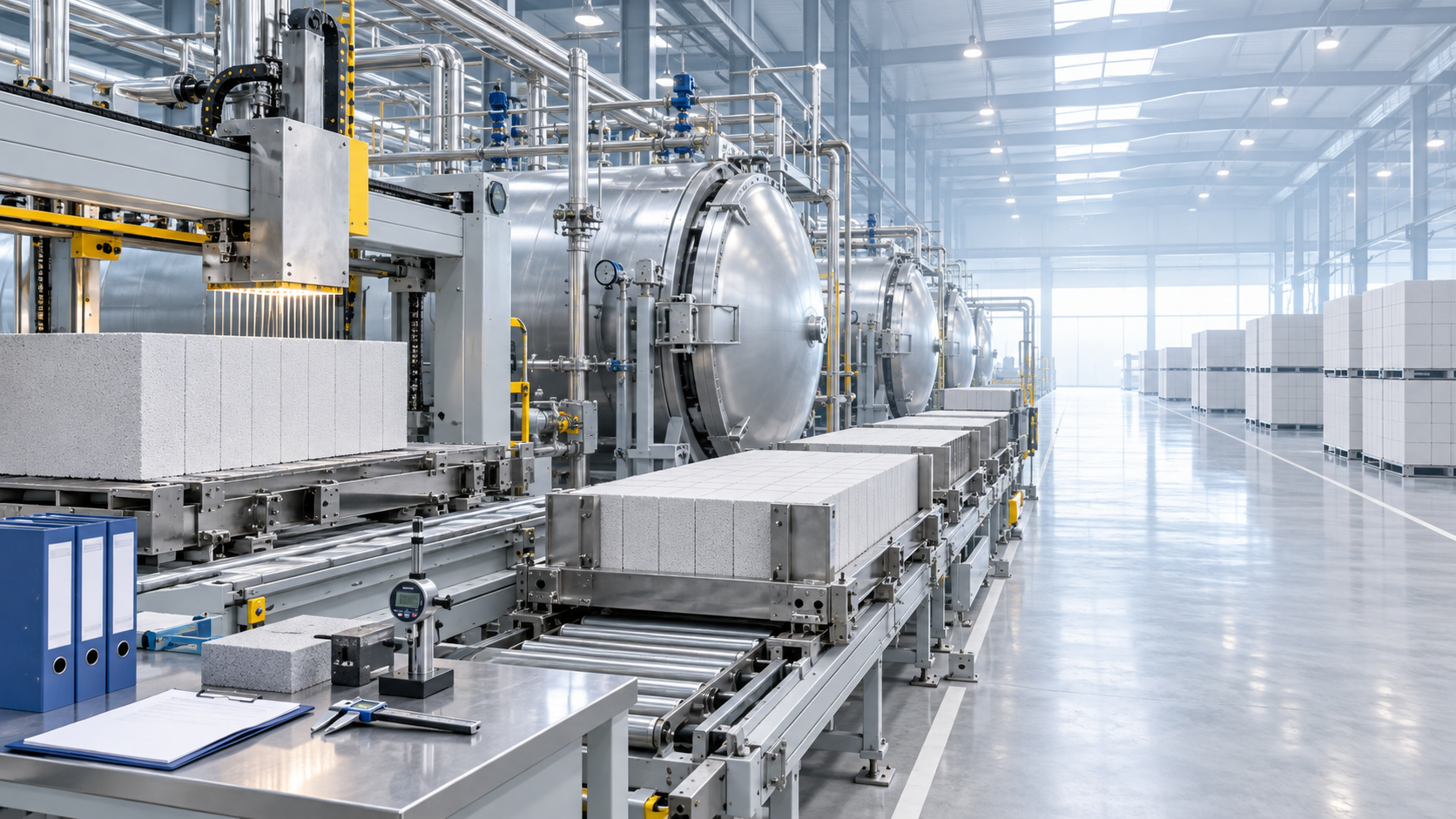
For an aerated concrete process, preparation should cover slurry mixing, dosing accuracy, mold filling, pre-curing behavior, cutting, autoclave loading where applicable, and handling of delicate green cakes. The training focus differs from a vibration-compaction block system because the product develops through controlled expansion and curing rather than direct molding pressure alone. Personnel must recognize that a change in temperature, mixing sequence, or foaming-related ingredients may affect both expansion and cutting quality.
Quartz stone machinery requires another training profile. Material blending, pigment distribution, resin handling, vacuum or compaction conditions, slab forming, curing, calibration, polishing, and edge processing all affect the finished surface. Moving slabs introduce pinch, crush, and handling risks that are different from those found in block production. A line-specific program should therefore distinguish between process similarities and equipment-specific limits rather than treating all green material production as one operating category.
Reading controls without relying only on automation
Human-machine interface training should cover more than screen navigation. Each displayed value needs process meaning. A batch record may show actual and target weights, water addition, mixer time, conveyor status, mold cycle timing, temperatures, motor loads, vacuum level, hydraulic pressure, or fault history. Training should explain which values are merely informative, which values indicate a developing quality problem, and which alarm conditions require an immediate controlled response.
Alarm response is especially important. Repeatedly acknowledging an alarm without identifying its cause can convert a minor fault into equipment damage or a product-quality issue. Training should require recognition of alarm priority, confirmation of safe equipment condition, review of related signals, and communication with maintenance or process supervision when the fault exceeds assigned authority. Bypassing an interlock to maintain output should never be treated as a normal production technique.
Manual mode requires tighter instruction than automatic mode. During cleaning, mold change, calibration, commissioning, or fault recovery, individual drives may be jogged and guards may be opened under controlled conditions. The safe positions of nearby personnel, the permitted direction of movement, and the exact communication sequence must be known before manual movement is initiated. Many incidents occur during recovery tasks rather than during stable automatic cycles.
Material training affects both safety and product quality
Material receiving and storage procedures are part of operational readiness. Bulk powders can be contaminated by moisture, mixed with the wrong grade, bridged inside a silo, or delivered through an incorrectly identified connection. Aggregates may change in moisture content after rain or extended storage. Recycled material can introduce variable particle size, foreign matter, or inconsistent absorption. These changes affect dosing even when the control system is functioning correctly.
Training should include identification of approved materials, lot separation where traceability is required, inspection of delivery documentation, sampling methods, and correct storage conditions. A person responsible for batching should know where a recipe can be adjusted under authorized process rules and where changes must be escalated. A nominally correct weight does not always mean the same effective material condition. Wet aggregate, compacted powder, and improperly dispersed additives can alter the mix without obvious changes on a scale display.
Mixing sequence matters. Some components require dry blending before liquid addition; others need staged water dosing, controlled mixing time, or a defined resting period. Adding an ingredient at the wrong point can produce incomplete dispersion, unwanted air entrainment, premature reaction, or poor compaction. Training should use the current approved formulation and should make clear that recipe changes are controlled process changes, not informal adjustments made at the line.
Quality inspection must be taught at the right production stage
Finished-product inspection alone is too late to correct many process problems. Training should connect visual and dimensional checks to the stage at which a defect begins. Uneven mold filling may show up as weak edges. Excess water may appear later as deformation, surface defects, or extended curing behavior. A change in slab thickness can point to forming, pressing, calibration, or transport alignment rather than a single machine setting.
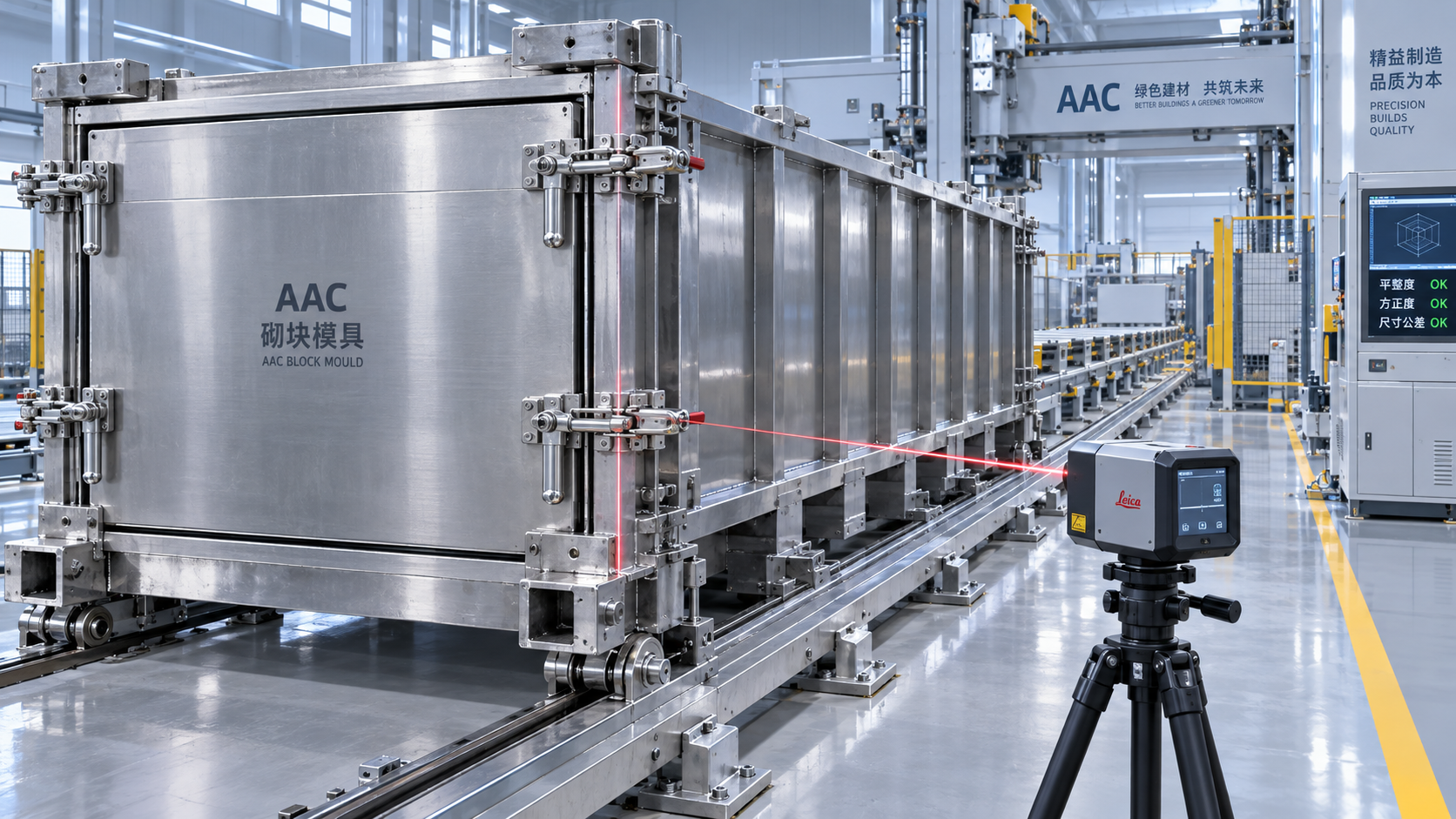
Clear acceptance samples and defect references are useful during training. Typical checks may include batch appearance, green-product stability, dimensions, density where relevant, surface texture, edge damage, color distribution, flatness, and curing condition. The exact inspection plan depends on the product and applicable production specification. Measurement tools must also be handled correctly: a poorly zeroed scale, worn gauge, contaminated sample container, or inconsistent test location can create misleading results.
Training should establish the difference between adjustment, containment, and release. A small deviation may be corrected within defined process limits. A more serious issue may require material to be held, the affected production interval to be identified, and records to be reviewed before product movement continues. This discipline protects traceability and prevents an unresolved defect from being mixed with acceptable output.
Energy-efficient operation needs process awareness
Green material production is often evaluated partly through material efficiency and resource use, but energy-saving actions must not compromise process stability. Training should explain the main energy loads on the actual line, such as mixers, air compressors, hydraulic units, vacuum systems, conveyors, curing equipment, dust collection, pumps, and polishing equipment. High energy use can signal an avoidable condition, including overloaded material flow, blocked filters, air leaks, misalignment, excessive pressure settings, or unnecessary idle operation.
Good operating practice may include starting equipment in the approved sequence, avoiding extended no-load running, closing compressed-air leaks promptly, maintaining dust-collection airflow, and using curing cycles that match the product specification. However, reducing mixer time, curing duration, compaction force, or vacuum time simply to lower consumption can create scrap and rework. Training should present energy efficiency as controlled operation within validated parameters, not as an instruction to minimize every setting.
Maintenance awareness is different from maintenance authorization
Daily observation can prevent many interruptions. Training should cover abnormal sounds, vibration, leakage, loose fasteners, belt tracking, roller wear, mold condition, oil level, filter condition, unusual motor heat, and changes in cycle time. These observations should be recorded through the site’s established reporting method so that recurring faults can be investigated.
At the same time, boundaries must be explicit. Routine cleaning or basic inspection may be assigned, while electrical cabinet access, hydraulic repair, parameter modification, lifting-device work, and guarded-area intervention require designated authorization. Confusion about those boundaries creates risk. A recurring sensor fault, for example, should not be addressed by repeated manual repositioning unless the approved fault procedure permits it.
Proving readiness before independent production
Classroom instruction and vendor documentation provide a foundation, but readiness should be confirmed through supervised tasks on the installed equipment. A practical assessment can include a pre-start inspection, correct selection of a production recipe, recognition of guard and interlock status, controlled startup, response to a simulated abnormal condition, collection of a quality sample, normal shutdown, and completion of production records.
The assessment should examine judgment as well as button sequences. Someone may be able to start a line yet fail to identify a material mismatch, abnormal motor load, poor mold fill, or unsafe manual-mode request. Competence is demonstrated when normal production, quality signals, and safe escalation are understood together.
Refresher training is appropriate after a major control-system update, recipe change, line relocation, installation of new handling equipment, extended downtime, or a significant process deviation. Training records should identify the relevant line, tasks covered, assessment outcome, and any restrictions that remain. This creates a useful operating baseline when production conditions or equipment configuration later change.
So, what training is needed before operating a green building material line? The practical answer is training that links safety, machine behavior, material condition, product quality, and controlled response to abnormal events. When those elements are taught as one production system, the line can be run with better discipline and clearer decisions at the moments that matter.
Recommend
 Oct 13, 2026
How to Choose a Wall Panel Production Machine for Export Quality?
How to choose a wall panel production machine for export quality? Explore essential factors for consistent output, curing, automation, quality control, and supplier support.
- Oct 12, 2026
Is ISO Certification Mandatory for AAC Block Manufacturing Equipment?
Are AAC block manufacturing equipment ISO certified mandatory? Discover legal requirements, supplier risks, and smart compliance checks before investing.
- Oct 11, 2026
How Often Should AAC Molds Be Inspected and Replaced?
How often should AAC molds be inspected and replaced? Discover practical inspection schedules, warning signs, and maintenance tips to reduce defects and downtime.