



What should be included in an AAC factory design before construction starts?
What should be included in a complete AAC factory design before construction starts? The short answer is: everything that affects material flow, equipment layout, utilities, quality control, and future expansion should be fixed before the first foundation is poured. In AAC projects, the biggest losses usually come from weak front-end planning, not from one single machine. If the plant layout is wrong, even good equipment will be harder to run, harder to maintain, and more expensive to expand.
What a complete AAC factory design really needs
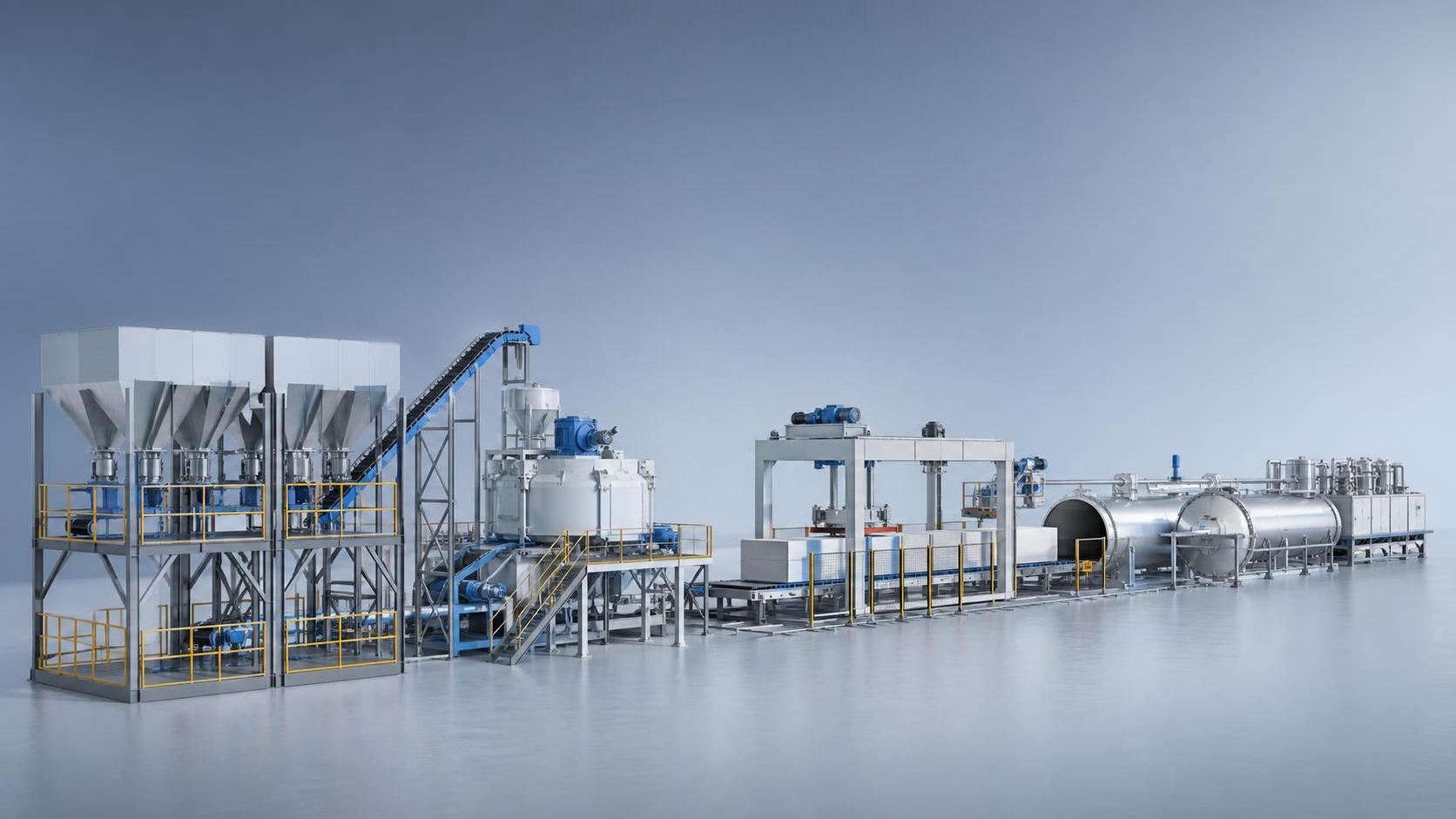
Before construction starts, a complete AAC factory design should cover the full path of production, from raw materials entering the site to finished blocks or panels leaving it. That means process flow, capacity matching, building layout, civil structure, utility systems, dust and wastewater handling, automation level, storage, and maintenance access. It also needs room for future changes, because many AAC plants start with one capacity target and later need to adjust to market demand.
The practical mistake is to treat design as a building drawing exercise. In reality, it is a production system decision. A factory that looks neat on paper can still fail if the grinder is too far from the silo, the curing area blocks forklift traffic, or the steam and power systems cannot support stable output.
What should be included in a complete AAC factory design before construction starts
The first comparison to make is between “can be built” and “can run well.” A plant can be physically buildable and still be a poor operating site. So the design should answer a few basic questions early: How many tons per day are planned? Will the plant make blocks, panels, or both? What raw materials are available locally? What utility conditions already exist on site? These answers decide the whole layout.
1. Process flow and capacity balance
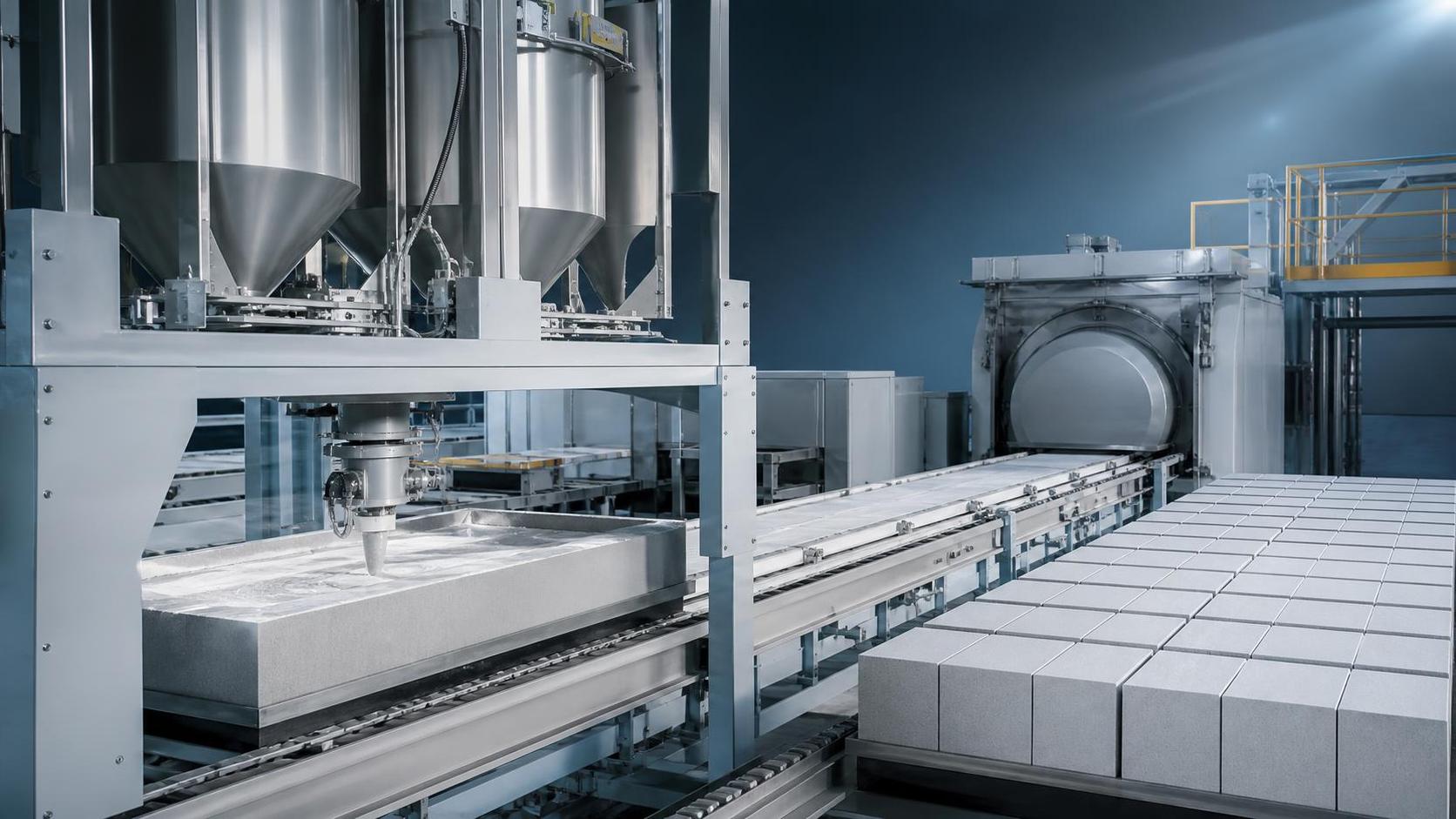
The process flow is the backbone. A proper AAC design should define every main step: raw material preparation, batching, mixing, casting, pre-curing, cutting, autoclaving, packaging, and yard logistics. Each step must match the next one in speed and volume. If the mixer is oversized but the cutting line is slow, the plant will accumulate semi-finished material and create bottlenecks. If the autoclave capacity is too small, the whole line loses rhythm.
This is why capacity balance matters more than a single machine specification. A complete AAC factory design before construction starts should compare hourly output, batch cycle time, curing time, and autoclave scheduling together, not separately.
2. Site layout and material movement
Good AAC plants save money by reducing unnecessary movement. Raw material storage, batching area, cutting section, autoclaves, finished goods yard, and loading area should be arranged to keep the movement short and predictable. Forklifts, crane paths, slurry pipelines, and maintenance access all need to be considered in the same drawing set.
If the layout forces trucks to cross internal production traffic, or makes operators carry material twice, the design is already leaking efficiency. In AAC projects, a clean flow is often worth more than a more expensive machine choice.
3. Civil and structural design
The civil side is often underestimated. AAC equipment is not light, and autoclaves, cranes, steam systems, cutting machines, and material storage all put specific loads on foundations and buildings. The design should cover floor load capacity, pit depth, crane beam positions, vibration control, drainage slope, and fire separation.
Some investors try to simplify this stage to save time. That usually creates later repair work, especially around autoclave zones, cutting lines, and steam areas where thermal and mechanical stress are not trivial.
4. Utility systems
AAC production depends on stable utilities. Electricity, steam, water, compressed air, and sometimes gas or fuel systems must be designed around real consumption, not rough guesses. Steam supply is especially important because curing quality and cycle stability are sensitive to pressure and temperature consistency.
Water quality also matters. If the plant uses poor or fluctuating water, the mix behavior may change and affect product stability. A complete factory design should therefore include utility capacity checks and backup logic, not just connection points.
5. Dust control, wastewater, and environmental protection
This part is no longer optional in serious projects. AAC plants handle lime, cement, fly ash, sand, slurry, and cutting dust, so dust collection and wastewater treatment should be designed into the site, not added later as a patch. That includes enclosed transfer points, dust collectors, sludge settling, recycling channels, and safe handling of waste slurry.
A common misjudgment is to assume environmental equipment can be “added later.” In practice, later additions are usually more expensive, harder to place, and less effective because the plant layout was not designed around them.
6. Automation and control
Automation should be matched to the plant’s management level and output target. Some projects need only basic batching and line control. Others need a higher level of automation for recipe management, production traceability, and stable quality. The right choice depends on labor cost, skill level, product mix, and how strict the customer’s quality requirements are.
What should be included in a complete AAC factory design before construction starts is not “the most advanced system available,” but the automation level that operators can actually use and maintain. A complicated system that few people understand can lower reliability instead of improving it.
7. Storage and logistics planning
Raw material storage and finished product storage often decide whether the plant can work through demand swings. Sand, fly ash, cement, lime, aluminum powder, pallets, and packaging materials each have their own storage logic. The design should define silo locations, yard size, rain protection, inventory turnover, and truck access.
Finished AAC products are bulky and fragile in a different way than many other building materials. If the loading yard is too small or too far from packaging, breakage and waiting time will climb quickly.
8. Maintenance access and expansion space
This is one of the easiest things to overlook and one of the hardest to fix later. Every main machine needs enough space around it for inspection, parts replacement, and emergency access. At the same time, the design should reserve expansion space for a second line, a larger autoclave block, or a new finished-goods yard if the business grows.
A plant with no expansion room often looks efficient on the first day and crowded on the first busy season.
What people often miss when comparing AAC factory design options
When investors compare suppliers or design plans, they often focus on equipment price and ignore system fit. That is the wrong comparison. A cheaper line that needs frequent rework, larger labor input, or expensive site modifications can cost more over time than a better-balanced design.
The other common mistake is copying another plant’s layout without checking local conditions. Raw material type, climate, power supply, land shape, labor skill, transport routes, and policy requirements all change the best design. An AAC factory in one region may work well for local sand and steam fuel, but the same layout may not fit another site at all.
For buyers, the best question is not “Which machine is the strongest?” but “Which design will keep output stable with the resources I actually have?” That question is usually more useful.
Where a capable equipment partner matters
At this stage, many projects benefit from working with an equipment manufacturer that understands both machinery and site planning. Shandong Hongfa Scientific Industrial & Trading Co., Ltd., founded in 1990, is one example in the building materials machinery field, with experience in aerated concrete block production lines, block machine lines, and concrete batching plants. Its technical background, production bases, and patent work suggest the kind of engineering depth that can help when a project needs more than a catalog quotation.
That said, a brand name alone does not replace a proper design review. Even a strong supplier should still be asked to confirm process balance, utility sizing, civil requirements, and the real operating conditions of the site.
If you are preparing an AAC project now, the safest approach is to freeze the design scope before construction starts: process, utilities, environmental controls, storage, automation, and future room for growth. That is what should be included in a complete AAC factory design before construction starts, and it is usually the difference between a plant that merely exists and one that runs well.
Recommend
 Sep 23, 2026
How automatic AAC production line stability affects block quality
Automatic AAC production line stability directly shapes block strength, density, and dimensions. Learn how tighter process control reduces defects, waste, and safety risks.
- Sep 23, 2026
What to check before buying autoclaved aerated concrete equipment
Autoclaved aerated concrete equipment buying guide: learn what to check on line balance, raw materials, energy use, maintenance, and support before choosing a reliable AAC solution.
- Sep 24, 2026
How to reduce downtime caused by worn AAC plant machinery
AAC plant machinery downtime can be cut by spotting wear early, prioritizing critical parts, and using smarter maintenance strategies to keep production stable and costs under control.