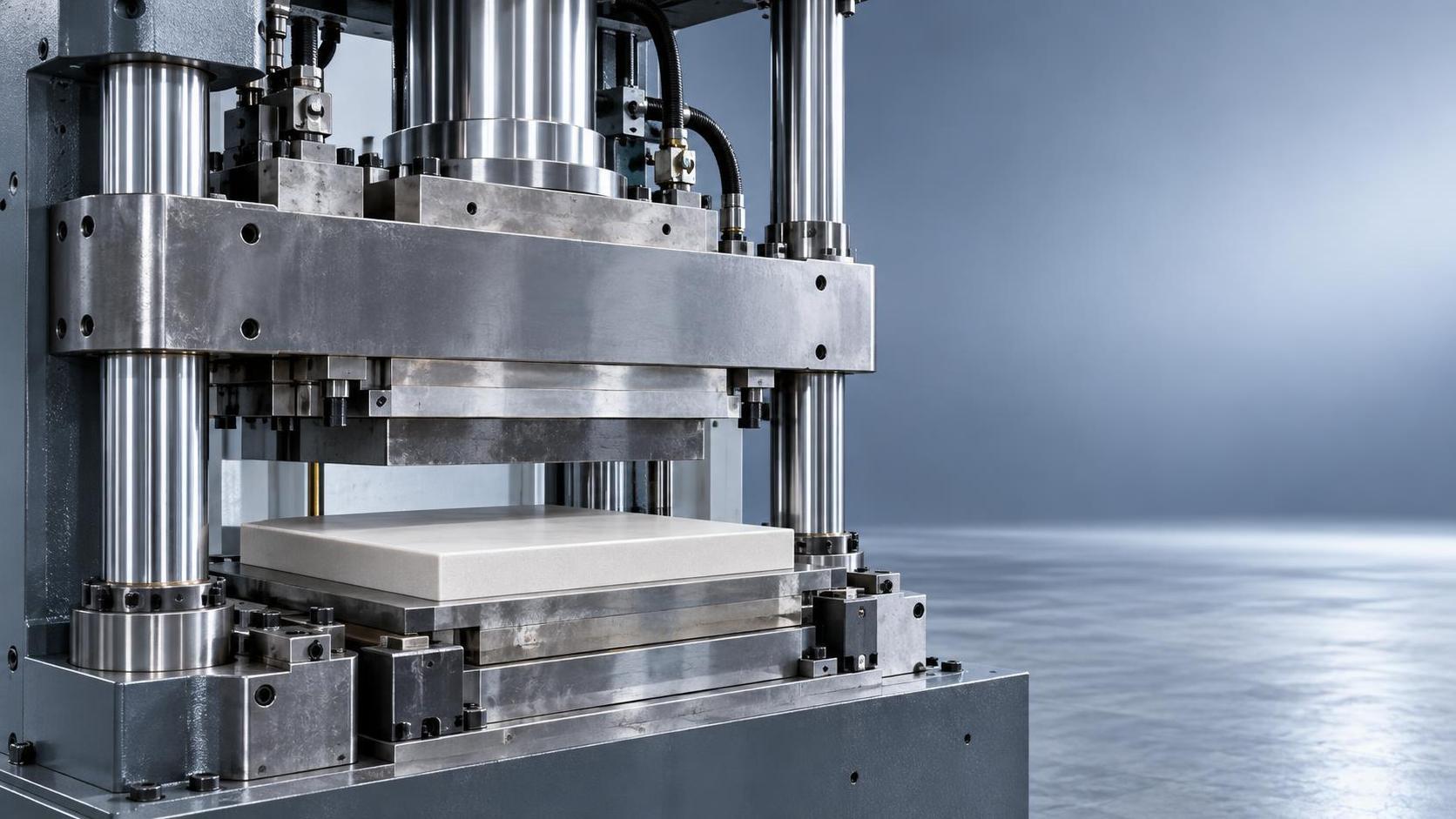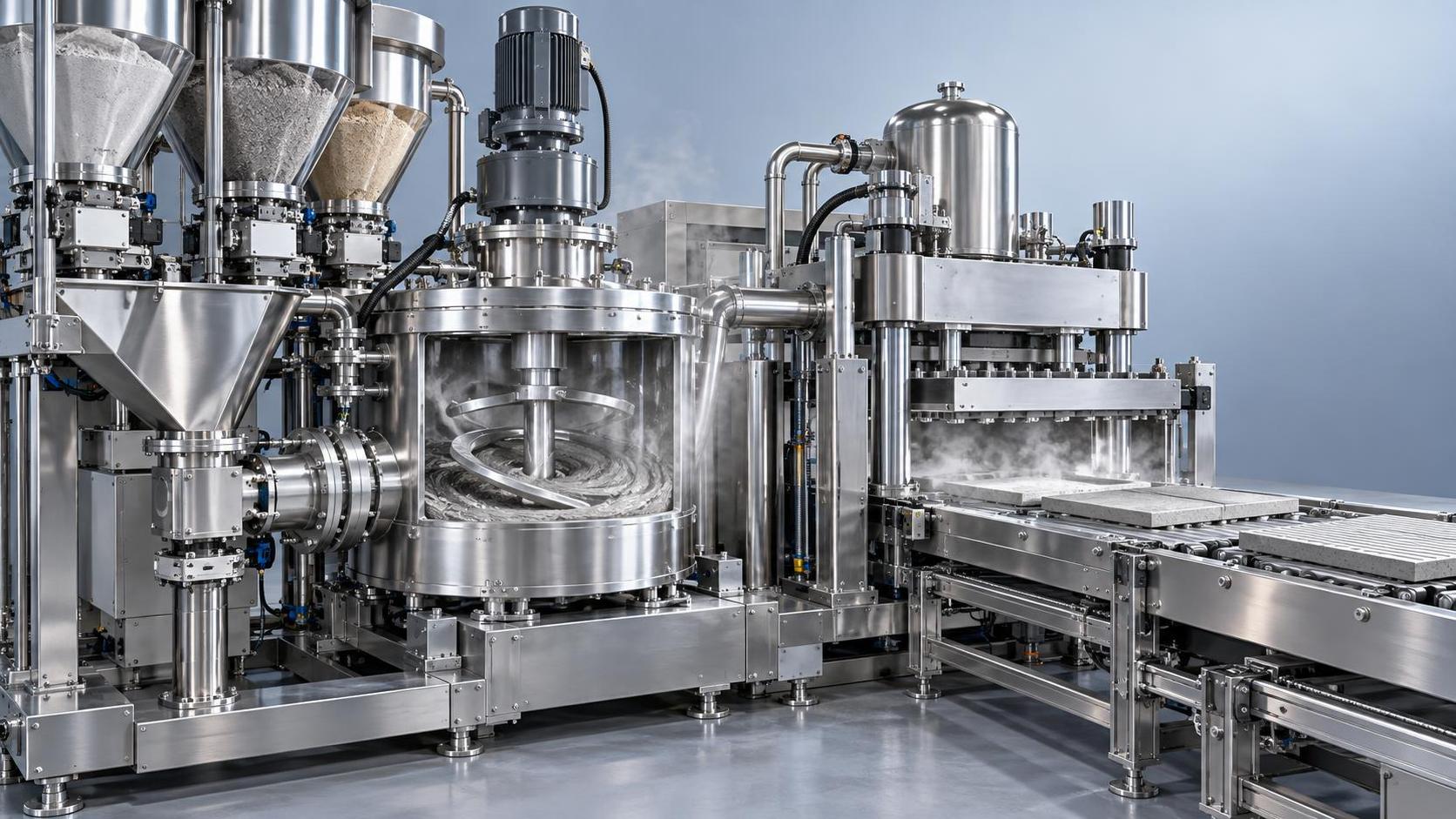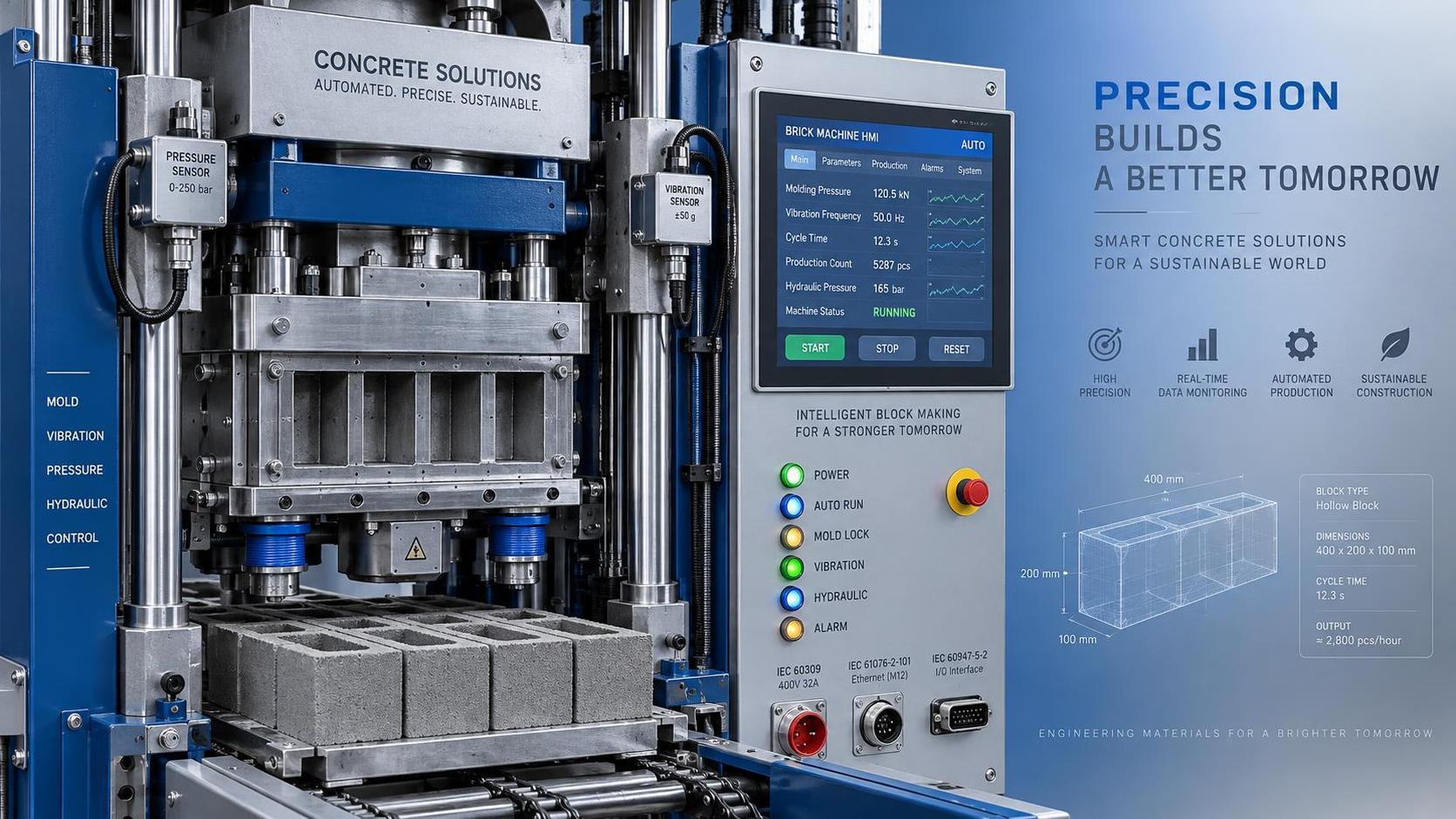
Are tile making machines compatible with ultra-low water absorption porcelain body formulations used in commercial flooring?
Yes—But Compatibility Depends on Three Technical Conditions, Not Just Machine Brand
If you’re evaluating a tile making machine for commercial flooring production using ultra-low water absorption porcelain bodies (≤0.5%), the answer isn’t simply “yes” or “no.” It’s conditional—and the conditions are mechanical, thermal, and process-integrated. Many technically sound machines fail in practice not because they’re poorly built, but because their design doesn’t align with the physical behavior of dense, low-moisture porcelain slips during pressing and drying. This is where technical evaluators must look beyond catalog specs and into how pressure distribution, moisture migration control, and thermal response interact at scale.
Why Ultra-Low Absorption Porcelain Is Technically Demanding
Commercial-grade porcelain tiles targeting ≤0.5% water absorption rely on finely milled, highly homogeneous raw mixes—often with >65% kaolin, high-purity quartz, and controlled feldspar ratios. These formulations achieve density through compaction, not glaze sealing. But that density comes at a cost: minimal internal porosity means almost no room for trapped air or excess moisture to escape during pressing and early drying. If the tile making machine applies uneven pressure, introduces localized shear stress, or allows rapid surface moisture loss before core equilibrium is reached, micro-cracks form—not visible immediately, but revealed after firing or under foot traffic in real installations.
This isn’t theoretical. In field assessments across 12 commercial tile plants (2021–2023), inconsistent tile warpage and edge chipping were traced back not to raw material variation, but to press dwell time mismatch and hydraulic cylinder synchronization drift in older-generation machines—even those rated for “porcelain-grade” output.
The Real Compatibility Checkpoints
Compatibility isn’t about whether a tile making machine can physically press the body. It’s whether it maintains dimensional stability, green strength, and uniform density *across full production runs*, under real factory conditions. Three checkpoints matter most:
- Compaction Uniformity: Measured as density deviation across a single tile (target: ≤±0.02 g/cm³). Achieved not by maximum tonnage alone, but by synchronized multi-point hydraulic actuation, rigid frame geometry, and die cavity precision (≤±0.01 mm tolerance).
- Moisture Gradient Management: The slip enters the press at ~5.8–6.2% moisture. A compatible machine integrates real-time moisture feedback—not just from inlet sensors, but from embedded die-plate probes—to adjust dwell time and ejection sequence per batch. Without this, surface skinning occurs while the core remains plastic, leading to post-ejection deformation.
- Thermal Stability During Press Cycle: Frictional heat from high-pressure compaction raises local temperature by 8–12°C. In ultra-dense bodies, that heat doesn’t dissipate quickly. Machines with thermally isolated platens and forced-air cooling channels between cycles prevent localized softening and green-state distortion.
These aren’t optional features. They’re interdependent system behaviors—each affecting the others. For example, increasing press tonnage without adjusting dwell time worsens moisture gradients. Adding cooling without recalibrating ejection timing increases green tile breakage.
Where Manufacturer Capability Matters Beyond Spec Sheets
Shandong Hongfa Scientific Industrial & Trading Co., Ltd. has invested specifically in these three areas—not as add-ons, but as integrated design principles. Their tile making machines incorporate modular press configurations (allowing quick changeover between 600×600 mm and 1200×2400 mm formats without retooling), real-time pressure monitoring per hydraulic zone (not just total load), and intelligent moisture-adaptive cycle logic built into the PLC interface.
This stems from operational reality: Hongfa operates four production bases and serves clients producing both standard ceramic wall tiles and high-spec porcelain flooring. That dual exposure means their R&D prioritizes cross-formulation robustness—not peak performance on one ideal mix. Their 46 national patents include 28 invention patents covering die-plate thermal compensation algorithms, multi-zone pressure balancing valves, and closed-loop moisture feedback loops tied directly to press dwell control.
Crucially, their ISO9001-2008 certified manufacturing ensures repeatability—not just initial calibration, but long-term stability of sensor accuracy, hydraulic response time, and platen parallelism over 10,000+ cycles. That matters because compatibility degrades gradually: a machine may pass validation on Day 1, then show ±0.04 g/cm³ density variation by Month 6 if thermal expansion isn’t compensated in real time.
What You Should Test—Not Just Review
When evaluating any tile making machine for ultra-low absorption porcelain, skip the brochure claims. Ask for:
- A live demonstration using *your actual slip formulation*—not a generic porcelain mix. Observe green tile handling: do corners chip during transfer? Does the tile flex visibly when lifted?
- Raw density mapping data from three consecutive batches (at least 5 tiles per batch), measured via Archimedes method—not just average, but min/max/std dev per tile and across positions (center vs. corner).
- Documentation of thermal drift testing: what’s the platen surface temp variation after 100 consecutive cycles at rated tonnage and speed?
If the supplier can’t provide this—or requires custom setup fees just to run your slip—they haven’t engineered for real-world compatibility. They’ve engineered for spec-sheet compliance.
One Practical Decision Rule
For technical evaluators: if your current production line already handles porcelain bodies at 0.8–1.2% absorption with acceptable yield (>92% defect-free green tiles), upgrading to ≤0.5% absorption *usually* requires more than incremental tuning. It demands verification of all three checkpoints above—and often, hardware-level integration (e.g., replacing standalone PLCs with fully coupled motion + moisture + thermal controllers). Don’t assume “porcelain-capable” means “ultra-low absorption ready.” The difference is 0.3% water absorption—and 30% higher rejection risk if the tile making machine isn’t tuned for it.
That’s why experienced teams start compatibility assessment not with machine selection, but with slip rheology profiling and green strength mapping—then match machine capabilities to those profiles. The machine follows the material behavior, not the other way around.
Next:No more content
Recommend
 Sep 18, 2026
Are tile making machines compatible with ultra-low water absorption porcelain body formulations used in commercial flooring?
Tile making machine compatibility with ultra-low absorption porcelain? Yes—but only if engineered for compaction uniformity, moisture control & thermal stability.
- Sep 14, 2026
What Is a Building Material Production Line? Key Components & Industry-Specific Configurations Explained
Discover what a building material production line truly is—integrated, industry-specific, and engineered for precision. Learn key components & real-world configurations.
- Sep 15, 2026
How does concrete brick machine automation level compare across major suppliers in 2026?
concrete brick machine automation level comparison in 2026: uncover real-world adaptive control, predictive maintenance & supplier rigor—beyond marketing claims.