



How Does Energy Use Compare Among Roof Tile Making Machines?
How Does Energy Use Compare Among Roof Tile Making Machines?
Energy costs are rarely confined to the motor nameplate on a roof tile machine. A production line may include batching, raw-material conveying, mixing, pressing or extrusion, cutting, stacking, curing, drying, firing, dust collection, and material return. Looking only at the installed kilowatts of the main machine can therefore produce a misleading purchasing decision.
A useful roof tile making machine energy consumption comparison asks a different question: how much electricity, fuel, compressed air, and thermal energy are required to produce one accepted square metre, one thousand pieces, or one tonne of finished tiles? The answer depends on the tile material, the production route, output stability, reject rate, local climate, and the way equipment is operated. Two lines with similar rated power can have very different energy intensity once idle time, rework, and curing or firing are included.
For producers planning a new plant or upgrading an existing line, energy should be evaluated as part of the complete process rather than as a single-machine specification. This is especially important where electricity tariffs vary by time of day, fuel supply is uncertain, or production volumes fluctuate between seasons.
The production route determines where energy is consumed
Roof tiles are not made through one universal process. Concrete tiles, clay tiles, metal roofing profiles, and some composite products use different equipment and have different energy profiles. Comparing them fairly requires a clear production boundary.
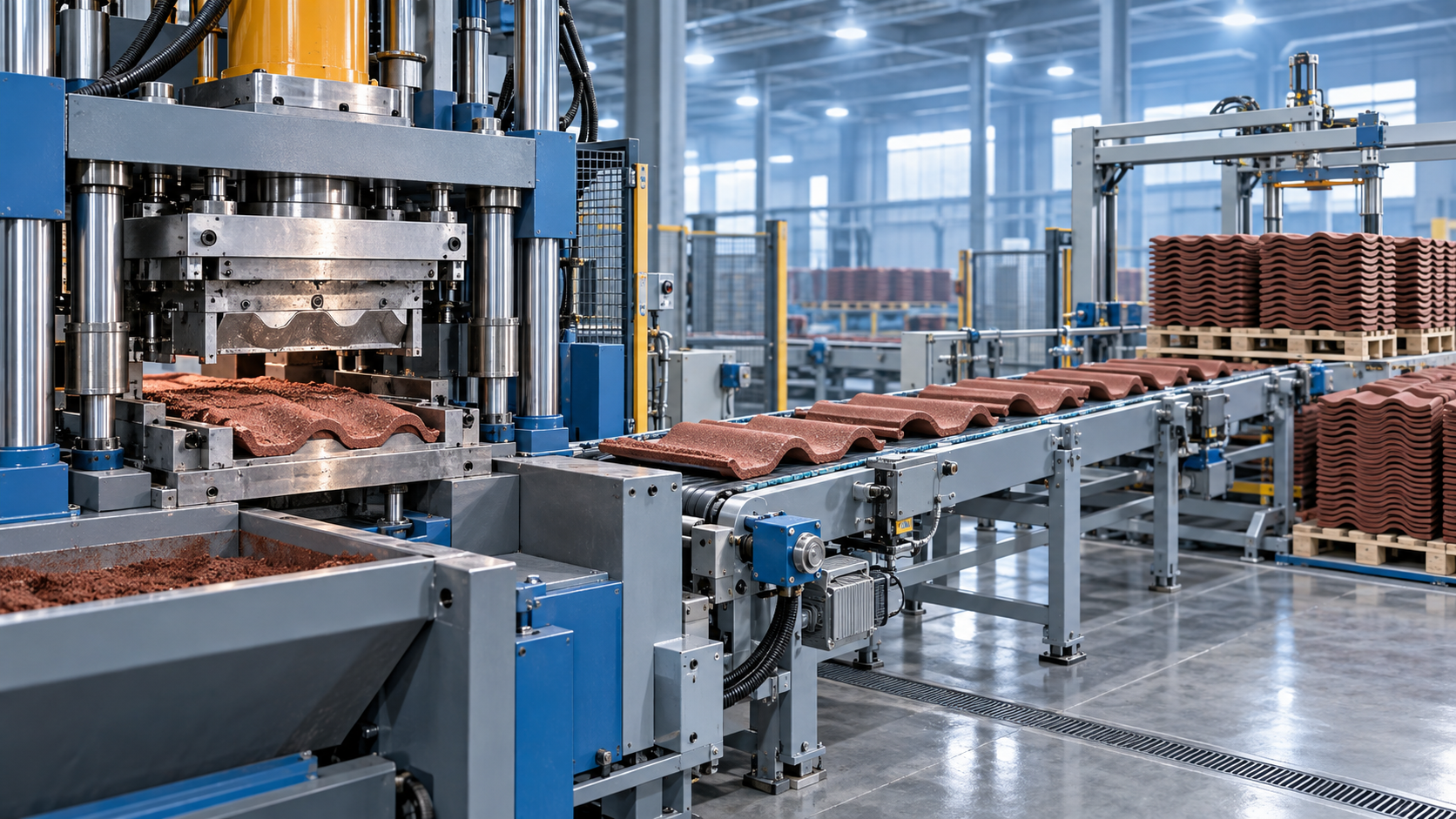
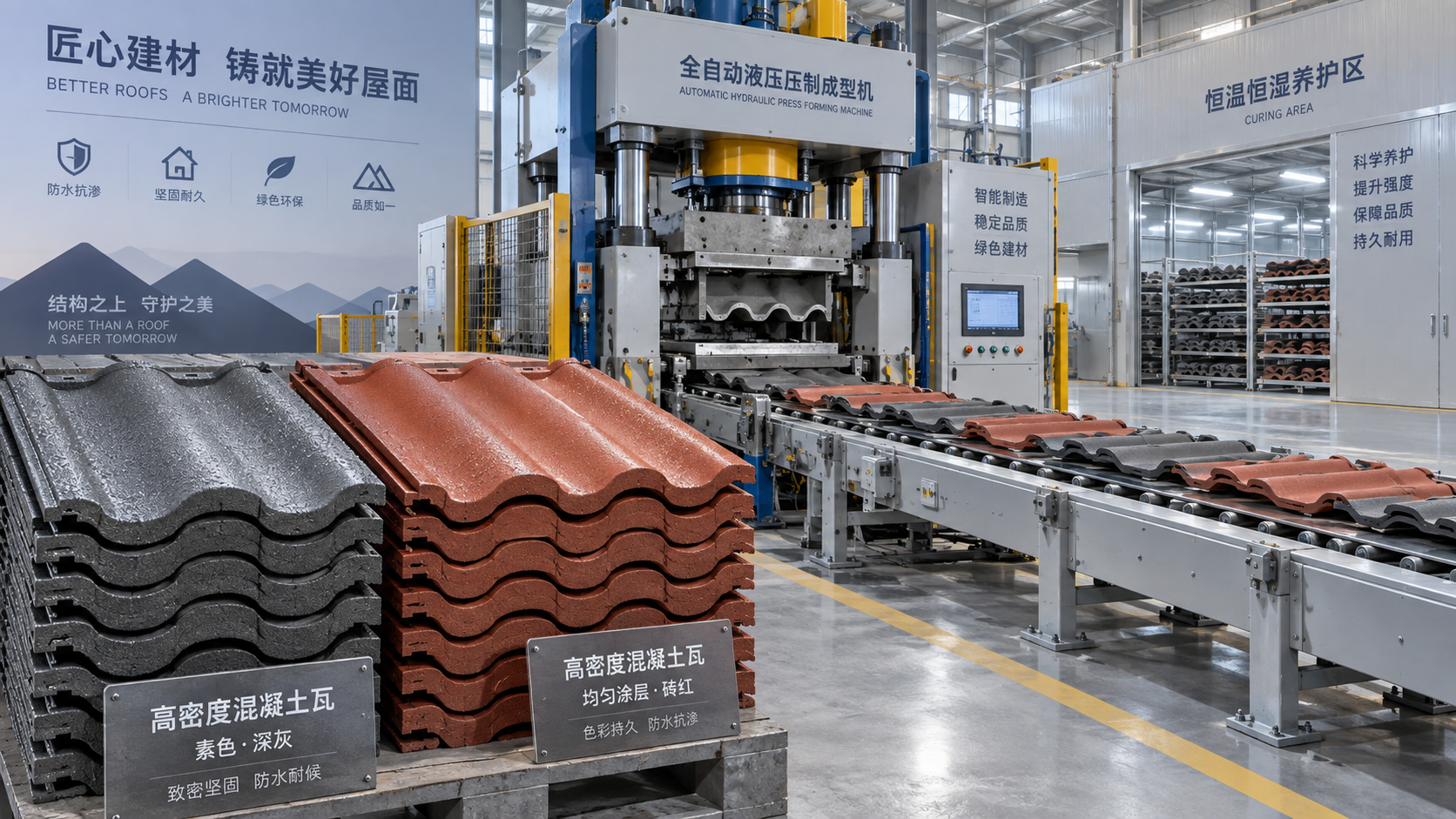
For concrete roof tile lines, electricity is generally concentrated in aggregate handling, mixers, hydraulic or mechanical presses, vibration systems, conveyors, pumps, finishing equipment, and curing-area ventilation or temperature control. The forming stage is important, but it is not always the largest load. Poorly coordinated conveyors, oversized motors running continuously, and repeated starts and stops can consume more energy over a shift than expected.
Clay roof tile production has a broader energy picture. Preparation and extrusion use electrical power, but drying and kiln firing commonly dominate total energy demand because water must be removed and the product must be heated to the required firing condition. Heat recovery, kiln loading, moisture control, and insulation can matter more than a modest difference in the power rating of the tile press or extruder.
Metal roof tile roll-forming equipment usually has a lower thermal burden because it shapes coated steel rather than curing or firing a mineral body. Its direct electrical use is associated with decoiling, feeding, roll forming, cutting, hydraulic systems, and handling. However, this does not make every roll-forming line automatically efficient. Coil thickness, line speed, tool condition, scrap handling, and frequent profile changes all affect the real energy use per finished panel.
The table does not establish a universal ranking. It shows why a comparison based on “machine power” alone is incomplete. A plant should compare like with like: same tile dimensions, comparable quality requirements, the same reporting period, and a defined treatment of auxiliary equipment.
Installed power is not operating consumption
Suppliers often state installed power because it is easy to list and useful for designing the electrical connection. It does not tell a buyer how many kilowatt-hours the line will use in production. Motors do not necessarily operate at full load, and equipment may spend considerable time waiting for materials, operators, pallets, mould changes, or downstream curing capacity.
A better calculation begins with metered consumption during a representative operating period. Divide total energy by accepted output, not gross output. For example, if a line forms tiles quickly but creates unstable geometry, surface defects, or breakage that later becomes scrap, its apparent cycle-speed advantage can disappear. Energy embedded in rejected products, returned material, and repeat processing still belongs in the production calculation.
The same principle applies to compressed air. Pneumatic valves, cleaning systems, and automated handling can be practical, but compressed air is an energy-intensive utility when leaks are neglected or pressure is set higher than the equipment needs. It is sensible to treat compressor demand as a shared plant load and allocate it realistically when comparing automation options.
Measure energy per accepted product
A practical internal dashboard can track electrical kWh per thousand tiles or per square metre, fuel or thermal input where applicable, water use, reject percentage, unplanned downtime, and actual output per shift. The goal is not to create administrative work; it is to identify whether energy rises because the machine is inefficient, because the process is unstable, or because production is running below its intended rhythm.
Metering should ideally separate major loads: raw-material preparation, forming, conveying, curing or drying, and thermal equipment. Without this separation, a high energy bill may lead managers to blame the press while the actual cause is a curing chamber running when it is underloaded, a kiln schedule that does not match production, or conveyor motors operating across long idle periods.
How machine design affects energy demand
In concrete roof tile production, the forming machine needs enough force and control to create a dense, consistent tile without excessive cycling or unnecessary material movement. Hydraulic systems can be highly effective, but their performance depends on pump sizing, valve condition, oil temperature management, and control logic. A system that maintains high pressure when no forming action is required wastes energy and adds heat to the hydraulic oil.
Variable-speed drives can help where fan, pump, conveyor, or feeder demand changes with output. They are not a universal answer. On equipment that must run at a fixed process speed, the benefit may be limited. The relevant question is whether a motor spends meaningful time at partial load or whether production requires frequent speed adjustment. Suppliers should be able to explain where drive control is useful and where a simpler arrangement is more appropriate.
Mechanical alignment also has an energy consequence. Worn bearings, belt slip, poor lubrication, damaged rollers, and misaligned conveyors increase resistance before they become visible as a major failure. They can also lead to tile handling damage. In this industry, maintenance is not separate from energy management: smoother movement reduces both power losses and product loss.
Automation deserves a similarly balanced view. Automatic feeding, stacking, pallet circulation, and recipe control may add motors and sensors, yet they can lower energy per accepted tile by reducing stoppages, inconsistent feeding, manual handling damage, and over-processing. A highly automated line is not automatically the right choice for every factory. Its value depends on production volume, product mix, workforce availability, maintenance capability, and the reliability of the plant’s utility supply.
Curing, drying, and firing can outweigh forming energy
For mineral-based roof tiles, the largest opportunity may sit after the press. Concrete tiles require controlled curing conditions to develop the required properties. The energy used for ventilation, humidity management, heating, and circulation should be matched to the actual curing schedule and ambient conditions. Excessive air exchange, poorly sealed chambers, and unnecessary heating can increase consumption without improving the finished product.
Clay tile plants face an even stronger link between material preparation and thermal efficiency. Extra moisture in the body must later be removed in the dryer. If the dryer and kiln are poorly balanced, defects such as cracking, warping, or uneven firing may create losses that are both material- and energy-intensive. Thermal optimisation is a process problem, not simply a burner-selection problem.
Local conditions matter. A curing approach that performs well in one climate may need adjustment in another. Electricity price structure, available fuel, water quality, humidity, building insulation, and production scheduling all influence the final operating picture. For this reason, a supplier’s energy estimate should clearly state its assumptions rather than present one consumption figure as universally applicable.
Questions worth asking before comparing quotations
A technically useful quotation review goes beyond the headline output rate. Ask which equipment is included in the stated installed power; whether mixers, air compressors, water pumps, dust collection, pallet handling, and curing systems are inside or outside the figure; and what output basis has been used. A rated production capacity may describe ideal continuous operation rather than the average output of a normal shift.
- What tile type, dimensions, raw material, and moisture condition were assumed?
- Which motors run continuously, and which run only during a forming cycle?
- How are idle conveyors, pumps, and hydraulic units controlled?
- What rejection rate is assumed when calculating output?
- Which maintenance points have the greatest effect on energy use and tile quality?
- Can the supplier provide a process layout that shows auxiliary loads as well as the main machine?
These questions also expose a common mistake: selecting a line with the lowest quoted connected load, then discovering that it needs extra auxiliary systems or depends on manual interventions that restrict stable throughput. The lowest-power machine is not necessarily the lowest-cost production solution.
Energy efficiency depends on engineering discipline
Manufacturers of building-material equipment have a role beyond supplying a press or conveyor. They need to understand the interaction between raw materials, material flow, forming technology, controls, curing, and maintenance access. That broader perspective is particularly relevant for companies operating multiple product lines or expanding from blocks and concrete products into roof-tile manufacturing.
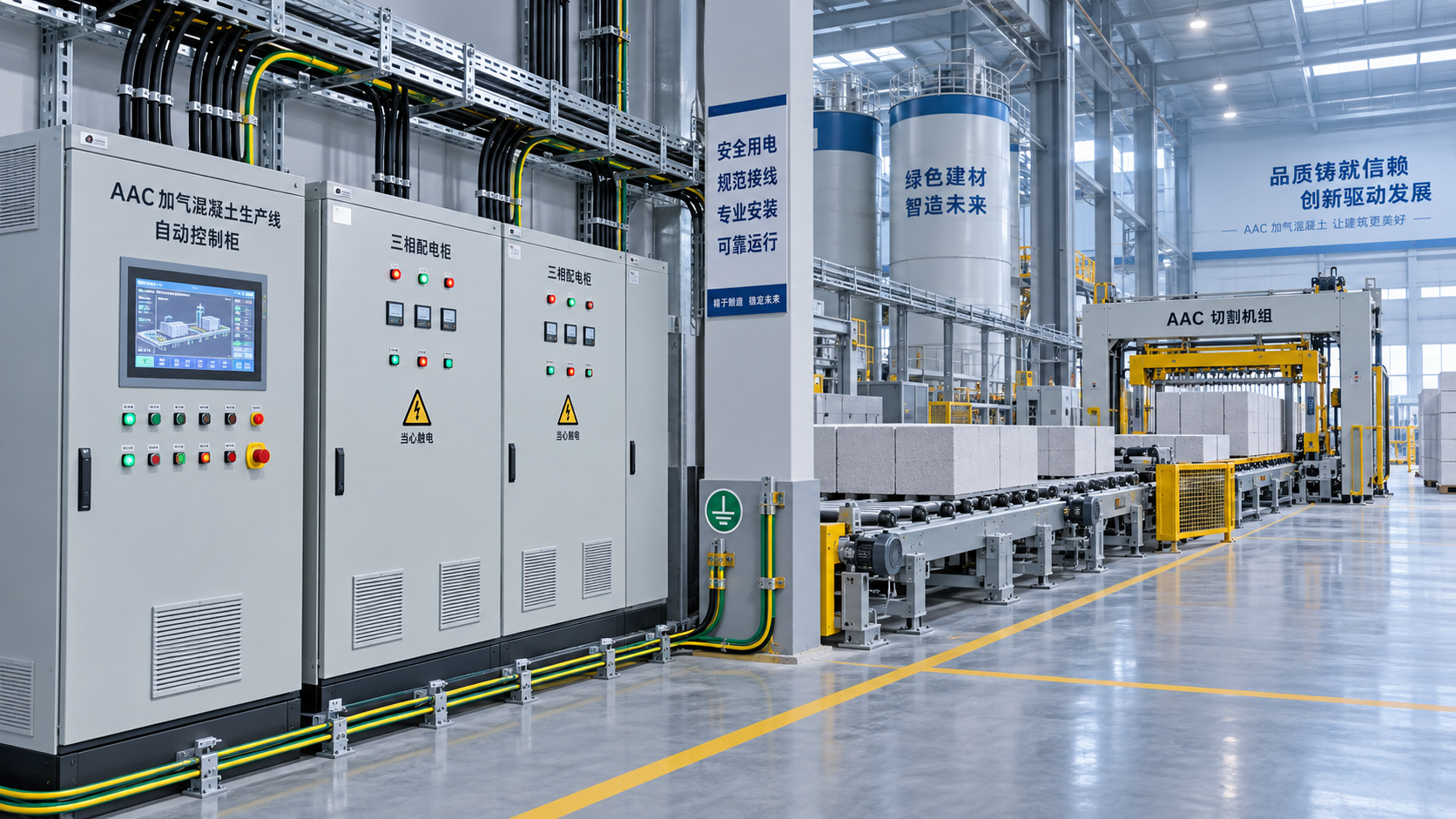
Shandong Hongfa Scientific Industrial & Trading Co., Ltd., established in 1990, has developed construction machinery across areas including block machine lines, concrete batching plants, aerated concrete block production lines, and quartz stone machinery. Its manufacturing bases in Shandong and Guangxi, together with engineering and technical teams, reflect the scale of coordination required in building-material equipment projects. The company’s stated focus on energy conservation and point-based quality tracking is relevant here: energy performance is more credible when it is considered alongside repeatable product quality and maintainable equipment, rather than treated as an isolated sales claim.
For a roof tile project, the most reliable next step is to map the intended process from raw material to accepted finished tile, then request energy assumptions for each major stage. Review installed power, expected operating loads, utility requirements, control strategy, and the capacity of curing, drying, or firing equipment as one system. That approach makes a roof tile making machine energy consumption comparison meaningful—and makes it far easier to identify where a proposed line will genuinely save energy, where it merely shifts consumption, and where site-specific verification is still needed.
Recommend
 Sep 30, 2026
When does an automated building material production line pay off?
Automated building material production line ROI explained: assess capacity, quality, labor, waste, and total costs to make a profitable investment.
- Oct 01, 2026
How a green building material production line reduces material waste
Discover how a green building material production line cuts waste through precise batching, controlled forming, stable curing, and smart material recovery.
- Oct 02, 2026
What to confirm before finalizing AAC factory planning
AAC factory planning: confirm product mix, raw materials, capacity, utilities, layout, automation, and supplier scope before investing in a reliable, efficient AAC plant.