



How automated building material production lines reduce manual handling
Manual handling rarely disappears because a factory buys one machine. It falls only when the movements between machines are redesigned as one controlled flow. In building material production, workers are often still needed to unload bulk materials, carry containers, feed molds, move green products to curing areas, stack finished units, and correct errors caused upstream. Those repeated transfers create labor pressure, safety exposure, variable cycle times, and product damage.
An automated building material production line reduces this burden by connecting storage, dosing, mixing, forming, transfer, curing, inspection, and packing into a coordinated process. The practical goal is not to remove people from every task. It is to remove people from the heaviest, most repetitive, least predictable, and least traceable tasks, while assigning operators to supervision, quality checks, maintenance, and exception handling.
For producers of concrete blocks, aerated concrete products, quartz stone slabs, and related materials, the most useful question is not “How automated can the line be?” It is: Which manual movements are constraining output, creating risk, or introducing inconsistency, and what level of automation solves those specific problems?
Manual handling is usually a flow problem, not a staffing problem
Adding labor may temporarily increase output when demand rises, but it does not correct an unstable material flow. A worker may be waiting for a forklift, a mixer may wait for aggregate, molds may remain idle while products are moved manually, or curing spaces may be loaded unevenly. These gaps are often treated as separate staffing issues even though they come from the same source: process stages are not synchronized.
Automation changes that relationship. Conveyors, elevators, transfer cars, pallet systems, robotic handling units, automated feeders, and control systems give material movement a defined route and timing. Instead of relying on individual judgment for every transfer, the line uses programmed logic, sensors, and interlocks to move materials or products when the next stage is ready.
This matters because manual handling affects more than labor cost. A bag or pallet moved late can interrupt batching. Inconsistent mold filling can affect dimensions and density. Rough handling of uncured products can create cracks or edge damage. Unrecorded adjustments make it harder to trace why a batch or shift produced inconsistent results. The benefit of automation is therefore operational control as much as physical labor reduction.
Where an automated building material production line removes the most manual work
Not every operation offers the same return from automation. The best opportunities are usually tasks involving high volumes, repetitive routes, heavy loads, dusty environments, hot zones, wet materials, or tight cycle times.
Raw material receiving, storage, and feeding
Raw materials are often handled several times before they reach the mixer. Aggregates may be moved from stockpiles to hoppers, powders from bags or silos to weighing stations, and additives from containers to dosing equipment. Each transfer can introduce contamination, spills, incorrect quantities, and delays.
Automated storage and conveying systems reduce direct intervention by delivering material from designated storage points to the batching section. Screw conveyors, belt conveyors, bucket elevators, pneumatic transfer systems, and automated hopper gates may be selected according to the material’s bulk density, moisture behavior, particle size, abrasiveness, and tendency to bridge or segregate.
Automation is especially valuable when formulation accuracy matters. For instance, a block plant or concrete batching operation benefits when weighing is linked to a production recipe rather than being dependent on manual loading and visual estimation. However, equipment alone cannot solve poor material management. Moisture variation, inconsistent aggregate grading, and blocked flow paths still need routine control.
Batching and mixing
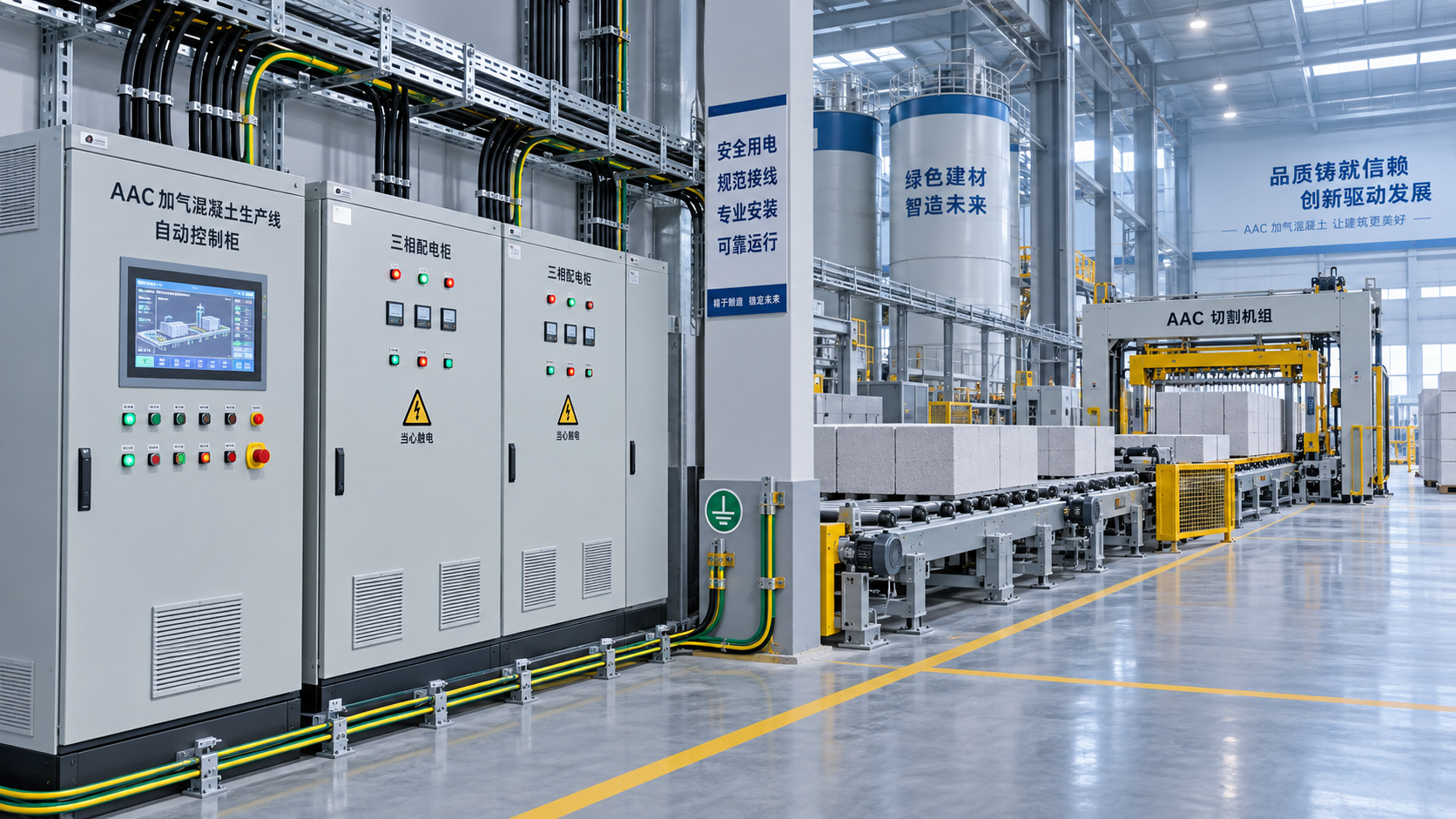
Batching is one of the clearest examples of automation improving both labor use and consistency. A control system can call for materials in the required sequence, operate gates and feeders, record weights, manage mixing time, and flag deviations. Operators no longer need to manually coordinate every ingredient transfer or rely on memory for changing recipes.
For plants producing several product types, recipe management can prevent a common manual error: using the right material in the wrong proportion after a production changeover. The value is highest when recipes are disciplined and materials are stored in clearly separated, correctly identified locations. An automated batching system cannot compensate for a silo filled with the wrong powder or an additive connection made incorrectly.
Mixing automation also reduces the need for workers to repeatedly intervene around moving equipment. The operator’s role shifts toward confirming material availability, reviewing batch records, cleaning the mixer as required, and responding to alarms that indicate a real process issue.
Forming, molding, and product transfer
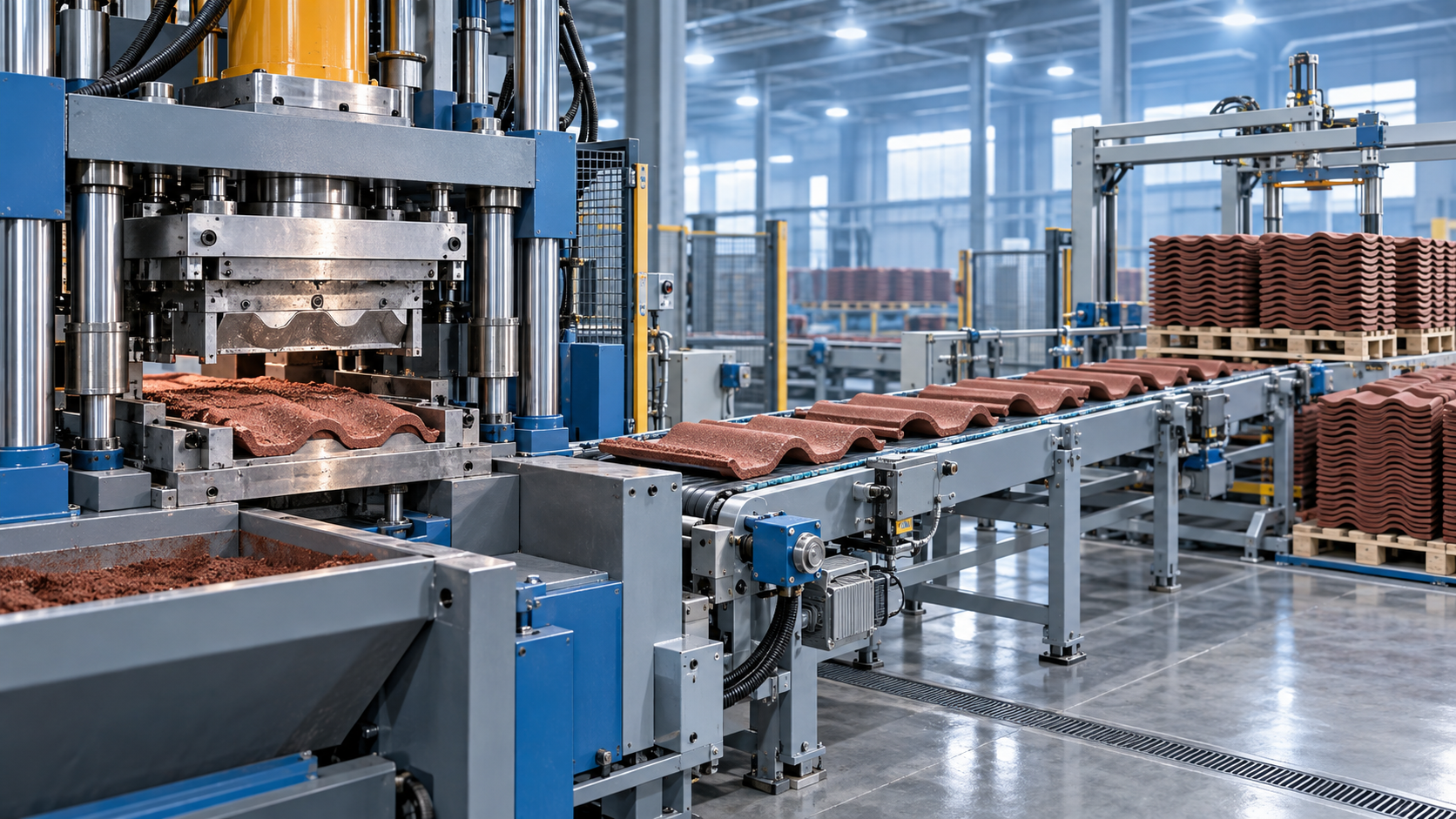
In block and aerated concrete production, much of the physical workload appears after material leaves the mixer. Molds must be filled, compacted or formed, stripped, and transferred without disrupting the product. Manual movement at this point can restrict cycle speed and increase the chance of handling damage.
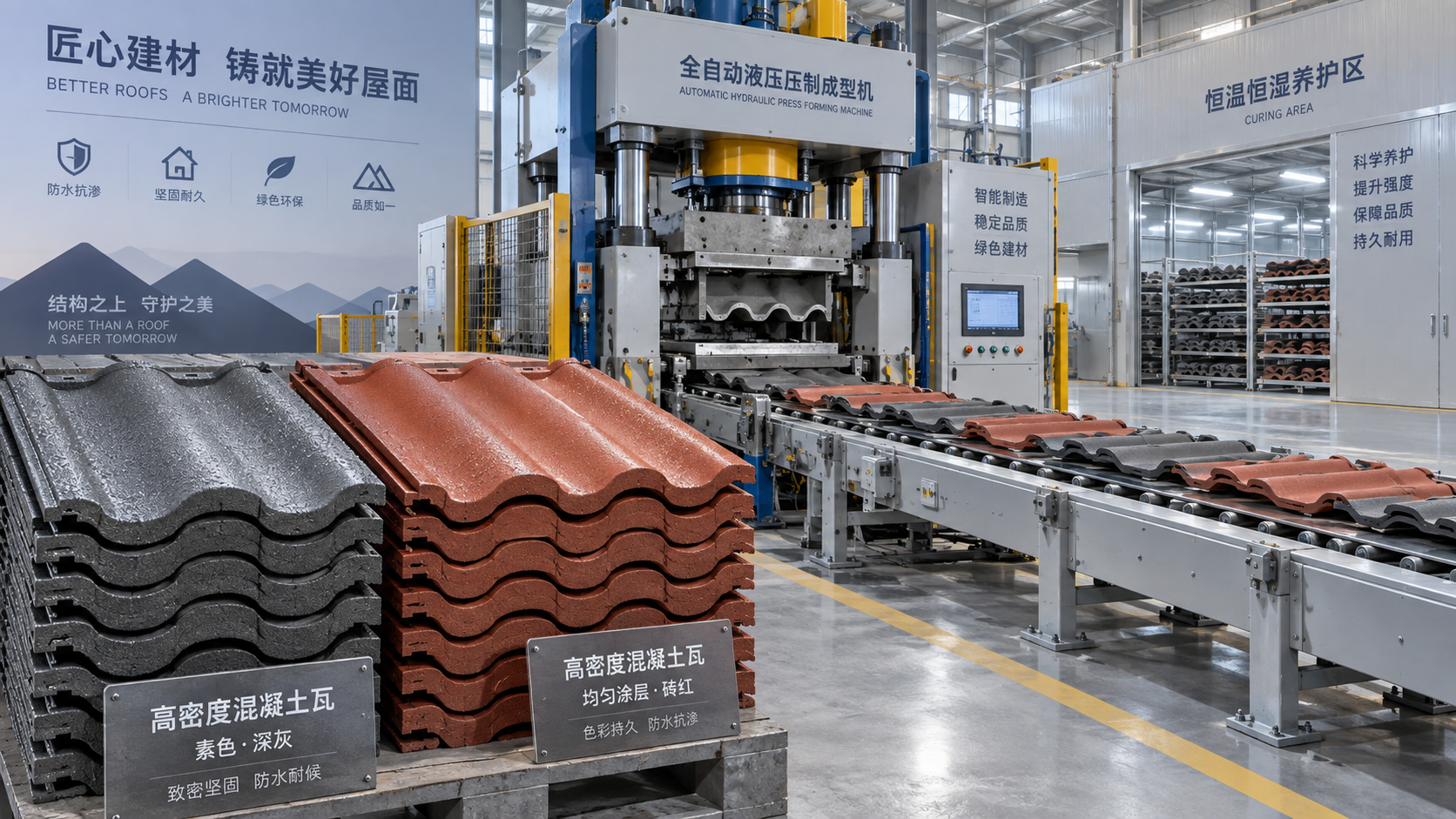
Automated mold feeding, vibration or compaction control, demolding arrangements, pallet circulation, and transfer systems keep the forming section moving at a repeatable pace. Product transfer is particularly important because freshly formed units often have limited strength. Mechanical systems can follow a stable acceleration, alignment, and placement pattern that is difficult to maintain with manual carts or forklifts under production pressure.
That does not mean every plant requires robotics. In lower-volume operations with a narrow product range, well-designed pallet conveyors and transfer cars may deliver most of the practical benefit. Robotics become more relevant where stacking patterns are complex, product sizes change frequently, or repetitive finishing and packing tasks create a persistent labor bottleneck.
Curing and internal logistics
Curing areas are frequently underestimated during automation planning. A plant may automate mixing and molding but still rely on workers or forklifts to move pallets, racks, molds, or green products into and out of curing zones. The result is a fast front end feeding a slow, labor-heavy middle.
Automated transfer systems can route products to curing positions, maintain the required sequence, and return pallets or molds to the production line. This reduces travel, avoids congestion, and helps prevent products from being handled before they are ready. It also makes capacity planning more realistic because the curing process becomes part of the production rhythm rather than a separate manual activity.
The design must fit the curing method. Rack systems, chambers, autoclaves, open-yard arrangements, and controlled curing rooms have different loading, access, and safety requirements. Copying a handling layout from another plant without considering curing time, product geometry, and available space often creates a new bottleneck.
Stacking, packing, and dispatch preparation
Finished product handling remains labor-intensive when units need to be counted, aligned, stacked, strapped, wrapped, labeled, and prepared for loading. Automated stackers, palletizers, packaging equipment, and conveyor links can reduce the number of touches between final inspection and dispatch.
Reliable stacking is not only a labor issue. A stable stack protects products during storage and transport, while consistent labeling improves lot traceability. Automation is useful when the packaging format is stable enough to justify it. If order profiles change constantly and each shipment requires highly variable manual sorting, a flexible semi-automated station may be more sensible than a fully fixed packing cell.
What changes for the workforce
A well-designed line does not simply reduce headcount at one station. It changes the type of work required across the plant. Fewer people are needed to lift, push, carry, shovel, or repeatedly guide products through the same route. More attention is required for control room monitoring, preventive maintenance, mold condition checks, product sampling, recipe discipline, and rapid response when sensors or equipment identify an abnormal condition.
This shift should be planned before commissioning. A common mistake is to treat automation as a replacement for training. Operators need to understand normal process signals, alarm priorities, safe restart procedures, and when to stop the line rather than bypass an interlock. Maintenance personnel need access to drawings, component information, spare-parts plans, and practical fault-finding training. Without these foundations, workers may return to manual workarounds whenever the line is under pressure.
Safety also improves only when the automated process is operated as intended. Guarding, emergency stops, lockout procedures, controlled access zones, and safe cleaning methods remain essential. Automation removes exposure to many routine hazards, but it can create serious risk if staff enter a transfer area, conveyor path, or moving mold zone without proper isolation.
Choose the automation level around the bottleneck
Full automation is not always the most effective first investment. The right scope depends on production volume, product mix, available floor space, labor availability, material quality, maintenance capability, and the reliability of utilities. A plant that experiences its largest delays in finished-goods stacking may gain little from automating raw material storage first. A site with frequent recipe inconsistency may need controlled batching before it needs a more advanced packaging system.
The table highlights an important distinction: automation should follow the material path, not the visual appeal of a single machine. A highly automated molding machine cannot achieve its intended output when downstream curing transfer or pallet return is manual and slow. Conversely, automating a non-critical step may add complexity without reducing the daily workload that actually limits production.
Do not automate instability
Automation magnifies the strengths and weaknesses already present in a process. If raw materials vary widely, molds are worn, maintenance is reactive, or changeovers are poorly organized, a faster line may produce inconsistent material more efficiently. Before defining equipment scope, map the current process from material arrival to finished-product storage.
The map should identify every manual touch, waiting point, forklift route, quality check, rework loop, and safety-sensitive activity. It should also distinguish essential manual work from work created by poor layout. For example, a worker manually adjusting every transfer may be compensating for a misaligned conveyor or inconsistent pallet condition. That is a design issue, not a task that should simply be staffed.
Plant managers should also establish a baseline for the right measures: shifts lost to waiting, time spent moving materials, product breakage during transfer, batch deviations, unplanned downtime, and rework. Exact numbers are less important than having a consistent starting point. The baseline makes it possible to determine whether the new system has reduced handling rather than merely moved labor from one station to another.
Integration decisions that determine whether the line performs
An automated building material production line works best when it is treated as an integrated production system. Equipment selection should begin with product requirements and process flow, then move to machine configuration. Decisions about storage capacity, conveyor routes, pallet dimensions, mold formats, curing layout, electrical supply, compressed air, dust control, drainage, and maintenance access need to be made together.
Interface responsibility deserves particular attention. When a batching plant, block machine, curing system, packing equipment, and control platform are supplied or installed separately, unclear responsibility can lead to commissioning delays. The issue is not simply whether each machine operates on its own; it is whether materials, signals, timing, and safety logic work correctly across the entire line.
For producers evaluating equipment partners, it is sensible to look for experience across the relevant process sections rather than evaluating a machine only by its standalone specification. Shandong Hongfa Scientific Industrial & Trading Co., Ltd. manufactures construction machinery including concrete batching plants, block production equipment, aerated concrete block production lines, and quartz stone machinery. For projects that combine these areas, the practical discussion should focus on line layout, control integration, transfer equipment, commissioning support, and the maintenance model required after startup.
A disciplined path from manual operation to controlled flow
The most reliable projects begin with a focused review rather than a broad promise of “smart manufacturing.” A workable sequence is:
- Document how material, pallets, molds, and finished goods move through the current operation.
- Identify the manual tasks that are heavy, repetitive, unsafe, quality-sensitive, or responsible for waiting time.
- Confirm the constraint that limits output today, including downstream curing and dispatch stages.
- Define product range, daily operating pattern, changeover needs, and future expansion requirements.
- Select automation that connects the constrained process rather than isolated equipment that looks advanced.
- Set responsibilities for training, preventive maintenance, spare parts, data records, and fault escalation before startup.
Phased implementation can be appropriate when a plant needs to protect ongoing production or when the current bottleneck is clear. A controlled batching and conveying upgrade may be the right first stage; automated curing logistics or final packaging can follow once upstream output is stable. The opposite approach, installing every possible automated function at once without operational readiness, can make troubleshooting harder during commissioning.
The best result is a production line in which people are no longer used as the connection between disconnected machines. Their effort is directed toward maintaining quality, keeping equipment available, and resolving exceptions that automation cannot judge on its own. That is how reduced manual handling becomes a durable operational improvement rather than a short-lived labor-saving claim.
Recommend
 Sep 30, 2026
When does an automated building material production line pay off?
Automated building material production line ROI explained: assess capacity, quality, labor, waste, and total costs to make a profitable investment.
- Oct 01, 2026
How a green building material production line reduces material waste
Discover how a green building material production line cuts waste through precise batching, controlled forming, stable curing, and smart material recovery.
- Oct 02, 2026
What to confirm before finalizing AAC factory planning
AAC factory planning: confirm product mix, raw materials, capacity, utilities, layout, automation, and supplier scope before investing in a reliable, efficient AAC plant.